Vegetable · Fabaceae
Fava Bean
Vicia faba
Tuck them into cold spring soil, give them sun and steady water, and these tough broad beans will crop early while it's still cool out.
Full sun
Every 5–7 days
75–90 days
USDA 3–8
Overview
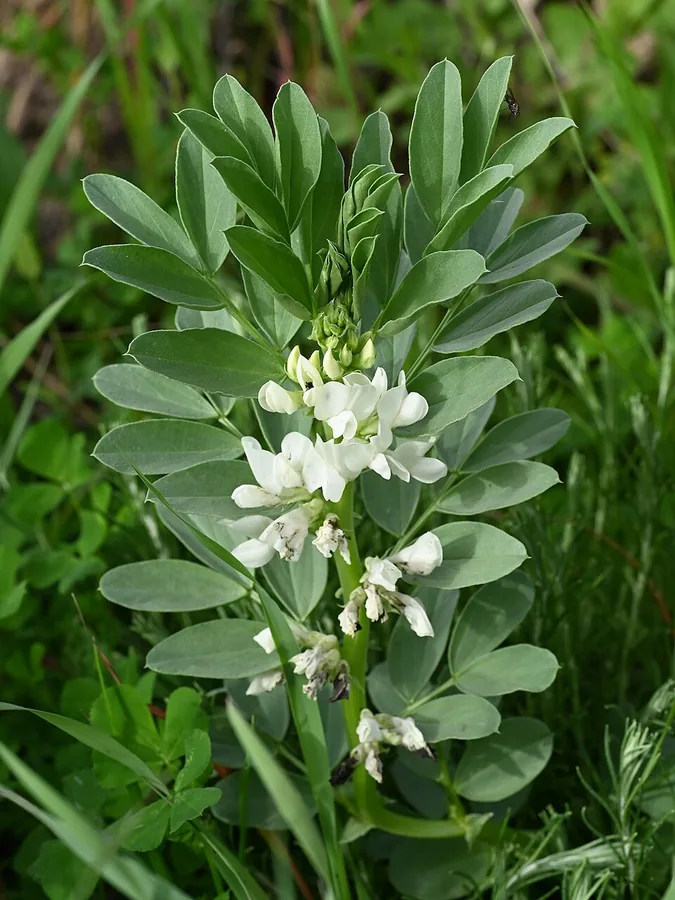
Fava beans go way back as one of the oldest crops people grow, and they're a cool-season legume that handles cold like almost nothing else in the garden. They grow tall and straight on a sturdy, squarish stem, carrying their flowers and chunky pods up close to that frame. You'll hear them called broad beans too, which makes sense once you see the wide, flat seeds sitting inside each soft-lined pod.
So what makes favas different? It's that they actually love the cold. You get to sow them while most beans are still weeks away from going out, either in early spring as soon as you can work the ground or in fall where winters stay mild. And because it's a nitrogen-fixing legume, the plant pretty much feeds itself and even leaves the soil better off for whatever comes next.
They don't ask for much, and they pay you back early. Put them in decent ground, keep the soil evenly moist through bloom and pod fill, and just keep half an eye on the new tips for black aphids. Time things so the flowers open in cool weather, and you'll be picking tender pods and beans from late spring into early summer.
Care
The short version: they want full sun and cool weather, deep well-drained soil with lots of organic matter, and steady moisture through flowering and pod fill, and you can skip most feeding because the plant fixes its own nitrogen.
Light
Favas crop best in full sun, but they'll take a bit of partial shade and still set pods for you. The more light they get, the stronger those tall stems stay and the better they flower.
Water
Keep the soil evenly moist through germination, flowering, and pod fill, which usually works out to a good soak every 5 to 7 days. Don't let it bounce between bone dry and soggy, and back off in cold, wet soils, where waterlogging will just rot the seed.
Soil
Get them into deep, well-drained loam with plenty of organic matter mixed in. A pH from 6.0 to 7.5 suits them nicely, and that deep, free-draining ground gives the strong taproot all the room it wants.
Temperature
This is a real cool-season crop, hardy down to around 14°F (-10°C) and happiest below 77°F (25°C). The thing to watch is heat at flowering, since that's what makes the blooms drop before they can set pods.
Humidity
Regular outdoor air at around 40% to 60% is totally fine, so there's no number to stress about here. What really matters is airflow, because crowded, damp leaves are basically an invitation for chocolate spot.
Feeding
Since it's a nitrogen-fixing legume, the fava feeds itself and hardly ever needs extra nitrogen. If your ground's poor, just work in a bit of phosphorus and potassium at planting and call it good.
Pruning
Once the lowest pods start setting, pinch out the soft growing tips. That one little move takes away the tender shoots black bean aphids are after and sends the plant's energy down into filling the pods.
Size & spacing
Plants get 3 to 5 feet (90 to 150 cm) tall and stay fairly narrow at 12 to 18 inches (30 to 45 cm) across. Give each one that much space so air can move and chocolate spot has a harder time taking hold.
When to plant
Favas actually want the cold that stops most beans in their tracks. Sow them straight into the ground in early spring as soon as you can work the soil, or in fall where winters stay mild, and you'll be picking tender pods from late spring into early summer, before the heat shuts things down.
Northern hemisphere
Southern hemisphere
Typical months for a temperate climate: start earlier in warm zones, later where spring frosts linger.
- Plant: Direct-sow in early spring as soon as soil is workable, or sow in fall in mild-winter (zone 7+) climates for overwintering.
- Harvest: Harvest tender pods/seeds in late spring to early summer.
Hardiness
USDA hardiness zones: 3–8
Temperature: down to -40°C
Troubleshooting
Most fava trouble turns up either on the fresh growth up top or on the lower leaves when the weather's damp. Catch it early and a little problem stays little. Find what matches what you're seeing below, then jump on it while it still helps.
Reddish-brown spots that turn leaves black when it's wet
Those rusty patches showing up on the leaves are chocolate spot, a fungus that loves cool, soggy, packed-in conditions and can blacken whole leaves once it gets going. The good news is it's manageable. Give the plants more elbow room for airflow, pull off the leaves that look really bad, and try to keep water off the foliage. Sort out the drainage, go easy on the nitrogen, and you'll keep it from taking over.
Fix:
- Improve air circulation by wider spacing
- Remove and destroy badly affected foliage
- Avoid overhead watering
Black aphids piling onto the soft new tips
See a crowd of tiny dark bugs at the very top of the plant? Those are black bean aphids, and they go right for the softest new growth. You'll often spot ants fussing over them and a sticky, shiny film that ends up sooty. Snip off the worst tips, hose the rest off with a strong blast of water, and if a colony just won't budge, that's when insecticidal soap earns its keep.
Fix:
- Pinch off and destroy heavily infested growing tips
- Dislodge colonies with a strong water spray
- Use insecticidal soap on persistent infestations
Lots of flowers, but no pods showing up
Plant looks great and green, but the flowers keep falling off without turning into pods? That's almost always heat during flowering. Favas are a cool-weather crop through and through, and they'll drop their blooms when a warm stretch hits at just the wrong time. Keep the soil evenly moist while they're flowering, pick whatever pods do form, and next time just tweak your sowing date so the flowers open in cooler weather.
Fix:
- Maintain even soil moisture during bloom
- Harvest existing pods promptly to encourage continued set
Toxicity
You can relax about fava beans around cats, dogs, horses, rabbits, livestock, and poultry, since the plant's a food crop and it's safe for all of them. For people, cooked beans are wholesome and good for you, with one important exception: anyone with the inherited G6PD enzyme deficiency can have a serious blood reaction called favism from eating the beans or even breathing in the pollen, so they should stay away from the plant entirely.
Safe for
People · Cats · Dogs · Horses · Rabbits · Livestock · Birds
Cats None
Fava plants won't poison a cat, so if yours grabs a quick bite of leaf or pod, it's really no big deal.
Dogs None
Dogs are fine hanging around these plants, and the ASPCA doesn't list favas as toxic. If one wolfs down a bunch of raw beans, you might just see a little gas or a soft stool, and that's about it.
Horses Safe
Horses do great on fava foliage, and honestly that's where the old name horse bean came from in the first place.
Rabbits Safe
Rabbits can munch the leaves and tender pods without any worry, though it's smart to ease them into any new green slowly, like you would with any fresh forage.
Livestock Safe
Cattle, goats, and sheep have eaten fava beans as feed and fodder forever, so there's really no danger out in the field.
Birds Safe
Backyard chickens can peck at the beans and greens just fine, and some folks even grow favas on purpose as a bird feed.
People Safe
For most people, cooked fava beans are great, wholesome food. There's one real catch, though: anyone with the inherited G6PD enzyme deficiency can have a serious blood reaction called favism from eating the beans or even breathing in the pollen, so they've got to stay away from the plant completely.
Human food-safety note: people with the inherited enzyme deficiency G6PD (favism) can develop acute hemolytic anemia from eating fava beans or even inhaling the pollen. This is a human genetic-condition concern, not a pet toxicity or general toxicity issue.
Varieties
There are loads of fava bean varieties out there, but a few keep popping up in home gardens. Here are the ones worth knowing by name.
Aquadulce
Want to sow in autumn and overwinter the crop somewhere mild? This very hardy long-pod type is the one gardeners reach for.
Windsor
It's the classic broad, flat-seeded bean tucked into short pods, and people grow it mostly because the flavor is so rich.
The Sutton
This little dwarf only gets to about 12 inches (30 cm), which makes it perfect for small beds and those windy, exposed spots.
Companions
Fava beans pair well with hungry crops that draw on the nitrogen they leave behind, and sit poorly next to onions and garlic, which many gardeners find hold legumes back.
Plant near
brassicas: As a nitrogen-fixing legume, fava beans can precede or accompany heavy-feeding brassicas that benefit from improved soil nitrogen.
Keep apart
onions and garlic (alliums): Alliums are commonly cited as poor companions for beans and other legumes.
How to propagate
Growing favas from seed is about as easy as veggies get, and you just sow them straight into the ground where they'll live out their whole short life.
SeedEasy
Direct-sow in early spring as soon as soil is workable, or in fall in mild-winter climates. · 1 to 2 weeks to germinate in cool soil
Just sow favas right where you want them to grow, since they settle in fast and don't take kindly to being moved. Pop the seeds in about 2 inches (5 cm) deep in cool, workable soil come early spring, or sow in fall if your winters stay mild. They'll usually pop up in 1 to 2 weeks, even while the ground's still chilly.
Myths
Fava beans are toxic to everyone and unsafe to eat.
Cooked fava beans are perfectly safe and nourishing for most people. The one real exception is anyone born with the G6PD enzyme deficiency, who can have a serious blood reaction called favism from eating the beans or breathing in the pollen. So it's an inherited human condition, not a poison sitting in the plant.