Houseplant · Apocynaceae
String of Hearts
Ceropegia woodii
Give it bright light and a good dry-out between drinks, and those hearts just keep trailing.
Bright indirect
59–86°F · 15–30°C
USDA 10–12
3–12 ft · 0.9–3.7 m
Overview
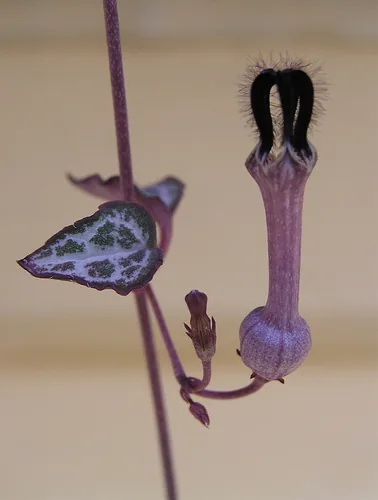
String of hearts comes from southern Africa, where it rambles over rocks as a tuberous vine. Those thin stems are lined with pairs of tiny heart-shaped leaves, marbled silver over green, and that's exactly where names like rosary vine and chain of hearts come from. Indoors it's happiest trailing down off a shelf or a hanging pot, and given time the strands will run out to several feet.
So why's it so forgiving? It tucks water away in its leaves and stems, which means it'll shrug off a watering you forgot far more easily than one you gave too soon. Pop it somewhere bright, use a gritty mix that drains in a hurry, and it pretty much takes care of itself, piling on length through spring and summer.
Really it only cares about two things: bright indirect light and drying out between waterings. Go too dim and the vines turn pale and stringy; water too much and the roots pack it in. Sort those two out, though, and you've got a plant that lasts for years and is dead simple to turn into more.
Care
The short version: keep it in bright indirect light, use a free-draining cactus or succulent mix, and only water once the soil's completely dry, easing right off through winter dormancy.
Light
Give it bright indirect light, and the brighter the better, so long as you skip the harsh midday sun. A west- or south-facing window is perfect, because all that light is what keeps the vines tight and the leaves nicely marbled. Leave it in a gloomy corner, though, and it'll go pale and stretchy on you.
Water
This is the bit that really matters. Let the soil dry out completely, then give it a proper soak, since the plant carries its own water and hates sitting soggy. Come winter dormancy it barely drinks anything, so back right off then.
Soil
Go with a free-draining cactus or succulent mix, and mixing in some coarse sand or perlite helps water shoot straight through. It's not picky about pH either, happy anywhere from 6.0 to 8.0, so drainage counts way more than the exact number.
Temperature
Normal room warmth is all it wants, somewhere between 59°F to 86°F (15°C to 30°C). Just keep it above 60°F (16°C) in winter and out of cold drafts, because frost is a deal-breaker for this one.
Humidity
Regular household air suits it just fine, and low humidity is no bother for a semi-succulent like this. There's no misting to fuss with and no magic number to hit.
Feeding
During spring and summer, feed it a bit with a half-strength balanced houseplant fertilizer, and once a month is plenty. When winter rolls in and it's resting, just stop feeding altogether.
Pruning
Trim back any vines that have gotten long or bare, and the plant fills back in with fuller, bushier growth. Don't chuck the trimmings either, because every strand you snip roots easily into a whole new plant.
Repotting
This one actually likes being a bit cramped, so only repot when you really have to. The signs it's ready are roots crammed into the pot, soil that dries out almost right after you water, and growth that's just kind of stopped.
Size & spacing
35–144 in (90–365 cm) tall
Troubleshooting
Almost every hiccup with this plant boils down to just two culprits: not enough light or a bit too much water. Get to know what the vines and the soil are telling you and you can stop trouble before it really starts. Spot your symptom below and jump on it early.
Yellow leaves with soft, mushy stems down by the soil
Yellowing leaves and soft, mushy stems are the classic sign of root rot from overwatering, which is pretty much the one thing that'll finish this plant off. When the mix stays wet, the lower stems go squishy and the roots turn brown and soft. So stop watering, let it all dry out completely, and repot into a free-draining cactus or succulent mix while trimming off anything rotten. If the rot's gotten far, grab a few healthy cuttings or tubers as a backup, just in case.
Fix:
- Stop watering and allow the mix to dry out completely
- Repot into a free-draining cactus/succulent mix and remove rotted tissue
- Take healthy stem cuttings or tubers as backup if rot is advanced
Sticky patches, warped growth, or little bugs on the stems
If you're seeing sticky patches or twisted new growth, odds are aphids, mealybugs, or scale have shown up for a snack. Keep an eye out for white cottony fluff, tiny raised bumps, or little clumps of soft-bodied bugs on the stems and under the leaves. Wipe them off with a cotton swab dipped in isopropyl alcohol, follow up with insecticidal soap, and keep the plant away from your others until it's all clear.
Fix:
- Wipe off pests with a cloth or cotton swab dipped in isopropyl alcohol
- Treat with insecticidal soap as needed
- Isolate the plant to prevent spread
Leggy, bare strands with big spaces between the hearts
When the vines get long and gappy like this, it's nearly always down to too little light. The leaves come out pale instead of nicely marbled, and the stems just keep running with barely anything on them. Shift the plant over to a brighter window with bright indirect light, and trim back those leggy bits so denser growth can fill in.
Fix:
- Move to a brighter spot with bright indirect light, such as a west- or south-facing window
- Trim leggy growth to encourage denser branching
Toxicity
Got pets or curious kids? Good news, because string of hearts is generally seen as non-toxic and safe to have around cats, dogs, and everyone else at home. The milky sap can make sensitive skin a little itchy, so give your hands a rinse after taking cuttings, but a stray nibble really isn't a big deal.
Safe for
People · Cats · Dogs · Horses · Rabbits · Livestock · Birds
Cats None
Since string of hearts is considered non-toxic, a nosy cat that chews a heart or two will be totally fine. Sure, a big mouthful of any houseplant might cause a bit of drooling or a quick upset stomach, but nothing that'll worry you.
Dogs None
Dogs can hang out around this trailing vine no problem. There's no known toxin in it for them, though a good chew on the stems could bring on a little passing tummy trouble, same as any plant that isn't food.
Horses None
Horses have nothing to worry about here. It's a small indoor vine they'll probably never even come across, and there's nothing in it that would hurt them.
Rabbits None
Rabbits are fine around string of hearts, since the leaves aren't poisonous and a stray nibble won't do any harm. That said, keep the strands out of reach so the plant survives the encounter.
Livestock None
Grazing animals aren't at any risk from this one, and honestly they'll never meet it since it lives indoors in a pot. Nothing in it is toxic to them anyway.
Birds None
Pet birds can perch and peck near this vine without any trouble, because it holds no toxin known to hurt them. A nibbled leaf here and there is nothing to stress about.
People None
There's no real danger to people from string of hearts. The milky sap might leave sensitive skin a touch itchy, so give your hands a wash after taking cuttings, and it's obviously not meant to be eaten.
As with any houseplant, discourage pets and children from chewing the foliage, and the milky sap of Apocynaceae plants may cause mild irritation in some individuals.
Varieties
Most folks just grow the plain species, but there's one named type that shows up enough to be worth knowing about.
Ceropegia woodii 'Variegata'
There's a variegated version splashed with pink, cream, and green, and it grows a good bit slower than the plain species.
How to propagate
Honestly, not many houseplants are this generous. Every trailing vine is a fresh batch of new plants waiting to happen, whether you snip a cutting, root one little bead, or layer a stem that's still hanging on to the parent.
Stem cuttingsEasy
Active growing season (spring to summer) · A few weeks to root, especially with bottom heat
Stem cuttings are the easiest way to go. Take a few during the growing season through spring and summer, pop them into a free-draining mix, and they'll root in a few weeks. Want them faster? A little bottom heat really speeds things up.
Offsets & pupsEasy
Active growing season · A few weeks once in contact with soil
See those small aerial tubers dotted along the vines? Those bead-like tubercles are what gave the rosary vine its name. Press one onto the soil during the growing season and it'll root all on its own, popping up a new plant in a few weeks.
LayeringEasy
Active growing season · A few weeks
Layering means you don't even have to cut anything at first. While a trailing stem's still attached to the parent, pin it down so its tubercles touch the soil, give it a few weeks of active growth to root, then snip the new plant free.
Myths
String of hearts needs watering all the time to stay lush, just like your average leafy houseplant.
Nope, that's backwards. This is a drought-tolerant semi-succulent, not some thirsty leafy thing, and it actually wants to dry out completely between drinks. Overwatering is what kills it, rotting the roots past saving, so once winter dormancy kicks in and it stops growing, ease off even more.