
Introduction
Few shrubs give you something to look at in every season, but the andromeda plant does. Spring brings coppery-red new growth and drooping clusters of white urn-shaped flowers. The blooms fade, and decorative buds form on dark stems that hold their shape through winter. That four-season interest means color and structure for 12 months a year from one plant.
Its real name is Pieris japonica. You'll also hear it called Japanese andromeda or the lily-of-the-valley shrub. It's a broadleaf evergreen in the heath family, the same group as rhododendrons and azaleas. The shrub comes from eastern China, Taiwan, and Japan. It grows well in USDA zones 4b to 8b, so most gardeners can plant it.
Most care guides stop at a quick checklist for light, soil, and water. This one goes further. You'll learn the grayanotoxin science behind why the plant is poisonous to people and pets, and why deer leave it alone. You'll see which species shrugs off the andromeda lace bug and which one feeds it. You'll even get the story behind the odd name. The plant once carried the genus name Andromeda japonica, and it still gets confused with other shrubs.
Here's the plan. First we'll nail down what the andromeda plant is and how to spot it. Then we'll cover acidic soil and the right site, planting and year-round care, and the top varieties worth your garden bed. After that comes the toxicity science and the pest problems that trip up new growers. Whether you've planted dozens of shrubs or this is your first one, the steps are easy to follow.
Meet the Andromeda Plant
The andromeda plant confuses more gardeners by its name than by its care. You shop for one shrub and find it sold under four or five labels, so it helps to sort out the names before you sort out the soil. The plant most people mean is a glossy evergreen shrub with drooping flower clusters that show up every spring.
Here is where the name knot starts. Long ago the plant's own genus was Andromeda japonica. That old name stuck as the common name even after the science moved on. The plant's true name today is Pieris japonica. So the same shrub now goes by one common name and a different Latin one.
Watch out for one true overlap. A different bog shrub still keeps that old genus as its real name. The Latin for it is Andromeda polifolia. Most folks just call it bog rosemary. That low marsh plant is not the showy garden shrub you came for. So check the Latin on the tag and look for Pieris japonica when you buy.
You will also see other tags on it. By far the most common one you will meet is Japanese andromeda. A few shops list it as Japanese pieris or fetterbush as well. You may even spot the name lily-of-the-valley shrub. That one fits best in spring. Tiny white bells hang in drooping strings, just like lily-of-the-valley blooms. All these tags point to one plant. That is why nursery labels feel so scattered.
It belongs to the heath family, Ericaceae. That makes it kin to rhododendrons, azaleas, and camellias. The family link tells you a lot at a glance. Like its cousins, it is a calcifuge. That means it hates lime and will not grow in chalky or limed ground, so plain garden soil often fails it.
Plant it in acidic, well-drained soil and it earns its keep all year. The leaves stay glossy and green through winter, new spring growth flushes coppery red, and the flowers arrive while most shrubs are still bare. Native to mountain thickets of southeast China, Japan, and Taiwan, it ranges from dwarf forms to large specimens with white, pink, or red bells.
It is noted for its emerging coppery red leaves, fragrant white urn-shaped flowers that bloom in the spring, and multi-season interest.
Soil and Site for Andromeda
My Mountain Fire andromeda sat on the moist, half-shaded north-side woodland border in my zone 6 garden and just sulked one season. The leaves turned a dull, off-color green, the new growth stayed flat, and nothing I fed it helped. A soil test finally told the story. The bed had drifted close to neutral, so I switched to an acidic pine-needle mulch and worked in elemental sulfur. By the next spring the deep color was back.
That whole episode came down to one number. Andromeda is a calcifuge, which means it refuses to grow in lime. It needs acidic soil with a soil pH between 4.5 and 6.0, and it struggles or dies in neutral to alkaline ground. The Royal Horticultural Society sums it up well. Grow it in moist but well-drained soil that stays on the acid side, give it shelter, and skip any bed built on chalk.
Light is your next call. Partial shade or dappled shade suits this shrub best. That matters most in hot southern gardens, where harsh afternoon sun scorches the broadleaf evergreen leaves. Full sun works only where summers stay cool and your soil stays moist. Give it a spot sheltered from cold winter winds and the foliage will not brown. These plants earn their keep as a foundation planting, a woodland-edge accent, or an evergreen screen in a shaded corner of your yard.
Acidic, Well-Drained Soil
- Soil pH: Andromeda is a calcifuge that only thrives in acidic soil between pH 4.5 and 6.0 and struggles or fails in neutral to alkaline ground.
- Drainage: The roots need moist but freely draining soil, since the plant will not tolerate chalk soils or standing water around the crown.
- Organic matter: Humus-rich soil amended with compost or leaf mold holds steady moisture and feeds the shallow, fibrous root system well.
Light and Exposure
- Best light: Partial or dappled shade suits andromeda best, especially in hot southern regions where harsh afternoon sun scorches the leaves.
- Full sun limits: Full sun is workable only where summers stay cool and soil stays reliably moist, otherwise foliage bleaches and stresses.
- Shelter: A spot protected from cold, drying winter winds keeps the broadleaf evergreen leaves from browning and desiccating in the cold.
Spacing and Placement
- Spacing: Allow roughly 6 to 7 feet between plants so air circulates freely and damp foliage dries quickly, which lowers fungal disease pressure.
- Companions: Andromeda pairs naturally with rhododendrons, azaleas, and camellias that share its acidic, shaded, woodland-edge growing conditions.
- Use: It works well as a foundation planting, a woodland-border accent, or an evergreen screen in a shaded part of the garden.
Moisture and Mulch
- Consistent moisture: Keep the soil evenly moist rather than wet or bone dry, watering more during heat and for the first season after planting.
- Acidic mulch: A 2 to 3 inch layer of pine needles or pine bark conserves moisture and gently helps keep the root zone acidic.
- Autumn care: Mulch annually in autumn, as RHS advises, to protect roots over winter and steadily refresh organic matter in the bed.
Planting andromeda in chalky or alkaline soil is the fastest way to lose it. If your ground is limey, grow it in a pot of acidic mix instead of fighting the native soil.
Planting and Year-Round Care
Good andromeda care runs on a simple seasonal rhythm, not constant fussing. Plant your shrub in spring or fall, when the soil is cool and roots can settle before the next stress. Pick a spot with acidic, well-drained soil and some shelter from harsh wind. Dig the hole as deep as the root ball but twice as wide, then set the crown level with the ground so water never pools around the stem.
Watering is where most people slip up. Give the plant about 1 inch of water per week to keep the soil evenly moist, and water more during hot, dry spells. The roots sit shallow, so they dry out fast in summer heat. A spring feeding does the rest. Work in a light dose of acid-loving fertilizer as new growth begins, and skip heavy feeding all together. This shrub grows slow and lives for decades, so it never needs a big push.
Renew the mulching every fall with a 2 to 3 inch layer of pine needles or pine bark. The acidic mulch holds moisture, keeps the roots cool, and feeds the low pH this plant loves. It also shields the shallow roots through winter, when cold, drying wind can brown the leaves on young plants.
Pruning after bloom is the one rule that trips up new gardeners. Andromeda needs very little cutting, so shape it lightly right after the flowers fade and pull off the spent clusters. The flower buds for next spring set in late summer, so any trim past that point cuts away the very blooms you are waiting for. That goes for deadheading too. Snap off the brown racemes soon after they finish, not months later.
I sheared my Mountain Fire on the north border in late August one year, just to tidy the ragged tips before fall. The shrub came back green and full the next spring, but the drooping white flower clusters never showed. A few sad blooms hung near the base while the rest of the plant stood bare. The Mountain Fire along the fence, the one I left alone, dripped with white the whole month.
Spring
Plant new shrubs, feed lightly with an acid-loving fertilizer as growth begins, and enjoy the coppery new leaves and white spring flowers.
After Bloom
Do any light shaping and remove spent flower clusters right after flowering, before next year's buds set in late summer.
Summer
Keep soil evenly moist with about one inch of water weekly, watering more in heat, while next season's flower buds form on the stems.
Fall
Plant or transplant in the cooler weather and renew a 2 to 3 inch acidic mulch of pine needles to protect roots over winter.
Winter
Leave the decorative buds and evergreen leaves alone, and shelter young plants from cold, drying winds that brown the foliage.
Time pruning for the weeks right after flowering. Flower buds for next spring form in late summer, so a late-season trim quietly removes the very buds you want.
Standout Andromeda Varieties
Every spring the Mountain Fire on my north-side woodland border lights up flame-red with fresh new growth, the color so loud it pulls your eye from across the yard. A few steps down the path the dwarf Cavatine stays a tidy mound, no higher than your knee, hung with small white flowers. Same plant family, same bed, two very different jobs. The names sounded interchangeable when I bought them, but their mature size and color did all the deciding for me.
That is the real lesson with andromeda varieties. The species runs from half-meter dwarfs to four-meter giants. Flowers come in white, pink, or deep red. So you pick a cultivar for the size and color you need, not the catalog name. Group the Pieris japonica varieties by job and the choice gets easy.
Dwarf forms like dwarf andromeda Cavatine suit foundations, low borders, and pots. A big shrub would crowd those spots fast. Mid-size cultivars near 1.5 m fit a mixed border without taking over. Tall types reach high, so Mountain Fire and its peers work best as a standalone plant or a tall evergreen screen.
One shortcut saves you guesswork at the nursery. Look for the RHS Award of Garden Merit tag, which flags cultivars that perform well in real gardens. Several andromeda picks below carry it, and that badge is a fast way to skip the weak performers.

Cavatine (Dwarf, White)
- Size: A compact dwarf reaching only about 0.5 m, making it one of the smallest andromeda cultivars available for tight spaces.
- Flowers: It carries clusters of white urn-shaped flowers that hang in the typical drooping lily-of-the-valley style in spring.
- Best use: Its small size suits foundation plantings, low borders, and containers where a full-size shrub would quickly outgrow the spot.
- Habit: The neat, rounded, slow-growing form needs almost no pruning to stay tidy and attractive through the seasons.
- Hardiness: Like the species, it prefers acidic, moist, well-drained soil and partial shade in cooler garden positions.
- Consider: Choose this dwarf when you want andromeda character without the eventual height of larger specimen types.
Flaming Silver (Variegated)
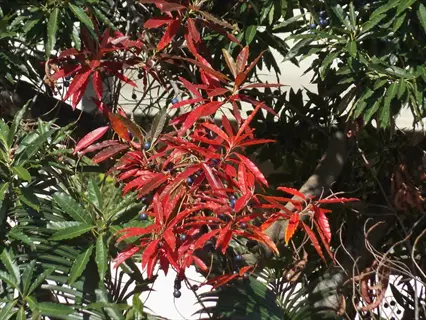
- Size: A mid-size cultivar around 1.5 m, fitting comfortably into mixed shrub borders without dominating them.
- Foliage: Its leaves are variegated with silvery-white margins, and new growth flushes bright red for strong color contrast.
- Flowers: White spring flowers appear above the colorful foliage, adding a second season of interest to the display.
- Best use: The bright variegation lights up shaded corners and pairs well with plain green evergreens nearby.
- Habit: It keeps a fairly compact, rounded shape and shares the species' preference for acidic, evenly moist soil.
- Consider: Pick this one when foliage color, not just flowers, is the main reason you want an andromeda.

Valley Valentine (Red Flowers)
- Size: A larger cultivar near 2.5 m, giving real presence as a border anchor or informal screen plant.
- Flowers: It stands out for deep red flowers, a striking departure from the usual white that most andromeda cultivars carry.
- Season: The red flower buds hold color through winter and open in spring for an extended display of interest.
- Best use: Use it where you want a bold flower color in a shaded, acidic bed alongside rhododendrons or azaleas.
- Habit: It grows in the species' slow, steady way and appreciates shelter from cold, drying winter winds.
- Consider: Choose this cultivar when red blooms and winter bud color are the look you are after.

Mountain Fire (Large Specimen)
- Size: One of the largest at around 4 m, making it a true specimen shrub or tall evergreen screen over time.
- Foliage: Its signature is fiery red new growth in spring that slowly matures to glossy dark green through the season.
- Flowers: White urn-shaped spring flowers complement the red foliage flush for a vivid two-tone spring display.
- Best use: Give it room as a standalone specimen or a backdrop where its eventual height will not crowd smaller plants.
- Habit: It is slow-growing but long-lived, rewarding patience with decades of four-season interest in the right site.
- Consider: Choose this cultivar when you have space and want the dramatic red new-growth color it is known for.
The Science Behind Its Toxicity
You might wonder, is andromeda poisonous to you and your animals. Yes it is. Every part of the plant carries a punch. The flowers, the leaves, and even the sap hold a real toxin, so you treat this shrub with care.
The culprit is a group of compounds called grayanotoxins. You will also see them written as andromedotoxin, named for the plant itself. These toxins do one thing to your body. They lock onto the sodium channels in your nerve and muscle cells and will not let them switch off.
That jammed switch keeps your vagus nerve firing. The firing drags down your heart rate and your blood pressure. Doctors have logged real cases that show how bad this gets. The plant is toxic to pets too, and your dogs, cats, and horses face the same danger from a few stray leaves.
What Makes It Toxic
- The compound: Every part of andromeda, including flowers, leaves, and sap, contains grayanotoxins, also known as andromedotoxin, which give the plant its name link.
- How it acts: Grayanotoxins bind voltage-gated sodium channels in nerve and muscle cells and prevent them from switching off, which causes continued vagal stimulation.
- Shared family: The same toxin family occurs across heath family relatives like rhododendron, kalmia, and agarista, so these acid-loving shrubs all carry similar caution.
Symptoms and Timing
- Onset: Symptoms typically begin 20 minutes to 3 hours after something eats part of the plant and usually last about 1 to 2 days.
- Signs: Reported effects include dizziness, low blood pressure, slowed heart rate or heart block, and nausea or vomiting in people and animals.
- Severity: Cases are rarely lethal in humans but can be more dangerous for pets and livestock, which makes prevention the priority.
Documented Cases
- Young child: Researchers documented a 21-month-old girl with bradycardia near 40 beats per minute after ingestion, who was treated successfully with atropine.
- Adult tea: A 76-year-old man who drank tea brewed from Pieris japonica developed bradycardia, low blood pressure, and a seizure before recovering.
- Treatment: In severe cases reported in the literature, doctors used atropine and intravenous saline to stabilize the heart rate and pressure.
Why Deer Avoid It
- The link: The very grayanotoxins that make andromeda dangerous to eat are why deer, rabbits, and livestock learn to leave the shrub alone.
- Garden benefit: This natural defense turns a safety hazard into a practical advantage, giving gardeners a reliably deer-resistant evergreen for browsed yards.
- Still cautious: Resistance is not an invitation to eat it; keep curious children and pets away and wear gloves when pruning the sap-bearing stems.
Here is the upside of all that chemistry. The same grayanotoxins that send people to the hospital are why hungry animals walk right past your shrub. Deer, rabbits, and grazing livestock taste it once and learn their lesson fast.
So your andromeda grows up as a deer resistant evergreen. It is a rare gift in yards where the herd treats your garden like a buffet. You get four-season color and a built-in defense in one plant. Just keep the warning in mind around your kids and pets, because the same trait that stops deer can hurt them too.
Many plants of the Ericaceae family, Rhododendron, Pieris, Agarista and Kalmia, contain diterpene grayanotoxins.
Lace Bugs and Other Problems
One pest does more harm to your shrub than all the rest put together. It is the andromeda lace bug, also called Stephanitis takeyai. This bug picks your plant as its top host. It feeds here far more than on any other plant in your yard.
Look at the top of the leaves. You will see fine leaf stippling in a yellow-to-gray wash. It looks like the green got bleached out in tiny dots. The first brood of the year does the worst harm. In warm states the bug runs at least four broods a year, from May through September. The eggs sit inside the leaf all winter. So the cycle starts again each spring.
The mistake most gardeners make is where they spray. The eggs and bugs live on the undersides of the leaves. A top-of-leaf spray will miss them. Aim your insecticidal soap or hort oil up under the leaves instead. That is where the bugs feed. Hold off on soil systemics like imidacloprid until the flowers fade. That way the spray never reaches the bees on your blooms.
Andromeda Lace Bug
- Identity: The signature pest is the andromeda lace bug, Stephanitis takeyai, whose primary host is Japanese andromeda rather than nearby rhododendrons.
- Damage: It causes severe yellow-to-gray stippling on the upper leaf surfaces, with the first generation of the season doing the most damage.
- Life cycle: It overwinters as eggs inside the leaf, with at least four generations per year in North Carolina that stay active from May through September.
Controlling Lace Bugs
- Target undersides: Apply treatments to the leaf undersides where eggs, nymphs, and adults actually live, since topside sprays largely miss them.
- Gentle options: Horticultural oil at the summer rate or insecticidal soap controls the insects while limiting harm to beneficial garden insects.
- Systemic timing: A soil-applied systemic such as imidacloprid is effective, but reserve it for after bloom so it does not reach flowers visited by bees.
Choosing a Resistant Species
- Resistant pick: Mountain andromeda, Pieris floribunda, is highly resistant to the lace bug and is the best substitute where the pest is a recurring problem.
- Site matters: Lace bug pressure worsens in full sun, so a shadier, sheltered position reduces infestations on susceptible Japanese andromeda.
- Long-term fix: Combining the resistant species with a good site is far more durable than repeated spraying season after season.
Other Diseases to Watch
- Root and crown rot: Phytophthora root and crown rot strikes in soggy soil, which is why sharp drainage and avoiding waterlogging matter so much.
- Leaf and stem issues: Fungal leaf spot and dieback can appear in crowded, humid conditions, so spacing for air circulation helps prevent them.
- Winter burn: Brown, scorched leaves in late winter usually mean cold wind desiccation rather than insects, and a sheltered site prevents it.
Naming the cause points you straight to the cure. Stippling on top of the leaf means lace bugs. Wilting in soggy soil points to Phytophthora root rot. Dark spots in crowded shade suggest leaf spot. Brown, scorched edges in late winter are wind burn, not bugs at all.
Here is the lasting fix if lace bugs keep coming back. They get worse in full sun, so a shadier, sheltered spot already helps. Even better, just swap in a tougher plant. The one you want is mountain andromeda. Its other name is Pieris floribunda. It shrugs off the bug that wrecks its close cousin.
Mountain Andromeda (Pieris floribunda) is highly resistant to this lacebug, and it should be utilized in place of Japanese andromeda wherever possible.
5 Common Myths
Andromeda is just a smaller, less interesting rhododendron that you can plant and care for in the exact same way.
They share the heath family and acid soil needs, but andromeda has distinct urn-shaped flowers, a different main pest, and its own care quirks.
Because andromeda holds its leaves all winter, it is a tough plant that will grow fine in ordinary garden soil anywhere.
Andromeda is a calcifuge that only thrives in acidic soil between pH 4.5 and 6.0 and fails in chalky or alkaline ground.
The plant is called andromeda, so its correct botanical name must still be in the genus Andromeda today.
Its modern botanical name is Pieris japonica; Andromeda japonica is only a former synonym that gave the shrub its common name.
Andromeda flowers are pretty and fragrant, so they and the leaves are perfectly safe to handle and harmless to pets.
Every part contains grayanotoxins that are poisonous to pets, livestock, and people, and handling sap can irritate skin.
If andromeda leaves get the gray stippled look from lace bugs, the plant is dying and should be removed.
Lace bug damage is mostly cosmetic and treatable; healthy plants recover, and the resistant mountain andromeda avoids the problem.
Conclusion
The andromeda plant gives you something to look at every month of the year. You get coppery new leaves in spring, drooping white flowers, green in summer, and tidy buds all winter. All of it comes from one slow shrub. Gardeners love that four-season interest, so they keep on planting Pieris japonica in the shade.
Get the site right and the rest is light work. Andromeda wants acidic soil near pH 4.5 to 6.0. It also wants steady moisture, partial shade, and shelter from cold wind. Prune it lightly once the blooms fade, then leave it be. It grows about 8 to 10 feet tall over many slow years, so plan for that size now.
Two facts shape how you live with it. Every part of the plant holds toxins called grayanotoxins. So it is bad for people, dogs, cats, and horses to eat. The same toxin is why the shrub is reliably deer resistant. The andromeda lace bug is the one real pest. You beat it without sprays by planting in shade. Where the bug runs heavy, plant the resistant mountain andromeda instead.
This shrub is slow and long-lived, so your first choices matter most. Match the cultivar to your space. Got chalky or alkaline ground? Skip it and grow andromeda in a pot of acidic mix. And put it where kids and pets won't snack on it. Do that, and andromeda is one of the easiest evergreens you will ever own.
Glossary
- andromeda lace bug
- The signature insect pest of Japanese andromeda that stipples the upper leaf surface gray.
- Award of Garden Merit
- An RHS award given to plants that perform reliably well in ordinary garden conditions.
- broadleaf evergreen
- A shrub or tree that keeps its wide, flat leaves all year instead of dropping them in fall.
- calcifuge
- A plant that needs acidic soil and will not tolerate chalky or limey ground.
- Ericaceae
- The heath family of plants, which includes rhododendrons, azaleas, and andromeda.
- grayanotoxin
- A natural toxin in andromeda and its heath family relatives that is poisonous to people and pets if eaten.
- raceme
- A long flower cluster where individual blooms hang on short stalks along a central stem.
- soil pH
- A 0 to 14 scale that measures how acidic or alkaline your soil is, with lower numbers meaning more acidic.
External Sources
Frequently Asked Questions
Do andromeda plants like sun or shade?
Andromeda grows best in partial or dappled shade, though it tolerates full sun where summers stay cool and soil stays moist.
Can andromeda plants grow in pots?
Yes. Andromeda grows well in pots, which is ideal where native soil is alkaline since you control the acidic mix.
What is so special about Andromeda?
Andromeda is special for its true four-season interest and deer resistance:
- Coppery-red new growth in spring
- Fragrant urn-shaped flowers like lily-of-the-valley
- Glossy evergreen leaves all year
- Decorative flower buds on dark stems through winter
- Deer resistance from its grayanotoxins
Do andromeda like coffee grounds?
Andromeda is an acid-loving shrub that needs soil around pH 4.5 to 6.0, so mildly acidic organic matter suits it, used in moderation.
How often should I water andromeda?
Keep the soil evenly moist, supplying about one inch of water per week and more during heat or for new plantings.
Can you cut back andromeda?
Yes. Andromeda needs only light pruning, done right after it finishes flowering so you keep next season's flower buds.
What are the benefits of Andromeda plants?
Andromeda offers several garden benefits:
- Year-round evergreen structure and four-season color
- Deer and rabbit resistance from its toxins
- Low-maintenance, slow growth needing little pruning
- Shade tolerance for woodland and foundation beds
- Fragrant, pollinator-friendly spring flowers
Is Andromeda invasive?
No. Andromeda is slow-growing and not flagged as invasive; it stays where it is planted and spreads very little on its own.
How many years to Andromeda?
Andromeda is slow-growing and long-lived, so it takes many years to approach its full mature size and rewards patience.
Is Andromeda an evergreen?
Yes. Andromeda is a broadleaf evergreen, holding its glossy leaves and decorative flower buds through all four seasons.