
Introduction
That soggy corner of your yard where the grass turns to mush and nothing will grow is not a dead loss. It is the one spot where bog plants will outshine anything else you could plant. The exact wet ground that rots your roses and drowns your tomatoes is what you need for these plants to put on their best show.
I killed my first pitcher plant with kindness. I potted it in rich compost, watered it from the tap, and gave it a shady spot I thought it would like. It was brown and mushy inside a month. The mineral water and the fertilizer in that soil did the damage, the two things a bog plant cannot survive.
Most guides hand you half the story. You get a long plant list full of Latin names, or you get build steps for a liner and a pile of peat. You rarely get both in one place, and you almost never get the care science that keeps your plants alive. You will get all of it here: a curated plant list, the real growing rules, and the water-cleaning story that makes a bog garden worth the dig.
Here is the part that trips up most people. These moisture-loving plants break two rules that every other plant in your garden follows. You never feed them, because fertilizer poisons your bog, and you give them full sun for at least 6 hours a day. Plant them in rich soil under a shade tree and you get sulking, dying stems. Give them lean, acidic soil and bright light, and you get thriving plants.
A bog garden also pulls its weight far beyond looking good. As interest in rain gardens and sustainable drainage keeps growing, you may not know that wetland plants act like sponges for runoff. Your bog soaks up storm water and pulls nutrients out of it, which helps protect your local streams and ponds. Turn that drainage headache into a living mini wetland, and you are ready to meet the 8 plants that do the job best.
8 Best Bog Plants to Grow
One May morning I watched the blue flag iris open in the low corner by the kitchen window. A downspout keeps that ground soggy all year. I had planted the clump there two springs back, in the muddy patch I used to apologize for. Now it holds the showiest violet flowers in the whole yard. Your wettest corner can become your best one too.
That bloom is why I trust bog plants to fix the damp spots you keep fighting. Big lists try to cover everything for you. LawnLove names 26 plants and Gardeners' World stops at 10, but a long roster leaves you guessing which ones earn their space.
So I kept my list of the best bog plants to just 8. It spans bright ornamentals and the strange carnivores. That way you see the full range a bog can hold, not one narrow slice. Each plant below lists its common and scientific name, light needs, mature size, and USDA zone. Many suit zones 3 to 9, and that data is what makes a list worth keeping.
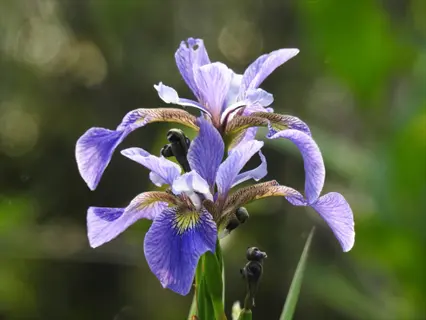
Blue Flag Iris
- Scientific name: Iris versicolor, a hardy native perennial that thrives along the wettest edges of a bog garden or pond margin.
- Light: Grows best in full sun, blooming most freely with at least six hours of direct light each day.
- Size: Reaches about 2 to 3 feet (60 to 90 cm) tall, forming upright clumps from spreading underground rhizomes.
- Zones: Suited to USDA hardiness zones 3 to 9, returning reliably each spring once established in wet ground.
- Bloom: Produces violet-blue flowers in late spring and early summer that draw pollinators to the bog.
- Care: Wants consistently moist, acidic soil and tolerates standing water at the roots far better than most garden plants.
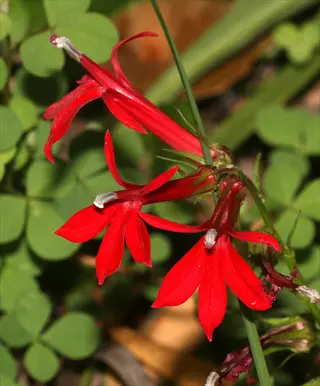
Cardinal Flower
- Scientific name: Lobelia cardinalis, a native perennial prized for vivid red flower spikes in a moist setting.
- Light: Performs in full sun to part shade, though richer color and sturdier stems come with more direct sun.
- Size: Grows roughly 2 to 4 feet (60 to 120 cm) tall, sending up tall spikes above a low rosette of leaves.
- Zones: Reliable in USDA hardiness zones 3 to 9, where it favors consistently damp, acidic ground.
- Bloom: Brilliant scarlet flowers appear in mid to late summer and are a strong magnet for hummingbirds.
- Care: Needs soil that never dries out and benefits from a moist bog edge rather than a baked, dry border.
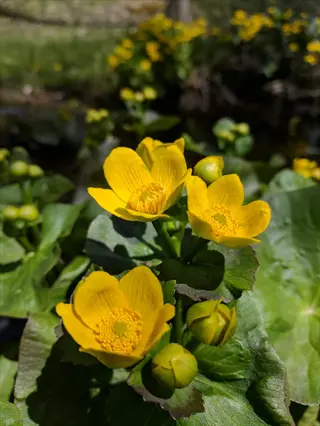
Marsh Marigold
- Scientific name: Caltha palustris, an early-flowering native perennial that brightens wet ground in spring.
- Light: Grows in full sun to light shade and flowers earliest where it gets generous morning light.
- Size: Stays compact at about 1 to 2 feet (30 to 60 cm) tall, forming neat mounds near the water line.
- Zones: Hardy in USDA zones 3 to 9 and one of the first bog plants to bloom each season.
- Bloom: Cheerful yellow, buttercup-like flowers open in early spring before many other plants wake up.
- Care: All parts are toxic if eaten, so site it where it adds color but stays away from foraging pets and children.
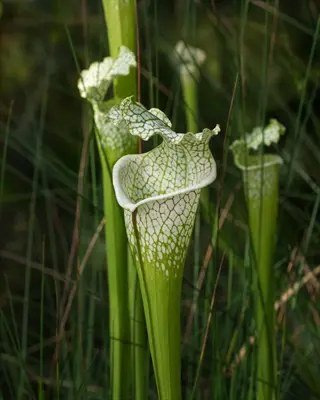
American Pitcher Plant
- Scientific name: Sarracenia species, a carnivorous bog native that traps insects in tall, hollow pitchers.
- Light: Wants direct, full sun for the brightest pitcher color and the most vigorous trapping.
- Size: Forms clumps roughly 1 to 3 feet (30 to 90 cm) tall depending on species, with upright tube-shaped leaves.
- Zones: Many hardy species suit USDA zones 6 to 9, though some tolerate colder zones with a winter rest.
- Habitat: Prefers very water-saturated areas of the bog and is native across the southeastern United States.
- Care: Needs mineral-free water and an acidic peat-and-sand mix, and must never be fertilized or fed meat.
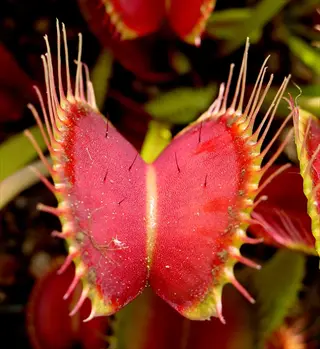
Venus Flytrap
- Scientific name: Dionaea muscipula, the famous snap-trap carnivore native to a small area of the Carolinas.
- Light: Demands bright, direct sun to keep traps red inside and to power healthy growth.
- Size: Stays small at about 4 to 6 inches (10 to 15 cm) across, making it ideal for a container mini-bog.
- Zones: Hardy outdoors in roughly USDA zones 7 to 9 and needs a cool winter dormancy to survive long term.
- Habitat: Grows naturally in sunny, acidic, nutrient-poor wetlands and catches its own insects to feed.
- Care: Water only with rainwater or distilled water, since tap minerals quickly damage this sensitive plant.
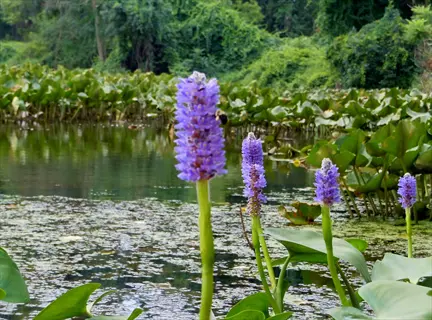
Pickerel Weed
- Scientific name: Pontederia cordata, a vigorous native marginal that thrives in the wettest parts of a bog or pond edge.
- Light: Grows best in full sun, where it flowers most freely and forms dense, glossy stands.
- Size: Reaches about 2 to 3 feet (60 to 90 cm) tall, spreading by underground rhizomes into bold clumps.
- Zones: Hardy in USDA zones 3 to 10, tolerating standing water several inches deep over its roots.
- Bloom: Spikes of blue-purple flowers appear through summer and attract bees and other pollinators.
- Care: Vigorous spread means it suits larger bogs and ponds rather than a tiny container planting.
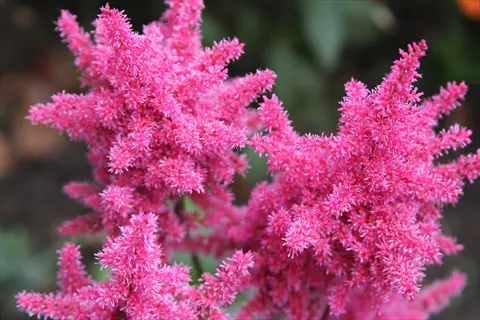
Astilbe
- Scientific name: Astilbe species, a clumping perennial valued for feathery flower plumes in a moist setting.
- Light: Grows in part shade to full sun as long as the soil stays consistently moist and never bakes dry.
- Size: Ranges from about 1 to 3 feet (30 to 90 cm) tall depending on variety, forming ferny mounds.
- Zones: Reliable in USDA zones 3 to 8 and a useful pick for the moist, lightly shaded edge of a bog.
- Bloom: Soft plumes in pink, red, or white rise above the foliage in early to midsummer.
- Care: Suffers quickly if it dries out, so it pairs well with steadier wet ground than a typical border offers.
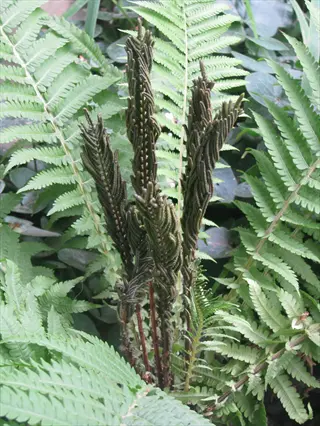
Ostrich Fern
- Scientific name: Matteuccia struthiopteris, a tall native fern that adds bold green texture to a damp bog edge.
- Light: Prefers part shade to full shade and keeps its best color out of harsh, drying afternoon sun.
- Size: Grows about 3 to 5 feet (90 to 150 cm) tall, unfurling large upright fronds in a vase shape.
- Zones: Hardy in USDA zones 3 to 7 and spreads steadily by runners in consistently moist soil.
- Foliage: Lush, feathery fronds give a woodland-wetland look and contrast well with flowering bog plants.
- Care: Wants steady moisture and tolerates wet ground, making it a strong foliage anchor for shadier bog corners.
Notice how this mix mingles ornamentals with carnivores like the pitcher plant. That pairing gives you color from early spring marsh marigold straight through the late-summer cardinal flower, so the bog never goes dull. The traps add their own oddball charm and pull in insects all season.
Most of these are native bog plants, and that matters more than looks. Native perennials feed local pollinators and give frogs and beneficial insects a damp place to live. Plant a few and your soggy corner starts working as real habitat, not just a pretty patch.
What Bog Plants Are
A bog plant is one built for soggy, acidic, low-nutrient soil that stays wet and sits in full sun. Bog plants thrive in the kind of ground that drowns or starves most garden plants. That single trait, a tolerance for wet feet and lean conditions, is what sets them apart.
People often mix up bog plants with marginal plants, but the two want different homes. Marginal plants sit at a pond edge with their crowns in shallow standing water. True bog plants want soil that stays damp, not flooded. Get that distinction right and you place each plant where it grows well.
So why does a bog stay so wet? The USDA Forest Service explains it as a plain matter of soil layers. Sandy soil up top drains fine, but a near-impermeable organic layer sits 2 to 4 feet (0.6 to 1.2 m) below the surface. That buried layer traps water and holds the water table high, which keeps the ground soaked year-round. The result is waterlogged soil that never really dries out.
Here is the plain fact behind that wetness. All that standing water and decaying peat turn the ground sour and lean. Constant waterlogging starves the soil of oxygen. As plant matter breaks down, it releases acids. You end up with acidic soil that is nutrient-poor by nature. That chemistry is the real reason only certain plants can grow in a bog, and why peat sits at the heart of every bog soil mix.
Think of a bog as a slow, soggy sponge that stays damp and sour, not a clear, open pond. This is the picture to hold in your head when you ask what is a bog garden. Bogs form on their own in cool, wet regions and across parts of the United States. Gardeners then recreate those same conditions on purpose to grow plants nothing else can handle.
True bog plants want soil that stays evenly moist but not deeply flooded, while marginal plants sit with their crowns in shallow standing water at a pond edge. Knowing the difference helps you place each plant where it will actually thrive.
Carnivorous Bog Plants
Carnivorous bog plants are the show-stoppers of any wet garden, and you have far more to choose from than you might guess. The US Botanic Garden counts more than 720 species worldwide, from the famous pitcher plant to traps you need a hand lens to see. If you live in the right climate, you can grow several at home.
You should know why a Venus flytrap, a sundew, or a butterwort even bothers to hunt. Here is the plain fact. Bog soil holds almost no nutrients. A normal plant pulls nitrogen from the ground, but here you have none to give. So the plant gets nitrogen from prey instead, which means the bug feeds your plant, not the soil. You never add plant food.
You have more choices than you think, and Florida has the highest number of carnivorous plant species of any US state. The four main groups below each catch prey in a different way. Pick the trap style that fits your space and your patience, and you will get a plant you actually enjoy watching.
Pitcher Plants
- How they trap: Slippery, hollow leaves shaped like tubes lure insects in with nectar and color, then trap them in a pool of digestive fluid below.
- Where they grow: American pitcher plants in the genus Sarracenia prefer the most water-saturated parts of a bog and are native to the southeastern United States.
- Conditions: Give your pitcher plants direct full sun and an acidic peat-and-sand mix, and water only with mineral-free water for the brightest pitchers.
- Good to know: You get striking, upright color, and these rank among the easiest carnivores to grow outdoors in a sunny bog garden.
Venus Flytrap and Sundews
- How they trap: The Venus flytrap snaps shut on insects that touch its trigger hairs, while sundews in the genus Drosera catch prey on sticky, glistening droplets.
- Where they grow: Both grow in sunny, acidic, nutrient-poor wetlands, with the Venus flytrap native to a small region of the Carolinas.
- Conditions: Sundews and butterworts cannot survive complete flooding, so keep your soil moderately wet rather than drowned.
- Good to know: In good light your plants catch their own insects, so never offer meat, which a carnivore cannot digest.
Butterworts
- How they trap: Soft, greasy-looking leaves in the genus Pinguicula hold tiny insects on a sticky surface and slowly digest them.
- Where they grow: Butterworts favor moderately wet bog conditions and dislike a long, complete flood.
- Conditions: Like other carnivores, give your butterworts bright light, acidic low-nutrient soil, and mineral-free water.
- Good to know: The small size makes a butterwort a good fit for your patio container bog alongside flytraps and small pitcher plants.
Bladderworts
- How they trap: Underwater bladders in the genus Utricularia suck in tiny prey the instant a hair at the bladder mouth feels a touch.
- Where they grow: Bladderworts prefer very water-saturated spots and live in the wettest parts of natural bogs.
- Conditions: A bladderwort thrives in still, acidic, nutrient-poor bog water and needs no fertilizer of any kind.
- Good to know: The traps rank among the fastest movements in the plant world, faster than most animals can react.
There are trigger hairs located at the mouth of the bladder; when a tiny insect triggers this mechanism, it is sucked inside the bladder in less than 10 thousandths of a second, making the bladderworts faster than most animals in reaction time.
Think about that comparison for a second. A bladderwort fires its trap in under 10 thousandths of a second, quicker than most animals can even react. You are growing an active hunter, not a quiet oddity sitting in the mud waiting for lunch.
One last rule matters more than any care tip. Many native carnivores are now rare in the wild. So always buy nursery-grown plants and never dig one out of a natural bog. You get a healthier plant this way. And you leave the wild bog intact for the next person who wants to see a flytrap snap.
How to Build a Bog Garden
Building your own wet bed is the part that scares most people off, but the steps are simple once you see them laid out. Learning how to create a bog garden comes down to two things, holding water in and letting the worst of it back out. Get that balance right and the plants almost take care of themselves.
Start on a dry, sunny site and dig down about 12 inches (30 cm), though some growers go as deep as 18 inches (45 cm). Drop a pond liner into the hole to trap moisture so the bed stays soggy. Then fill it with a peat and sand mix of roughly 80% peat moss and 20% sharp sand, the ratio Extension offices have backed for years.
By midsummer the in-ground bog under my kitchen window had gone sour. The water sat black and still, the surface smelled like an old pond, and every plant in there sulked with yellow, limp leaves. I had skipped the drainage holes when I laid the liner, so the bed was a sealed bucket with nowhere for stale water to go. I pulled back the edge, pierced the sides every few inches with a screwdriver, and topped it off with fresh rainwater. Within three weeks the pitcher plants stood back up and pushed out new traps.
Short on space? A container bog garden works just as well on a balcony or patio. Use a pot at least 8 inches (20 cm) deep and 12 inches (30 cm) wide, fill it with the same 80/20 mix, and set it in a saucer kept full of water. The pot wicks moisture up from below while rain keeps the soil acidic, just like a natural fen does.
Choose a site that gets full sun for at least six hours a day, since most bog plants need bright light to grow strong and flower well.
Dig down about 12 inches (30 cm), then lay a pond liner in the hole to hold moisture in the bed and stop it draining away too fast.
Poke holes along the sides of the liner so excess water can seep out slowly, because stagnant trapped water will rot the roots and kill the plants.
Fill the bed with a mix of about 80% peat moss and 20% sharp sand, then wet it through so the bed is evenly soggy before you plant.
Set bog plants into the moist mix at their natural depth, then water them in with rainwater or distilled water rather than tap water.
Refill the bog with rainwater during dry spells so the soil never dries out, since a rain barrel keeps the bed both wet and acidic.
The most common reason a homemade bog fails is poor drainage that leaves stagnant water sitting around the roots. Always pierce the liner along the sides so water moves through slowly instead of going stale and suffocating the plants.
Bog Plant Care Essentials
Most care lists tell you to keep the soil moist and leave it there. That advice skips the one thing that kills more carnivorous bog plants than anything else. Bad water. Good bog plant care starts with what you pour into the pot, not just how often.
The plants in a bog grew up in lean, soggy, mineral-poor ground for thousands of years. Tap water carries dissolved minerals that build up in that low-nutrient soil like scale inside a kettle. Over weeks those minerals poison a plant built for almost nothing. So you want mineral-free water every time you water.
Use rainwater, melted snow, or distilled water and your plants stay happy. Tap water is safe only if it tests under 100 parts per million of dissolved solids and below pH 8, which rules out most home taps. When in doubt, default to rain or distilled and skip the guesswork.
The rest of the routine is short. Give your plants full sun, meaning at least 6 hours of direct light each day, so they grow strong and color up. And use no fertilizer, not even a weak dose, because feeding burns roots that evolved to pull nutrients from bugs instead of soil.
Do not use tap water or mineral water on carnivorous plants. Rainwater, melted snow or distilled water are ideal.
One last step trips up new growers. Native U.S. carnivores like pitcher plants and flytraps need a cool winter dormancy to live past their first year. They go quiet and look half dead through the cold months, and that rest is normal. Skip it and the plant fades after a season, leaving you to wonder what went wrong when nothing did.
Bog Plants as Water Filters
Clear, frog-friendly water now collects in the little downspout bog by my kitchen window, and I watch tadpoles wriggle through it most mornings. That same spot used to be a muddy puddle that washed silt across the lawn every time it rained hard. I dug a shallow basin, packed it with peat and sand, and planted a few moisture-lovers at the mouth of the gutter. Now the gutter dumps its load and the plants drink it down before it reaches the grass.
That backyard fix points to a real strength of bog plants water filtration. These plants soak up the dirty water that rolls off your roof, your driveway, and your lawn. As they pull water through their roots, they grab the nitrogen and phosphorus that would otherwise feed algae in a nearby creek. A bog garden works much like a rain garden, holding runoff in place long enough for the plants to clean it.
The hard numbers come from a 2024 study in the journal Plants. The team grew wetland plants in built water systems. Then they checked how much pollution the roots pulled out over 180 days. A mixed planting took out about 80.8% of the ammonium nitrogen. It also grabbed roughly 86.7% of the phosphate in the water. And 80% to 87% of the organic matter dropped out too.
One detail from that table matters most. The mixed planting beat the single-species plot on both nitrogen and phosphorus removal. When you stuff a bog with several kinds of plants, their roots fill the soil at different depths and work different parts of the water. So the practical move is simple. Plant a polyculture, not a monoculture, and your living filter does more work.
Be honest about what that study proves. The team used a built water system, not a backyard bog. So your home garden will not hit those exact numbers. Still, the data backs the phytoremediation idea behind bog plants. That just means plants pull pollution out of water. The University of Florida extension sees this at home too. They say golden canna works like a filter and strips nitrogen and phosphorus from the water that flows past it.
So a patch of bog plants does double duty in your yard. It looks good, and it quietly helps your plants absorb runoff before that water carries silt and fertilizer into the storm drain. Even a small basin under a downspout keeps a surprising amount of mess off your lawn and out of the local creek.
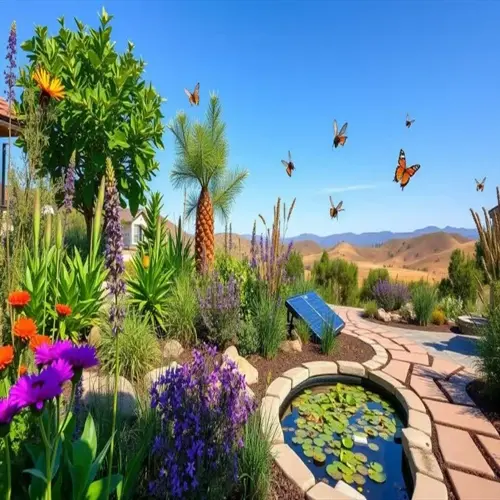
A bog garden can add a miniature wetland habitat to your backyard. These interesting features bring together a wide array of water-loving plants and support the health of local waterways by absorbing runoff.
5 Common Myths
Bog plants are swamp weeds that grow in deep shade and need no sun, so any dim wet corner will do.
Most bog plants demand full sun for at least six hours a day; in shade they grow weak, leggy, and rarely flower well.
Bog plants live in water, so giving them rich soil and fertilizer will make them grow faster and bigger.
Bog plants are adapted to low-nutrient soil; fertilizer can burn and kill them, which is why you never feed a bog garden.
Any tap water is fine for bog plants because they sit in water all the time and clearly love moisture.
Tap water minerals build up and harm bog plants, especially carnivores; use rainwater, melted snow, or distilled water instead.
Carnivorous bog plants like Venus flytraps must be hand-fed insects or raw meat to survive indoors.
They catch their own insects in good light and cannot digest meat; feeding them meat rots the traps and harms the plant.
A bog garden is just a permanently flooded pit, so stagnant standing water is exactly what the plants want.
Bogs need consistently moist, oxygenated conditions; stagnant water from poor drainage suffocates roots and kills the plants.
Conclusion
The whole secret to bog plants comes down to three things you now know cold. I keep a watering can of rain by my own bog so I never reach for the tap out of habit. Give your plants the right soil, the right water, and the right light, and that soggy corner you used to fight stops being a problem. It turns into the best spot in your yard.
Hold onto the load-bearing facts. Your plants want full sun for at least 6 hours a day to stay healthy and bloom. Mix your soil at roughly 80% peat moss and 20% sharp sand to keep it acidic and loose. Water only with mineral-free water like rain or distilled, and never reach for fertilizer. That last rule trips up more people than any other.
One more thing matters before you shop. Many native carnivorous plants are threatened in the wild, so buy nursery-grown stock and never dig them from a roadside or a swamp. A pitcher plant you collect yourself often dies anyway, and you leave a gap in a fragile place that took decades to fill.
Picture your bog garden a year from now. Frogs tuck into the damp edges and bees work the cardinal flower. The rain that used to pool and stagnate now feeds plants that clean it. That water gets filtered before it ever reaches a storm drain. Get the conditions right once, and this little wetland mostly runs itself.
Glossary
- Bog plant
- A plant adapted to grow in soggy, acidic, low-nutrient soil that stays wet and sits in full sun.
- Carnivorous plant
- A plant that traps and digests insects to get nutrients the poor soil cannot provide.
- Dormancy
- A cool winter rest period that many native carnivorous plants need to survive from year to year.
- Marginal plant
- A plant that grows with its crown in shallow standing water at the edge of a pond, unlike a true bog plant.
- Mineral-free water
- Water with very few dissolved minerals, such as rainwater, melted snow, or distilled water, safe for bog plants.
- Peat moss
- A spongy, acidic, low-nutrient material made from decomposed bog plants, used as the main part of bog soil mixes.
- Phytoremediation
- The use of living plants to remove pollutants such as nitrogen and phosphorus from water or soil.
- Sharp sand
- Coarse, gritty horticultural sand mixed into bog soil to improve airflow and structure around the roots.
External Sources
Frequently Asked Questions
What is a bog plant called?
Bog plants are also called wetland, marsh, or moisture-loving plants, and many of the most famous ones are carnivorous plants.
What exactly defines a bog plant?
A bog plant is one adapted to grow in soggy, acidic, low-nutrient soil that stays wet and sits in full sun.
What plants grow well in boggy soil?
Iris, cardinal flower, marsh marigold, pitcher plants, and many ferns and sedges grow well in boggy soil.
Is ginger a bog plant?
Common edible ginger is not a true bog plant; it likes moist but well-drained soil, not waterlogged ground.
Which plants are special to bogs?
Carnivorous plants like pitcher plants, sundews, butterworts, and bladderworts are most special to bog habitats.
Do bog plants really clean water?
Yes, wetland plants absorb runoff and can remove most nitrogen and phosphorus from the water around them.
Why can't you water bog plants with tap water?
Tap water carries dissolved minerals that build up and harm bog plants, especially carnivores, so use rainwater or distilled water.
What soil do bog plants need?
Bog plants need an acidic, low-nutrient mix of about 80 percent peat moss and 20 percent sharp sand.
Can you grow bog plants in a container?
Yes, you can grow a mini-bog in a deep container at least 8 inches deep using a peat and sand mix.
What is a bog in America?
A bog is a wet, acidic, low-nutrient wetland where the water table stays high and peat builds up over time.