
To remove chocolate vine, you cut it to the ground, dig out the roots, and then keep treating the regrowth for a full season. There is no one-weekend fix. The plant comes back from the base and from any stem that has rooted into the soil. You have to outlast it, not just hack at it once.
Cut an established vine down and it shrugs the loss off. Within weeks new shoots push up from the crown, and fresh stems sprout from every node that touched the ground. That is the trap. One pass with the loppers feels like progress, but the plant has already set up backup growth in a dozen spots. This is why you treat removal as a plan that runs across the whole growing season.
The vine is stubborn because it spreads on its own without seeds. The Wisconsin DNR notes it roots wherever its stem nodes press into the soil, so a single plant turns into a web of crowns over time. NC State Extension has documented roots running 22 feet (6.7 m) from one vine. When you cut and walk away, you leave most of that hidden network alive underground. To control invasive vine growth like this, you have to deal with the roots, not just the leaves you can see.
Cut all stems to the ground, then bag and dispose of the cut material rather than composting it, since stem pieces can re-root.
Dig out as much of the root system as you can, tracing roots that may run well away from the main crown.
Cover small patches with cardboard and wood chips, or apply a foliar herbicide of triclopyr or glyphosate when the vine is fully leafed-out.
Check for regrowth through the season and re-cut or re-treat as needed, since one pass rarely finishes the job.
You can go after it by hand. The IUCN Global Invasive Species Database calls for repeated cutting and digging all season. Then you cut it hard to the ground at the end of summer. Each cut drains a little more energy from the roots. For a small patch, you can smother it instead. Lay down cardboard and pile wood chips on top to block light. Starved of sun, the shoots weaken and the crown gives out over time.
When the patch is large or the roots run too far to dig, a foliar herbicide is the practical way to kill akebia vine for good. The Wisconsin DNR recommends a spray of 2% to 5% triclopyr or 2% to 4% glyphosate. Apply it when the vine is fully leafed-out. Full leaves pull the herbicide down into the roots, the part that keeps coming back. Always read and follow the label directions on the product you buy. The label is the law. It sets the rate, timing, and safety steps for your yard.
How you handle the debris matters as much as the cutting. Bag the cut material and throw it out. Never compost it. Stem pieces can root in a compost pile or a brush pile and start a brand new colony. To fully remove chocolate vine, you watch the bare ground closely after your first round. Fresh shoots will appear, and you re-cut or re-treat each one as it shows. Plan on at least one full season of follow-up, and check again the next spring.
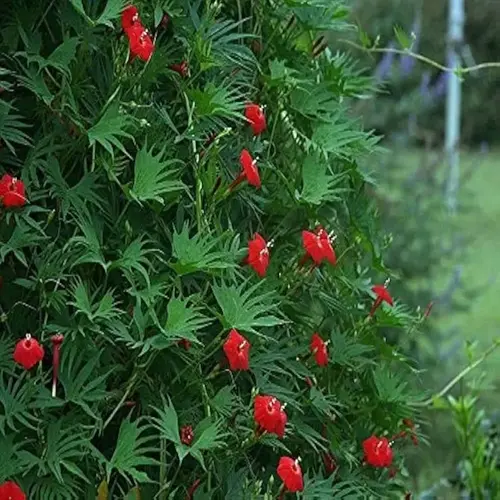
Once the ground stays clear, fill the gap with something that belongs there. A bare patch invites the akebia, or another weed, to move right back in. Plant a well-behaved native climber instead. Coral honeysuckle is a strong pick for much of the eastern United States. It gives you red tubular flowers that feed hummingbirds, and it climbs a trellis without swallowing your whole yard. You get the cover you wanted, minus the years of fighting it back.
Read the full article: Chocolate Vine: Complete Care Guide