
Introduction
Few climbers earn their keep the way chocolate vine does in spring. The small maroon flowers give off a faint, spicy scent. Many gardeners read it as chocolate. One healthy plant can drape a whole arbor or fence in a single season. You get fragrance, fast cover, and an odd purple fruit in fall, all from a vine that asks for almost nothing.
That speed is the whole story, good and bad. The plant goes by the name Akebia quinata. This fast-growing vine can add up to 40 feet of new growth in one season, says the Wisconsin DNR. It first came to the United States in 1845 as a garden plant. So the vine you plant for its looks has climbed American fences for almost 180 years.
Here is where most guides let you down. They sell you the fragrant vine and the tasty fruit. Then they bury the hard truth or skip it. This guide does the opposite. It pairs the plant's real beauty with facts from .gov sources and science journals. That way you can decide with clear eyes whether to plant it and how to keep it in check.
The trade-off is simple. Chocolate vine is one of the easiest fragrant climbers you can grow. It is also one of the hardest to keep in bounds. That is why it now counts as an invasive vine in 19 US states and the United Kingdom. The rest of this guide walks you through it. You will learn how to grow it, what makes the flowers smell like chocolate, and why the fruit needs a second plant to set. You will also get the best cultivars and see how it stacks up against wisteria and clematis.
What Is Chocolate Vine?
The plant you call chocolate vine is a twining woody vine with the name Akebia quinata. It sits in the plant family Lardizabalaceae. The vine is native to China, Japan, and Korea. You may also see it sold as five-leaf akebia, fiveleaf akebia, or raisin vine.
The name throws people off at first. It comes from the faint chocolate scent of the small spring flowers, not from any chocolate flavor in the plant. The maroon blooms give off a soft, spicy fragrance on a warm day. So the name describes the smell, and nothing else.
Spotting it gets easy once you know the leaves. Each leaf splits into five rounded leaflets that fan out from one point, much like fingers spreading from the palm of your hand. The leaflets run about 1.5 to 3 inches (3.8 to 7.6 cm) long, which is why the five-leaf name stuck. This palmate shape is the fastest way to tell the plant apart from other climbers.
Your climate decides how the vine acts through the year. In cold regions it drops its leaves and goes deciduous. In warmer zones it stays semi-evergreen to evergreen and keeps its leaves. The vine reaches up to 40 feet (12 m) at full size, and experts rate its growth rate as Rapid. Growers first brought it to the United States in 1845 as an ornamental, and it has spread far since then.
How to Grow Chocolate Vine
Three springs after I planted one small vine by the back-garden gate, the chocolate vine ate the entire cedar arbor over it. Stems wove through every slat, draped over the top, and hung down the far side in a green curtain that brushed your head when you walked under it. I cut it back twice that summer just to find the latch again.
That is the heart of chocolate vine care. The plant is easy to grow and tough to slow down, so most of your real work is restraint. NC State Extension rates its maintenance High, and the Wisconsin DNR notes it can put on up to 40 feet of growth in a single season. Give it a strong structure and a pruning plan from day one.
The good news is that growing chocolate vine asks little of the soil or the site. It handles full sun to partial shade, and even deep shade under 2 hours of light, per NC State Extension. It grows in clay, loam, silt, or sand as long as you have ordinary well-drained soil. Once settled, it shrugs off drought, holds slopes against erosion, and deer leave it alone.
The one thing it will not forgive is a flimsy support. Set a sturdy trellis, arbor, or fence before you plant, then follow the simple flow below to get it started right.
Choose a site from full sun to deep shade with well-drained soil, and set a sturdy trellis, arbor, or fence in place before planting so the twining stems have something to climb.
Set the plant at the same depth it grew in its pot, firm the soil gently around the roots, and water it in thoroughly to settle the soil and remove air pockets.
Keep the soil evenly moist through the first growing season while roots establish, then ease off to deep watering only during dry spells once the plant is settled.
Tie young stems loosely to the support to direct early growth, then prune hard right after flowering, since blooms appear on old wood and the vine grows back quickly.
Timing your cuts matters more than how much you take off. The flowers form on old wood, so a hard prune right after the spring bloom keeps the plant tidy without costing you next year's chocolate-scented show. Wait too long and you trim away the very stems that would have flowered.
Chocolate vine is rated High maintenance and can grow up to 40 feet in a season, so plan on heavy, regular pruning rather than a plant-it-and-forget-it climber.
Flowers, Fragrance and Fruit
One still spring morning a spicy, sweet smell drifted off the cedar arbor by the back gate. It reached the kitchen window. I went out and found the chocolate vine flowers open in dark maroon clusters, each one no bigger than a fingernail. That faint scent is why people plant this vine. They forgive almost everything else about it.
The chocolate vine fragrance does most of the selling. But the show has three parts worth knowing. You get the small spring blooms. You get the odd sausage-shaped pods. And you get the question every grower asks, which is why a healthy plant so often skips fruit. The list below walks through each part with plain facts.
The chocolate-scented flowers
- Bloom time: Flowers open in mid-spring on pendulous racemes, appearing on old wood, so any hard pruning is best done right after flowering finishes.
- Color and size: Blooms are red-purple to maroon or chocolate-brown and under 1 inch (2.5 cm) across, small but produced in noticeable clusters along the stems.
- The fragrance: The scent is a faint, spicy chocolate-vanilla note, though how strong it reads varies by person, weather, and time of day.
The edible sausage-shaped fruit
- Appearance: Fruit is a purple to lavender sausage-shaped pod about 2 to 4 inches (5 to 10 cm) long that splits open along one side in fall to reveal the pulp.
- What you eat: The sweet white inner pulp is edible and is often compared to dragon fruit inside, while the tiny black seeds and the thicker rind are usually not eaten.
- How often it fruits: Fruit is only rarely produced and holds 100 to 200 tiny black seeds, so a heavy crop is the exception rather than the rule for most gardeners.
Why your vine may not fruit
- Cross-pollination: The flowers self-pollinate poorly, so a lone vine rarely sets fruit and you typically need two genetically different plants nearby.
- Hand-pollination: Where a second plant is not possible, transferring pollen between flowers by hand can help the vine set its pods.
- Patience: Even with pollination handled, fruiting can be sparse and weather-dependent, so treat any crop as a bonus rather than a guarantee.
What the research says about the fruit
- Antioxidants: Lab analysis found the pulp has an intermediate nutritional profile with moderate antioxidants such as Quercetin and Rutin per Nazir et al. (2025) in Food Chemistry: X.
- Early lab findings: A separate study isolated compounds from the fruit that boosted insulin secretion in rat cells in vitro per Lee et al. (2020), which is preliminary lab work, not proven human health benefit.
- Sensible framing: Enjoy the fruit as an unusual edible treat, and treat any medicinal claims as early research rather than established fact.
So if you want the chocolate vine fruit, plan for it. The flowers self-pollinate poorly. A lone vine rarely fruits. You need two different plants nearby, or you hand-pollinate the blooms yourself. Cross-pollination is the whole game here. Even then the pods stay sparse and depend on the weather.
Treat the edible seedpods as a fun bonus, not the main reason to grow this plant. The sweet white pulp tastes mild and odd. The seeds are tiny and black. The early lab work on antioxidants like Quercetin and Rutin is still just that, early. Grow it for the spring scent over the gate, and count any crop as luck.
The Invasive Truth
The same fast growth that makes this plant a great screen also makes chocolate vine invasive across much of the eastern US. The Wisconsin DNR reports it can grow up to 40 feet in a single season and form a dense mat of stems up to 1 foot deep. That mat blocks light and stops young trees and wildflowers from coming up underneath.
What sets this vine apart is its shade tolerance. Most aggressive climbers stall out in deep woods, but this one keeps spreading where the sun barely reaches. That single trait is why it slips into forest understories and starts smothering native plants that have nowhere else to grow.
It spreads further than you might guess. NC State Extension has tracked roots 22 feet from a single vine, and the IUCN lists it across 19 US states plus the United Kingdom. Most of that spread comes from people planting it and from stems rooting where they touch soil, not from birds. So the plant moves about as far as a gardener carries it.
The numbers below pull the key research into one place so you can weigh the risk for your own yard.
The rules vary by state, so check yours first. Wisconsin lists it as Prohibited. The Invasive Plant Atlas tags it as a noxious weed or invasive plant in many eastern states. The list runs from Michigan and Pennsylvania down to Georgia. Kentucky and Virginia are on it. So are the Carolinas, Tennessee, and West Virginia. Rhode Island is too. None of this means you must avoid the plant for good. It means you should plant it with care and act early if it starts to wander.
Say you already have it and need it gone. The fix is patience over one full season. The main method for how to control chocolate vine is to cut and dig it again and again to wear down the roots. The Wisconsin DNR then adds a foliar spray of 2 to 5% triclopyr or 2 to 4% glyphosate. You apply it once the vine is fully leafed out. One pass will not do it, so plan to come back and treat regrowth.
Where this vine is banned, you still have good ways to get fast cover. Strong native vine alternatives are easy to find. Dutchman's pipevine, coral honeysuckle, and Virginia creeper all work well. Each one climbs, fills space, and feeds local bees and birds. And none of them will take over a woodland. You get the look you wanted and keep your own patch in better shape.
Akebia quinata is able to invade forested habitats because it is shade tolerant. The dense mat of vines formed can displace native understory species. It can also climb into, smother, and kill small trees and shrubs.
Cultivars and Garden Uses
By that first August, my bare cedar arbor was a solid green wall. You could not see through it. I had set one young vine at the base in spring, tied two stems up the post, and walked away. It climbed past the top bar in weeks, then doubled back over itself until the whole frame vanished.
That kind of speed is what makes the chocolate vine cultivars so useful in the garden, and so easy to misjudge. The standard species and the named white forms grow at the same fast pace, so your choice changes the flower color, not the work ahead. Pick the look you want first, then plan how you will keep it in bounds.
The plant has two faces worth knowing before you plant. The species, maroon five-leaf akebia, carries the red-purple spring flowers with that faint spicy-chocolate scent. The white forms trade that maroon for a soft, pale bloom and a more refined look. Below you will find both, plus the main garden uses people lean on this vine for.

The species: maroon five-leaf akebia
- Flowers: The standard Akebia quinata bears the classic red-purple to maroon spring flowers with the faint spicy-chocolate scent the plant is named for.
- Foliage: Palmately compound leaves of five rounded leaflets give a fine, layered texture that reads green through the season and lingers in mild climates.
- Vigor: This is the fast, up-to-40-foot-a-season grower, so it suits large supports and gardeners ready to prune regularly.
- Best use: Ideal for quickly clothing a sturdy arbor, pergola, or fence where you want fast, fragrant cover.
- Hardiness: Reliable in USDA Zones 5 to 8, tolerating full sun through deep shade and most well-drained soils.
- Caution: This is the form most often listed as invasive, so site it with care and keep it pruned.
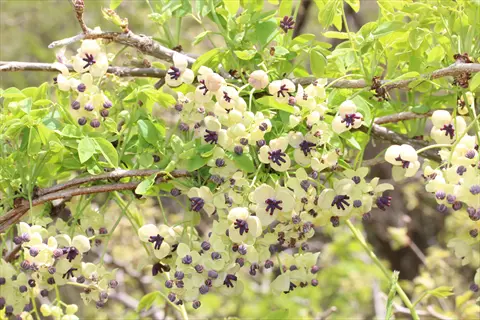
White forms: 'Shirobana' and Alba
- Flowers: These named cultivars carry soft white to pale flowers instead of maroon, offering a gentler look while keeping the akebia foliage and habit.
- Availability: The white form is sold as 'Shirobana' and as Alba, and is the cultivar most often named by nurseries that stock akebia.
- Design value: White flowers brighten a shaded corner and pair well with darker foliage or evergreen backdrops.
- Same vigor: White cultivars grow just as fast as the species, so they need the same sturdy support and pruning plan.
- Pollination: Pairing a white form with a different akebia can help with the cross-pollination needed to set fruit.
- Best use: Choose these when you want the akebia effect with a lighter, more refined flower color.
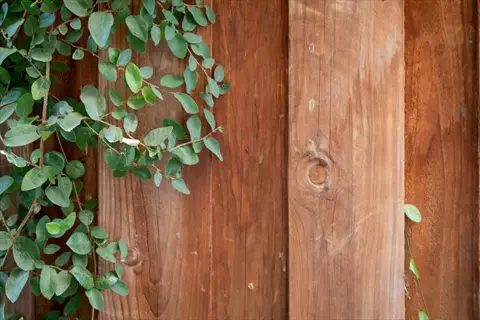
Fast privacy and screening
- Speed: Because it can add up to 40 feet (12 m) of growth in a season, it covers an open fence or trellis faster than most ornamental climbers.
- Coverage: Its dense, twining stems and layered leaves create a solid living screen that hides views and softens hard structures.
- Shade tolerance: It screens even in shaded spots where many flowering vines refuse to fill in, thanks to its deep-shade tolerance.
- Support: Use a strong trellis, arbor, or sturdy fence, since the mature weight of a full vine is considerable.
- Maintenance: Expect to prune at least once a year, right after flowering, to keep a screen tidy and in bounds.
- Responsible note: In areas where it is invasive, use a contained structure or a native screening vine instead.
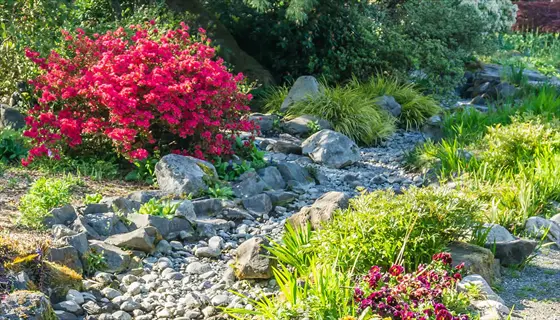
Erosion control and slopes
- Ground coverage: Left to sprawl, the vine forms dense mats that knit across the soil surface and can stabilize bare ground.
- Tough roots: Its roots spread far and wide, and it resists drought and erosion per NC State Extension, which helps hold soil on slopes.
- Low inputs: Once established it needs little water and tolerates poor, ordinary soils, making it low-effort groundcover where space allows.
- Deer resistance: It is also deer resistant, so browsing pressure rarely sets back a planting used for cover.
- Caution: The same mat-forming habit that controls erosion is what smothers native plants, so keep it confined on purpose.
- Best use: Reserve this use for contained, managed banks far from natural areas, or pick a native groundcover where it is regulated.
Pick a cultivar for the flower color you love. The white Shirobana form brightens a shaded corner, while the maroon species gives you that deeper, classic spring show. Both fill a fence or arbor with the same vigor, so a fast privacy screen and erosion control on a slope are within reach of either one.
Treat the responsible-use note as part of the plan, not an afterthought. Is chocolate vine invasive where you live? If so, grow it in a container or a tightly pruned arbor, or plant a native vine instead. That way the garden value never costs you the wild ground nearby.
Chocolate Vine vs Other Vines
Chocolate vine is not your only option for covering a fence or arbor. Picking the right climber comes down to how much space you have, how much pruning you want to do, and whether your spot sits in sun or shade.
The chocolate vine vs wisteria question is the one people ask most. Both grow fast and both can take over if you ignore them. Wisteria gives you those famous hanging purple blooms, but the heavy woody stems can crush a weak trellis over time. Chocolate vine stays lighter and adds faint chocolate-scented flowers plus the odd edible fruit in fall.
If you want something calmer, look at clematis. A clematis climbs slower and stays tidier, so you cut it back far less than you would an akebia. The trade-off is speed. You won't get fast cover from a clematis in one season the way you will from chocolate vine.
Shade is where chocolate vine really stands apart. It thrives from full sun all the way down to deep shade, which makes it a rare fast-growing vine for shade. Most flowering climbers sulk in low light. A native honeysuckle like coral honeysuckle handles part shade and feeds local birds, but it won't fill a dark corner as quickly.
So the real choice is about your priorities, not a single winner. Want the fastest fragrant climbing vine for a shady wall and don't mind yearly cutting? Chocolate vine wins. Want a low-worry plant that stays put and feeds wildlife? A tamer or native climber is the smarter pick. That goes double if you live where akebia is listed invasive.
- You need fast cover and can give it a sturdy support plus yearly pruning.
- You want fragrant spring flowers and the novelty of edible fall fruit.
- You have a shaded spot where most flowering climbers will not fill in.
- You can confine it to a container or managed arbor away from wild areas.
- You live where chocolate vine is listed invasive and cannot contain it.
- You want a slower, tidier climber like clematis that needs less cutting back.
- You prefer a native vine such as coral honeysuckle that supports local wildlife.
- You want showy hanging blooms and do not mind wisteria's own vigor and weight.
5 Common Myths
Chocolate vine is harmless because it is sold as an ordinary garden ornamental at many nurseries.
It is listed invasive across the eastern United States and Prohibited in Wisconsin, where it smothers native understory plants and young trees.
A single chocolate vine planted on its own will reliably produce a good crop of its sausage-shaped fruit.
Fruit set usually requires two genetically different plants or hand-pollination, since the flowers self-pollinate poorly and rarely fruit alone.
Chocolate vine only grows well in full sun and will struggle or refuse to climb in a shaded corner.
It tolerates full sun through deep shade, which is exactly why it can invade forest understories where many other vines fail.
Because it has chocolate in its name, the vine tastes like chocolate and its fruit is a chocolate flavor.
The name comes from the faint chocolate scent of the flowers. The edible white fruit pulp is mildly sweet, not chocolate-flavored.
A fast-growing vine like chocolate vine is impossible to control once it is established in a garden.
It is manageable with heavy, regular pruning, container growing, or persistent cutting and digging, though neglected plants do become hard to remove.
Conclusion
Chocolate vine earns its place in the garden on looks alone. You get fragrant maroon flowers in mid-spring that carry a faint, spicy chocolate scent, and you get sweet purple fruit in fall if two plants share the work. The leaves stay neat, the plant shrugs off pests, and it climbs almost anything you give it. That mix of beauty and ease is rare in one vine.
The same traits that make it special also make it a problem. Akebia quinata can push 20 to 40 feet of new growth in a single season, the figure the Wisconsin DNR uses to flag its risk. That speed builds a thick screen fast. It also lets the vine slip a fence, root where its stems touch soil, and smother whatever native plants sit nearby. Power like this needs a firm hand.
Growing chocolate vine well comes down to a few honest steps. Check your local rules first, because this invasive vine is banned or watched in many states. Plant it where you can keep it confined, then prune hard each year to hold its size and shape. Two plants set near each other handle the cross-pollination that fruit needs, a detail NC State Extension makes clear. In USDA Zones 5 to 8 it settles in with little fuss.
Where the vine is restricted, the kinder choice is a native climber that gives cover without the spread. Responsible planting is really just matching this plant to a spot where its speed becomes an asset instead of a threat. Give chocolate vine a strong support, clear boundaries, and a yearly trim, and that wild vigor turns into a fast, sweet-smelling screen you control. The decision rests with you, and now you have what you need to make it a wise one.
Glossary
- Akebia quinata
- The scientific name for chocolate vine, a fast-growing twining climber native to China, Japan, and Korea.
- Cross-pollination
- The transfer of pollen between two genetically different plants, which chocolate vine usually needs in order to set fruit.
- Foliar herbicide
- A weedkiller sprayed onto a plant's leaves so it is absorbed through the foliage, used here on fully leafed-out vines.
- Hand-pollination
- Manually moving pollen from one flower to another, often with a small brush, to help a plant set fruit when natural pollination is poor.
- Palmately compound leaf
- A leaf made of several separate leaflets that all radiate from a single point, like fingers spreading from the palm of a hand.
- Raceme
- A flower cluster in which individual flowers are attached by short stalks along a central stem, often hanging downward.
- Semi-evergreen
- A plant that keeps some or most of its leaves through winter in mild climates but drops them where winters are cold.
- Twining vine
- A climbing plant whose stems coil and wrap around a support to climb, rather than clinging with tendrils or sticky pads.
External Sources
Frequently Asked Questions
What is a chocolate vine?
Chocolate vine (Akebia quinata) is a vigorous twining woody climber from East Asia, named for the faint chocolate scent of its spring flowers.
Is chocolate vine invasive?
Yes. Chocolate vine is listed invasive across much of the eastern United States and is classified Prohibited in Wisconsin.
Can you eat the fruit of a chocolate vine?
Yes. The sweet white pulp inside the purple sausage-shaped pod is edible, though the tiny black seeds and rind are usually not eaten.
Does chocolate vine smell like chocolate?
The flowers carry a faint, spicy chocolate-vanilla fragrance, though the strength of the scent varies by nose, weather, and time of day.
Is chocolate vine easy to grow?
Yes, it grows easily in most soils and from full sun to deep shade. The challenge is not growing it but keeping its fast growth in check.
How cold hardy is chocolate vine?
Chocolate vine is reliably hardy in USDA Zones 5 to 8 per NC State Extension, though many blogs broaden the range to Zones 4 through 9.
Does Akebia need a trellis?
Yes. As a twining climber, akebia needs a sturdy structure such as a trellis, arbor, pergola, or fence to climb and to keep it contained.
Why won't my chocolate vine produce fruit?
Most often because it needs cross-pollination. A single vine rarely fruits, so plant two genetically different vines or hand-pollinate the flowers.
Is chocolate vine poisonous to dogs?
Authoritative sources do not document chocolate vine as toxic to dogs, but as a precaution keep pets from chewing the leaves, stems, or seeds.
How do you get rid of chocolate vine?
Removal takes persistence: cut and dig repeatedly through the season, smother small patches, or use a targeted foliar herbicide when fully leafed-out.