
Introduction
The scarlet runner bean pays you back twice. It works as a bright ornamental, and it works as a food crop. This climbing bean covers a fence or a teepee in red blooms. Then it hands you flowers, pods, and beans you can eat off the same plant.
You may see it sold under its plant name, Phaseolus coccineus. It is a fast climber that runs 8 to 15 feet (2.4 to 4.6 m) up any support you give it. The red flowers open at sunrise. They pull in hummingbirds and bees all summer, so many gardeners grow it as a hummingbird vine first. It also ranks as the third most important bean crop, behind the common bean and lima bean.
There is far more to this plant than how to grow it. It has perennial tuberous roots that resprout each year. Its seed saving gets tricky, since this bean crosses so fast. You can eat a full menu of edible flowers, pods, beans, and roots. And it comes in named cultivars worth hunting down. This guide gives you all of it.
You get the full path from seed to plate and back to seed. We cover growing and timing, the best cultivars, and building support. We cover the flowers and every edible part. We cover harvest, seed saving, and overwintering the roots. And we cover the few problems that show up. By the end you will know how to get years of value from this plant.
How to Grow Scarlet Runner Beans
Once you know how to grow scarlet runner beans, the plant almost takes care of itself. The seeds are big and easy to handle, and they sprout fast in warm ground. This bean comes from the mid to high mountains of Mexico and Central America. That heritage lets it shrug off cool spring nights better than most warm-climate beans.
Because of those mountain roots, you can sow a little earlier than common green beans. Wait until your soil temperature hits 50 degrees Fahrenheit (10 degrees Celsius). You do not need to hold out for fully warm ground. The foliage still cannot take a frost, so check that the last frost has passed before you plant.
One spring I rushed the seeds into cold, wet ground along the back fence where the vegetable patch meets the wooden privacy fence. Half of them rotted before they ever broke the surface. I dug out the mush, waited two weeks for the soil to warm, and resowed the same spot. That second batch came up thick and even in under a week.
Get the planting depth and spacing right and the rest is simple. Sow each seed 1 to 1.5 inches (2.5 to 4 cm) deep and 4 to 6 inches (10 to 15 cm) apart in rich, well-drained soil. Give the bed full sun, which means 6 or more hours of direct light each day, and the vines will pour on growth.
Sow after the last frost once soil reaches at least 50 degrees Fahrenheit (10 degrees Celsius); the foliage cannot tolerate frost.
Install a tall trellis, teepee, or fence at planting so you avoid disturbing roots later, since vines climb 8 to 15 feet (2.4 to 4.6 m).
Plant seeds 1 to 1.5 inches (2.5 to 4 cm) deep and 4 to 6 inches (10 to 15 cm) apart in rich, well-drained soil in full sun.
Keep soil evenly moist; seeds emerge in 7 to 14 days, occasionally up to 21 days when soil stays cool.
Once seedlings reach the support, gently steer the twining stems onto it so they climb cleanly through the season.
Do not feed runner beans heavy nitrogen fertilizer. As a legume it fixes its own nitrogen, and too much pushes leafy growth at the expense of flowers and pods.
Keep the soil evenly moist and watch the bed closely over the next two weeks. Most seeds emerge in 7 to 14 days, though a cold spring can stretch that germination time out to 21 days. Patience here pays off, because cool soil slows the clock but rarely kills a healthy seed.
Best Cultivars to Choose
From my kitchen window the two-tone red-and-white blooms of Painted Lady glow against the wooden privacy fence each morning. Right beside them I grow the classic all-red scarlet runner, and the contrast is the first thing your eye lands on. Same vine, same trellis, same care, yet one reads bold and the other reads soft. That side-by-side view is why I stopped thinking of this plant as one bean and started picking it by flower.
The scarlet runner bean varieties worth growing all share the same easy nature. So your choice comes down to color and size. Flower color in this bean runs from the usual scarlet to salmon, white, and two-tone forms. Every one of them wants full sun and rich, moist soil. That means you can pick on looks alone and still get every edible pod and every hummingbird.
A few named cultivars stand out, and most garden writers only mention them in passing. The classic red is the standard, but Painted Lady brings a red-and-white bloom, Sunset opens salmon-pink, Albus shows clean white, and Hestia stays small. If you want this ornamental bean in a pot or a tight corner, the dwarf scarlet runner bean form is the one to reach for.
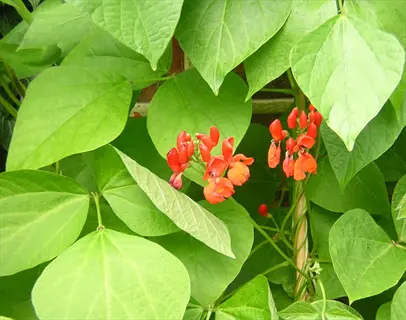
Classic Scarlet Runner
- Flowers: Bears the signature bright scarlet blooms in trusses that open at sunrise and draw hummingbirds and bees through summer.
- Habit: A vigorous twining climber reaching 8 to 15 feet (2.4 to 4.6 m), making it ideal for tall trellises and privacy screens.
- Seeds: Produces the well-known large seeds, usually black mottled with purple-red, that are striking enough to display.
- Uses: Fully dual-purpose, valued equally as an ornamental vine and as a source of edible flowers, pods, and beans.
- Best for: Gardeners who want the traditional look and the strongest hummingbird draw on a full-size climbing vine.
- Care: Wants full sun, rich well-drained soil, and steady moisture, with sturdy support set in place at planting time.
Painted Lady
- Flowers: Carries striking bicolor blooms in red and white, adding a softer, two-tone display to the same vigorous vine.
- Habit: Climbs like the standard type to roughly 8 to 15 feet (2.4 to 4.6 m), so it needs a tall, sturdy support.
- Appeal: A long-grown heirloom prized for its ornamental flowers as much as for its edible pods and beans.
- Pollinators: The bright bicolor flowers still attract hummingbirds and bees just like the all-red form.
- Best for: Gardeners wanting an heirloom with a more decorative flower while keeping full edible value.
- Care: Identical needs to the classic type, full sun and rich moist soil, with support installed at planting.
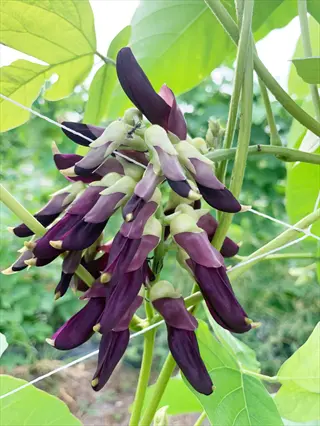
Sunset
- Flowers: Opens in a soft salmon-pink rather than scarlet, giving a gentler color for pastel or cottage plantings.
- Habit: A full-size climbing vine in the 8 to 15 foot (2.4 to 4.6 m) range that needs the same tall support.
- Appeal: Offers a distinctive bloom shade while keeping the easy growth and edible parts of the species.
- Pollinators: The pale flowers still draw hummingbirds and bees to the garden through the warm months.
- Best for: Gardeners who want runner bean performance in a color that blends into softer planting schemes.
- Care: Treat exactly like the scarlet type with full sun, rich moist soil, and a trellis from the start.
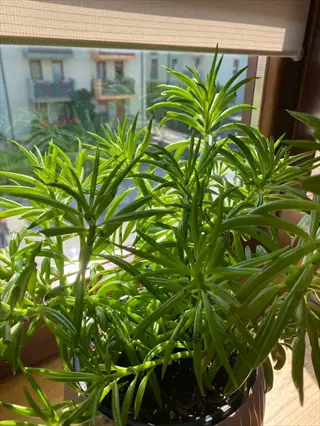
Hestia (Dwarf Bush)
- Habit: A compact dwarf bush form rather than a tall climber, staying low enough to grow without a big trellis.
- Flowers: Still produces colorful runner-bean blooms, often red and white, on a much smaller, tidier plant.
- Containers: The bush habit makes it the natural choice for pots, balconies, and tight spaces where a long vine cannot fit.
- Pods: Sets edible pods like the climbing types, so you keep the harvest in a fraction of the footprint.
- Best for: Container growers and small-garden gardeners who want runner beans without managing a 15 foot vine.
- Care: Needs full sun and steady moisture; the compact form still benefits from light support to stay upright.
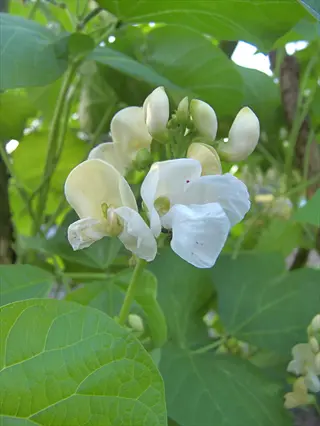
Albus (White Dutch Runner)
- Flowers: Bears clean white flowers instead of scarlet, giving a bright, calm look on the usual vigorous vine.
- Habit: A full-size twining climber in the 8 to 15 foot (2.4 to 4.6 m) range needing a tall, strong support.
- Seeds: Tends toward pale or white seeds, a contrast to the mottled seeds of the red-flowered types.
- Appeal: Valued where white flowers suit the planting scheme while still offering edible pods and beans.
- Best for: Gardeners building a white or pale flower display who still want a productive edible vine.
- Care: Grow as for the scarlet type, full sun and rich moist soil, with support placed at planting time.
One difference matters more than color when you have limited room. Hestia and other dwarf forms grow as compact bushes, not tall climbers, so they fit a balcony pot where a 15 foot vine would never work. Pick a dwarf for containers and small beds, and save the full-size climbers for a sturdy trellis or a privacy screen.
Trellising and Support
These vines do not stay short or polite. A healthy plant climbs 8 to 15 feet (2.4 to 4.6 m) in a single season, so your support has to be tall and rock solid before you plant a thing. A short cage or a flimsy stake will get swallowed and dragged down by July.
The good news is that scarlet runner beans do most of the work for you. Once the first stems reach a pole, they twine and climb on their own. So vine training is mostly a matter of guiding those early shoots onto the support by hand. You will not be tying stems every few days the way you fuss over tomatoes.
Pick a support structure that matches your space. The classic choice is a bean teepee. You lash three to five bamboo poles at the top, and it works like a living tent that kids love to sit inside once the leaves fill in. Against a wall or a property line, a flat trellis, netting, or an old fence turns the same vine into a green screen. Whatever you build, anchor it well. A heavy vine catches summer wind like a sail and can topple a weak frame.
Here is how the two most common options stack up when you plan a trellis for scarlet runner beans.
Three to five bamboo poles tied at the top make a quick, very stable structure that resists summer wind and creates a shaded play space, ideal for open beds and children's gardens.
A flat panel, netting, or an existing fence saves space against a wall or boundary and makes an easy living screen, though it needs firm anchoring so the heavy vine does not pull it over.
Set the support before you sow. Pushing poles into the bed after the roots are established disturbs the plant and risks snapping young vines.
Flowers, Pollinators, Edible Parts
The scarlet runner bean flowers are the reason you want this vine in your yard in the first place. Hummingbirds cannot resist the blooms, and a single plant in flower turns into a busy feeding stop from morning to dusk. Each raceme carries up to 20 bright red blooms, and you get fresh flowers daily, since each one opens at sunrise and fades by sunset.
That nonstop show is why gardeners call it a hummingbird vine. Ruby-throated hummingbirds work the blooms for nectar, and bumble bees crowd in right behind. Plant it near a window or your porch and you get a front-row seat. Heat does cut the show short, though. Pollen stops working above 90°F (32°C), so you get the heaviest bloom and the best pollinator traffic in cool summers and early fall.
The flowers are edible flowers, with a mild, crunchy, bean-like flavor you can taste right off the vine. Each bloom only stays good for a day or two once you pick it, so eat your flowers fresh. Toss them raw in a salad or cook them lightly. And when you pick a handful for your kitchen, you still leave plenty on the vine to feed the pollinators.
Nearly every part of this plant earns its keep at your table. You can eat the flowers, the young green pods, the fresh shell seeds, the dried beans, and even the starchy roots. One vine gives you an ornamental, a hummingbird magnet, and a real food crop all at once. The list below breaks down each edible part and how you use it.
Edible Flowers
- Flavor: The scarlet flowers are mild and crunchy with a faint bean-like taste that brightens salads.
- Use: Eat them raw, boiled, steamed, or sauteed; they only stay fresh for a day or two once picked.
- Bonus: Picking some flowers for the kitchen still leaves plenty to feed hummingbirds and bees on the vine.
Young Green Pods
- Timing: Harvest pods young and thin, around 3 to 4 inches (8 to 10 cm), for the best taste and texture.
- Texture: Older pods turn tough and stringy and the surface roughens, so pick often to keep them tender.
- Cooking: Slice and cook them like green beans; they are at their best when still flexible and bright.
Fresh Shell Seeds
- Use: Shell the plump fresh seeds from maturing pods and cook them much like lima beans.
- Color: Raw seeds are boldly mottled, though they turn grey and lose that color once cooked.
- Safety: Always cook them fully, since raw seeds carry a lectin that upsets the stomach.
Dried Beans
- Flavor: Fully dried seeds take on a rich, chestnut-like flavor once soaked and simmered.
- Prep: Give them a long soak and a thorough cook; raw or undercooked dried beans are not safe to eat.
- Storage: Stored dry in an airtight container, the large seeds keep well and stay viable for several years.
Starchy Roots
- Tradition: In its native range in Mesoamerica the thick, starchy tuberous roots are eaten as food.
- Note: This is an unusual extra use most growers never realize the plant offers.
- Caution: As with the seeds, any plant part is best cooked rather than eaten raw.
Hummingbirds are especially attracted to the flowers.
Harvest, Storage, Seed Saving
Timing is everything with this crop, and it splits into two clear paths. For tender pods on your plate you pick early, and for dried beans or seed you wait out the whole season. Get the timing right and one vine feeds you for months.
Harvesting scarlet runner beans for eating works best when you snap the pods young and thin. Aim for 3 to 4 inches (8 to 10 cm) while they still break with a clean snap and taste tender. Fresh pods hit that eating size around 65 days after sowing, so mark your calendar from planting day. Past that window the pods turn tough and stringy, and the bean inside swells.
Keep picking and the vine keeps making more, which is the trick to a long harvest. When you want dried beans instead, leave your chosen pods alone and let them ripen fully on the vine. They turn brown, papery, and rattle when you shake them. Shell those out, let the seeds cure in a dry, airy spot, then store them in an airtight jar somewhere cool. Saved seed stays good for several years that way.
Last spring I sowed a jar of seed I saved off my back-fence vines. The plants came up with flowers I never planted. Some bloomed the usual scarlet. But a handful opened in soft pinks and an odd salmon, and a few had two-tone petals. The year before I grew two runner types side by side and never kept them apart. The scarlet runner bean is open-pollinated. So it crosses with any other runner type nearby. That free cross-pollination is why saved seed can surprise you. It also keeps the whole species rich and varied.
If you care about saving scarlet runner bean seeds that come back true to type, the fix is simple. Grow only one runner variety, or keep different ones well apart so bees cannot trade pollen between them. Skip that and you roll the dice on next year's colors, which can be half the fun if you do not mind the gamble. The days to maturity for fresh pods stay close to 65 no matter what, but the flower colors are anyone's guess once the bees get busy.
For eating, harvest pods young and thin at about 3 to 4 inches (8 to 10 cm) while they snap cleanly and stay tender.
Harvest often to keep the vine producing; fresh pods reach eating size around 65 days after sowing.
For dried beans or seed, let chosen pods stay on the vine until they are brown, papery, and fully dry.
Shell the dry pods and let the seeds finish curing in a dry, airy spot before storing them.
Keep the cured seeds in an airtight container in a cool, dry place where they stay viable for several years.
Because the plant is open-pollinated, grow only one runner variety or isolate plants if you want saved seed to come true.
Perennial Nature, Overwintering
Most gardeners treat this plant like any green bean and pull it up at the first frost. That throws away its best trick. The scarlet runner bean perennial habit means the plant wants to come back. The roots below the soil hold the power to make that happen year after year.
It is a true perennial that most of us grow as an annual. In hardiness zones 7 to 11 the roots act as a short-lived perennial. They form fleshy tuberous roots that sit out the winter underground and resprout on their own when the soil warms back up in spring.
The fleshy root works a lot like a dahlia tuber you lift and store over the cold months. So if you garden in a colder zone, you do not have to lose the plant. You dig the tuber, tuck it in cool damp sand, and bring it out again next year. This is the heart of overwintering runner beans, and it pays off fast.
Here is the real reward. A stored, replanted root flowers much sooner than a seed-started plant does. You get an earlier wave of blooms, the hummingbirds show up earlier, and your harvest comes in weeks ahead. That early start ties straight back to the plant's mountain home in Mexico and Central America, where it lives on from one year to the next.
In zones 7 to 11 the tuberous roots can survive in the ground and resprout; in colder zones lift them to overwinter indoors.
Once frost kills the top growth, cut the vines down so you can find and work with the roots.
Carefully dig the fleshy, tuberous roots, much as you would lift a dahlia tuber, keeping them intact.
Pack the tubers in cool, damp sand and keep them in a frost-free spot through winter so they stay plump.
Set the stored tubers back out after the last frost; they flower much sooner than seed-started plants for an earlier show.
An overwintered root is a head start. Because stored tubers flower far sooner than fresh seedlings, you get earlier blooms, earlier hummingbirds, and an earlier harvest next year.
Pests, Problems, Solutions
Most scarlet runner bean pests are the same ones that bother any garden bean. Bean beetles chew lacy holes in your leaves, and they hit your vegetable beans too. You will see aphids cluster on new growth, while slugs and snails work the lower leaves at night.
Your trickiest problem is no flowers no pods, or plenty of red blooms that never set a single bean. Heat is almost always your cause. Pollen stops working above 90°F (32°C), so the flowers open but cannot make pods. Your pod set comes back on its own as the weather cools, so keep your plants watered and wait it out.
One disease deserves a quick word before you reach the table. Leafhoppers can carry mosaic virus into your plant, so knocking them back early heads off a problem that has no cure later. Use this chart for troubleshooting, including yellowing leaves, by matching your symptom to its cause and the fix that works.
5 Common Myths
Scarlet runner beans are purely ornamental flowers and the pods or seeds they produce are not actually meant to be eaten.
They are fully edible. The flowers, young pods, fresh seeds, and dried seeds are all good food once cooked properly.
Because the plant is a legume, you can pick a handful of the fresh seeds and eat them straight off the vine like peas.
Raw seeds hold phytohaemagglutinin, a lectin that upsets the stomach. Thorough cooking neutralizes it and makes the seeds safe.
Scarlet runner beans are simply annuals that die completely at the end of every season and must be started over from seed.
They are true perennials. In zones 7 to 11 the tuberous roots survive winter and resprout, flowering earlier than seed-grown plants.
If you save seed from your scarlet runner beans, the new plants will always look exactly like the parent plant you grew.
The plant is open-pollinated and crosses readily with nearby runner varieties, so saved seed can differ unless you isolate the plants.
Scarlet runner bean vines stay short and compact, so a small stake or a tomato cage gives them all the support they need.
Vines climb 8 to 15 feet and grow heavy, so they need a tall, sturdy trellis, teepee, or fence set in place at planting.
Conclusion
Few garden plants pull their weight like the scarlet runner bean. One vine hands you bright red blooms all summer, a steady stream of hummingbirds, and a real harvest of edible flowers, tender pods, and beans. You came here for a plant that earns its space, and this one does.
Keep a few core facts in mind and the rest takes care of itself. Sow your seeds once the soil hits 50°F (10°C), since the seeds shrug off cold that other beans won't touch. Give the vine a tall 8 to 15 foot (2.4 to 4.6 m) support to climb. Cook the beans before you eat them, never raw, and you can enjoy the harvest without worry. And in zones 7 to 11, leave the tuberous roots in the ground to resprout next spring.
The plain fact is this: the scarlet runner bean is a beginner-friendly plant in the best sense. It grows fast, climbs on its own, and forgives the small mistakes that sink fussier crops. The first year I grew mine, I sowed the seeds late and barely watered them, and the vines still topped the fence by August. Under good conditions it is the most productive of all the beans. One packet of seed can feed a whole row and still leave plenty of pods to dry for next year. As an ornamental bean that doubles as a food crop, it gives you two gardens in the space of one.
So here is a final note for you, the reader. Picture your own hummingbird vine a few months from now. The trellis is a wall of red, the leaves hum with bees, and a hummingbird drops in to work the blossoms while you pick a handful of beans for dinner. On my own vines that visit comes most mornings, and I still stop to watch it. Few plants this small give you flowers, hummingbirds, and a full meal at once. That is what makes growing scarlet runner beans worth the small patch of dirt it asks for.
Glossary
- cross-pollination
- When pollen from one plant variety fertilizes the flowers of another, mixing their traits in the resulting seed.
- hypogeal germination
- A way of sprouting in which the seed leaves stay below the soil surface as the shoot pushes up.
- mosaic virus
- A plant virus, often spread by leafhoppers, that mottles and distorts leaves and has no cure.
- open-pollinated
- A plant that is pollinated by insects or wind and crosses readily with nearby varieties, so saved seed may not come true.
- Phaseolus coccineus
- The botanical name for the scarlet runner bean, a climbing legume native to the mountains of Mexico and Central America.
- phytohaemagglutinin
- A natural lectin in raw runner bean seeds that causes stomach upset until thorough cooking neutralizes it.
- raceme
- An unbranched flower cluster in which individual blooms attach along a central stem.
- tuberous roots
- Thick, fleshy storage roots that survive winter and resprout, letting the plant return year after year in mild climates.
External Sources
Frequently Asked Questions
Can you eat the beans from scarlet runner plants?
Yes. The flowers, young pods, fresh seeds, and dried seeds are all edible once cooked.
Why can't you eat scarlet runner beans raw?
Raw seeds contain phytohaemagglutinin, a lectin that causes nausea until thorough cooking neutralizes it.
Do scarlet runner beans need full sun or shade?
They grow best in full sun with at least six hours of direct light, tolerating light afternoon shade.
Do scarlet runner beans come back every year?
In zones 7 to 11 they return from tuberous roots; in colder areas they are grown as annuals.
Do scarlet runner beans need a trellis?
Yes. The vines climb 8 to 15 feet and need a sturdy trellis, teepee, or fence set up at planting.
Can you grow scarlet runner beans in pots?
Yes. Use a deep, wide container with sturdy support and water often, since pots dry out faster.
How long do scarlet runner beans take to sprout?
Seeds usually sprout in 7 to 14 days, occasionally up to 21 days in cooler soil.
Are scarlet runner beans fast growing?
Yes. They are vigorous climbers that can reach 8 to 15 feet in a single growing season.
What should you not plant next to runner beans?
Avoid planting alliums like onions and garlic near runner beans, as they can hinder bean growth.
Why are my scarlet runner beans flowering but not setting beans?
Heat is the main reason. Pollen is not viable above 90 degrees Fahrenheit, so pods fail to set.