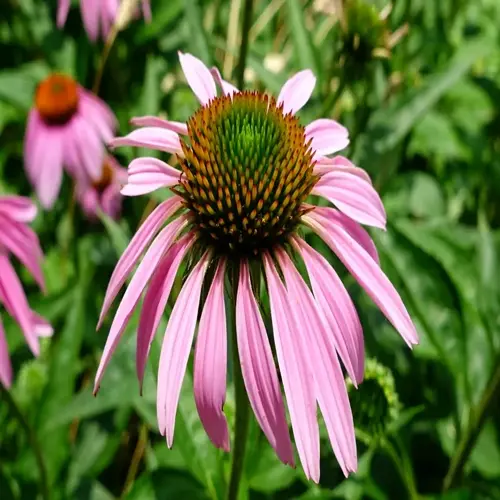

Feverfew is good for two things you can count on. It is a cheerful daisy that pulls bees and hoverflies into your garden. And it has a small, evidence-limited role in preventing migraines. Those are the real feverfew plant uses. The migraine one is the only health claim with any solid science behind it. Most of the other folk reputations are far weaker than the marketing makes them sound. So the short answer is a pretty plant first, and a backup migraine herb second.
Start with the garden, because that part is easy. The plant is tough and it self-seeds with no fuss. It blooms for weeks with small white-and-yellow flowers that look like tiny daisies. You get steady pollinator traffic and almost no work in return. It shrugs off poor soil, mild drought, and a bit of neglect. If you want a low-effort plant that earns its spot in a border, that alone is a fair reason to grow it. Of all the feverfew plant uses, this one asks the least and gives back the most. Pinch off old blooms and it keeps going even longer.
The medicinal feverfew benefits trace back to one main compound. It is called parthenolide. The compound sits in the leaves at roughly 0.2% to 0.5% of leaf weight. That means the dose in any plant or product can swing a lot. Parthenolide does two useful things. It tamps down prostaglandin synthesis, which drives swelling and pain. It also limits serotonin release from blood platelets, which affects how blood vessels widen. Both steps feed the changes tied to a migraine attack. That is the plain reason the herb got linked to headache and inflammation in the first place.
Now the honest part about feverfew for migraines. The evidence is real but thin. A Cochrane review rated the support for migraine prevention as low quality. That means the studies were small or shaky. The strongest trial cut attacks by only about 0.6 fewer per month versus a placebo. That is a small win. It can matter if you get frequent headaches. But it is not a cure, and it should not replace a proven medication your doctor gives you.
What about everything else people sell it for? You will see claims for fevers, arthritis, stomach trouble, skin problems, and a long list of old remedies. The U.S. NCCIH says there is little or no reliable evidence for those other conditions. The name comes from old fever folklore, not from modern proof. So treat any non-migraine claim as tradition, not fact. Keep your money in your pocket and your hopes in check.
If you do try it, set your expectations low and go slow. Dried-leaf capsules give a steadier dose than chewing raw leaves. Raw leaves can sting your mouth and cause small sores, so most people skip them. Any effects, if they come at all, take weeks of daily use to show up. Do not judge it after a few days. Stopping fast after long use can trigger rebound headaches and stiffness. Taper off slowly instead of quitting cold turkey.
One more thing matters more than any benefit. Talk to a clinician before you use feverfew as medicine. Skip it during pregnancy, since it may stir up uterine contractions. Be careful if you take blood thinners. The herb can change how your platelets clot, which raises bleeding risk. It can also clash with other drugs you already take. My honest take on the feverfew plant uses is simple. Grow it for the bees, give it a fair shot for migraines if your doctor agrees, and ignore the rest of the hype.
Read the full article: Feverfew Plant: Grow, Use, and Stay Safe