
The best aucuba planting location is a shaded, sheltered spot. The soil should be moist but well-drained. Keep the plant out of hot afternoon sun and away from drying winter wind. Get those three things right and it settles in fast. For most gardens, a north or east-facing border is the best place to plant aucuba you can find.
My glossiest corner sits on the north side of the house. It runs under a mature oak by the back fence, and I see it from the kitchen window each morning. That bed once held a row of thin, leggy shrubs. They never filled out in the deep shade, and they dropped leaves every winter. I pulled them about six years ago and put in one female Variegata aucuba. It now fills the whole corner with gold-flecked, glossy leaves and holds red berries through the cold months.
Light is the first thing to get right. Aucuba is one of the few shrubs that takes partial to deep shade and still keeps a dense, leafy shape. Hot direct sun does the opposite, and it hits variegated forms hardest. The young leaves bleach pale, then the tips blacken and scorch. So keep your plant out of strong afternoon sun, and watch the gold-dust types in summer. If your only open spot faces south, add a taller plant or a screen to shade it through the hottest part of the day.
Shelter matters almost as much. Cold, drying winter wind pulls water from the leaves faster than the roots can send it back up. You end up with brown, crisp edges, and that damage is called windburn. Tuck your plant beside a wall, a fence, or some taller evergreens to cut that wind right down. The corner under my oak gets shade from the canopy and a wind break from the fence. That pairing is the main reason it does so well.
Drainage is the last piece. Aucuba comes from moist woodlands, so it likes steady water at the roots. But it will rot in ground that stays soggy. Work plenty of leaf mould or compost into the bed to give it free-draining soil, and skip any low spot where rain pools after a storm. Keep this one in mind: wet feet kill more aucuba than cold ever will. Toxicity and the full care routine each have their own question, so you won't find that detail here.
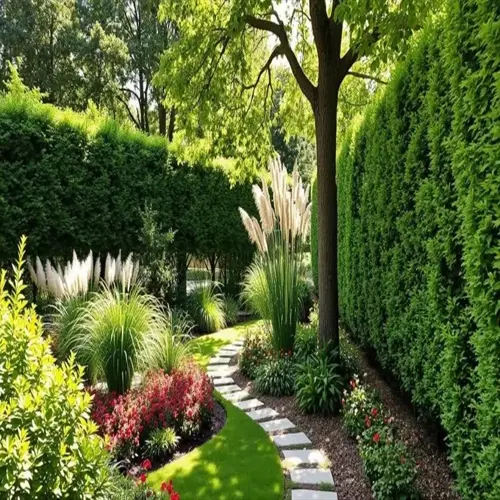
Now think about real spots in your own yard. When you scout an aucuba planting location, a north or east-facing border works well, and so does the edge of a woodland planting. A foundation bed on the shaded side of the house is another strong pick. All of these give the shade and the shelter your plant wants. A large container in a shady courtyard works too, as long as the pot drains well and you keep it watered through summer. The plant takes poor soil and city air without much fuss, so a tough spot is fine if the shade and drainage are there.
Give your plant room to grow before you set it in the ground. A mature aucuba spreads about 4 to 6 feet (1.2 to 1.8 m) wide. Leave that much space from walls, paths, and neighboring plants. Crowd it and you lose the full, rounded shape that makes it such a good shade border shrub. Space it right and you get a glossy, year-round anchor for the darkest corner of your garden. Set it once in the proper spot and it asks very little of you after that.
Read the full article: Aucuba Japonica: Complete Care Guide