Herb · Lamiaceae
Bee Balm
Monarda didyma
Give it full sun, moist soil, and room to breathe, and bee balm pulls in bees and hummingbirds all summer long.
Full sun
Every 3–7 days
USDA 4–9
2–4 ft · 0.6–1.2 m
Overview
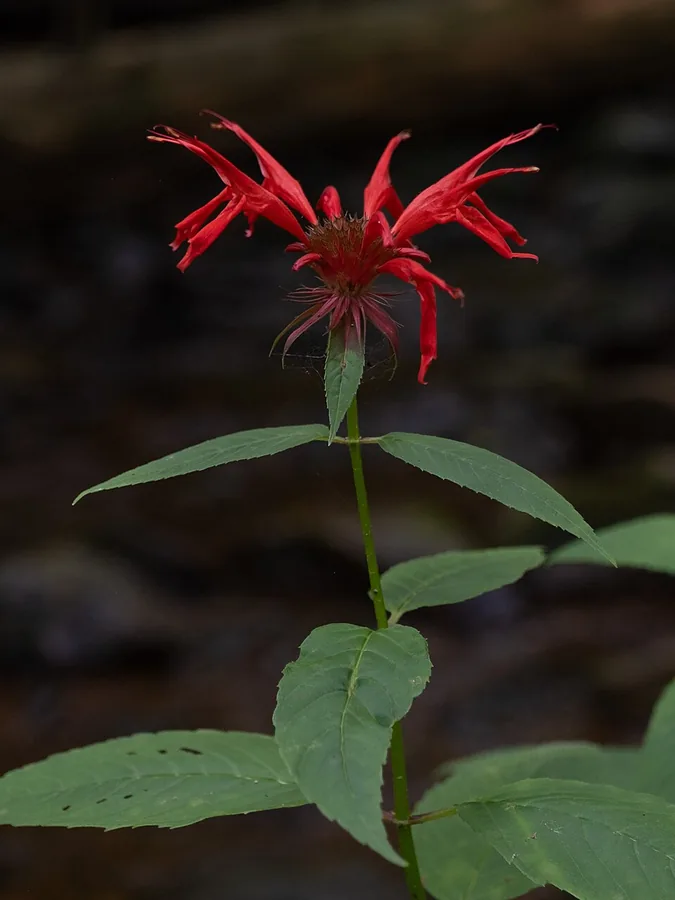
So what is bee balm? It's a mint-family native from North America, and it really shows off once it blooms. Shaggy flowers in red, pink, or wine ride on square stems over fragrant leaves, and they keep bees, butterflies, and hummingbirds dropping by for weeks. Rub a leaf between your fingers and that citrusy smell explains the other common name, bergamot.
The catch is how it travels. Bee balm runs on underground rhizomes, so one little plant fans out into a broad clump within a season or two. That's wonderful in a loose meadow and a bit much in a neat bed, where you'll be splitting it now and then to rein it in. Those leaves have history, too; the Oswego people once steeped them, and that's how the name Oswego tea came about.
Really, it doesn't ask for much: sunshine, soil that stays damp, and a breeze moving through the stems. Tick those boxes and you'll get color for months. Let the air go stale, though, and you're basically inviting powdery mildew, which is the one thing that reliably trips this plant up.
Care
The short version: it's happiest in full sun with rich, consistently damp soil and plenty of breathing room. Split the clump every 3 to 4 years so it stays lively, and snip off faded flowers to trigger another wave of bloom.
Light
Give bee balm as much full sun as you can and it'll flower its heart out. A bit of partial shade is okay, but be warned: shade is usually why a plant sulks and skips flowers, and it's what lets mildew move in.
Water
Aim to keep that soil nicely damp, echoing the wet meadows and creek edges this plant hails from. A drink every 3 to 7 days does the trick, adjusting for weather, and always pour it down at the roots, because soggy leaves are basically a welcome mat for powdery mildew.
Soil
Plant it in rich, humusy ground that holds moisture, even heavy clay, which bee balm tolerates well. A pH between 6.0 and 7.0 suits it best, on the slightly acidic to neutral side.
Temperature
Cold isn't really a worry here. Bee balm shrugs off winters as low as -29°F (-34°C) and handles summers that climb to 90°F (32°C), so odds are your garden falls comfortably inside its range.
Humidity
Everyday humidity somewhere in the 40% to 60% range is perfectly fine, so don't fuss over it. The real deal-breaker is airflow, since still, muggy pockets around packed stems are precisely what powdery mildew loves.
Feeding
One meal a year does it: come spring, hand it some balanced fertilizer or a scoop of compost and call it done. This is a native that gets on just fine in ordinary garden dirt, so there's no need to overdo it.
Pruning
Keep snipping off finished blooms and you'll usually get a second show later in the season. When flowering wraps up, trim everything down to the low basal foliage, and thin out any packed stems so air can get through. One more tip: let some hollow stems stand through winter, since native bees like to nest in them.
Repotting
This isn't a houseplant, so skip the pot; the real chore with bee balm is splitting the clump every 3 to 4 years. When you notice the middle petering out or the flowers thinning, that's your cue to dig in and divide.
Size & spacing
Expect a mature plant somewhere around 2 to 4 feet (60 to 120 cm) in height, with a spread of 16 to 35 inches (40 to 90 cm). Don't crowd it either; leaving that much elbow room keeps the air flowing and makes mildew far less likely.
When to plant
Think of bee balm as a plant that keeps a cold-winter schedule. Get seed going indoors toward the end of winter, move plants outside in spring once the frost is done, and those showy flowers show up from midsummer into early fall. Want the best-tasting tea? Grab the leaves right before it blooms, when the flavor's at its peak.
Northern hemisphere
Southern hemisphere
Typical months for a temperate climate: start earlier in warm zones, later where spring frosts linger.
- Sow: Late winter, 6-8 weeks before last frost
- Plant: Spring after last frost
- Harvest: Showy flowers mid-to-late summer (July-September); harvest aromatic leaves before flowering for best tea flavor
Hardiness
USDA hardiness zones: 4–9
Temperature: down to -34°C
Troubleshooting
Nine times out of ten, whatever's wrong with bee balm comes down to stuffy, crowded air or a shortage of sun. Take a look at the leaves and the shape of the clump and the answer's usually right there. Find the match below, then step in before it gets worse.
A Bare Middle While the Edges Sprint Outward
Here's the thing: bee balm travels on rhizomes, so the oldest part in the middle tends to fizzle out while the outer ring keeps charging into new ground. Nothing's sick, that's just how it grows. Dig and split the clump every 3 to 4 years, keep the lively outer chunks, and yank any wandering rhizomes that stray too far.
Fix:
- Divide clumps every 3-4 years, replanting vigorous outer sections
- Remove unwanted rhizomes to control spread
White Dusty Film Creeping Over the Leaves
Yep, that's powdery mildew, the complaint bee balm is famous for, and it shows up wherever plants are packed tight in stuffy air. Splashing water overhead and warm, sticky, breezeless spells only egg it on. Open things up by thinning and dividing, water down at the roots, pull the sorriest leaves, and next time plant a cultivar that resists it.
Fix:
- Improve air circulation by thinning and dividing crowded clumps
- Avoid overhead watering; water at the base
- Remove and dispose of affected foliage
- Choose mildew-resistant cultivars
Orange-Brown Specks Dotting the Leaf Undersides
See those little rusty bumps hiding under the leaves? That's a rust infection. Pinch off the spotted leaves and bin them, give the clump more elbow room so a breeze can get through, and keep the hose off the leaves so the spores never find the damp they're after.
Fix:
- Remove and destroy infected leaves
- Improve air circulation
- Avoid wetting foliage
Lots of Leaf, Hardly a Flower in Sight
When the blooms just won't come, two culprits are usually behind it: not enough sun and a clump so packed it's got nowhere to go. Give it a brighter spot or trim back whatever's casting shade, split that crowded crown to wake it up, and keep snipping off the faded heads to nudge a fresh round along.
Fix:
- Relocate to or thin for full sun
- Divide overcrowded clumps
- Deadhead to encourage rebloom
Toxicity
Here's the easy part: bee balm is completely safe to have around. The leaves are edible (that's the classic Oswego tea, after all), and no extension source flags it as toxic to people or pets. So if a curious pet grabs a mouthful, there's really nothing to worry about.
Safe for
People · Cats · Dogs · Horses · Rabbits · Livestock · Birds
Cats None
Got a cat that likes to chew on the garden? No worries here, since there's nothing toxic in bee balm. At most, wolfing down a lot of any pungent herb can upset a tummy briefly, and it sorts itself out.
Dogs None
A dog can sniff around and nibble the fragrant leaves and be totally fine. The only likely downside from a big helping is a quick spell of soft stool, and that's about the amount eaten, not any poison.
Horses Safe
Horses munch it happily, and funnily enough that's exactly why the wild form picked up the nickname horsemint. Nothing toxic for them to steer clear of.
Rabbits Safe
Rabbits won't come to any harm from a nibble. Funny enough, that minty smell usually convinces them to look for dinner somewhere else anyway.
Livestock Safe
Turn the cows, goats, or sheep loose near it and there's no problem at all. There's simply nothing in this plant that would trouble a grazing herd.
Birds Safe
It's harmless to birds, and those nectar-rich blooms are a real draw for hummingbirds all summer. Backyard hens can pick at the leaves without worry too.
People Safe
Totally fine for people too; the leaves have been brewed into Oswego tea for generations. They taste best when picked before flowering, and the blooms themselves make a cheerful edible garnish.
Generally safe to handle; the aromatic foliage is edible. As with any plant, discourage pets from grazing large quantities.
Varieties
There are plenty of named bee balm cultivars out there, picked mostly for their flower color and for how well they fend off mildew. Here are the ones you're most likely to run into.
'Jacob Cline'
Big red flowers and a real knack for brushing off mildew are what keep this one on so many favorites lists.
'Marshall's Delight'
Bears clear pink flowers on a plant that's bred for strong mildew resistance.
'Raspberry Wine'
A tall, energetic grower with rich wine-red flowers that hold their own toward the back of a border.
'Petite Delight'
Stays compact and dwarf with lavender-pink flowers, so it's a good fit for small beds and containers.
How to propagate
Making more bee balm couldn't be much simpler, and the fastest way is just the same job that keeps it healthy. If you'd rather start from scratch, cuttings and seed are both on the table too.
DivisionEasy
Spring or fall, every 3-4 years · One growing season
The simplest way to get more bee balm is division, and honestly you'll be doing it anyway just to keep the clump in good shape. Come spring or fall, lift the whole spreading clump, break it apart, pop the lively outer pieces back in the ground, and toss that tired woody middle. Give the new pieces one season and they're off.
Stem cuttingsModerate
Late spring to early summer from softwood growth · Several weeks to root, established by next season
Cuttings work too, though they're a bit slower. Snip softwood pieces from shoots that aren't flowering, roughly late spring into the first weeks of summer, and keep them in damp medium. Give them several weeks to root; come the next season they're usually settled in.
SeedModerate
Start indoors late winter or sow outdoors in spring · Blooms typically in the second year
You can raise it from seed, sowing indoors in late winter or straight outside in spring, but don't count on flowers until the second year. And here's a catch: seed off a named cultivar won't match the parent, so if you want an exact copy, division is the way to go.
Myths
Bee Balm Is the Source of the Bergamot That Flavors Earl Grey Tea.
Not quite. That flavor in Earl Grey actually comes from a citrus, the bergamot orange (Citrus bergamia), which has zero connection to this plant. Bee balm just happens to smell a bit like it, so the nickname stuck. Same word, two unrelated plants.