Herb · Lamiaceae
Creeping Thyme
Thymus serpyllum
Hand it full sun and sharp drainage, and creeping thyme turns into a tough, fragrant carpet that laughs off dry spells.
Full sun
Every 10–14 days
USDA 4–9
1–4 in · 2–10 cm
Overview
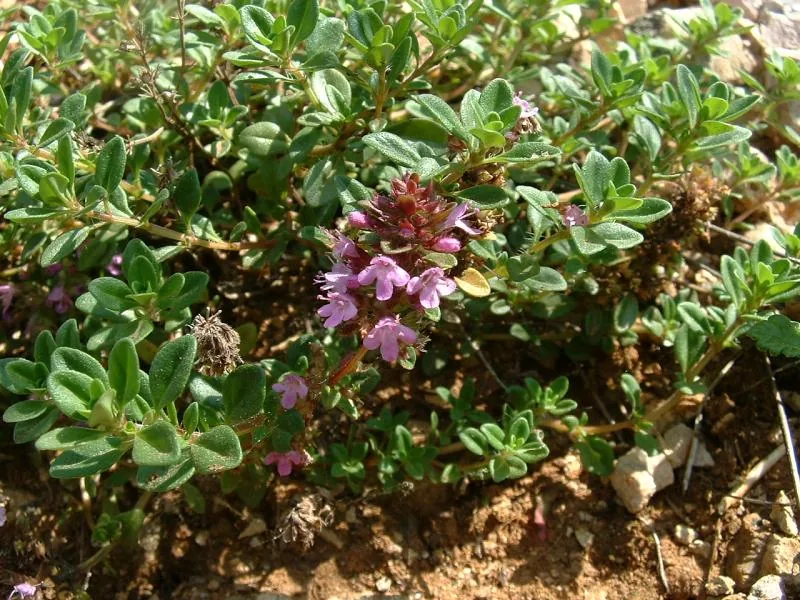
Creeping thyme's a low, woody groundcover from the mint family, and it hugs the soil in a dense evergreen mat that's only an inch or two high. Want that classic warm, herby thyme smell? Just brush it with your hand or step on it and there it is. It's brilliant for filling the cracks between pavers, tumbling over a wall, or covering ground where grass keeps giving up.
The real selling point is how tough it is. Once it's rooted in, it takes drought, thin stony soil, and brutal winters totally in stride, and it stays hardy right through USDA zones 4 to 9. Then early summer rolls around and the whole mat vanishes under tiny pink-to-purple flowers, with bees turning up in droves.
It barely asks for anything, but there's one rule it won't bend on. Sharp drainage and full sun are the whole game, and rich soil or wet feet will finish it off quicker than any bug ever could. Nail the spot when you plant it, and after that it pretty much runs itself.
Care
The short version: full sun plus lean, gritty, sharply drained soil. Water deeply but rarely once it's settled, don't bother with fertilizer, and shear it back after it blooms so the mat stays nice and dense.
Light
Creeping thyme's after full sun, and the more it gets the happier it is. It'll scrape by in partial sun, sure, but the mat goes thin and floppy and the flowers really thin out, so give it the brightest, most open spot you've got.
Water
Once it's settled it's genuinely drought-tolerant and would rather keep things dry to medium. Water deeply but rarely, just every 10 to 14 days in a dry patch, and let the top half of the soil dry out before you do. Soggy ground? That's the one thing it just won't put up with.
Soil
Lean is what you're going for here. Plant it in loose, sandy, gritty or rocky soil with sharp drainage, and the poorer the better, because rich ground softens it up and cuts the flowering. It's pretty relaxed about pH too, happy anywhere from 6.0 to 8.0.
Temperature
This one's seriously cold-hardy and takes a huge swing, all the way from -29°F to 86°F (-34°C to 30°C). Harsh winters don't bother it one bit, and it brushes off summer heat fine as long as the soil keeps draining.
Humidity
It likes things on the dry side and has zero interest in muggy air. Good airflow counts for a lot more than any humidity number, since stagnant, damp air is exactly what brings on rot and mites.
Feeding
Keep it light, or just don't bother. Creeping thyme's a light feeder, and rich soil actually works against it by knocking back its winter hardiness and its bloom. A bit of feed in spring is plenty, if you even do that.
Pruning
Shear or cut the stems back after flowering to tidy the mat, keep its spread in check, and slow down that woody buildup that bares the center as time goes on. One trim a year and it stays dense and good-looking.
Size & spacing
Each plant stays low, only 1 to 4 inches (2 to 10 cm) tall, while it spreads into a mat 12 to 18 inches (30 to 45 cm) wide. Space them out by roughly that spread and they'll knit together into solid cover.
When to plant
Creeping thyme's a hardy perennial, so you plant it once and it just keeps coming back year after year. Start the seed indoors in late winter, pop the plants outside in spring once the frost's gone, and the mat flowers all summer while you snip leaves whenever you fancy.
Northern hemisphere
Southern hemisphere
Typical months for a temperate climate: start earlier in warm zones, later where spring frosts linger.
- Sow: Late winter to early spring, 6-8 weeks before last frost
- Plant: Spring, after danger of frost has passed
- Harvest: Tiny deep pink to purple flowers appear early-to-mid summer (June-September) and are highly attractive to bees; aromatic leaves can be harvested anytime.
Hardiness
USDA hardiness zones: 4–9
Temperature: down to -34°C
Troubleshooting
Put creeping thyme somewhere it likes and it stays out of trouble, and honestly almost every issue comes down to either too much water or a mat that's just getting old. Spot the early signs below and you can jump in before a patch packs it in. Find the one that matches what you're seeing, then act while it still does some good.
Black, mushy bases on the stems and a slumping mat
What you've got here is root and crown rot, and it's down to soggy ground, not some disease you can spray away. Wet, badly drained soil, or just too much time with the watering can, smothers the roots until they go soft and smell awful. Cut out the dead bits, dig in some sand or grit to open the soil up, and water way less often.
Fix:
- Remove affected sections
- Improve drainage by amending with sand or grit
- Reduce watering frequency
- Replant healthy divisions in a faster-draining site
A balding, woody patch right in the mat's center
Don't panic, this is just the natural woody aging of the oldest stems in the middle, not a pest or a disease. The center goes brown and leafless while the green outer ring keeps right on creeping. Shear the whole mat after it flowers to wake up fresh growth, and every few years lift and divide those healthy outer pieces to start fresh.
Fix:
- Shear back after flowering to encourage fresh basal growth
- Divide and replant vigorous outer sections to rejuvenate
Dotted, faded leaves plus a bit of fine webbing
That's spider mites, which show up in hot, dry summer stretches and drink the leaves dry from underneath. You'll catch the fine speckling first, then the thin webbing once there's more of them. Blast them off with a strong jet of water, open things up for better airflow, and only bother with insecticidal soap if they refuse to leave.
Fix:
- Rinse foliage with a strong jet of water
- Increase airflow
- Treat persistent infestations with insecticidal soap or horticultural oil
Toxicity
Good news on this front. Creeping thyme's non-toxic right across the board, so it's safe for cats, dogs, horses, rabbits, livestock, birds, and people too. The fragrant leaves are edible as well, so if a nosy pet or a little one grabs a taste? No big deal at all.
Safe for
People · Cats · Dogs · Horses · Rabbits · Livestock · Birds
Cats None
Totally safe around cats, so if one takes a curious nibble of the aromatic leaves, no harm done.
Dogs None
Non-toxic to dogs, so a dog pushing through the mat or grabbing a leaf has nothing to worry about.
Horses Safe
It's listed as safe for horses, with no toxic compounds anywhere in the leaves or stems.
Rabbits Safe
Rabbits can graze the foliage without any risk, and plenty of them really go for the scented leaves.
Livestock Safe
Grazing cattle, goats, and sheep all handle creeping thyme just fine.
Birds Safe
No hazard to birds either. The summer flowers mostly pull in bees rather than posing any threat.
People Safe
People have nothing to fear here. You can even eat the fragrant leaves, though they're a good bit mellower than the thyme that usually ends up in the pot.
No special handling precautions; foliage is aromatic and safe to touch and taste.
Varieties
Most of the creeping thyme you'll find is just the plain species, but there's a couple of named picks worth knowing about for their size or their flower color.
Elfin
It's an extremely dwarf, tight little cushion that stays at only about an inch tall, which makes it the obvious one to tuck between stepping stones.
Coccineus
It's a vigorous mat that puts out deep magenta-red flowers, way more intense than the soft pink-purple you get off the plain species.
How to propagate
Making more creeping thyme is no trouble at all. You can split a mat you've already got, root a few cuttings, or start the species off from seed.
DivisionEasy
Spring or early fall · 4 to 8 weeks
Lift an established mat in spring or early fall and just pull it apart, making sure every piece holds onto its own roots. The divisions you replant settle in over 4 to 8 weeks, and this is the reliable way to copy a named cultivar true to type.
Stem cuttingsEasy
Late spring to summer · 3 to 6 weeks
Take softwood cuttings off the non-flowering shoots in late spring or summer and stand them in a gritty, well-drained mix. They root easily in 3 to 6 weeks and keep the parent's traits, so a favorite cultivar carries straight on through.
SeedModerate
Late winter to spring, indoors before last frost · Several weeks to germinate; full mat coverage over a season or more
Seed's the usual way to go for the plain species. Surface-sow the tiny seeds indoors before the last frost and keep them lightly moist, and they'll take several weeks to come up and a full season or more to knit into a mat. Cultivars won't come true this way, so keep seed for the species only.
Myths
That carpet of creeping thyme is the very herb you'd chop into dinner.
They're close cousins, but not the same plant at all. The thyme in your kitchen's Thymus vulgaris, while creeping thyme's grown mostly as a good-looking groundcover. It's edible, just milder, and it hardly ever ends up in a recipe.