Bulb · Begoniaceae
Tuberous Begonia
Begonia × tuberhybrida
Hand it shade, even moisture, and good airflow, and the tuberous begonia pays you back with huge summer blooms.
Partial shade
Every 2–4 days
55–75°F · 13–24°C
98–120 days
Overview
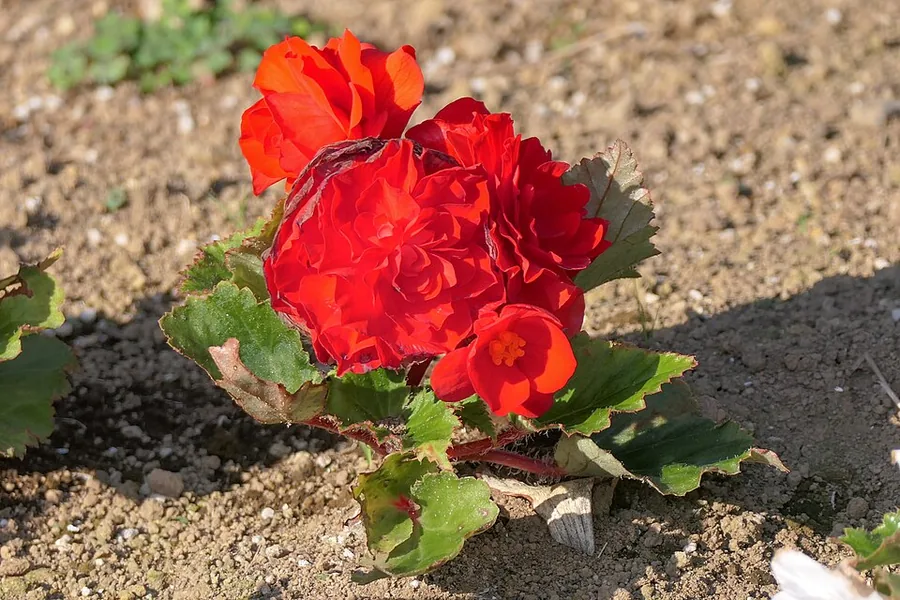
What makes the tuberous begonia worth growing? The flowers, plain and simple, since they're some of the biggest and richest a shade garden can offer. Instead of a fibrous root, it grows from a chunky underground tuber, and that tuber is really the whole story: it fuels a long summer of bloom, then naps through winter so it's ready to do it all over again. Pop it in a bed, a pot, or a hanging basket, whatever suits you.
These are warm-season plants that can't stand frost or harsh sun, so they're truly a shade gardener's flower. Their colors run from gentle pastels all the way to deep reds, and the forms range from camellia-style doubles to trailing types that pour over a basket's edge. Most stay nice and compact, topping out around 12 to 24 inches (30 to 61 cm) tall.
Honestly, none of this is tough once you mind two things. Soggy soil rots the tuber, so good drainage and a light touch with the watering can really do decide whether it makes it. Nail the light and water, and you'll get big blooms from midsummer to frost.
Care
The short version: partial to dappled shade, soil kept evenly moist but never soggy, rich and well-drained ground, and a cool, breezy spot so the foliage stays dry and disease-free.
Light
Aim for partial to dappled shade, that soft light you'd find under a tree or along the cool side of the house. They'll handle a touch of gentle morning or late-afternoon sun, but hot midday sun scorches the leaves and stalls the flowers.
Water
Keep the soil evenly moist but never soggy, watering every 2 to 4 days once the surface begins to dry. Remember the tuber holds its own water, so a waterlogged pot rots it from underneath. Let the top dry a little between drinks.
Soil
Set them in rich, well-drained loam with lots of organic matter mixed in. A pH between 5.5 to 7.0 works well, but it's sharp drainage that matters most here, since standing water is what does the tuber in.
Temperature
They feel best between 55°F and 75°F (13°C to 24°C). Push past that and the heat stresses the plant and drops the buds, while frost simply ends the season.
Humidity
Average humidity is perfectly fine, so there's no number to fuss over. Airflow matters far more than moisture in the air, since still, damp conditions are precisely what mildew and gray mold love.
Feeding
These plants are heavy feeders. All through the growing season, from spring into late summer, hand them a dilute balanced fertilizer about every two weeks to keep those big flowers rolling.
Pruning
Pinch the growing tips early on to encourage bushier growth and more blooms, and tug off spent flowers as they fade. Come late summer, cut the plant back and ease up on the water to walk it gently into dormancy.
Repotting
Run them on a yearly cycle. Lift the tubers each fall, keep them cool and dry over winter, then start them off in fresh medium come spring rather than leaving them stuck in tired, crowded soil.
Size & spacing
Plants get to 12 to 24 inches (30 to 61 cm) tall and 12 to 18 inches (30 to 46 cm) wide. Give each one that much elbow room so air can move freely and the leaves stay dry.
When to plant
Tuberous begonias run on a yearly rhythm that revolves around the tuber. Get the tubers started indoors in late winter, hold off on planting out until the last frost is behind you, then enjoy the show from midsummer right up until the cold sends the tuber back to sleep.
Northern hemisphere
Southern hemisphere
Typical months for a temperate climate: start earlier in warm zones, later where spring frosts linger.
- Sow: Start tubers indoors February to April; sow seed December to January for summer bloom
- Plant: After all danger of frost passes, typically late May to early June
- Harvest: Mid-summer through first frost (July to September)
Hardiness
USDA hardiness zones: 9–11
Temperature: down to -7°C
Troubleshooting
Almost every begonia problem comes back to water or stale air. Keep an eye on the tuber, the lower leaves, and the flowers, because that's where the earliest warning signs pop up. Find what matches below and jump in early.
A squishy, mushy tuber or a rotting stem base
Of everything that can go sideways with these plants, tuber rot is the worst, and too much water is nearly always behind it. The giveaways? A nasty smell, plus a plant that droops even though the soil's still damp. Pull the tuber up, trim off the rot, dust the cuts, and pop it back into fresh, fast-draining mix.
Fix:
- Reduce watering immediately
- Lift and inspect the tuber; cut away rotted tissue and dust cut surfaces
- Repot or replant in fresh, well-drained medium
A dusty white film creeping across the leaves
What you're seeing is powdery mildew, a fungus that moves in when air goes still around plants packed too close. Sure, you can wipe the coating away, but it'll keep returning until the plant gets to breathe. So give things some room, water down at the base, and snip off the leaves that look worst.
Fix:
- Improve air circulation and spacing
- Remove and discard affected foliage
- Avoid wetting the leaves when watering
Fuzzy gray mold settling on flowers and leaves
Botrytis blight, the gray mold you might've heard of, gets going in cool, damp air that isn't moving, and it hitches a ride on wet leaves and dropped petals. Once it lands, the tissue browns and caves in quickly. Pick off the moldy bits and any litter, then open the plant up so the leaves can dry out between waterings.
Fix:
- Remove infected flowers and leaves promptly
- Increase air circulation and reduce leaf wetness
- Clean up fallen plant debris
Buds turn yellow and drop before they ever open
Think of bud drop as the plant telling you it's stressed, and the culprit is usually wobbly watering or a run of heat and humidity. The fix? Keep the soil evenly damp without letting it flood or dry to a crisp. Shift it somewhere cooler, shadier, and breezier, and the plant calms down so the next batch of buds hangs on.
Fix:
- Maintain even soil moisture without extremes
- Provide shade during hot afternoons
- Move container plants to a cooler, protected spot
Toxicity
This one's toxic, so keep it well away from pets and kids. Every part of it carries soluble calcium oxalates, and the buried tuber is the most toxic piece of the whole plant. One bite means a burning mouth, heavy drooling, and vomiting, so keep the plant, and any cut tubers especially, well out of reach.
Toxic to
Cats · Dogs · Horses · Rabbits · Livestock · Birds · People
Cats Mild
Bite into a leaf or the tuber and a cat ends up with a burning mouth and heavy drooling right away. After that, you'll often see vomiting and a lot of pawing at the face.
Dogs Mild
Chew on any part and a dog will likely drool, get a sore mouth, and throw up. Since the buried tuber packs the most punch, the diggers are the ones you really want to keep an eye on.
Horses Moderate
A graze leaves a horse with the same irritated, drooly mouth, but here's the catch: a big mouthful is more dangerous for a horse and can start pushing the kidneys toward failure.
Rabbits Mild
Those same oxalates sting a rabbit's mouth and put it right off its food. Best to stash any cut tubers and trimmings somewhere it can't get to them.
Livestock Moderate
One nibble gives cattle, goats, and sheep a sore, drooly mouth, and if they graze hard on the tubers, that can put a strain on the kidneys.
Birds Caution
There isn't much on the books about birds, but since the calcium oxalates bother every other animal, why risk it? Keep this one away from them.
People Caution
No part of this is food, and the sap and tubers can leave your skin and mouth irritated. Give your hands a wash after handling, and keep the plant clear of little kids.
Wash hands after handling tubers and sap, which can irritate skin; keep tubers and plants away from pets and children.
Helpline numbers

United States
ASPCA Animal Poison Control: (888) 426-4435 (fee applies)
Poison Control: (800) 222-1222



Canada
Poison Centres: 1-844-764-7669
Varieties
Tuberous begonias show up in all sorts of flower forms, but a handful of groups cover most of what you're likely to run into. Here are the ones worth knowing by name.
Camellia (Camelliflora) types
If you want the biggest show, these are it: the blooms are full and double and stretch up to 3 inches across, so they read a lot like a camellia.
Picotee types
Look closely and you'll see each double bloom trimmed with a slim band of a contrasting shade, which makes the petals seem outlined.
Pendula (hanging/trailing) types
Rather than growing upright, these let their stems tumble over the rim of a pot, and that's exactly why they're the go-to for hanging baskets.
How to propagate
Want more of these plants? There are three ways to go about it, from splitting a tuber to rooting a cutting to the slow, patient job of starting from seed.
DivisionModerate
Spring when restarting dormant tubers · Several weeks to sprout and root
When spring rolls around and you're waking the dormant tubers, slice one up so every piece holds onto at least one shoot. Don't skip dusting the cut surfaces, because an open wound on a tuber is basically an open door for rot. Then give each division several weeks to sprout and root before it really gets going.
Stem cuttingsModerate
Spring as new shoots develop · 3 to 6 weeks to root
As soon as fresh shoots come up in spring, take a basal or stem cutting and tuck it into a moist, well-drained mix somewhere out of direct sun. Then just be patient: it needs 3 to 6 weeks to root into a plant of its own.
SeedDemanding
December to January for summer bloom · 14 to 16 weeks before ready to plant out
Going from seed is the tricky route. The seed is fine as dust, so scatter it right on the surface and keep things warm and humid instead of covering it up. Sow in December or January, and plan on 14 to 16 weeks before the seedlings are ready to go out for summer bloom.
Myths
Begonias are perfectly safe houseplants for homes with pets.
Not quite. The ASPCA flags begonia as toxic to cats, dogs, and horses because of the soluble calcium oxalates, and the buried tuber is the worst of the bunch. If a pet chews on it, expect an irritated mouth, lots of drooling, and vomiting. Keep the plant, and especially the tubers, out of reach of animals that chew.
Tuberous begonias need plenty of full sun to bloom well.
Honestly, it's the other way around. These plants want partial to dappled shade and they sulk in hot, direct sun, which scorches the leaves and knocks the buds off. A bit of soft morning or late-afternoon light is about all they'll happily take.