Houseplant · Begoniaceae
Angel Wing Begonia
Begonia coccinea
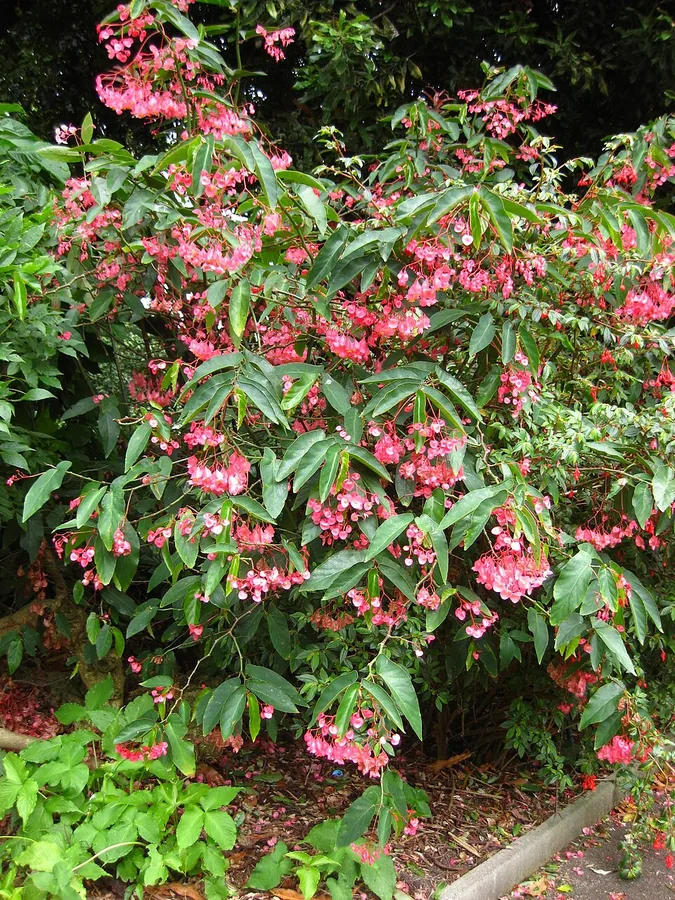
Hand it bright light and a regular pinch, and the angel wing begonia gives back silver-spotted leaves and dangling red flowers.
Bright indirect
50–86°F · 10–30°C
USDA 10–11
1–3 ft · 0.3–0.9 m
Overview
Ever wonder where the name comes from? It's those slightly lopsided, wing-shaped leaves running up the tall canes, lots of them speckled with silver. This one's a cane-type begonia, part of a bunch of upright, bamboo-stemmed plants from the forests of Brazil, and it's been a go-to houseplant for well over a century.
Grow it happily and you get two things at once. The leaves keep it looking great all year, and once the warm months roll in it dangles pendulous clusters of red or pink flowers right where the leaves meet the stem. It's a fast grower that hits 1 to 3 feet indoors, so a bright empty corner won't stay empty for long.
It's an easy plant, but it does like a bit of attention to look its best. Bright light, steady moisture that's never soggy, and a regular pinch keep it full and blooming. Skip the pinching and what happens? It shoots up tall and bare at the base, all leaves up top and bare stem down below.
Care
The short version: bright indirect light with a bit of morning sun, soil kept evenly moist but never wet, warmth above 50°F (10°C), high humidity, and a regular pinch so it stays nice and bushy.
Light
Give it bright indirect light with a little direct morning sun, like you'd get at an east-facing window. It'll handle some partial shade, but harsh afternoon sun scorches the leaves, and too little light leaves it stretched and thin.
Water
Keep the soil evenly moist and let just the top dry out between waterings, giving it enough to keep the leaves crisp. Ease off in winter, and don't let the pot sit in water, because soggy soil rots the roots and stems in no time.
Soil
Pop it in a loose, humus-rich potting mix that drains well. Any pH from 5.5 to 7.5 is fine, leaning acidic to neutral, and honestly good drainage matters way more than nailing the exact number.
Temperature
It's happiest between 50°F and 86°F (10°C to 30°C) and won't take frost at all. A cold draft below 50°F turns the leaves yellow and makes them drop, so keep it away from chilly windows once winter hits.
Humidity
It loves high humidity, more than most rooms have in winter. Cluster it with other plants or set it on a pebble tray, but keep a little air moving so damp, still spots don't bring on mildew.
Feeding
While it's growing hard from spring through summer, feed it a balanced liquid fertilizer at half strength every other watering, so about every couple of weeks. Once things slow down in the darker months, you can quit feeding.
Pruning
Pinch the branch tips early and often to push out side branches and keep it bushy instead of leggy. Once it's as full as you'd like, just stop pinching and let it flower.
Repotting
Repot every 1 to 2 years, or sooner if roots poke through the drainage holes, growth stalls, or water runs straight through. Just bump it up one pot size into fresh, well-drained mix.
Size & spacing
Indoors it grows fast to around 1 to 3 feet (30 to 91 cm) tall and spreads 1 to 2 feet (30 to 61 cm) wide. Give it some room and a bit of airflow so the leaves dry off and mildew stays away.
Troubleshooting
Most begonia trouble comes down to water, light, or air, and that's good news because it's easy to sort out. Too much water rots the base, too little light stretches the canes, and stale air invites mildew. Find your plant below, then fix the cause before it spreads.
Squishy black stem bottoms and a toppling plant
This is root and stem rot, nearly always from soil that stays too wet, and cool damp air can throw botrytis into the mix too. Once the base goes soft and the roots turn dark and slimy, stop watering and let it all dry out. Cut away the rotted bits, take a few healthy tip cuttings to save the plant, and repot into fresh, fast-draining mix.
Fix:
- Withhold water and allow the soil to dry
- Cut away rotted tissue and take healthy tip cuttings to start a fresh plant if rot is advanced
- Repot into fresh, well-drained mix with adequate drainage
Dusty white film on the leaves
That chalky white film? It's powdery mildew, a fungus that loves still, humid air. Open up the air around the plant, pull off the worst leaves, and keep water off the foliage. Knock the humidity down a notch and you'll slow it before it spreads.
Fix:
- Improve air circulation around the plant
- Remove and discard affected foliage
- Avoid wetting the foliage and reduce ambient humidity around the plant
Yellowing leaves that wilt and fall
Soggy soil is usually behind this, and overwatering causes most of it, though a cold draft below 50°F (10°C) can bring on the same droop. Let the surface dry between waterings, never leave the pot sitting in water, and move it away from chilly spots. Keep it in the 50°F to 86°F (10°C to 30°C) range and back off the water through winter.
Fix:
- Let the soil surface dry between waterings and never let the pot sit in standing water
- Move the plant away from cold drafts and keep it above 50°F (10°C)
- Ensure the pot has drainage and a loose, well-drained mix
Tacky leaves, fuzzy white stuff, or tiny fliers
A few common pests go after begonias: mealybugs leave cottony tufts in the leaf joints, spider mites stipple the leaves and spin fine webbing, whiteflies lift off in a little cloud when you brush past, and thrips leave silvery scars. Move the plant away from the others first, then wipe off the mealybugs and rinse the leaves to knock back mites and whiteflies. Follow up with insecticidal soap or horticultural oil, and keep at it until they're gone.
Fix:
- Isolate the affected plant
- Wipe off mealybugs and rinse foliage to dislodge mites and whiteflies
- Treat with an appropriate insecticidal soap or horticultural oil, repeating as needed
Stretched-out stems with leaves way up high
Cane begonias stretch out and go leggy when they're short on light and nobody's been pinching them. Move it somewhere brighter with a bit of morning sun, and pinch the growing tips so it pushes out side branches. Cut the tallest canes right back and root those pieces as cuttings, and the plant fills out again.
Fix:
- Move to a brighter spot with bright indirect light and some direct morning sun (e.g. an east window)
- Pinch the tips of branches to promote lateral growth and a fuller habit
- Cut back overly tall canes and use the removed shoots as cuttings
Toxicity
This is one to keep away from animals. Every part has soluble calcium oxalates in it, and the roots have the most, so the same stuff that upsets a dog or cat can hurt the kidneys of a grazing horse or goat. The sap can leave your skin red and itchy too, so just wash up after pruning and you're fine.
Toxic to
Cats · Dogs · Horses · Rabbits · Livestock · Birds · People
Cats Moderate
A cat that chews the leaves or stems will usually drool and then throw up. The soluble calcium oxalates are why, and since the roots hold the most, keep the pot well out of reach.
Dogs Moderate
Watch for heavy drooling and vomiting soon after a dog has a nibble. It's the same oxalates at work, and a dog that digs up and chews the roots gets the biggest dose.
Horses Toxic
Grazing on begonia is dangerous for horses, since the soluble oxalates can hurt the kidneys. The buried parts carry the most toxin, so don't let a horse pull at a planting.
Rabbits Toxic
Rabbits shouldn't ever be offered any part of this plant. The oxalate crystals irritate the mouth and gut, and the roots are worst of all.
Livestock Toxic
Cattle, goats, and sheep run the same kidney risk as horses if they graze the foliage or roots. Fence the plant off from anything that might browse it.
Birds Caution
Pet birds can react to the oxalates with mouth irritation and an upset stomach. Just keep curious beaks away from the leaves and stems.
People Caution
The plant isn't for eating, and the sap can leave your skin red and itchy from contact. Wash your hands after pruning and keep little kids from chewing the leaves.
Sap can cause skin irritation (contact dermatitis); the underground parts (roots) are the most toxic part. Keep the plant out of reach of pets and children, and avoid letting animals graze on it
Helpline numbers

United States
ASPCA Animal Poison Control: (888) 426-4435 (fee applies)
Poison Control: (800) 222-1222



Canada
Poison Centres: 1-844-764-7669
Varieties
Angel wing is really a whole family of cane begonias, and a few named ones pop up over and over. Here are the ones worth knowing about.
'Argenteo-guttata'
This is the original angel wing begonia, a cross of B. aconitifolia and B. coccinea raised back in 1888, and its silver-spotted wing-shaped leaves are what gave the whole group its name.
'Canary Wings'
Grown for its bright chartreuse-yellow foliage, this cane type hangs heavy clusters of red flowers that really pop against the glowing leaves.
'Corallina de Lucerna'
A vigorous old favorite, it carries big silver-spotted leaves and dangling sprays of red flowers on tall canes.
'Gryphon'
This one's the odd one out, grown for its big palmate leaves, streaked silver on top and deep orange-red underneath, rather than for any flower show.
How to propagate
Angel wing begonias are some of the easiest houseplants to make more of, and one plant gives you plenty to work with. Why buy another when you can just take a cutting?
Stem cuttingsEasy
Spring to summer · Roots in a few weeks
This is the usual way to multiply cane begonias, and it's about as easy as propagation gets. Take a tip or stem cutting in spring or summer, stick it in water or a pot of moist mix, and within a few weeks it roots into a plant just like its parent.
Leaf cuttingsModerate
Spring to summer · Several weeks
Leaf cuttings are the slower second option, taken in spring or summer like stem cuttings. They take several weeks to root and want a bit more babying, so most folks grab stem cuttings first.
DivisionEasy
At repotting · Several weeks
Next time you repot a big, crowded clump, you can split it into separate plants. Each division settles in over several weeks and grows on as its own begonia.
Myths
It's the canes and leaves of a begonia that put pets most at risk.
You'd think the leaves would be the worst part, right? But the ASPCA says otherwise. The roots underground hold the most toxin, which is one more reason to keep pets from digging around in the pot.
Begonia oxalates are pretty much the insoluble crystals you'd find in aroids.
Nope, they're not the same. Begonias have soluble calcium oxalates, which act differently from the insoluble crystals in a lot of aroids and can reach the kidneys of a grazing animal that eats enough.