Houseplant · Crassulaceae
Aeonium
Aeonium
Hand it bright light, gritty soil, and a dry summer rest, and this winter grower stays plump and firm.
Full sun
Every 7–21 days
41–77°F · 5–25°C
USDA 9–11
Overview
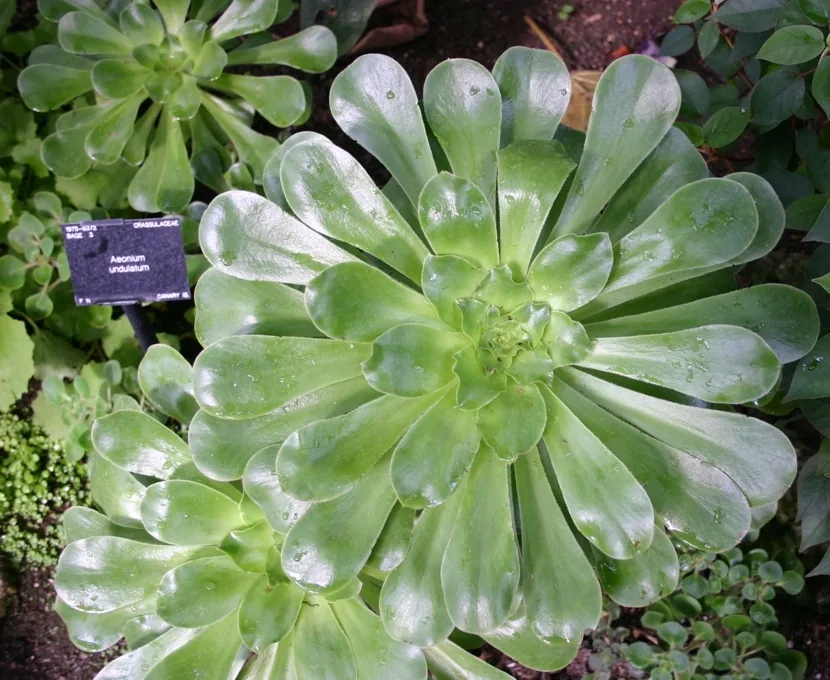
So Aeonium is a succulent in the stonecrop family, and you can grow it indoors or tuck it into a mild garden. Its fleshy leaves bunch into neat rosettes right at the stem tips, and the shape can be anything from a low saucer flat on the soil to a branching little tree. Why does it have such an easy reputation? Hand it some sun and a gritty mix, and honestly it won't ask for much more.
Here's the quirky part: this plant runs on a backwards calendar. While most plants are busy growing in summer and dozing off in winter, Aeonium flips that around completely. It does its growing in the cool season and turns semi-dormant in summer heat, with the rosettes closing up while the lower leaves shrivel and drop. The first time you see it, sure, it looks scary, but that's the plant taking a break, not giving up.
Across the genus you'll find everything from compact windowsill rosettes to sprawling clumps, and the colors are all over the map too. Plenty stay a fresh green, while the well-known black rose carries rosettes so dark they almost read purple-black. Plant it outside in the right climate and it builds a sculptural mound, while in a pot it's a tidy, low-fuss buddy for a sunny ledge.
Care
The short version: park it in full sun to bright light and a gritty, fast-draining mix. Only water once the soil has dried during the cool growing season, ease way back through the summer rest, and feed at half strength while it's growing.
Light
Give Aeonium full sun to bright light, though it's happy enough with partial sun or a bright indirect indoor spot. The more light it gets, the tighter and more compact those rosettes stay. Go light on the light, and you'll watch the stems stretch and lean while bare gaps open up between the leaves.
Water
Hold off on watering until the soil has gone dry, and don't forget this is a winter grower at heart. While it's active in the cool months a drink every 7 to 21 days keeps it content, but once summer dormancy hits you want it much drier so the shut rosettes can rest. Leave it sitting in wet soil over summer and you're inviting stem rot faster than anything.
Soil
Set it up in a gritty, fast-draining mix that won't trap water around the roots. Aim for a pH somewhere between 6.0 and 7.0 and you're in the easy zone. Drainage beats richness every time here, because the one thing this succulent can't deal with is sitting in damp.
Temperature
Aeonium feels good anywhere from roughly 41°F to 77°F (5°C to 25°C). Frost is a no-go since it has basically no cold hardiness, so shelter it from any freeze. And when the heat pushes past the top end of that range, it just clocks out for its summer rest.
Humidity
This is a low humidity plant that couldn't care less about dry indoor air. There's no percentage you need to hit, so relax on that front. What actually helps is good airflow moving around the rosettes, way more than any humidity tray ever would.
Feeding
Reach for a balanced fertilizer watered down to half strength, and line it up with the cool active-growth season running fall through spring. Once a month does the trick. Skip feeding entirely during summer dormancy, since a resting plant isn't taking up much anyway.
Pruning
Trim leggy or bare stems back down to a leaf rosette and you'll coax out fresh branching. Clip away finished flower stalks and any dead lower leaves so it looks neat. And don't toss those trimmings, because the cuttings root with almost no effort.
Repotting
Plan on repotting every 2 to 3 years, timing it to the start of the cool growing season so it can settle in as it wakes up. Bump it up a size when roots peek through the drainage holes, the mix dries out way too fast, or the rosettes start jostling the pot rim. A batch of fresh gritty mix gives it a solid runway for the next round of growth.
Size & spacing
Depending on the type, plants land anywhere from 6 to 35 inches (15 to 90 cm) tall, with a spread of 6 to 24 inches (15 to 60 cm). The flat, low kinds hug the soil, while the branching tree types climb for some genuine height. It grows at a moderate clip, so whatever size you plant is close to what you'll end up living with.
Troubleshooting
Pretty much every Aeonium hiccup comes down to water or light. Luckily it shows its hand early, whether that's soft tissue, stretched-out stems, or a summer slowdown that looks scarier than it really is. Find the symptom that matches yours below, then tweak things before a little problem grows up into a big one.
Mushy, water-soaked tissue where the stem meets the rosette
When a stem goes squishy or see-through at the base, you're looking at rot from overwatering, and it loves to strike a sleepy summer plant left sitting in damp soil. Trim away anything soft or off-colored until you reach firm tissue, give those healthy cuttings a few days to callus, then settle them back into dry gritty mix. Want to stop a repeat? Stick with a mix that drains fast and only water while the plant is actually awake and growing.
Fix:
- Cut away all rotted tissue back to firm, healthy stem
- Let cuttings callus, then re-root in dry gritty mix
- Withhold water until new roots form
Hot weather making the rosettes clamp shut and shed their bottom leaves
Don't panic if this happens in the hot months, because it's just normal summer dormancy rather than a plant on its way out. Aeonium does its growing while things are cool and naps once the heat arrives, so the middle of the rosette stays firm while the outer leaves curl in and drop. Back off the watering, throw a bit of shade over it during the worst afternoon sun, and it'll perk right up as fall settles in.
Fix:
- Reduce watering and let the plant rest
- Provide light shade from intense summer afternoon sun
- Resume normal care as temperatures cool in fall
Bare, stretched stems topped by nothing but a tip rosette
Stems that shoot up tall and naked are basically begging for too little light. You'll notice them tilting toward the window while the leaves spread further apart as the plant hunts for sun. Shift it to a brighter spot that gets a few hours of direct light, and if you like, lop off those stretched rosettes and re-root them so it starts over nice and compact.
Fix:
- Move to a brighter location with several hours of direct sun
- Behead leggy rosettes and re-root them to restart compact growth
Toxicity
Here's the relief for anyone with pets or little ones: Aeonium is non-toxic and pet-safe. The ASPCA doesn't flag it as toxic to cats or dogs, and it won't poison the other animals wandering around your home or yard either. A nosy nibble does nothing, so it can sit on any windowsill and you can stop worrying.
Safe for
People · Cats · Dogs · Horses · Rabbits · Livestock · Birds
Cats Safe
A cat lounging next to one is totally fine, and even a curious nibble won't hurt it.
Dogs Safe
Should your dog decide to taste a rosette, there's nothing in this plant to make it sick.
Horses Safe
Horses won't get poisoned if they happen to graze on it.
Rabbits Safe
Rabbits are in the clear around it, just keep leafy greens to a modest slice of what they eat each day.
Livestock Safe
Goats, sheep, and cattle can hang around it with zero poisoning worry.
Birds Safe
Whether it's a pet bird or backyard chickens, they're all fine near it.
People Safe
It poses no danger to kids or grabby toddlers who can't resist touching everything.
Varieties
Aeonium shows up in all kinds of shapes, from flat ground-hugging saucers to branching stems that behave like miniature trees. The three below are the ones you'll bump into most, and they do a nice job of showing the spread.
Aeonium 'Zwartkop' (black rose)
Its deep purple rosettes sit so dark they look nearly black, riding on tall branching stems, which is exactly where the black rose nickname comes from.
Aeonium arboreum
Picture cheerful green rosettes perched on woody stems that grow tall and treelike, giving you real vertical presence.
Aeonium tabuliforme
This one stays flat to the soil like a saucer, with leaves crammed into tight, layered rings.
How to propagate
Out of all the succulents, Aeonium is about as easy to multiply as they come, and the cool growing season is your sweet spot. Grab a cutting or twist off a side rosette, and a brand-new plant is basically yours for free.
Stem cuttingsEasy
During the cool active growing season (fall to spring) · 2 to 4 weeks to root after callusing
Getting stem cuttings to root is about as easy as it gets. Snip them while the weather is cool and the plant is growing, give the cut ends a few days to callus over, and then tuck them into gritty mix. Roots usually show up in 2 to 4 weeks, but here's the catch: lots of Aeonium rosettes are monocarpic, which means a rosette dies once it has flowered.
Offsets & pupsEasy
During the cool active growing season · 2 to 4 weeks once detached and rooted
Branching kinds sprout side rosettes that come off as instant little plants. Pluck a pup while things are cool and the plant is active, pop it into gritty mix, and it'll get comfortable inside of 2 to 4 weeks. Just keep in mind that lots of Aeonium rosettes are monocarpic, so a rosette dies once it has flowered.
Myths
You've got to water Aeonium as regularly as any other houseplant.
Not so, since it's a drought-tough succulent that grows in winter and barely sips. Keep it nearly dry through summer dormancy, then water only after the soil has dried out during the cool growing stretch.
A rosette that shuts itself up and loses leaves over summer is surely done for.
Nope, that's just normal summer dormancy, the downtime a winter grower takes. The plant picks up growth again when cool weather returns in fall, so let it stay dry and be patient.