Houseplant · Crassulaceae
Jade Plant
Crassula ovata
Give it bright light and a good dry-out between waterings, and honestly the jade plant will outlast most of the houseplants you bought next to it.
Full sun
50–75°F · 10–24°C
USDA 10–11
1–6 ft · 0.3–1.8 m
Overview
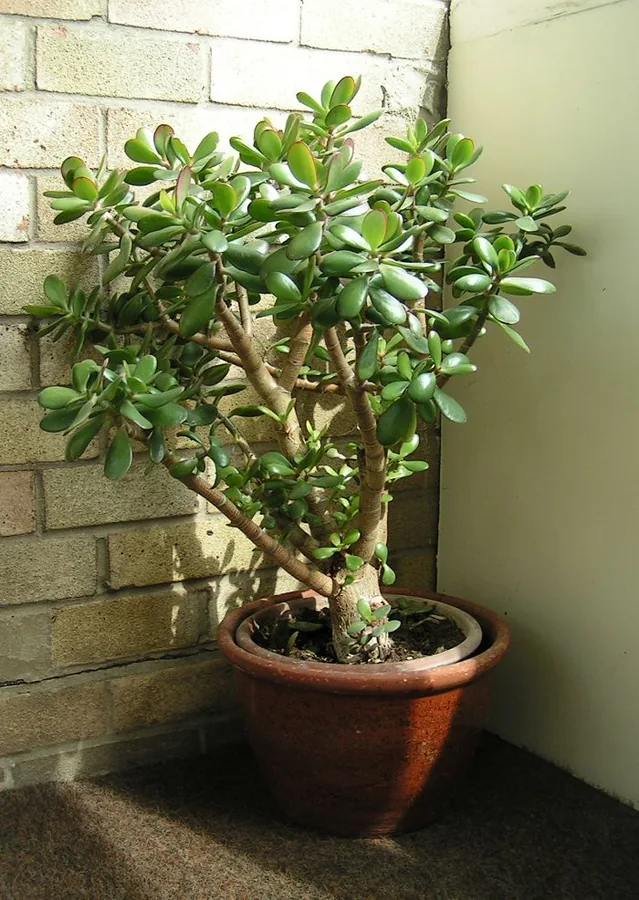
The jade plant is a succulent from southern Africa, and it's turned into one of the easiest houseplants you can keep. It stashes water in thick, glossy leaves and a chunky woody trunk, so it just shrugs off the kind of neglect that would finish off pickier plants. Leave it in a bright window and, over time, it starts to look like a tiny tree.
It grows slowly, but it's in it for the long haul. A jade can stick around for decades and get up to 1 to 6 feet (30 to 180 cm) indoors, thickening into a gnarled, bonsai-like shape over the years. Sure, it goes by money plant and lucky plant, but the real luck is just how forgiving it is, not any charm it carries.
The one thing it really can't stand? A soggy pot. Nearly every jade that dies got loved with too much water, not too little. Get the watering and drainage right and the rest of its care is pretty much a breeze.
Care
The short version: bright light with a bit of direct sun, a gritty fast-draining mix, and water only once the soil's dried out completely. Keep it warm, feed it lightly through the growing season, and try not to overwater it.
Light
Jade really wants bright light with several hours of direct sun, so a south-facing window is its happy place. Give it too little and the stems start stretching and leaning, going pale and leggy as they reach for the glass.
Water
Water it deeply, then wait until the soil's dried out completely before the next drink, and ease way off in winter. Overwatering is by far the biggest jade-killer, while too little just shrivels the leaves, and they plump right back up after a good soak.
Soil
Pot it in a gritty cactus or succulent mix that drains fast, always in a pot with drainage holes. A slightly acidic pH of 6.0 to 6.5 keeps it happy, and that loose, sandy texture stops water from pooling around the roots.
Temperature
Regular room warmth is perfect, somewhere around 50°F to 75°F (10°C to 24°C). Just keep it away from cold drafts and never let it dip below 50°F (10°C), which can set off a sudden leaf drop.
Humidity
This is a dry-climate plant that likes low humidity and isn't a fan of damp, stuffy air. No need to mist it, since your normal household air is plenty.
Feeding
Feed it monthly through spring and summer while it's growing, then knock it off for winter. Go with a balanced or low-nitrogen succulent fertilizer diluted to half strength, because jade grows slowly and doesn't ask for much.
Pruning
Pinch or prune in spring to nudge it toward fuller, tree-like growth and to clear out leggy or weak stems. Jade handles hard pruning just fine, and whatever you trim off will root easily as a fresh cutting.
Repotting
Repot it every 2 to 3 years in spring, or whenever roots start poking out the drainage holes and it gets top-heavy. Move it into a pot just a bit bigger with fresh gritty mix, and go easy on the water for a week or so afterward.
Size & spacing
Indoors a jade gets to 1 to 6 feet (30 to 180 cm) tall with a spread of about 1 to 3 feet (30 to 90 cm). It grows slowly, so give it a solid, heavy pot to keep that thickening top from tipping the whole thing over.
Troubleshooting
Nearly every jade issue comes back to water and light, so you're usually close to the fix. Soft, mushy growth means too much water, while a wrinkled or stretched plant is just asking for a drink or a brighter spot. Match up what you're seeing below and you can usually sort it out before the plant's a goner.
Soft, mushy stems and yellowing at the base
Noticing soft, dark, yellowing tissue down at the base? That's root and stem rot, and it almost always comes from water hanging around the roots too long. Once the base has gone soft there's no bringing it back as it is, so you'll want to cut away the rotten bits and let the cuts dry, or just start fresh from a healthy cutting. After that, only water once the soil's completely dry and you'll be fine.
Fix:
- Stop watering immediately and allow the soil to dry out
- Remove the plant, cut away rotted roots and tissue, and let cuts callus
- Repot into fresh, fast-draining gritty mix
- Propagate healthy stem or leaf cuttings if the base is lost
Leaves dropping all at once
When a jade drops a bunch of leaves out of nowhere, it's usually reacting to stress from a sudden change in light, temperature, or watering. So think back over the last week or so: did it get moved, catch a cold draft, or go from dry to soaked? Get it settled in one steady spot with a steady routine, keep it away from cold below 50°F (10°C), and just let it adjust in its own time.
Fix:
- Stabilize location, light, and watering routine
- Protect from cold drafts and temperatures below 10°C
- Allow the plant to acclimate gradually to new conditions
Wrinkled, shriveled, or drooping leaves
Soft, floppy leaves sitting on bone-dry soil? That's just underwatering, since your jade has used up the water it keeps stashed in its leaves. Give it a good long drink until water runs out the bottom, and then wait until the leaves feel a bit soft again before the next one. The plump look usually comes back within a day or two.
Fix:
- Water thoroughly until it drains from the bottom
- Resume a regular dry-out watering cycle
- Move out of excessive heat if leaves continue to shrivel
Stretched, leggy stems with gaps between leaves
If the stems are stretching out with big gaps between the leaves, your jade just isn't getting enough light, and there's even a name for it: etiolation. Pop it in a bright south-facing window with a few hours of direct sun, and give it a quarter turn now and then so it grows evenly. That stretched growth won't shrink back, but you can prune the leggy stems and get that neat, tree-like shape again.
Fix:
- Move to a brighter spot with several hours of direct sun
- Rotate the plant periodically for even growth
- Prune leggy stems to restore a compact shape
Toxicity
Keep the jade plant away from cats and dogs. The ASPCA lists it as toxic to both, and a pet that chews the leaves can throw up, get lethargic, wobble around, and end up with a slowed heartbeat. Oddly enough, nobody's ever identified the exact toxin, so the safest move is just to put the plant somewhere pets can't get to it. People, though, are basically fine around it.
Toxic to
Cats · Dogs · Horses · Rabbits · Livestock · Birds
Safe for
People
Cats Moderate
A cat that chews the leaves will usually be sick and get kind of dull and sleepy. Keep an eye out for a wobbly, tipsy walk too, and with a bigger bite, a heartbeat that slows right down.
Dogs Moderate
If a dog gets into jade, it'll typically throw up and go quiet and low on energy. Some get a bit unsteady on their feet, and a slower heartbeat can show up after a big mouthful.
Horses Caution
Horses aren't a known target here, but nobody's actually figured out what the toxin is, so who's to say they're safe? Better to just keep the plant well out of their reach.
Rabbits Caution
There's no real record of how jade affects rabbits, and honestly a succulent like this doesn't belong in their diet anyway. So treat it as off-limits and don't let them nibble.
Livestock Caution
Grazing animals haven't been tested with this plant, and since the active stuff is still a mystery, the safe bet is to fence it off from goats, sheep, and cattle. No sense taking chances.
Birds Caution
Nobody's confirmed what jade does to birds, but you know a curious parrot will gnaw on just about anything. So keep it away from cages and perches, just to be safe.
People Low
People are pretty much in the clear, and jade isn't seen as a danger to handle or have around the house. It's not food though, so there's no reason to taste it, and it's worth keeping little kids from popping leaves in their mouths.
Helpline numbers

United States
ASPCA Animal Poison Control: (888) 426-4435 (fee applies)

United Kingdom
Animal PoisonLine: 01202 509000 (fee applies)

Australia
Animal Poisons Helpline: 1300 869 738
Varieties
Past the everyday jade, there are a few cultivars grown for their odd leaf shapes and colors. If you fancy something different, these are the ones worth tracking down.
'Gollum'
Its leaves grow like skinny tubes with reddish suction-cup tips, which gives the whole plant a fun coral-like look.
'Hobbit'
Its leaves curl and roll back into little trumpet shapes, and the plant stays noticeably more compact than 'Gollum'.
'Hummel's Sunset'
Its golden-yellow leaves pick up red edges that get richer when the light's bright and the air turns cooler.
'Variegata' (Tricolor)
Each leaf is streaked with creamy white and green, and it often blushes pink around the edges.
How to propagate
Honestly, few plants are easier to copy than a jade. A single dropped leaf or a snipped stem will root pretty much on its own, which is exactly why one plant tends to turn into a whole collection.
Leaf cuttingsEasy
Spring or summer during active growth · 2 to 4 weeks to root, several weeks more to form plantlets
Believe it or not, one leaf is all you need to start a whole new jade. Just gently pull a healthy leaf in spring or summer while it's growing, let the cut end dry and callus for a few days, then set it on top of or barely into gritty mix. It'll root in 2 to 4 weeks and take several weeks more before little plantlets show up, so it's the slow but almost can't-fail way to go.
Stem cuttingsEasy
Spring or summer during active growth · 2 to 3 weeks to root
Want a real plant a bit quicker? Go with a stem cutting. Take one during the spring or summer growth stretch, let the cut callus for several days, then stick it in dry succulent mix. It roots in around 2 to 3 weeks and settles in faster than a leaf, since it's already got a piece of stem to work with.
Myths
The jade plant is the true money plant that brings wealth, the same one sold as a trailing vine.
Here's the thing: money plant is just a folk name that's been slapped on a bunch of unrelated plants. Jade's a succulent, while the trailing vine sold under that name is usually a pothos or a Pilea, so they're not even close cousins. The name comes from folklore, not from any plant that actually grows you money.
Jade plants are perfectly safe to keep in a home with pets.
Not quite, because the ASPCA lists jade as toxic to cats and dogs, and the weird part is nobody's ever pinned down the exact compound behind it. A pet that eats it can throw up, get lethargic, wobble around, and end up with a slowed heartbeat. So keep it well out of reach of cats and dogs.