Tree · Rutaceae
Blood Orange
Citrus × sinensis
Give it full sun and cold winter nights, and a blood orange ripens flesh the color of garnet.
Full sun
Every 7–14 days
USDA 9–11
8–30 ft · 2.4–9.1 m
Overview
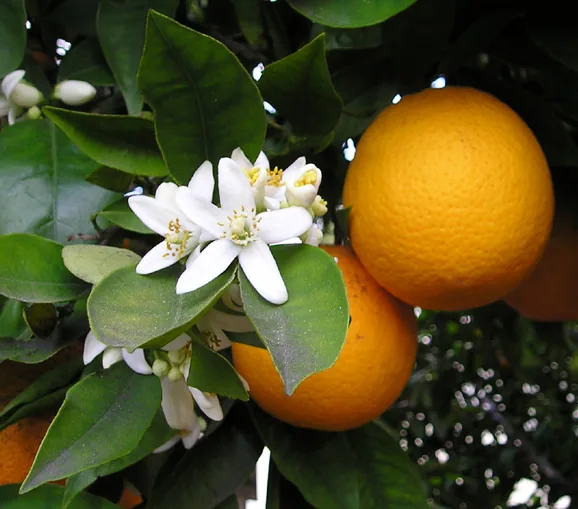
A blood orange is just a sweet orange with a surprise tucked inside. Cut one open and the flesh goes from streaked orange to deep garnet, and that color? It's anthocyanins, the same natural pigments you'll find in berries. It's part of the citrus family and grows as an evergreen tree, all fragrant when it flowers and loaded with fruit through the cooler months.
The interesting bit is how that color even happens. The flesh only turns red when warm days give way to cold winter nights, so the same tree grown somewhere mild and even gives you paler fruit instead. That's the whole reason the best blood oranges come from places like Sicily, where the chill off Mount Etna deepens the color year after year.
Here's the thing: a blood orange wants the same stuff any sweet orange does. Give it full sun, soil that drains well, and a bit of protection from hard frost, and it'll pay you back for patience way more than for fussing. A grafted tree takes a few years to settle in, but once it does, it can keep fruiting for decades.
Care
The short version: full sun, soil that drains well, and watering that's steady but careful so the roots never sit waterlogged. Feed it through the growing season, keep it out of frost, and let those cold winter nights handle the job of coloring the fruit.
Light
Blood oranges want full sun, and honestly the more the better, since sun drives both the crop and the sugar in the fruit. They'll put up with a little partial shade, but a shaded tree flowers less and sets fewer oranges, so why settle?
Water
Soak young trees about twice a week for the first month, then ease off as the roots reach out and toughen up. An established tree mostly just needs water in dry spells, and the one thing you really don't want is waterlogging, because citrus roots just can't handle it.
Soil
Plant it in well-drained loam, silt, or sandy soil where water never pools up. A slightly acidic pH of 5.5 to 6.5 suits it well, but don't stress the exact number, since good drainage matters way more.
Temperature
The tree handles a pretty wide range, from about 41°F to 100°F (5°C to 38°C), though a hard freeze will hurt the leaves and twigs. Cold nights are actually a good thing at fruiting time, since they're what turn the flesh red.
Humidity
Average humidity of 40% to 60% keeps the tree happy, so most climates within its range are no problem at all. Good airflow counts for more than hitting any exact number, so don't fuss over a gauge.
Feeding
Feed it a balanced citrus fertilizer such as 8-8-8 with micronutrients through the growing season, roughly February to October. Spreading the feedings out across spring through fall keeps growth nice and steady instead of forcing it.
Pruning
Blood oranges hardly need pruning at all. Cut out dead, damaged, or crossing branches and clear any suckers below the graft union, and do it after the fruit ripens, since the flowers form on new wood.
Repotting
A container-grown tree wants a bigger pot every 2 to 3 years. How do you know it's time? Roots circling the pot, roots poking out the drainage holes, or growth that's just stalled all mean it's ready to move up a size.
Size & spacing
Out in the ground a blood orange can hit 8 to 30 feet (2.4 to 9 m) tall with a canopy spreading 8 to 15 feet (2.4 to 4.5 m) wide. Give it that much open room so the branches catch full sun and air can move freely through the tree.
When to plant
Blood oranges kind of run on a winter clock. Plant young trees in spring once the frost is done, keep an eye out for fragrant white flowers a bit later, and then pick the ripe fruit from winter into early spring, after a stretch of cold nights has turned the flesh red.
Northern hemisphere
Southern hemisphere
Typical months for a temperate climate: start earlier in warm zones, later where spring frosts linger.
- Plant: Spring, after danger of frost has passed
- Harvest: Fragrant white flowers in spring; blood oranges ripen winter to early spring (about December to April), developing deepest flesh color after cool nights
Hardiness
USDA hardiness zones: 9–11
Temperature: down to -7°C
Troubleshooting
Most blood orange trouble comes down to bugs, cold, or one really serious disease. Catch the early signs and you've got a real shot at saving the tree, or at least slowing things down. Find what matches what you're seeing below, then jump on it before it spreads.
Uneven yellow leaves and crooked, bitter fruit
Here's the bad one: uneven yellow leaves and crooked, bitter fruit usually mean citrus greening, also called Huanglongbing, and it's about the worst thing a citrus tree can catch. A tiny bug called the Asian citrus psyllid carries it from tree to tree, and once a tree's got it, there's no cure. So what do you do? Pull the sick tree and destroy it, plant only certified disease-free stock next time, and keep that psyllid in check before it ever shows up.
Fix:
- Remove and destroy infected trees
- Control the Asian citrus psyllid vector
- Plant certified disease-free stock
Dropping leaves and dying twigs after cold weather
This is just freeze damage. After a hard frost the leaves go water-soaked, then brown, and they drop while the twig tips die back. Cover the tree when a freeze is coming, park it in the warmest spot you've got, and don't grab the pruners yet. Wait for new growth in spring before you cut anything, because those bare twigs often push out fresh leaves once it warms up.
Fix:
- Provide cold protection during freezes
- Prune out dead wood only after new growth resumes in spring
Black sooty coating on the leaves and fruit
That black coating? It's sooty mold, and it grows on the sticky honeydew that aphids, whiteflies, scale, or mealybugs leave behind. The mold does almost nothing to the tree and wipes right off, but it's basically a sign that sap-suckers are busy underneath. Hit those bugs with horticultural oil and rinse the leaves down, and the mold's got nothing left to feed on, so it clears up on its own.
Fix:
- Control the honeydew-producing insects with horticultural oil
- Rinse foliage to remove mold
Toxicity
The juicy flesh is great for people, but the rest of the tree isn't for animals. The peel, leaves, and seeds hold essential oils and psoralens that upset a pet's stomach and can bother the skin. Keep cats, dogs, horses, and grazing animals away from the rind, the foliage, and any prunings.
Toxic to
Cats · Dogs · Horses · Rabbits · Livestock · Birds
Safe for
People
Cats Mild
If a cat chews on the peel or leaves, it might drool, throw up, or get loose stools and seem off for a bit. The peel oils can also leave the skin red and itchy, so a wipe-down helps.
Dogs Mild
A dog that eats the rind or foliage will probably end up with an upset stomach, some vomiting, or diarrhea, and the oils can bother the skin where they touch. It's miserable but usually passes.
Horses Mild
The ASPCA lists sweet orange as toxic to horses, since the same peel oils and psoralens upset the gut. Best move? Keep prunings and windfall peels out of the paddock so they can't get to them.
Rabbits Caution
The peel and leaves carry those same irritating oils, so they're not a good nibble for a rabbit. A little bit of the flesh now and then is fine, but the rind and foliage are a no.
Livestock Caution
Goats, sheep, and cattle can handle a small bit of pulp, but a belly full of bitter peel and leaves leads to digestive trouble. Don't let them browse the tree or pick at the trimmings.
Birds Caution
Plenty of birds love a bit of the juicy flesh as a treat, but the oily peel and pith are better left off the plate.
People Flesh safe
Good news for you: the juicy flesh is totally safe to eat and a real treat. Handle a ton of peel, though, and sensitive skin can tingle out in the sun, thanks to the psoralens in the oil.
The fleshy fruit pulp is edible, but keep peels, leaves, seeds, and concentrated peel oils away from pets.
Helpline numbers

United States
ASPCA Animal Poison Control: (888) 426-4435 (fee applies)
Poison Control: (800) 222-1222



Canada
Poison Centres: 1-844-764-7669
Varieties
Three blood orange cultivars keep coming up, and each one's got its own mix of color, sweetness, and season. These are the ones worth knowing by name.
Moro
Moro's the one with the deepest, most dependable crimson-to-burgundy flesh of the trio, packing the highest anthocyanin content and a berry flavor that tastes a lot like raspberry.
Tarocco
Tarocco is Italy's most widely grown blood orange, and it's sweet and low in acid with almost no seeds and flesh that goes anywhere from orange to red.
Sanguinello
Sanguinello is a late-season Spanish cultivar with few seeds and a moderate red color, and the nice part is it hangs on the tree well after it ripens.
How to propagate
Blood oranges are grown almost entirely by grafting, which copies a favorite tree exactly. Seed works in a pinch, but it'll cost you years of patience and won't promise much.
GraftingDemanding
Spring to summer when the bark slips · 1 to 2 years to a sellable tree; about 3 to 5 years to fruiting
Want to know how nurseries grow nearly every blood orange? Grafting. You take a bud of the cultivar you want and join it onto a rootstock in spring or summer, while the bark still slips, and that keeps the fruit true to type while borrowing the rootstock's cold and disease tolerance. It takes a bit of skill, and you're looking at 1 to 2 years to a tree worth selling and 3 to 5 years before it fruits.
SeedModerate
Spring · Several years; many seedlings come true due to nucellar embryony but are slow to fruit
Sure, you can grow one from seed in spring, and it's easy enough to try, but nurseries skip it for a reason. A lot of citrus seeds actually come true to the parent thanks to a quirk called nucellar embryony, but the seedlings throw thorny juvenile growth and take several years to fruit. So expect a slow, kind of unpredictable plant instead of a fast copy of the tree you started with.
Myths
Blood oranges are a man-made cross or a genetically modified fruit.
Nope, not even close. The red color is just anthocyanins, the same natural pigments that make berries and red cabbage red. A blood orange is really just a pigmented version of the regular sweet orange, Citrus x sinensis, and it showed up all on its own, no lab and no crossbreeding needed.
Blood oranges need a hot tropical climate to turn red.
It's actually the other way around. The flesh only turns red when warm days flip to cold nights, so the deepest color comes from places with chilly winters, like the slopes around Mount Etna in Sicily, and not from steady tropical heat at all.