Tree · Rutaceae
Lemon
Citrus limon
Give it full sun, deep but not-too-often water, and some frost cover, and a lemon tree keeps fruiting for decades.
Full sun
Every 7–14 days
USDA 9–11
6–20 ft · 1.8–6 m
Overview
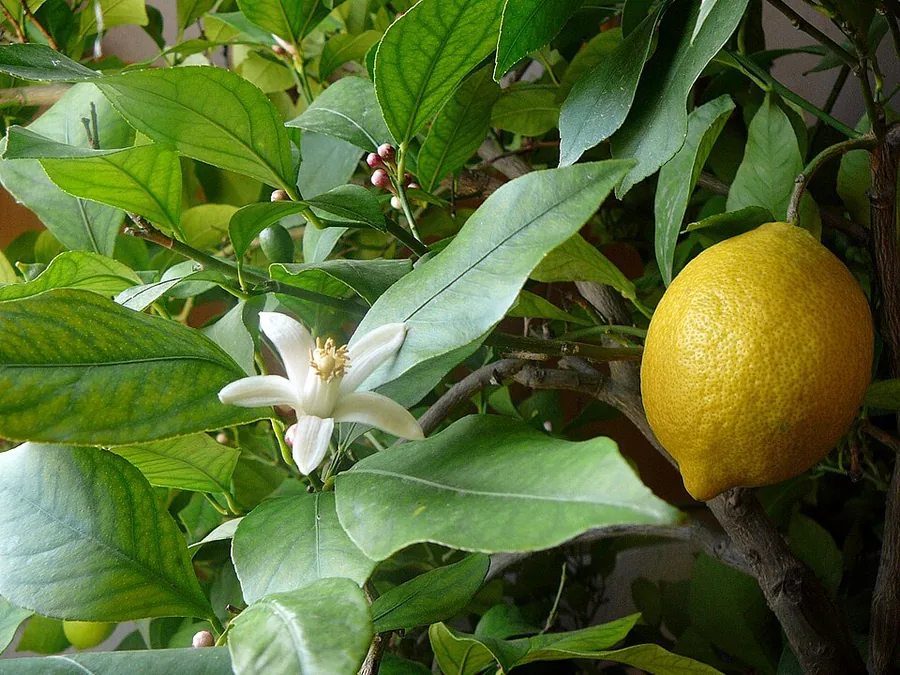
The lemon's a small evergreen tree in the citrus family, and it's an easy one to love thanks to its glossy leaves, sweet-smelling white blossoms, and tart yellow fruit. It travelled here from Asia by way of the Mediterranean, and it settles in wherever winters stay mild, in zones 9 to 11. Give it a warm, sunny spot and, funnily enough, it'll often carry flowers and fruit at the very same time, sometimes right through the year.
You can plant a lemon straight in the ground if you're somewhere frost-free, or just keep it in a big pot you can wheel under cover when the cold shows up. A grown tree hits 6 to 20 feet (1.8 to 6 m) tall, but don't panic if space is tight, because the dwarf types stay much smaller and fit a patio or sunroom nicely. And here's a fun fact: almost every tree you buy is grafted onto a hardy rootstock, which is exactly why a lemon grown from a pip rarely matches its parent.
Give a lemon what it likes and honestly it doesn't ask for much back. The main things to watch out for are frost, soggy roots, and a short list of citrus pests and diseases. Nail the drainage and the watering rhythm, keep half an eye on the tender new growth, and the tree'll pay you back with fruit for years.
Care
The short version: full sun and shelter from frost, a deep watering only once the top few centimetres of soil have dried out, well-drained soil rich in organic matter, and a monthly citrus feed all through the growing season.
Light
Lemons really want full sun, ideally 8 hours or more a day, since that's what drives all the flowering and fruit. They'll cope with partial sun or bright indirect light indoors, but less light means a leggier tree and a thinner crop, so keep that in mind.
Water
Water deeply, then just wait until the top few centimetres of soil dry out before you water again, usually every 7 to 14 days. Citrus hate both drought and soggy roots, so the rhythm matters way more than how much you pour on. A potted tree dries out faster, so check it more often when it's hot.
Soil
Plant it in well-drained sandy loam with plenty of organic matter, and never let the roots sit in water. A slightly acidic pH of 5.5 to 6.5 keeps the tree feeding itself nicely. If there's one thing a lemon won't forgive, it's poor drainage.
Temperature
Lemons love warmth, and they'll run from about 28°F to 100°F (-2°C to 38°C), though frost near that low end nips the tender growth. Keep a potted tree above freezing over winter and it'll come through just fine.
Humidity
Average humidity of 30% to 60% suits a lemon fine, so there's really nothing to fuss over. Indoors, the thing to watch is the dry air near a heater, where an occasional misting or a pebble tray does the trick.
Feeding
Feed it once a month through the growing season, spring into late summer, with a citrus-specific fertilizer that's higher in nitrogen. The added iron, zinc, and manganese head off that yellowing citrus are prone to.
Pruning
Lemons don't need much shaping at all. Prune lightly in late winter or early spring to take out dead, crossing, or weak wood and any suckers below the graft union, and thin the canopy just enough to let light and air move through.
Repotting
Bump a container tree up into a pot one size larger every 2 to 3 years. Roots circling the pot, water running straight through, or growth that stalls even though you're feeding, those all tell you it's time to size up.
Size & spacing
A lemon tree gets 6 to 20 feet (1.8 to 6 m) tall with a spread of 5 to 15 feet (1.5 to 4.5 m), so give it open room, or grab a dwarf if you're working with a tight spot or a container.
When to plant
A lemon runs on warmth and just stops when frost hits. So set young trees out in spring, once the cold's passed and the soil's warmed up. Blossom shows up mostly in spring, and then the fruit takes its sweet time, ripening roughly 6 to 9 months later, with the peaks often landing in winter.
Northern hemisphere
Southern hemisphere
Typical months for a temperate climate: start earlier in warm zones, later where spring frosts linger.
- Plant: spring, after all danger of frost has passed and soil has warmed
- Harvest: Blooms mainly in spring but is everbearing in mild climates; fruit ripens roughly 6 to 9 months after bloom, with peaks often in winter. Trees are typically grafted onto rootstock rather than grown from seed.
Hardiness
USDA hardiness zones: 9–11
Temperature: down to -7°C
Troubleshooting
With a lemon, trouble tends to show up on the leaves first, whether it's a pest mining the new flush or a fungus blistering the older foliage. Learn to read those early signs and you can jump in before the tree really slips. Just match what you're seeing below, then sort it out while doing so still makes a difference.
Patchy mottled foliage, dying twigs, and lopsided fruit that tastes bitter
This is the bad one: Huanglongbing, also called citrus greening. It's a bacterial disease that the Asian citrus psyllid carries, and it slowly kills the tree. There's no cure, so a confirmed tree has to come out to keep the trees nearby safe. Here's the tell: the mottling spreads across the veins in a lopsided way, which is how you know it isn't just a neat nutrient shortage, so get any suspect tree tested by your agricultural agency.
Fix:
- There is no cure; remove and dispose of confirmed infected trees to protect the area
- Report suspected cases to your state department of agriculture or extension office
- Manage the Asian citrus psyllid vector
Sticky residue, dark grime, and little bumps that won't budge
Those little bumps that don't move are scale insects, and they're sipping sap while they sit there. The sticky stuff and black mold? That's just the honeydew they leave behind. Wipe or prune off a light run, then coat the rest with a narrow-range horticultural oil so you get full cover. And deal with the ants too, since they basically farm the scale and shoo away the bugs that would've cleaned it up.
Fix:
- Wipe or prune off light infestations
- Apply horticultural or narrow-range oil for thorough coverage
- Control ants to allow natural predators and parasitoids to work
Yellow-brown greasy patches beneath the older leaves
This one's greasy spot, a fungus that raises blisters on the underside of older leaves after a warm, muggy stretch and then makes them drop early. Rake up and bin the fallen leaves, because that's where the spores wait out the winter, and open the canopy with a bit of pruning so the leaves dry off quicker. A copper or oil spray timed to the summer flush helps too, wherever that's the advice for your area.
Fix:
- Rake and remove fallen leaves that harbor spores
- Improve airflow through pruning
- Apply a copper or horticultural oil spray timed to summer leaf flush where recommended
Squiggly silver lines and crinkled baby leaves
Seeing squiggly silver trails on the youngest leaves? That's the citrus leafminer, and its larvae tunnel around inside the soft new flush. Pinch off the worst leaves and go easy on nitrogen and light pruning, because both of those push out the tender growth the pest is after. On a grown tree it looks scary but hardly ever costs you fruit, so there's no need to reach for a spray.
Fix:
- Prune off and dispose of heavily mined new flush
- Avoid excess nitrogen and frequent light pruning that forces vulnerable new flush
- Use horticultural oil on new growth; protect natural parasitoid wasps by avoiding broad-spectrum insecticides
Toxicity
Good news first: the flesh and juice are safe for people. The rest of the tree, though, isn't really pet-friendly, because the peel, leaves, and seeds hold essential oils and psoralens that the ASPCA flags as toxic to cats and dogs, and those same compounds can upset other animals too. So keep rinds, prunings, and any concentrated citrus oils away from your pets.
Toxic to
Cats · Dogs · Horses · Rabbits · Livestock · Birds
Safe for
People
Cats Mild
If a cat chews on the peel or leaves, you'll usually see vomiting, loose stools, some drooling, and a flat, mopey mood. Concentrated citrus oil on the fur can make the skin touchy in sunlight too, so that's worth watching.
Dogs Mild
A dog that gnaws bark, leaves, or peel is probably in for an upset stomach, diarrhea, and a bit of a slump. Strong citrus oils can make the skin react in the sun as well, so keep those products off your dog.
Horses Mild
The same oils and psoralens in the peel and leaves can throw off a horse's gut and leave it dull. Good thing most horses can't stand the bitter foliage, so it doesn't come up much.
Rabbits Caution
A rabbit's sensitive tummy just doesn't get on with the fragrant oils in the peel and leaves. Skip the rind and greenery altogether, and even the juicy flesh is only an occasional nibble at most.
Livestock Caution
Cattle, goats, and sheep hardly ever go for citrus, but the oily peel and leaves can upset the stomach if they try. Just keep prunings and windfall fruit out of the grazing area and you're fine.
Birds Caution
It's best to keep the strong oils in the rind and leaves away from pet birds, since their bodies don't handle those compounds well. A tiny taste of the plain flesh is really the most they should get.
People Flesh safe
For people the flesh and juice are total kitchen staples, safe to eat and drink. Handle a lot of peel or oil, though, and your skin can turn sun-sensitive, so give your hands a rinse before you head outside.
Keep peels, leaves, seeds, and any concentrated lemon essential oils away from pets, and avoid applying citrus oil products to animals.
Helpline numbers

United States
ASPCA Animal Poison Control: (888) 426-4435 (fee applies)
Poison Control: (800) 222-1222



Canada
Poison Centres: 1-844-764-7669
Varieties
There are hundreds of lemon selections out there, but only a handful turn up in pretty much every garden and grocery aisle. These are the ones worth knowing by name.
Eureka
This is your everyday grocery lemon, pretty much thornless and happy to fruit all year where the winters stay mild.
Lisbon
Lisbon's a strong, thorny grower that piles on fruit in seasonal bursts and shrugs off cold and heat better than Eureka does.
Meyer
Meyer's a lemon-mandarin cross, so the fruit's sweeter and less sour with a thin orange-tinged rind, and it makes a great little dwarf for pots.
How to propagate
Lemons are nearly always multiplied by grafting, but you can also strike a cutting or sow a seed if you're okay with the trade-offs that come with each route.
GraftingDemanding
Active growing season, late spring to summer · A season or more for the graft to take and push growth
Grafting is how it's done commercially, and it just means budding a chosen lemon scion onto a tough, disease-resistant rootstock during the active growing season, late spring into summer. It takes a bit of skill, and the graft needs a season or more to knit together and start pushing growth. But the payoff is worth it: a tree that fruits true and comes with the rootstock's toughness.
Stem cuttingsModerate
Spring to early summer from semi-hardwood growth · Several weeks to a few months to root
Want something simpler? You can root a lemon from semi-hardwood cuttings taken in spring or early summer, and they'll strike in anywhere from several weeks to a few months. The tree then grows on its own roots, which is easier than grafting, though you do give up the disease resistance and vigor a good rootstock would've brought.
SeedModerate
Sow fresh seed from ripe fruit · Many years to reach fruiting size, if ever true to type
Sowing fresh seed from a ripe fruit is easy enough, but just know the seedlings come up variable, often thorny, and take many years to reach fruiting size, if they ever fruit like the parent at all. That's why seed is mostly for breeding work and raising rootstock, not for a tree you're hoping to actually harvest from.
Myths
A pip from any grocery lemon grows right back into the same tree.
Here's the catch: the lemons you buy are grafted onto a separate rootstock for disease resistance and reliable fruit, so a seedling won't turn out like its parent. What you'll actually get is a slow, unpredictable, often thorny tree that might never fruit the way you were picturing.
Lemon trees and their oils won't bother cats or dogs.
Not quite, unfortunately. The ASPCA lists Citrus limon as toxic to cats and dogs, thanks to the limonene, linalool, and psoralens packed into the peel, leaves, and seeds. So keep the rind, foliage, and any concentrated citrus oils well out of a pet's reach.