Shrub · Rosaceae
Boysenberry
Rubus ursinus × idaeus
Give it full sun, a sturdy trellis, and a yearly prune, and the boysenberry crops with big, wine-dark fruit.
Full sun
Every 5–7 days
41–86°F · 5–30°C
USDA 6–9
Overview
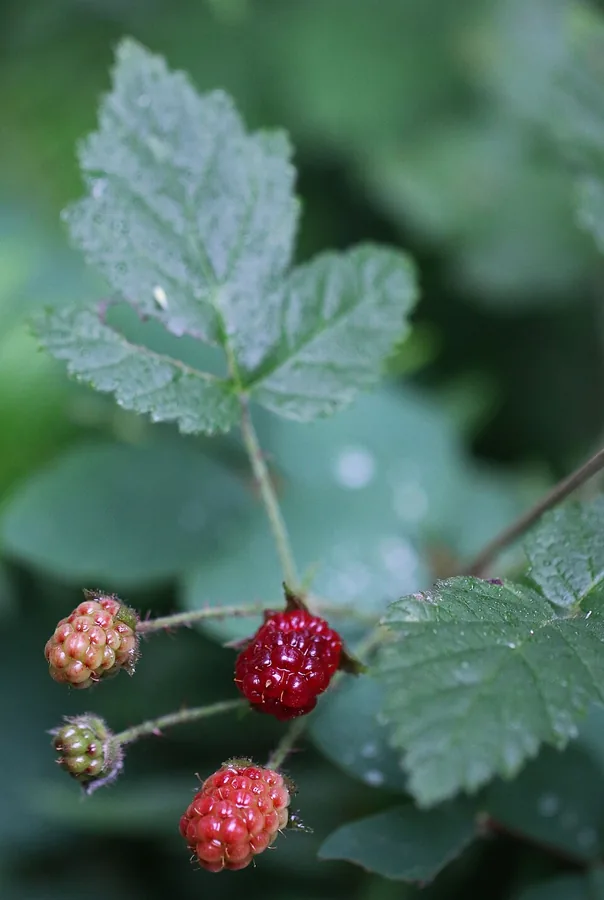
The boysenberry is a trailing bramble in the rose family, and it's grown for those big, soft berries that ripen to a deep reddish-purple. It started life as a tangled cross of blackberry, raspberry, loganberry, and dewberry, and Knott's Berry Farm out in California is what turned it into a household name. The fruit comes out sweeter and more fragrant than a plain blackberry, with a flavor that's truly its own.
Like the other trailing brambles, it runs on a two-year cane cycle. The first-year canes, the primocanes, simply put on growth. Then the next summer those same canes flower and fruit as floricanes before dying back, so every year you'll be juggling old wood to pull out and new wood to tie in. That back-and-forth is what drives how you prune and trellis the thing.
It grows fast and spreads readily, dropping roots anywhere a cane tip lands on soil. Give it full sun, deep rich ground, and a strong support, and it'll crop well for years. Leave it to its own devices, though, and it sprawls into a thorny tangle, so think of a trellis as a must, not a maybe.
Care
The short version: full sun, deep well-drained soil rich in organic matter, and 1 to 2 inches of water a week. Guide the canes onto a trellis, cut out the spent fruiting canes after harvest, and tie in the new ones for next year.
Light
Boysenberries crop best in full sun, meaning six or more hours a day. They'll put up with a little afternoon shade, but you'll pay for it with lighter fruiting and weaker canes, and a shaded, damp plant is far more likely to catch disease.
Water
Give the plants 1 to 2 inches of water a week, and lean toward the high end while the fruit is setting and ripening. Drip irrigation is the way to do it, since soaking the leaves and berries just invites rot. Steady moisture all summer is what gives you fuller, juicier fruit.
Soil
Plant in deep, well-drained sandy loam with a good helping of organic matter worked in. A slightly acidic pH of 5.8 to 6.5 is right where they like it, and that deep, rich ground gives the wide-ranging roots plenty of room to stretch.
Temperature
These plants handle a wide range, from about 41°F to 86°F (5°C to 30°C) through the growing season, and they're hardy in zones 6 to 9. Long spells of extreme heat can stress the fruit, so a bit of afternoon shade helps where summers get really hot.
Humidity
Average humidity somewhere in the 40% to 70% range suits boysenberries just fine. What counts way more is airflow, because still, damp air around crowded canes is exactly the kind of thing gray mold and cane diseases are after.
Feeding
Feed once in early spring as growth picks back up, using a balanced complete fertilizer such as 10-10-10 or a top-dressing of aged compost. A split nitrogen application across the season works too. Keep it light, though, since piling on the feed pushes soft, disease-prone growth.
Pruning
Pruning really is the heart of growing this one. Once you've harvested, cut the spent fruiting floricanes right down to the ground, then train and tie the fresh primocanes onto the trellis for next year's crop. Thin out any crowded canes so air can move and disease stays in check.
Repotting
Boysenberries go in the ground or a large trellised bed, not in pots, so there's no repotting to fuss over. If you do try one in a container, watch for roots circling out the bottom and weak, stunted new canes, both signs it's run out of room.
Size & spacing
A plant climbs to about 3 to 6 feet (90 to 180 cm) tall on its trellis, but the trailing canes reach 6 to 10 feet (1.8 to 3 m) wide. Leave each plant that much space along the support so you can train the canes out and let air move between them.
When to plant
Boysenberries move with the seasons the way any trailing bramble does. Set new plants out in early spring once hard frost is behind you, keep an eye out for bloom in late spring, and pick through early to mid summer, roughly June into July across most of zones 6 to 9.
Northern hemisphere
Southern hemisphere
Typical months for a temperate climate: start earlier in warm zones, later where spring frosts linger.
- Plant: early spring after danger of hard frost has passed
- Harvest: blooms late spring; harvest early to mid summer (roughly June to July)
Hardiness
USDA hardiness zones: 6–9
Temperature: down to -23°C
Troubleshooting
Most of the trouble you'll run into with boysenberries turns up on the canes or the ripening fruit, and damp, crowded plantings are usually the reason. Get to know the early signs and you can cut a problem out before it travels down the row. Find what matches below, then act while it still does some good.
Canes yellowing, wilting, and folding over on one side
Verticillium wilt is a soil fungus that plugs the plant up from the inside, and once it's in, there's no fixing it. Slice into a wilting cane and you'll usually spot brown streaks running through the wood. Pull the affected plants and destroy them, and whatever you do, don't replant brambles where tomatoes, peppers, or potatoes were growing lately, because they leave the very same fungus behind.
Fix:
- Remove and destroy affected plants
- Do not replant brambles in the same infested soil
- Choose new sites with no recent solanaceous crops
Gray centers with purple rims showing up along the canes
What you're looking at is anthracnose, a fungus that loves a long wet stretch and leaves sunken lesions that can split the cane open. Snip out the infected canes and get rid of them, then thin whatever's left so air can move through the patch. If it keeps coming back, a dormant lime sulfur or a labeled fungicide will help you stay ahead of it.
Fix:
- Prune and remove infected canes and destroy them
- Improve air circulation by thinning canes and weeding
- Apply a labeled fungicide or dormant lime sulfur per extension guidance
Ripening berries turning soft, fuzzy, and gray
Gray mold moves in on ripening fruit when the weather turns cool and damp, and it really thrives buried inside a crowded canopy. The moment you see a spoiled berry, pick it off, and harvest the ripe ones often so nothing just sits there waiting to rot. Want to keep it from spreading? Keep the leaves dry and give the canes plenty of room.
Fix:
- Pick and remove infected fruit promptly
- Harvest frequently when ripe
- Improve airflow and reduce canopy density
Toxicity
Here's some good news if you've got pets: the boysenberry isn't poisonous. The leaves and fruit are safe for cats, dogs, and other animals, and the ripe berries are great for people too. The one real hazard is physical, not chemical, since thorny canes carry sharp prickles that can scratch, so wear gloves and go for a thornless type if pets share the garden.
Safe for
People · Cats · Dogs · Horses · Rabbits · Livestock · Birds
Cats Safe
There's no poisoning to worry about here. If a cat chews a leaf or grabs a berry, it'll be just fine, though the thorns on a thorny cane can still leave a scratch.
Dogs Safe
This plant won't hurt a dog, and a couple of ripe berries make a perfectly safe snack. A big pile of fruit can loosen things up, though, so keep the portions small.
Horses Safe
Horses can graze the leaves and fruit with no trouble at all. The only thing to keep an eye on is the prickles on a thorny cane.
Rabbits Safe
Rabbits can munch the leaves and the fruit safely enough. Just go light on the berries, since too much sugary fruit upsets a rabbit's tummy.
Livestock Safe
Cattle, goats, and sheep browse bramble leaves with no ill effects, and goats will happily clear out a whole thicket for you.
Birds Safe
Birds adore the ripe berries and they're none the worse for it. Netting is really about saving your harvest, not protecting them.
People Safe
The ripe berries are a sweet, edible fruit you can eat fresh or cook with. The only genuine hazard is the thorns, so glove up before you prune.
The main hazard is physical: most boysenberry canes bear sharp recurved thorns/prickles that can scratch pets and people; thornless selections exist and are safer to handle. Wear gloves when pruning or training canes.
Varieties
With boysenberries it really boils down to one choice: thorns or no thorns? Either way you get the same big, dark fruit.
Thornless Boysenberry
A smooth-caned pick that gives you the same big, dark wine-red berries minus the prickles, which makes picking the fruit and training the canes so much easier on your hands.
Original (thorny) Boysenberry
This is the classic Rudolph Boysen selection that Knott's Berry Farm put on the map, with strong, thorny trailing canes and big, fragrant fruit.
Companions
Boysenberries do best away from their disease-sharing neighbors, and a few aromatic plants nearby can help keep pests down.
Plant near
Garlic and onions: Alliums planted nearby can help deter some pests around brambles.
Keep apart
Tomatoes, peppers, potatoes, and eggplant: These solanaceous crops can harbor Verticillium wilt that infects brambles, so avoid planting brambles where they recently grew.
How to propagate
Boysenberries are easy to multiply from a plant you've already got, since those long trailing canes will root just about anywhere they touch down.
LayeringEasy
Late summer to early fall · Roots form over several weeks; transplant the following spring
Tip layering is the easiest path in. Sometime in late summer or early fall, just bend a trailing primocane down and tuck its growing tip a few inches into the soil. Over the next several weeks it puts out roots, and come the following spring you can cut the new plant loose and set it wherever you'd like.
Stem cuttingsModerate
Late winter dormant season or early summer for softwood · Several weeks to a few months
Rooting cuttings is another option, either dormant cane sections taken in late winter or softwood cuttings in early summer. Keep them moist and they'll root in anywhere from several weeks to a few months. Honestly, for trailing types like this one, tip layering is the easier and more dependable way to go.
Myths
A boysenberry is just another name for a blackberry.
It actually goes back to a tangled cross of blackberry, raspberry, loganberry, and dewberry, so it's carrying genes from all four. The result is a fruit all its own, big and soft with a dark reddish-purple color and a flavor no plain blackberry can quite pull off.
Boysenberries fruit on brand-new canes in their first year.
Like most trailing brambles, they run on a two-year cycle. A cane spends its whole first season just growing, then fruits the next summer as a floricane before it dies back, and that's exactly why you cut out the spent canes and tie in the fresh ones every year.