Ornamental · Lamiaceae
Spotted Dead Nettle
Lamium maculatum
Tuck it into cool, dry shade where almost nothing else thrives, and the silver foliage brightens the ground straight through the season.
Partial shade
Every 5–10 days
USDA 3–8
6–9 in · 15–23 cm
Overview
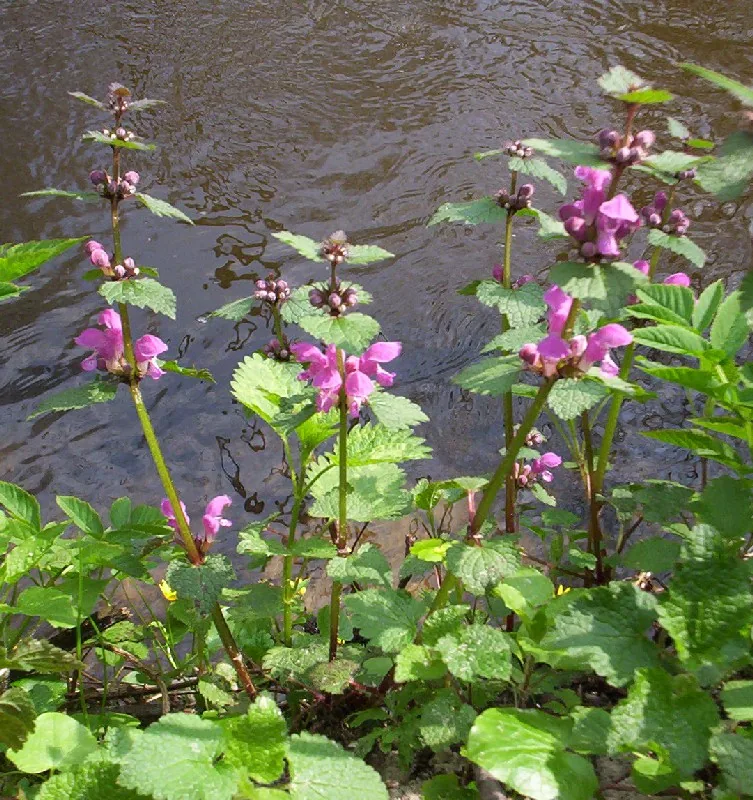
Spotted dead nettle is a low, creeping groundcover made for the shade, prized just as much for its silver-marked leaves as for the pink, mauve, or white flowers that lift above them in late spring. It's part of the mint family, so it has that family's fast, mat-forming way of growing. The name trips folks up, since it resembles a stinging nettle yet carries no sting whatsoever.
Few plants are this forgiving in a difficult corner. It reaches 6 to 9 inches (15 to 23 cm) tall and weaves into a thick carpet, covering the ground under shrubs and along the shady north side of a house where grass simply quits. Because the stems root as they go, a handful of plants soon look like one unbroken sweep of foliage.
Hand it cool, moist, shaded ground and it rewards you with months of color and barely any work. Shove it into a hot, dry, sunny spot, though, and the leaves scorch and thin out. Give it the shade it craves, and about the only chore left is keeping its keen spread within the bed you had in mind.
Care
The short version: part to full shade, soil that stays cool and evenly moist while draining well, one shearing once the flowers fade, and an edge to keep the spreading mat where you want it.
Light
Aim for part to full shade. It'll take a bit of morning or dappled sun, but a hot, sunny spot scorches and thins the leaves, so the deeper shade where grass struggles is right where this plant does its best.
Water
Keep the soil cool and evenly moist, watering about every 5 to 10 days and a bit more often when things turn dry. Once it's settled in it puts up with dry shade, but the leaves brown and thin if it bakes, so don't let it go bone dry in the heat.
Soil
Set it in humusy, well-drained loam loaded with organic matter, with a pH anywhere from 6.0 to 7.5. The one thing it can't stand is wet or packed-down ground, which opens the door to crown rot.
Temperature
It's a real toughie, shrugging off anything from -40°F to 84°F (-40°C to 29°C). Cold won't faze it, but a long stretch of summer heat and humidity can make the mat melt out in patches.
Humidity
Everyday outdoor humidity works fine, so there's no number to chase. What counts more is air movement, because stagnant, muggy air around crowded leaves is what kicks off leaf spot and blight.
Feeding
This one eats lightly and rarely needs a hand. A single helping of balanced general-purpose fertilizer in spring does the trick, and overdoing it just leads to soft, floppy growth.
Pruning
Shear or cut the plants back hard after they bloom. That one trim clears out worn foliage, fills any bare spots, and often nudges a second round of flowers.
Repotting
It seldom needs repotting, but a potted one lets you know it's time when the center goes bare and dead or the roots cram the pot and dry out fast. When that shows up, divide it and replant into fresh soil.
Size & spacing
Plants stay short at 6 to 9 inches (15 to 23 cm) tall, yet each one spreads 12 to 24 inches (30 to 61 cm) across, so space them out enough to knit into a carpet without crowding each other.
When to plant
Spotted dead nettle is a tough perennial that returns on its own anywhere from zone 3 to zone 8. Get it in the ground in spring as soon as the soil can be worked, watch for flowers from late spring into summer, then shear it back afterward to freshen up the foliage for the rest of the year.
Northern hemisphere
Southern hemisphere
Typical months for a temperate climate: start earlier in warm zones, later where spring frosts linger.
- Plant: spring
- Harvest: Late spring into summer
Hardiness
USDA hardiness zones: 3–8
Temperature: down to -40°C
Troubleshooting
Nearly every issue with dead nettle traces back to the wrong location or too much moisture. Browning leaves usually say it's too hot and dry, while holes and spots flag slugs or wet-weather fungus. Match what you're seeing to the list below, and sort out the conditions before you reach for anything heavier.
Browning, scorched foliage and bald spots across the mat
What you're looking at is leaf scorch, which crops up when the planting lands somewhere too hot, too dry, or too bright for a plant that's after cool, moist shade. Heat and sticky summer air can also bring on melt-out, where chunks of a big planting brown and go thin. Cut the plants back hard so fresh leaves push out, keep the soil evenly damp with regular water, and shift anything stranded in a hot, sunny spot.
Fix:
- Cut or shear plants back to stimulate fresh new foliage growth
- Increase watering to keep soil evenly moist
- Relocate or shade plants sited in hot, dry, sunny areas
Confused with the invasive yellow archangel
People often muddle spotted dead nettle with yellow archangel (Lamium galeobdolon), a different cousin that genuinely is invasive and carries that label in the western US. So how do you tell them apart? Look at the flowers and the way each grows: yellow archangel shows yellow blooms and bolts outward on rooting runners, while spotted dead nettle flowers pink, mauve, or white and stays a breeze to manage. Stick with Lamium maculatum cultivars, and yank out any yellow archangel you spot.
Fix:
- Identify and remove yellow archangel where present
- Choose Lamium maculatum cultivars rather than L. galeobdolon
A roaming carpet that drifts past where you planted it
Dead nettle gets around on sprawling stems that root anywhere they touch soil, so the mat just keeps widening by itself. It's a strong grower, sure, but it's simple to rein in and hardly a bully. Tug or trim back the stems wandering over the edge, drop in some edging to hold a clean line, and split up any clump that's outgrown its spot.
Fix:
- Pull or cut back encroaching stems at bed edges
- Install edging to contain the planting
- Divide and thin overgrown stands
Torn holes and spotty leaves in moist shade
Most of the chewing comes from slugs, which gnaw ragged holes through the tender leaves wherever the shade stays damp. That same wet, muggy air opens the door to leaf spot and leaf blight, and aphids show up here and there too. Put out slug traps or bait, pick off any spotted or blighted leaves, and thin the planting so air can flow and the foliage dries quicker.
Fix:
- Control slugs with traps or baits
- Remove and dispose of spotted or blighted foliage
- Improve air circulation and avoid overhead watering
Toxicity
Here's the reassuring part for homes with animals: spotted dead nettle is not toxic. You won't find it on the ASPCA's poison lists, and name aside, it has no stinging hairs, so people and pets are all fine around it. The most a curious cat or dog might pick up from a big mouthful of leaves is a brief upset stomach.
Safe for
People · Cats · Dogs · Horses · Rabbits · Livestock · Birds
Cats None
Perfectly fine to keep around cats. If a cat wolfs down a big mouthful of leaves it might feel a little queasy for a bit, and that's about it.
Dogs None
Nothing to fear for dogs. About the worst a nosy chewer runs into is some mild, quick-to-pass tummy upset after a big helping of leaves.
Horses Safe
Harmless to horses, and there's no record of poisoning from grazing on it.
Rabbits Safe
Rabbits can munch the soft leaves no problem, as long as it doesn't push out their hay and greens.
Livestock Safe
Cattle, goats, and sheep handle it just fine when grazing, and it holds none of the toxins that bother pasture animals.
Birds Safe
No threat to birds at all. Backyard hens and wild visitors can peck at the foliage with nothing to worry about.
People Safe
Fine for people too, and the young leaves are actually edible. Name aside, there are no stinging hairs, so you can handle it bare-handed without trouble.
Despite the name it is a dead nettle with soft, non-stinging foliage and no stinging hairs, so handling is safe; pets nibbling foliage may have mild GI upset.
Varieties
Nearly all named dead nettles are grown for that silver foliage, and they mostly vary by flower color. Here are the ones you're most likely to bump into, plus a look-alike worth dodging.
White Nancy
Lights up deep shade with its silvery-white leaves rimmed in green and crisp white flowers.
Beacon Silver
Tops broad silver leaves with pink flowers that brighten a gloomy corner.
Pink Pewter
Brings that same silver foliage together with gentler, paler pink blooms.
Purple Dragon
The showiest of the lot, lifting large purple flowers over silver-marked leaves.
Orchid Frost
Sets warm orchid-pink flowers against frosted silver leaves.
Yellow archangel (Lamium galeobdolon)
Skip this one, because it's a separate, genuinely invasive Lamium relative with yellow flowers and aggressive rooting runners that is listed invasive in the western US, not a true spotted dead nettle cultivar.
How to propagate
Getting more dead nettle is just about effortless, since the plant is already spreading and rooting by itself as it grows.
DivisionEasy
Spring · 4-8 weeks
Division is the simple, dependable route to more plants, and spring is the time to do it. Dig up an established mat, tear or slice it into clumps, and tuck them in wherever you want more cover, and they get going in roughly 4 to 8 weeks. Honestly, the plant handles half the job for you, because its sprawling stems root all on their own at any node that meets soil.
Myths
Dead nettle must sting like a nettle, since the name says so.
Sure, the leaves look an awful lot like a true stinging nettle, which is exactly how it picked up the name, but the resemblance stops right there. Spotted dead nettle is a mint-family plant with soft foliage and no stinging hairs at all, and it isn't even kin to true stinging nettle (Urtica dioica). Grab it bare-handed and you'll be just fine.