Ornamental · Lamiaceae
Woodland Sage
Salvia nemorosa
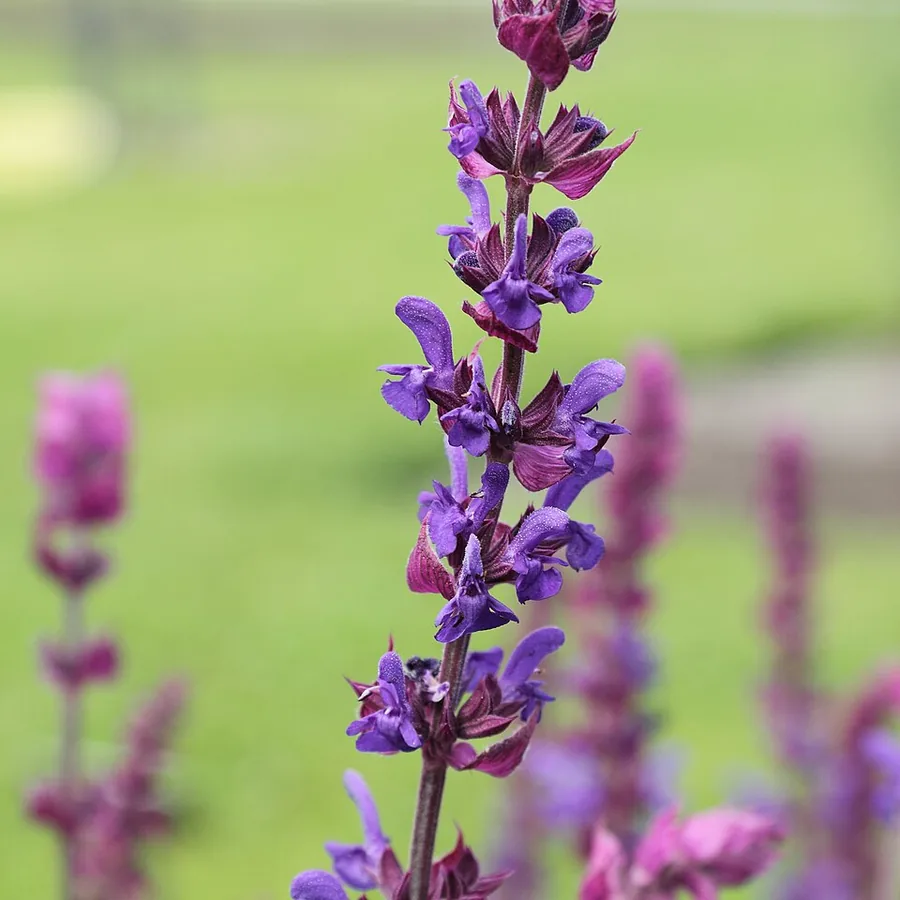
Hand it full sun and dry, lean soil, and woodland sage keeps cranking out violet flower spikes from summer right into fall.
Full sun
Every 7–14 days
USDA 4–8
2–3 ft · 0.5–0.9 m
Overview
Woodland sage is one of those easygoing perennials in the mint family that just gets on with it. Come early summer, it throws up tight spikes of violet-blue flowers, and the bees and hummingbirds can't seem to get enough of them. Snip the spent spikes off and guess what? It circles right back around with another round of bloom.
Here's the nice part: this plant does better when you kind of leave it alone. Once it's rooted in, it takes drought in stride, doesn't mind the heat, and comes back after winters as cold as zone 4. And those aromatic, slightly pungent leaves? Deer and rabbits want nothing to do with them.
One thing worth sorting out, since it trips people up: this garden salvia has zero connection to the psychoactive Salvia divinorum you sometimes hear about. Sure, they share a genus and a name, but Salvia nemorosa is just a harmless ornamental that's totally fine to grow where kids and pets hang out.
Care
The short version: full sun, lean soil that drains well, and don't overdo the water once it's settled in. Give it a haircut after that first bloom, and you'll get another wave of flowers for your trouble.
Light
Woodland sage wants full sun, so give it six hours a day at least. A bit of afternoon shade is fine, but pile on too much shade and the stems get leggy, the flowers thin out, and the whole clump kind of flops apart.
Water
Water it well while it's getting established, then you can really back off. Once it's rooted it's drought-tolerant and actually likes drying out between drinks, roughly every 7 to 14 days. Keep it soggy, though, and you're asking for root rot and fungal problems.
Soil
It's not picky, but it does want well-drained soil that leans on the lean and gritty side. A slightly acidic to neutral pH of 6.0 to 7.0 is the sweet spot, and sandy or gravelly ground beats heavy soil that sits wet around the crown any day.
Temperature
This plant is genuinely tough. It handles cold down to about -29°F (-34°C) and takes heat up to 90°F (32°C) without blinking, which is why it overwinters just fine across zones 4 through 8.
Humidity
Don't sweat the humidity, since regular outdoor air is all it needs. What actually counts is airflow, because still, muggy air trapped around crowded plants is what gets powdery mildew going.
Feeding
Funny enough, this one does best a little hungry. Plant it in decent soil with some compost mixed in and it needs next to no fertilizer. Feed it heavily and all you'll get is soft, floppy growth and more disease to deal with.
Pruning
Keep snipping the faded spikes back to the basal leaves through summer, and you'll keep the reblooms coming. Leave the stems standing over winter to protect the crown, then cut the old growth back in early spring once you see new shoots.
Repotting
Salvia hardly ever needs splitting, but if you notice fewer flowers, a clump dying out in the middle, or stems getting crowded, that's your cue. Just lift and divide it in early spring and it'll perk right back up.
Size & spacing
Expect it to hit 1.5 to 3 feet (46 to 91 cm) tall with a spread of 6 to 24 inches (15 to 61 cm). Space the clumps out enough that air can move between them, and you'll head off a lot of mildew trouble.
When to plant
Woodland sage is a hardy perennial, so it dies back and pops up again on its own every year. Start the seed indoors in late winter, get the young plants outside in spring after the frost quits, and you'll see spikes from June to September, with more coming into fall as long as you keep snipping.
Northern hemisphere
Southern hemisphere
Typical months for a temperate climate: start earlier in warm zones, later where spring frosts linger.
- Sow: About 12 weeks before planting time
- Plant: Spring after last frost
- Harvest: June to September, repeating into fall with deadheading
Hardiness
USDA hardiness zones: 4–8
Temperature: down to -34°C
Troubleshooting
Honestly, salvia is about as low-drama as perennials get, and when something does go sideways it usually traces back to too much water, not enough sun, or clumps packed too tight. Find your issue below, and fixing the setup will do more good than any spray.
The whole plant wilting and keeling over even though it's watered
If a salvia goes down fast in hot, sticky weather, you're probably looking at Southern bacterial wilt or Southern blight, or maybe a root or stem rot from ground that stays too wet. There's no fixing it, so pull the plant and toss it, but don't compost it. Going forward, sharp drainage, plenty of sun, and easy watering are what keep it from happening.
Fix:
- Remove and destroy affected plants
- Improve soil drainage
- Avoid overwatering and overhead irrigation
That white powdery stuff spreading over the leaves
What you're looking at is powdery mildew, and it shows up when the air gets stagnant around damp, crowded clumps. Thin and divide things so air can move through, water down at the base instead of over the top, and pull off the leaves that are worst hit. Keep it in full sun with good drainage and it won't come back.
Fix:
- Improve air circulation by thinning and dividing clumps
- Avoid overhead watering
- Remove and discard affected foliage
The clump falling open and flopping around by midsummer
Flopping usually means the plant's got it a little too cushy, whether that's rich soil, too much shade, or too heavy a feed pushing out soft, weak stems. Cut those spent stems back to the basal leaves and it'll rebloom shorter and tighter. Grow it in full sun and lean, well-drained soil and it holds itself up just fine.
Fix:
- Cut back spent stems to basal leaves to promote compact rebloom
- Grow in full sun and lean, well-drained soil
- Avoid over-fertilizing
Toxicity
Got pets or little kids? You can relax, because garden salvia is completely non-toxic. The ASPCA lists sage as safe for cats, dogs, and horses, and those bitter, aromatic leaves mean most animals won't bother with it anyway. Just remember it's the garden plant, not that unrelated psychoactive one.
Safe for
People · Cats · Dogs · Horses · Rabbits · Livestock · Birds
Cats None
Totally fine around cats. That strong, minty smell usually means a curious cat won't even bother going near it.
Dogs None
Nothing to worry about with dogs. A dog that chomps a leaf might get a little queasy just from the amount, but there's no toxin in there.
Horses None
It's listed as non-toxic to horses, so planting a salvia border near a paddock or grazing spot is no problem at all.
Rabbits Safe
Rabbits won't come to any harm, and they usually skip it anyway. That aromatic foliage is basically why salvia gets sold as rabbit-resistant in the first place.
Livestock Safe
No danger to cattle, goats, or sheep. Those pungent leaves taste off, so the animals rarely bite it even when it's right there.
Birds Safe
Birds are perfectly safe, and here's a bonus: those tubular flowers actually bring in hummingbirds and other pollinators looking for nectar.
People Safe
Safe to handle and grow around kids, no question. Just keep in mind it's the ordinary garden salvia, not the psychoactive Salvia divinorum, which is a whole different plant.
Aromatic foliage is generally unpalatable; not a known toxicity hazard. Distinct from the psychoactive Salvia divinorum.
Varieties
Pretty much every named salvia out there is some form of Salvia nemorosa or a hybrid of it, tweaked for better color and a neater shape. A few keep showing up at the garden center, and those are the ones you'll want to know.
Caradonna
You'll spot Caradonna by its dark, almost black purple stems under bright violet-blue spikes, standing around 30 inches tall.
May Night (Mainacht)
This compact one grabbed Perennial Plant of the Year back in 1997, and it's loaded with deep violet-blue flowers.
Ostfriesland (East Friesland)
Ostfriesland stays neat and compact, tops out around 18 inches, and carries deep purple blooms.
Companions
Woodland sage pairs best with other sun-loving, drought-tolerant perennials that want the same lean, well-drained soil, filling out a pollinator or cottage border alongside them.
Plant near
Coreopsis: Shares full-sun, well-drained, drought-tolerant conditions in perennial and pollinator borders
Echinacea (coneflower): Similar sun and soil needs; complements salvia in butterfly and cottage gardens
How to propagate
Making more salvia is easy, though the way you'll go about it comes down to whether you've got the plain species or a fancy named cultivar.
DivisionEasy
Early spring when new growth begins · One growing season
The easiest way to get more salvia is just to split it. In early spring, right as the new growth starts pushing up, dig up the clump and pull it apart, and each chunk will settle in and fill out over one growing season.
Stem cuttingsModerate
Late spring to summer · Several weeks to root
You can also root softwood cuttings from shoots that aren't flowering, taken in late spring or summer. Snip a healthy shoot, stick it in some moist mix, and it'll root over the next few weeks.
SeedModerate
Sow indoors about 12 weeks before planting time · One growing season to flowering
The plain species grows easily from seed, started indoors about 12 weeks before planting time, and it'll flower that first season. Named cultivars like Caradonna won't come true from seed, though, so you'll want to divide them or take cuttings instead.
Myths
Garden salvia is the same thing as the hallucinogenic salvia that's a controlled substance.
Nope, the Salvia nemorosa in your garden is just a regular perennial with no psychoactive kick whatsoever. The one people mean is a totally different species, Salvia divinorum from Oaxaca, Mexico, and its compound salvinorin A works on the brain's kappa-opioid receptors. They've got a genus name in common, and that's the whole story.