Ornamental · Asteraceae
Purple Coneflower
Echinacea purpurea
Pop it in full sun and lean, well-drained soil and you'll get coneflowers from early summer right into fall.
Full sun
Every 7–14 days
USDA 3–8
2–4 ft · 0.6–1.2 m
Overview
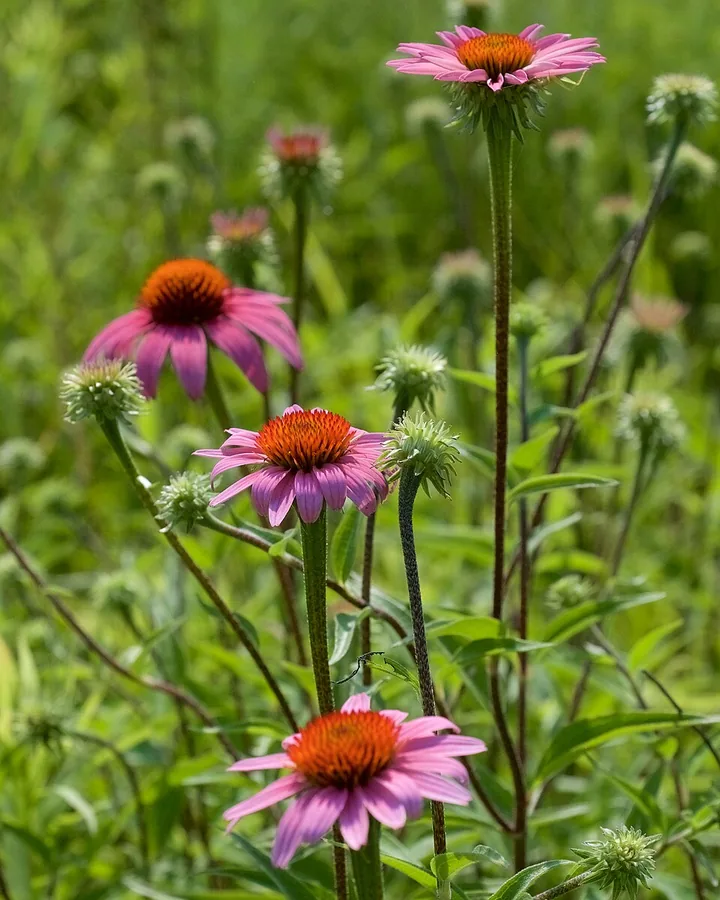
Purple coneflower is a tough, sun-loving perennial in the daisy family, and it comes from the prairies and open woods of eastern North America. It puts up sturdy stems topped with rosy-purple petals around a raised, bristly cone, and here's the nice part: it comes back bigger every year. It's hardy through USDA zones 3 to 8, so it takes cold winters and hot, dry summers without a fuss.
Not many flowers earn their keep like this one does. The blooms run from early summer well into fall, pulling in bees and butterflies all season, and if you leave the old cones standing they'll feed finches over winter. It's also been around forever as the herb echinacea, taken as a supplement for generations.
Easy? That's pretty much the whole story. Coneflower just wants full sun and soil that drains, and after that it mostly looks after itself, handling drought and rough ground that would do in pickier plants. Give it a little elbow room and it'll pay you back for years with almost no effort.
Care
The short version: it wants full sun and lean, well-drained soil, and once it's settled in you only water every week or two. It's fine with clay, sand, and dry spells, barely needs feeding, and just keeps getting better every year.
Light
Coneflower really wants full sun, around six hours of direct light a day, so it can bloom well and stand up straight. It'll put up with partial shade, but too much shade and it starts to stretch, flop, and flower less, so why not give it the brightest spot you've got?
Water
Once it's settled in, it's pretty drought tolerant and only needs water every 7 to 14 days, leaning toward dry to medium moisture. Just water at the base instead of over the top, because wet leaves are basically an invitation for disease.
Soil
It's happy in average, well-drained loam and takes clay, sand, and rocky ground in stride. A wide pH of 6.0 to 8.0 works fine, so really the only thing it can't stand is soil that stays soggy.
Humidity
Plain outdoor air is all it needs, so there's no humidity number to worry about. What matters more is good airflow, since crowded, damp leaves are exactly what powdery mildew loves.
Feeding
Coneflower has low feeding needs and does great in lean soil. A light slow-release feed like 12-6-6 in early spring is plenty, and piling on more fertilizer just gives you floppy stems instead of flowers.
Pruning
Snip the spent blooms if you want to tidy things up and stretch the flowering, though it'll rebloom on its own anyway. Leave a few seed heads into winter to feed the birds and let it self-sow, then cut the stems back in late fall, or just leave them as shelter for native bees.
Size & spacing
In bloom the plants get to about 2 to 4 feet (60 to 120 cm) tall. Give each one 12 to 24 inches (30 to 60 cm) of space so air can move through and mildew doesn't get a foothold.
When to plant
Coneflower runs on a normal northern season, so it's easy to time. Start seed indoors in late winter, move the young plants out once the last spring frost is gone, and you'll see flowers from early summer all the way into fall.
Northern hemisphere
Southern hemisphere
Typical months for a temperate climate: start earlier in warm zones, later where spring frosts linger.
- Sow: Sow indoors at 65 to 70°F about 8 to 10 weeks before last frost; germinates in 10 to 20 days.
- Plant: Transplant outdoors after the last spring frost.
- Harvest: Blooms early summer through mid-fall, peaking June through August.
Hardiness
USDA hardiness zones: 3–8
Temperature: down to -40°C
Troubleshooting
Most coneflower problems turn up on the flowers or leaves, and honestly, a healthy patch barely runs into any. Get to know the early signs below and you can jump in before anything spreads through the bed.
Petals turning green with leafy tufts on the cone
What you're looking at is aster yellows, a phytoplasma that leafhoppers carry from plant to plant. The catch is that it's systemic and never goes away, so once a plant shows greened petals and those witches-broom tufts, you can't save it. Dig it up, bag it for the trash and not the compost, and keep leafhoppers and weedy hosts under control nearby.
Fix:
- Promptly dig up and remove infected plants
- Bag and discard them in the trash, not compost
- Control leafhoppers and weedy hosts nearby
Foliage chewed to lace in midsummer
Odds are it's Japanese beetles, piling onto leaves and blooms and chewing them right down to the veins. First thing in the morning, while they're still sluggish, pick them off into a pail of soapy water, and hit lighter outbreaks with insecticidal soap. A bit of early summer scouting lets you knock the numbers back before they build.
Fix:
- Hand-pick beetles into soapy water in early morning
- Treat with insecticidal soap for light infestations
Distorted, tufted blooms with a rosetted cone
When the flower heads come in twisted and rosetted, it's usually eriophyid mites feeding out of sight inside the developing buds. They're way too small to see, so those warped blooms are your tip-off. Just cut off and toss the affected heads in fall to clear the mites out before they overwinter.
Fix:
- Cut back and remove affected flower heads in fall
White powdery film coating the leaves
That dusty white-to-gray coating on the upper leaves in humid weather? That's powdery mildew, and it spreads fastest where plants are crammed too close. Give each plant more room so the air moves, and keep the leaves dry by watering at the base. It looks bad, but it rarely does any real harm.
Fix:
- Improve spacing and air circulation
- Avoid overhead watering
Toxicity
Got pets? You're in luck, because purple coneflower is non-toxic across the board. It's not on the ASPCA toxic plant list, it's safe around cats, dogs, horses, and livestock, and people have taken it as the herb echinacea for ages. So go ahead and plant it wherever your animals like to wander.
Safe for
People · Cats · Dogs · Horses · Rabbits · Livestock · Birds
Cats None
Purple coneflower isn't on the ASPCA toxic list, so if a curious cat nibbles a leaf, there's nothing to worry about.
Dogs None
Dogs can sniff, chew, or dig around the plant all they want without any risk of poisoning.
Horses Safe
Horses grazing near a stand of coneflowers have nothing to fear from the foliage or the flowers.
Rabbits Safe
The leaves and stems are harmless to rabbits, though they might just eat the whole plant down to the ground.
Livestock Safe
Cattle, goats, and sheep can browse coneflower without any trouble, since it doesn't carry a known toxin.
Birds Safe
Birds are more than welcome here, and finches especially flock to the dried seed heads through fall and winter.
People Safe
People have used echinacea as an herbal supplement for ages, and the plant's considered non-toxic.
Varieties
There are loads of named coneflowers out there, from the classic purples to fun modern color blends. The few below are the ones you're most likely to come across.
Magnus
Magnus stands out for its big flowers, held on flat, horizontal rosy-purple petals that don't droop the way so many coneflowers do.
White Swan
White Swan swaps the usual purple for clean white petals circling a warm coppery-orange cone.
Cheyenne Spirit
Cheyenne Spirit is a seed-grown mix that gives you flowers in red, orange, yellow, purple, and cream from just one packet.
How to propagate
Want more? Coneflower's a breeze to multiply. You can split an established clump or start from seed, and the plant will even sow itself if you let it.
DivisionModerate
Divide clumps in spring or fall, roughly every 3 to 4 years when they become overcrowded. · One growing season to re-establish.
Lift a crowded clump in spring or fall, every 3 to 4 years or so, and split it into pieces that each keep their own roots and shoots. Pop the divisions back in right away, and they'll settle in again over a single growing season.
SeedEasy
Sow indoors 8 to 10 weeks before last frost or allow self-seeding in the garden. · Germinates in 10 to 20 days; typically blooms the second year from seed.
Start seed indoors 8 to 10 weeks before the last frost, or just let the plant drop its own seed in the bed. You'll see sprouts in 10 to 20 days, but the plants usually hold off until their second year to flower. Leave the seed heads standing and coneflower reseeds itself with zero help from you.
Myths
Coneflowers will not rebloom unless you deadhead them.
Good news, you can skip the worry, because plants come back into bloom on their own whether or not you snip the old flowers. Deadheading mostly just tidies up the look, while leaving some seed heads feeds the birds and lets the plant sow itself for next year.
Echinacea is toxic and dangerous to pets.
Nothing to stress about here, since purple coneflower never shows up on the ASPCA toxic plant list and is treated as non-toxic all around. It's even got a long track record as an herbal supplement for people.