Ornamental · Asteraceae
Bidens
Bidens ferulifolia
Pop it into full sun and average soil, and bidens keeps pumping out golden flowers from spring right up to frost.
Full sun
Every 2–4 days
USDA 8–11
10–15 in · 25–38 cm
Overview
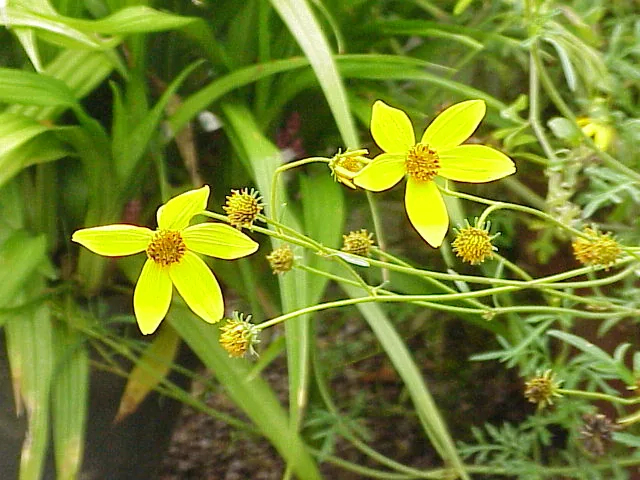
Bidens is a low, sprawling cousin in the daisy family, and you grow it for months of cheery flowers, not for anything on the dinner plate. It spills out of baskets and pots and threads along the front of a border, smothered in little blooms that usually come up gold. Why do gardeners love it? Because it asks for next to nothing and pays you back in flowers.
Once it's found its feet, bidens just laughs off heat and drought and keeps blooming long after fussier plants throw in the towel. It grows quick but stays low, hardly ever topping knee height, so it fills the in-between spots and tumbles over edges instead of reaching up. And the newer named picks stretch the colors past plain gold into white, pink, and two-tone blooms.
Deep down it's a tender plant, so most folks grow it as a warm-season annual and pop in fresh ones each spring once the cold backs off. Hand it some sun and a spot that drains well, and it pretty much takes care of itself. Trim it back once around midsummer and it bounces right back with another flush of flower.
Care
The short version: full sun, average soil that drains well, and water that's steady but never soggy. Feed your potted plants all season, give the whole thing one pinch around midsummer, and it'll bloom away without any deadheading.
Light
Bidens craves full sun, and the more it soaks up, the more it flowers. It'll tolerate a touch of afternoon shade, but stick it in real shade and the plant stretches out thin while the flowers thin right along with it.
Water
Let the top of the soil dry out between drinks instead of keeping it damp, because soggy roots are the one thing bidens really can't stand. It shrugs off heat and drought nicely once it's established, but keep in mind that pots and baskets dry out fast and want watering more often through the summer.
Soil
Plain, well-drained ground is all it's after, with nothing fancy or fed-up needed. A pH anywhere between 6.0 to 7.0 sits well with it, so most garden soil does the job as long as water actually drains through.
Temperature
Bidens is happy cruising through warm weather and copes with a wide range, somewhere around 36°F to 86°F (2°C to 30°C). A hard frost is its limit, though, which is exactly why most gardeners just start over with fresh plants each spring.
Humidity
Regular outdoor humidity suits it fine, so there's nothing to measure or fiddle with. What really counts is air moving freely around the plant, since stale, crowded growth is an open invitation for mildew and mold.
Feeding
Plants tucked into the ground hardly ever need feeding, but containers and baskets burn through their nutrients quick. Give those a balanced water-soluble feed every two weeks all through the growing season and the flowers just keep coming.
Pruning
Bidens flowers happily without any deadheading, so feel free to leave the faded blooms alone. If it gets sprawly or leggy by midsummer, just shear or pinch it back and it returns fuller and packed with fresh bloom.
Size & spacing
Plants keep low, topping out around 10 to 15 inches (25 to 38 cm) tall and spreading 12 to 24 inches (30 to 61 cm) wide. Give each one space to trail and the whole patch knits into one solid sheet of flower.
When to plant
Bidens has zero patience for frost, so it sits tight until the weather warms up. Get seed going indoors in late winter, move plants outside once the last frost is behind you and the soil has warmed, and you'll get flowers carrying on from late spring clear through to fall's first frost.
Northern hemisphere
Southern hemisphere
Typical months for a temperate climate: start earlier in warm zones, later where spring frosts linger.
- Sow: 6 to 8 weeks before the last spring frost
- Plant: after the last spring frost when soil has warmed
- Harvest: late spring through fall until frost
Hardiness
USDA hardiness zones: 8–11
Temperature: down to -12°C
Troubleshooting
For the most part bidens stays out of trouble, but a handful of pests and molds can crop up when conditions go sideways. Most of them hit the new growth or the flowers first. Find what matches below and jump on it early, while it's still an easy fix.
Dull, speckled leaves with thin webbing when it's hot
When the weather turns hot and dry, spider mites show up and suck the life out of the leaves until they look freckled and faded. Want to be sure? Tap a leaf over white paper and watch the dots scurry. A good rinse helps push them back, and insecticidal soap or a labeled miticide handles the ones that won't quit.
Fix:
- Rinse foliage with water to reduce populations
- Apply insecticidal soap or a labeled miticide if infestation persists
Fuzzy gray mold on the blooms when it stays damp
A run of cool, wet days invites botrytis, the gray mold that fuzzes up faded blooms and rots the soft stuff underneath. Pinch off the spotted flowers and leaves and toss them out before it gets a foothold. Then open up some space so the leaves can dry off quickly once the rain stops.
Fix:
- Remove and discard affected flowers and foliage
- Increase spacing and air circulation to dry foliage
Tiny soft bugs swarming the sticky new tips
Those little clumps are aphids, and they pile onto the softest new tips where the sap tastes sweetest. That sticky coating they leave is called honeydew. Knock them loose with a sharp blast of water, and if a few stubborn ones cling on, hit them with insecticidal soap.
Fix:
- Spray plants with a strong stream of water to dislodge aphids
- Apply insecticidal soap to affected growth as needed
A dusty white film spreading over the leaves
That chalky white dusting is powdery mildew, and it loves crowded plants where the air just sits still. Loosen things up by thinning and spacing your plants, then pull off the leaves that are coated worst. Plenty of sun and a steady breeze keep it from creeping back.
Fix:
- Improve air circulation by thinning and spacing plants
- Remove and discard heavily affected foliage
Toxicity
Got pets or grazing animals at home? Here's the good news: bidens carries no known toxin. It's nowhere on the ASPCA list of poisonous plants, so a nibbled leaf is nothing to lose sleep over. That said, it's grown for looks and not for eating, so there's no need to make a habit of it.
Safe for
People · Cats · Dogs · Horses · Rabbits · Livestock · Birds
Cats Safe
You won't find bidens on the ASPCA toxic plant list, so a nosy cat that takes a bite of a leaf has nothing to worry about. Wolfing down a big mouthful of any greenery can still cause a bit of drool or a queasy tummy, so it doesn't hurt to gently shoo them away.
Dogs Safe
Your dog can hang out around bidens just fine, because it holds no known toxin. Chew on a stem and a pup might end up with a slightly off stomach, the way any plant bits can, but nothing more concerning than that.
Horses Safe
Horses can graze right beside bidens with nothing to fear. It's not a poisonous plant, and you won't find any reports of it doing them harm.
Rabbits Safe
A rabbit can nibble bidens with no trouble at all. Like any leafy green, a huge helping all at once is best skipped, but the plant itself has nothing harmful in it.
Livestock Safe
Cattle, goats, and sheep can browse around bidens without any worry, since it holds no toxin that bothers grazing animals.
Birds Safe
Bidens is no danger to birds, and they'll often peck at the faded flower heads for the seed. Backyard hens can scratch around it freely too.
People Safe
Bidens is grown for its flowers, not for your plate, but it's perfectly fine to handle or have nearby. There's no reason to keep the kids away from it, though it's not something you'd want to eat.
Varieties
The straight species comes up gold, but breeders have nudged bidens into fresh colors and tidier habits. Here are the named picks worth getting to know.
Blazing Fire
Its two-tone flowers glow red-orange in the middle and soften to gold out toward the petal tips, and it proved to be a steady, even grower in the University of Georgia trials.
White Delight
Want something other than the usual yellow? This one shows up with creamy white flowers for a gentler look, and it earned its place in the University of Georgia trials.
Pretty in Pink
A pink-blooming pick that swaps the everyday gold for a softer tone, and it went through the University of Georgia trials too.
Mexican Gold Improved
A polished version of the classic golden-yellow species, tuned up and put through the University of Georgia trials for a better show in the garden.
How to propagate
Making more bidens is easy, whether you're after spot-on copies of a favorite hybrid or a tray of seedlings to round out the beds.
Stem cuttingsEasy
Spring through summer during active growth · About 2 to 4 weeks to root
If you want a perfect copy of a named hybrid, cuttings are how you do it, since the new plant inherits every trait of its parent. Just snip a soft tip while the plant is growing strong in spring or summer, and it puts down roots in about 2 to 4 weeks.
SeedEasy
Start indoors 6 to 8 weeks before the last spring frost · Germinates in roughly 1 to 2 weeks at warm temperatures
The species and the open-pollinated kinds sprout easily from seed, though named hybrids tend not to come back true to type. Start them indoors 6 to 8 weeks before the last frost, keep the tray nice and warm, and you'll see seedlings poke up in around 1 to 2 weeks.
Myths
The bidens you grow as an ornamental will poison your dog or cat.
Bidens just doesn't show up anywhere on the ASPCA toxic plant database, and the ornamental Bidens ferulifolia is considered non-toxic to pets. So a dog or cat that chews a leaf isn't in any danger, even if there's no good reason to let them snack on the garden.
Garden bidens takes over the yard with clingy seeds like the weedy beggarticks do.
Wild bidens picked up the beggarticks nickname from their two-pronged seeds that latch onto fur and clothes. But the garden ferulifolia hybrids? Totally different deal: they're grown as warm-season annuals and often bred to be low-seeding selections, so they won't sprawl all over the place like their weedy relatives.