Ornamental · Asteraceae
African Daisy
Osteospermum ecklonis
Hand it full sun, soil that drains, and cool weather, and the African daisy just keeps cranking out blooms.
Full sun
Every 3–7 days
50–75°F · 10–24°C
USDA 10–11
Overview
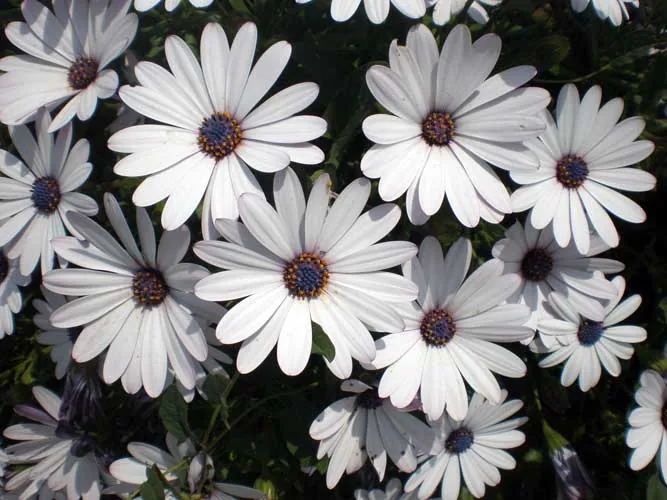
The African daisy belongs to the sunflower clan and hails from southern Africa, and that's where it got tagged with the names Cape daisy and Cape marguerite. In most of the country people grow it as an outdoor flowering annual, where it spreads into a low mound or trailing mat of gray-green foliage with daisy-style heads hovering over the top. Each bloom balances on a skinny stem and unfurls into a bright wheel of rays circling a middle disk that's a totally different color.
Here's a fun quirk that sets it apart from a regular daisy. The flowers close up at night and in dim light, then pop back open once the sun's out, so a bed that looked empty first thing fills right back in by mid-morning. It's a tender perennial, which means it only makes it through winter in zones 10 and 11, and anywhere colder than that folks just replant it every spring and run it as an annual.
It earns its easygoing rep, no question. Give it some sun and soil that drains, keep up with snipping the old blooms, and it'll flower from late spring all the way into fall. The only thing it really can't stand is a hot, muggy summer, which can hit pause on the blooms until cooler days bring them back.
Care
The short version: the two things that really count are full sun and loose dirt that drains well. Hold steady moisture but don't let it turn into a swamp, keep feeding light, and pluck the tired blooms so fresh buds keep showing up.
Light
African daisies are happiest in full sun, soaking up at least 6 hours of direct light a day to flower their best. They'll handle partial sun, sure, but too much shade swaps flowers for floppy, leggy growth. And more sun keeps the leaves dry, which helps fend off mildew.
Water
Keep the soil evenly moist but not soggy, because sitting water is the fastest way to rot the roots. Once it's settled in it can shrug off a quick dry spell, but it really does bloom better with steady moisture. Let the top of the soil dry out a bit between drinks, which usually works out to every 3 to 7 days when it's hot.
Soil
Pop it into loose, well-drained soil with a bit of organic matter mixed in, since good drainage is what keeps this daisy happy. It's not fussy about acidity and does fine across a pH of 5.5 to 7.5. The only real thing to deal with first is heavy, wet clay.
Temperature
This is a cool-season plant that's at its best between 50°F and 75°F (10°C to 24°C). Blooming slows down once a hot, humid summer kicks in, then picks up again as things cool off. In most places, frost is what finally finishes it.
Humidity
Regular outdoor humidity is plenty, so there's no number to worry about. What matters way more is airflow, because still, crowded air is exactly how powdery mildew gets going.
Feeding
Go light on the food. A balanced slow-release fertilizer or a bit of compost through the growing season is all it needs, applied seasonally. Overdo it and you'll end up with loads of leaves and barely any flowers, since too much nitrogen pushes growth over bloom.
Pruning
Snip the dead flowers off as they fade and the plant just keeps making more. Pinch the tips early on if you want a fuller, bushier shape. And trim back any long, sprawling stems from late summer into autumn to keep the whole thing tidy.
Size & spacing
A grown plant gets to about 12 to 35 inches (30 to 90 cm) tall and spreads 9 to 24 inches (23 to 61 cm) wide. Give each one enough room to reach its full width so air can flow through and the leaves stay dry.
When to plant
It's an outdoor grower that wants warm ground but a cool breeze up top, if that makes sense. Kick the seed off inside 6 to 8 weeks before the last frost, shift the plants outside once frost is done and the dirt's warmed up, and you're looking at flowers from late spring into fall, busiest while it's still on the cool side.
Northern hemisphere
Southern hemisphere
Typical months for a temperate climate: start earlier in warm zones, later where spring frosts linger.
- Sow: 6 to 8 weeks before the last spring frost
- Plant: after the last spring frost when soil has warmed
- Harvest: late spring through fall, blooming most heavily in cool weather
Hardiness
USDA hardiness zones: 10–11
Temperature: down to -1°C
Troubleshooting
Pretty much any African daisy trouble traces to one of two culprits: wet feet or a hot summer. Keep an eye on the flowers and the lower leaves for those first little clues, and you can step in well before things snowball. Scroll down to whichever one looks like yours, then deal with it while a quick fix still does the job.
It's flopping and yellowing near the soil
Usually that's root rot, and it happens when the soil stays soggy and the roots can't breathe, so they go brown and mushy. There's also verticillium wilt, which can leave the plant looking just as sad and yellow. Let the soil dry out between drinks, pull anything that's truly collapsed, and don't pop a fresh daisy back into ground that stayed infected.
Fix:
- Improve drainage and let soil dry between waterings
- Remove and discard severely affected plants
- Avoid replanting susceptible species in infected soil
Why is the new growth curled and sticky?
That'll be aphids, those tiny soft bugs that pile onto the shoot tips and the backs of leaves to drink the sap, and they leave a sticky film wherever they go. A good blast from the hose knocks most of them off in one go. If they wander back, insecticidal soap sorts them out, and a few ladybugs hanging around will mop up whatever's left.
Fix:
- Spray off with a strong jet of water
- Apply insecticidal soap if populations persist
Where did all the flowers go in the heat?
Nothing's broken here. This one's a cool-season bloomer, so a lot of cultivars just coast through the hot, sticky part of summer. And if you've been feeding it a lot? That extra nitrogen pushes leaves instead of flowers and makes the lull drag on. Ease off the food, keep snipping the dead heads, and the blooms come right back when it cools down.
Fix:
- Site in a spot with cooler conditions and good air flow
- Reduce fertilizer and avoid high-nitrogen feeds
- Deadhead regularly to promote rebloom when cool weather returns
What's that white dust on the leaves?
That powdery stuff is powdery mildew, a fungus that loves damp, still air around plants jammed together, and it'll keep creeping across the leaves if you let it. So give the plants some breathing room and get the air moving. Water down low at the base instead of over the top, and pinch off the leaves that look the worst.
Fix:
- Improve air circulation and spacing
- Avoid overhead watering
- Remove affected foliage
Toxicity
Got pets or little kids around? Then you'll like this. The African daisy is non-toxic, and the approved sources sign off on it for cats, dogs, and horses too. If a pet sneaks a taste or a toddler grabs a leaf, nobody's getting hurt, so feel free to grow this one right where everybody plays.
Safe for
People · Cats · Dogs · Horses · Rabbits · Livestock · Birds
Cats Safe
Cats are totally fine with it, so if yours sneaks a bite of a leaf, there's nothing to worry about.
Dogs Safe
Your dog can flop right next to it or chomp a leaf, and it won't poison them at all.
Horses Safe
The trusted sources give it a thumbs up for horses, since there's nothing toxic in it.
Rabbits Safe
Rabbits are safe around it too, though leafy stuff should only be a little slice of what they eat.
Livestock Safe
Goats, sheep, and cattle can graze close by and they're in no danger of getting poisoned.
Birds Safe
Pet birds and the backyard hens can poke around it all day with zero trouble.
People Safe
It's harmless to people, so go ahead and plant it where the little ones run around.
Varieties
A handful of different plants answer to African daisy, but the garden Osteospermum really boils down to the species plus a few named picks. These are the ones worth knowing.
Osteospermum ecklonis
This is basically the original parent that most hybrids trace back to, a woody-based plant that either mounds up or trails, showing white rays around a blue-purple eye.
Bright Lights series
It's a neat little hybrid group that's done well in university trial gardens, chosen for punchy flower colors and a nice long stretch of cool-season bloom.
Wildside
It's a named pick that plant-finder listings call out for the offbeat way its flowers are colored.
How to propagate
You can start an African daisy from cuttings or from seed, and honestly it comes down to which variety you've got. Most named hybrids only come true if you grow them from cuttings.
Stem cuttingsModerate
During active growth in the growing season · Roots typically form in about 4 to 5 weeks under mist or a humidity tent
Want a copy that matches the parent exactly? Go with cuttings, which is why most named hybrids are grown that way and not from seed. Snip a tip while the plant's growing, dab the cut end with rooting hormone, and stick it into a damp soilless mix. Keep it under mist or a humidity tent and you'll see roots come along over about 4 to 5 weeks.
SeedModerate
Sow indoors 6 to 8 weeks before the last spring frost · Several weeks to transplant size before moving outdoors after frost
Some cultivars happily grow from seed, even if most garden hybrids still lean on cuttings. Get them going inside 6 to 8 weeks before the last spring frost, and let the seedlings have several weeks to bulk up to transplant size before they head outdoors once the cold's behind you.
Myths
African daisies bloom best in the heat of summer.
It's actually the other way round. Osteospermum puts on its best show when it's cool out, and loads of cultivars practically take a break in a hot, muggy summer. So think of it as a cool-season plant and you'll get way more flowers for way longer.
Every plant called African daisy is the same one, and it is toxic.
You can see why people get nervous, since a bunch of unrelated plants all go by this same name. But yours is Osteospermum from the Asteraceae family, and approved sources say it's non-toxic to cats and dogs.