Vegetable · Zingiberaceae
Ginger
Zingiber officinale
Give it warmth, steady moisture, and dappled light, and one little rhizome turns into a whole season of fresh ginger.
Partial shade
Every 2–4 days
59–86°F · 15–30°C
240–300 days
Overview
Ginger's a tropical perennial, and it's grown for that knobby, aromatic root that ends up in so much cooking. It comes from the warm, humid forests of Asia, and once you know that, its care pretty much explains itself. Give it heat, moisture, and broken light and it's happy; let it go cold and wet, or dry it right out, and it just sulks.
Somewhere with warm summers? It'll grow in the ground. Cooler than that, and most folks just run it as a long season annual instead. You start a piece of rhizome indoors in late winter, move it outside once frost is gone, and dig the crop before the cold comes back. And a pot works great too, so a bright porch or windowsill can keep this tropical edible ticking along.
The catch is patience. Ginger takes the better part of a year to bulk up, somewhere around 8 to 10 months from planting to a mature harvest, though you can always pinch off some tender baby ginger way sooner. Keep it warm, fed, and evenly watered through that long stretch, and one rhizome pays you back with plenty more.
Care
The short version: bright, dappled light and steady warmth, soil that stays evenly moist but never soggy, plenty of humidity, and a good long wait before you dig.
Light
Ginger likes bright but filtered light, sort of like what it'd get under a forest canopy. A spot with morning sun and afternoon shade is ideal, and you'll want to keep harsh midday sun off it, because that scorches the leaf edges.
Water
Keep the soil evenly moist all through the growing season, but don't let it turn into a swamp, because soggy ground is what rots the rhizomes. Then ease off the watering as the leaves start to yellow near harvest, which helps the rhizomes firm up and cure.
Soil
Plant it in rich, loose, well drained loam loaded with organic matter so water drains away fast. A slightly acidic pH of 5.5 to 6.5 is the sweet spot, and honestly good drainage matters here more than just about anything.
Temperature
Warmth isn't optional. Ginger's happiest between 59°F and 86°F (15°C to 30°C) and just stalls or dies in the cold, so it can't head outside until all the frost's gone and the soil's warmed.
Humidity
It loves humidity, ideally 70% to 90%. Dry indoor air can crisp up the leaf tips, so cluster it with other plants, pop it over a pebble tray, or keep it somewhere naturally muggy.
Feeding
Feed it monthly through spring and summer with a balanced fertilizer or compost, side-dressed as the new shoots come up. That long season really pulls on the plant, so steady feeding pays off when you dig.
Pruning
Ginger barely needs pruning at all. Just pull off any yellowed or dead leaves, snip the flower stalks if you're after the root, and cut back the top growth as it dies down before harvest.
Repotting
In a pot, freshen ginger up every year or season, since the rhizomes spread quick and crowd to the surface. Once you see roots circling the pot or poking out the drainage holes and growth slowing down, it's time for fresh mix and a bit more room.
Size & spacing
You'll get a clump of upright, reed-like shoots hitting 2 to 4 feet (60 to 120 cm) tall, spreading 12 to 24 inches (30 to 60 cm) wide as the rhizomes fan out underground.
When to plant
Ginger wants a long, warm run and won't put up with frost. So start a rhizome piece indoors in late winter, move it outside once the soil's warmed past the last frost, and start harvesting from early autumn as the foliage yellows and dies back.
Northern hemisphere
Southern hemisphere
Typical months for a temperate climate: start earlier in warm zones, later where spring frosts linger.
- Sow: late winter to early spring (start rhizome pieces indoors in warmth)
- Plant: after all danger of frost has passed and soil has warmed
- Harvest: harvest young 'baby' ginger about 4-5 months after planting; mature ginger about 8-10 months when foliage yellows and dies back
Hardiness
USDA hardiness zones: 9–12
Temperature: down to -7°C
Troubleshooting
Most ginger trouble kicks off underground or in the moisture around the roots. Keep an eye on the rhizomes and the lower leaves, since that's where rot, wilt, and stress turn up first. Find your symptom below, then jump on it before it spreads through the bed.
Soft, smelly rhizomes rotting down in the soil
What you're looking at is soft rot, and it comes from Pythium or Fusarium fungi that move in when the soil stays too wet. The rhizomes go slimy and give off a sour smell, and once that happens there's really no bringing them back. So dig out the sick plants and bin them, sort out the drainage, and start over with clean, healthy seed pieces in fresh media.
Fix:
- Remove and discard affected plants and rhizomes
- Improve drainage and avoid waterlogging
- Replant only clean, healthy seed pieces in fresh or pasteurized media
Shoots suddenly wilting, with a milky ooze
This one's the big worry: bacterial wilt from Ralstonia solanacearum, and it races through warm, wet soil. Want to be sure? Cut a wilted stem and dangle it in a glass of clear water, and if a milky stream drifts out, that's your answer. Pull the infected plants and destroy them, and don't put ginger or its relatives back in that soil, because the bacteria hang around for years.
Fix:
- Remove and destroy infected plants
- Do not replant ginger or related crops in infested soil
- Practice long crop rotation and use clean seed
Yellow leaves with brown, crispy edges
Brown, crispy edges usually come down to too much sun or heat, and you'll spot the worst of it on whichever side catches the strongest light. Uneven watering or a hungry plant can dry those margins too. So move it into dappled shade for the hottest part of the day, keep the soil evenly moist, and give it a feed if growth has stalled.
Fix:
- Provide dappled shade during the hottest part of the day
- Maintain even soil moisture
- Apply balanced fertilizer if growth is poor
Toxicity
Ginger's about as friendly as plants get. The root's a kitchen spice people eat all over the world, and it's safe for people and pets alike, with nothing on it the ASPCA calls toxic. So grow it, handle it, cook with it, and don't give it a second thought.
Safe for
People · Cats · Dogs · Horses · Rabbits · Livestock · Birds
Cats Safe
Worried about a curious cat? Ginger isn't on the ASPCA's toxic list, so a nibbled leaf or a bit of root is no problem at all. The one thing to watch is a big mouthful of the spicy root, which might upset a touchy stomach for a bit.
Dogs Safe
Dogs can chew the leaves or the root and be totally fine, and you'll actually find a little ginger in plenty of dog treats. If one really goes to town on the pungent rhizome, expect a loose tummy for a day, and that's it.
Horses Safe
Horses get on with ginger just fine, and it even shows up in some of their supplements. There's nothing in it that would bother them.
Rabbits Safe
A rabbit can nibble the leaves without any trouble. Most won't fancy the root anyway since it's too sharp, so if you offer any, keep it to a tiny taste.
Livestock Safe
Cattle, goats, and sheep can browse the leaves and come to no harm. There's just nothing in ginger that causes the stomach or nerve trouble you'd get from a genuinely toxic plant.
Birds Safe
Backyard hens and pet birds can peck at ginger with nothing to worry about. It's a kitchen spice, plain and simple, not a hazard.
People Safe
Ginger's a kitchen staple you can eat fresh, dried, or steeped into tea, and it's safe for grown-ups and kids alike. Both the root and the young shoots are good to eat.
No special handling precautions; the rhizome is a common food and is safe to handle.
Varieties
Just about all the ginger you'll grow is the one culinary type, but it's handy to know exactly what's in the ground.
Common culinary ginger (Zingiber officinale)
This is just the everyday ginger from the market, grown for that pungent, aromatic root that flavors kitchens all over the world.
How to propagate
Ginger's easy to make more of, since any piece of rhizome with a live bud is basically a new plant waiting to go.
DivisionEasy
Late winter to early spring, before planting out after frost · About 2 to 8 weeks for sprouts to emerge under warm, moist conditions
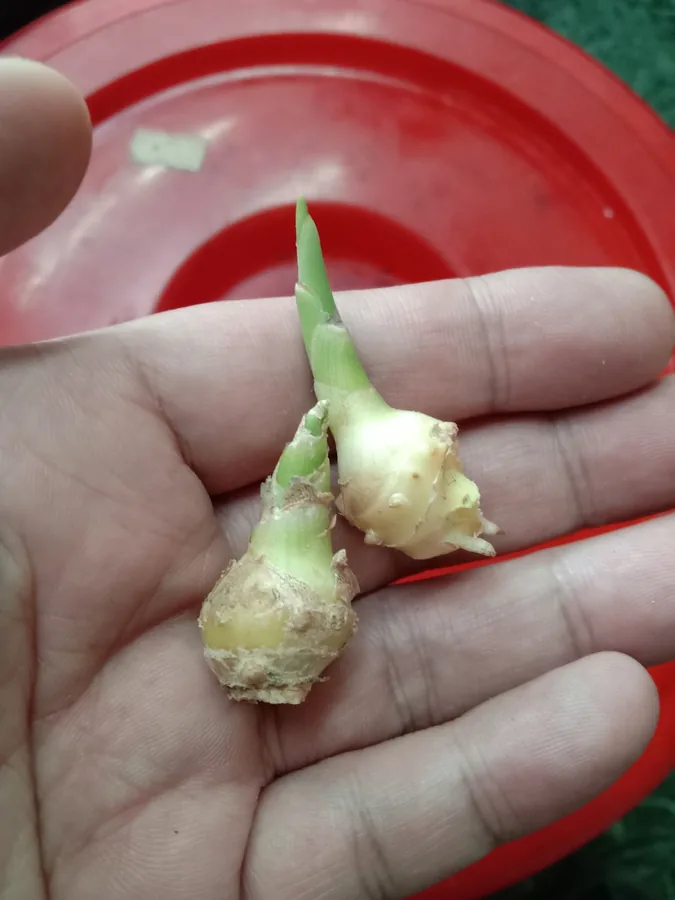
Making more ginger is really just dividing the rhizome, the same way you'd start it from a piece of root. Come late winter or early spring, cut it into chunks so each one has at least one healthy bud, then let the cut faces dry and callus for a day or two before planting. Tuck the pieces in shallow in warm, moist, well drained mix, and give it time, since the first shoots show up in 2 to 8 weeks.
Myths
Grocery store ginger will never sprout because it has been treated.
Here's the thing: a plump, fresh grocery rhizome with visible buds, those little nubs gardeners call eyes, often sprouts just fine. Soak it overnight and keep it warm and moist, and you'll do even better. The real trouble is old stock or a growth inhibitor, not the produce aisle itself.