Houseplant · Asparagaceae
Lucky Bamboo
Dracaena sanderiana
Give it clean water and bright, indirect light, and this laid-back Dracaena stays green for years.
Bright indirect
Every 7 days
64–75°F · 18–24°C
USDA 10–12
Overview
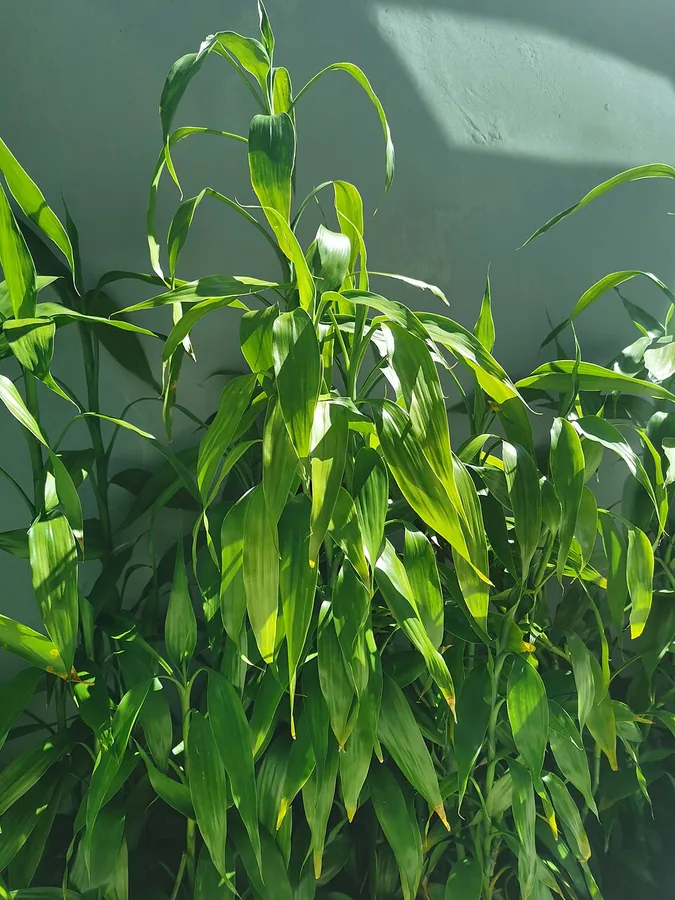
Lucky bamboo is about as easy as houseplants get, and here's a fun twist: it's badly named. It isn't actually bamboo, it's Dracaena sanderiana, a tropical cousin of the corn plant that just happens to grow in those jointed green stalks. People train the stalks into curls, spirals, and braids, then stand them in a little dish of water and pebbles on a desk or windowsill.
So what makes it special? It'll grow in plain water with no soil whatsoever. Nestle the roots into some pebbles or marbles, keep the lower stem under the water, and it just carries on. It also puts up with low light better than most, which is why you'll spot it in offices and dim corners where a pickier plant would throw a fit.
It doesn't ask for much, but it's got one firm opinion: it can't stand the fluoride and chlorine in regular tap water, which browns its leaf tips. Sort out the water, hand it some bright indirect light, and honestly, lucky bamboo is about as hard to kill as they come.
Care
The short version: bright indirect light, clean water with no fluoride or chlorine, and cozy indoor temperatures. Stand it in pebbles and water or a well-drained mix, swap the water every week, and give it a light feed through spring and summer.
Light
Lucky bamboo is happiest in bright, indirect light, roughly what you get a step back from an east or north window. It'll cope with low light and shade way better than most houseplants, but hot direct sun scorches the leaves, so keep it off a sunbaked sill.
Water
Grow it in chlorine-free water with pebbles or marbles holding the roots, or in a steadily moist mix, keeping the roots and lower stem under the surface. Since it doesn't like fluoride, chlorine, and salts, go for distilled, filtered, or rainwater, or just let tap water sit out for a day or two. Swap the water weekly to keep it fresh and keep mosquitoes away.
Soil
If you'd rather pot it, use a well-drained, loam-based mix made for indoor or tropical plants. It's easygoing about pH, happy anywhere from 6.0 to 8.0, and it grows just as well with no soil at all, sitting in plain chlorine-free water and pebbles.
Temperature
It likes the warm, steady feel of a normal room, somewhere around 64°F to 75°F (18°C to 24°C). It's tropical, so it's got zero patience for the cold, and you'll want to bring any outdoor display back in well before the nights get chilly.
Humidity
Regular indoor air is fine, so there's no humidity number to worry about. If the air's really dry the tips might brown a bit, but don't stress, because water quality matters far more to this plant than humidity ever will.
Feeding
Give it a light feed through the growing season, spring into summer, with a weak liquid houseplant fertilizer. If yours grows in water, feed only about every other month at roughly a quarter of the labeled rate, since it barely needs any.
Pruning
Snip off any yellowed or damaged stalks and leaves whenever they show up. To keep the height down, cut a stem just above a node, which pushes out fresh shoots, and you can even root the bits you cut off as new cuttings.
Repotting
Bump it up a pot size every 1 to 2 years, or sooner if the roots start crowding or circling the pot or filling the vase. Slower growth and a knot of roots are the tell that it wants more room, while water-grown displays just need a refresh as they fill in.
Size & spacing
Indoors it gets to about 3 to 5 feet (91 to 152 cm) tall and nearly as wide, though most folks keep it shorter with a bit of trimming. It's a slow grower, so give it some room and let it fill out over time instead of expecting a quick spread.
Troubleshooting
The nice part is that lucky bamboo tips you off early, and the leaves are where you'll see it first. Brown tips and yellow stalks are the two things you're likely to run into, and both usually come back to the water. Find your symptom below, then fix what's actually causing it instead of just snipping off the damage.
A stalk or leaves turning yellow
Seeing yellow? That usually means too much water or water that's gone stale, and sometimes not enough light along with it. If a stem sits in old, stagnant water too long, it can go soft and rot right at the base. So pull out the yellowing or rotting stalk, swap the water every week with just the roots and lower stem under the surface, and give it brighter light out of direct sun plus a weak feed.
Fix:
- Remove yellowing or rotting stalks
- Change the water weekly and keep only roots plus the lower stem submerged
- Provide bright indirect light and a weak fertilizer
Brown, crispy tips on the leaves
Nine times out of ten, this is just tip burn from tap water. Here's the thing: lucky bamboo is a Dracaena, and Dracaenas really don't like the fluoride, chlorine, and salts in city water, which build up at the leaf edges and dry them out. So switch to distilled, filtered, or rainwater, or leave tap water sitting out for a day or two, keep it away from hot sun, and you're sorted.
Fix:
- Switch to distilled, filtered, or rainwater, or let tap water stand uncovered 1-2 days before use
- Change water-grown plants' water weekly
- Move out of direct sun into bright indirect light
Toxicity
This one belongs out of reach of your pets. Lucky bamboo has saponins in it, and the ASPCA lists it as toxic to cats and dogs, which can mean vomiting, drooling, and a flat, off-color mood if they chew it. People are fine, and nobody's eating it anyway, though the sap can leave sensitive skin a little irritated, so wash your hands after pruning.
Toxic to
Cats · Dogs · Horses · Rabbits · Livestock · Birds
Safe for
People
Cats Moderate
If a cat has a chew on a stalk, the saponins tend to bring on vomiting, sometimes with a bit of blood, plus drooling and a dull, checked-out mood. It'll often skip meals too, and a bigger mouthful can leave the pupils looking wide, so it's worth a vet call.
Dogs Moderate
A dog that's been gnawing the leaves or stalks usually drools a lot and throws up, now and then with a little blood in it. Don't be surprised if it's off its food and pretty low on energy for a while afterward.
Horses Caution
Those same saponins that bug cats and dogs? They make a stalk a bad idea for a horse too, so keep any well out of reach. A nibble would probably just leave the stomach unsettled.
Rabbits Caution
This isn't rabbit food, plain and simple, since the saponins can upset a bunny's delicate tummy. Just make sure a dropped leaf or trimmed stalk doesn't end up somewhere it can graze.
Livestock Caution
Farm animals can get an upset stomach from the saponins too, even though a houseplant like this hardly ever crosses their path. To be safe, keep the clippings away from anywhere stock might reach.
Birds Caution
A nosy pet bird that bites a stalk could wind up with a sore stomach from the saponins, so it's best kept off the menu. Just put the plant where the birds can't get at it.
People Safe
Good news for people: it's basically harmless, and it isn't something anyone's going to eat anyway. The sap can leave some skin a touch irritated though, so give your hands a wash after pruning or repotting.
Sap may cause minor skin irritation in people; wash hands after handling.
Helpline numbers

United States
ASPCA Animal Poison Control: (888) 426-4435 (fee applies)

United Kingdom
Animal PoisonLine: 01202 509000 (fee applies)

Australia
Animal Poisons Helpline: 1300 869 738
Varieties
Lucky bamboo isn't really sold as a bunch of named cultivars, more like one plant styled a couple of different ways. Here are the two forms you'll actually come across.
Braided / spiral lucky bamboo
Those curls, spirals, and braids are just regular Dracaena sanderiana stems that got trained toward the light while they were young, so it's not a different plant at all.
Variegated lucky bamboo
You'll know this one by the cream or gold stripes running down its slim green leaves.
How to propagate
Making more lucky bamboo couldn't be simpler, and you've already got everything you need. A trimmed stem and a glass of clean water are all it takes to start a brand new plant.
Stem cuttingsEasy
Spring through summer during active growth · Roots usually form in about 2-3 weeks
Want more of it? Go for cuttings in spring or summer while it's actively growing. Just snip a new shoot off the main stem right above a node, pull off the bottom leaves, and pop it in a glass of chlorine-free water, where roots turn up in about 2 to 3 weeks. Once it's rooted, you can leave it in the water or move it into a pot, whichever you like.
Myths
Lucky bamboo is a kind of bamboo.
The name and the jointed stalks sure make it look the part, but nope, it isn't a real bamboo and it's got nothing to do with the grasses. It is Dracaena sanderiana, a Dracaena in the family Asparagaceae, which puts it way closer to a corn plant than to anything you'd find in a bamboo grove.