Ornamental · Apiaceae
Masterwort
Astrantia major
Give it moist soil and a bit of dappled shade, and masterwort will carry its starry bracts right through the cool of summer.
Partial shade
Every 2–5 days
USDA 4–7
2–3 ft · 0.8–0.9 m
Overview
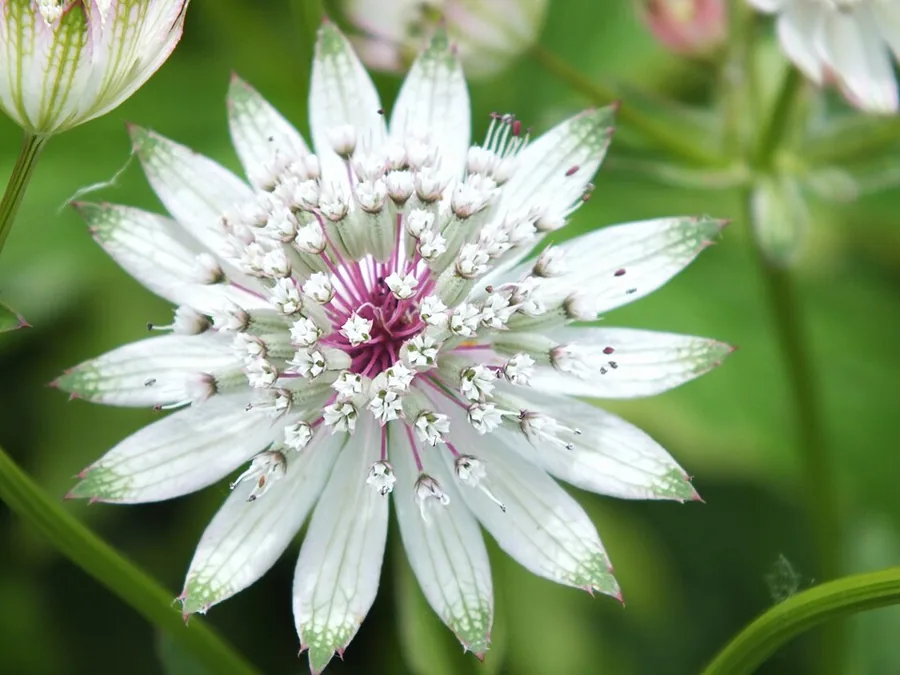
Masterwort is a clump-forming woodland perennial that's actually part of the carrot family, and each bloom looks like a little pincushion sitting inside a collar of papery, petal-like bracts. It comes from the cool meadows and mountain woods of Europe, and honestly, that background explains just about everything about how it likes to grow.
Here's the good part: it's the plant for that shady, damp corner where so much else just gives up. It wants soil that stays moist and rich, a bit of partial shade with maybe some morning sun, and the cool feel of a temperate climate. Hot, dry summers are its one soft spot, so it really earns its keep up in northern gardens.
The bracts are the whole reason to grow it, aren't they? They keep their color and shape long after the true flowers fade, so a clump looks good for weeks and even dries nicely for a vase. Tuck it in with hostas, ferns, and astilbe, and it ties a shady border together instead of hogging the spotlight.
Care
The short version: part shade with a little morning sun, soil kept evenly moist and never bone-dry, rich ground worked with organic matter, and the cool conditions that match its woodland roots.
Light
Masterwort's happiest in partial shade, ideally with a few hours of soft morning sun and dappled light the rest of the day. It'll put up with deeper shade, but the flowering thins out when it's too dark. Just keep it clear of harsh afternoon sun, which scorches the leaves and dries the soil way too fast.
Water
Keep the soil evenly moist all the time, because this one can't handle drought and will need a drink whenever the rain doesn't deliver. The nice thing is it takes wet ground better than most and is perfectly happy at the edge of a bog garden, so when you're unsure, go damp rather than dry.
Soil
Plant it in rich, organic ground that holds moisture but still drains, kind of like the medium-to-wet woodland soil it grows in wild. Work in plenty of compost or leaf mold before planting to feed the roots and help hold that moisture in.
Temperature
It's a cool-climate plant through and through, hardy down to about -29°F (-34°C) and comfy up to roughly 75°F (24°C). It does great in zones 4 through 7 and struggles where summers drag on long and hot.
Humidity
Regular outdoor humidity is plenty, so there's no number to chase here. What really matters is steady moisture at the roots, since dry air on top of dry soil is what wears the plant down.
Feeding
Give it a light feed in spring, either by mixing organic matter into the soil or adding a balanced fertilizer as it wakes up. The rich soil does most of the heavy lifting, so don't overdo it, since too much just pushes soft growth that pulls in aphids.
Pruning
Deadhead the spent flowerheads after bloom to cut back on self-seeding, and that same snip often nudges out a second round of flowers. You can cut the old foliage back in fall, or leave it up for winter interest and tidy it in spring, whatever suits you.
Repotting
Masterwort grows from a clump that slowly spreads, so lift and divide it every few years once it gets crowded. A clump that's flowering less, looks packed in, or dies out in the middle is basically telling you it's time to split.
Size & spacing
Plants get to about 2.5 to 3 feet (76 to 91 cm) tall and make a clump roughly 12 to 18 inches (30 to 46 cm) wide, so give each one that much elbow room to fill out without crowding its neighbors.
When to plant
Masterwort just follows the beat of a cool-season perennial. Start seed in late winter after a good long chill, put young plants outside in spring once frost's done or again in fall, and you'll see the bracted flowers open from late spring through midsummer.
Northern hemisphere
Southern hemisphere
Typical months for a temperate climate: start earlier in warm zones, later where spring frosts linger.
- Sow: Late winter to early spring; fresh seed needs cold stratification for 2-3 months
- Plant: Spring after frost, or fall
- Harvest: May to July
Hardiness
USDA hardiness zones: 4–7
Temperature: down to -34°C
Troubleshooting
Good news: masterwort is a pretty laid-back plant with few real headaches. The ones you might bump into are slugs in the damp shade, aphids on soft new growth, and thin flowering when a spot's too dark or too dry. Match what you're seeing below and jump on it early.
Hardly any flowers on a plant that looks tired
Barely flowering? It usually comes down to too much shade or soil that keeps drying out once the weather heats up. So move it somewhere it gets a few hours of soft morning sun with dappled shade, keep the ground steadily moist with regular watering, and lay down mulch to trap that moisture and keep the roots nice and cool.
Fix:
- Move or site the plant where it gets a few hours of morning sun and dappled shade
- Keep soil continuously moist with regular irrigation
- Mulch to keep roots cool and conserve moisture
Ragged holes turning up in the leaves
Nine times out of ten that's slugs, and they love the same damp, shady spot masterwort does. So head out at dusk or first light and pick them off by hand, then clear away the leaf litter and mulch near the crown where they like to hide. If they just won't quit, some traps or iron-phosphate bait will help you get ahead of them.
Fix:
- Hand-pick slugs in the evening or early morning
- Remove debris and mulch hiding places near the crown
- Use traps or iron-phosphate slug bait if damage is heavy
New shoots looking crumpled and full of tiny bugs
Those little soft-bodied bugs bunched on the tips? That's aphids, and the sticky honeydew they leave behind is the dead giveaway. A good blast of water usually sends most of them packing, and insecticidal soap handles the ones that hang on. Lady beetles and other predators will lend a hand too, and easing up on the nitrogen helps, since all that soft new growth is what lures them in.
Fix:
- Spray plants with a strong jet of water to dislodge aphids
- Apply insecticidal soap if populations are high
- Encourage beneficial predators such as lady beetles
Toxicity
Great news if you've got pets: masterwort isn't known to be poisonous. It isn't listed as toxic to cats, dogs, horses, or any other animals, and it's safe to grow where kids and pets hang out. Like any plant, a big mouthful of leaves might cause a passing tummy ache, but there's really nothing here to lose sleep over.
Safe for
People · Cats · Dogs · Horses · Rabbits · Livestock · Birds
Cats None
If a nosy cat nibbles a leaf, there's nothing toxic in masterwort to worry about. The worst a big mouthful of any greenery might do is a bit of drooling or a short-lived upset stomach, and that clears up by itself.
Dogs None
Dogs are just fine around it, because there's no known poison in the leaves, stems, or flowers. Even a real chewer probably won't get worse than a touch of stomach upset.
Horses None
Got horses? They can graze right near masterwort without harm, since there's nothing in it that would bother them.
Rabbits None
Rabbits can munch the leaves safely, as there aren't any toxins here. That said, it's smart to keep any sudden pile of fresh greens on the small side.
Livestock None
Cattle, goats, and sheep have nothing to worry about with masterwort, since it doesn't carry the stuff that troubles grazing animals.
Birds None
Backyard birds and poultry can peck away at masterwort worry-free, because it's no poisoning risk to them.
People None
It isn't listed as toxic to people, so a kid brushing past or touching it is totally fine. It's grown to look at, not to eat, so there's really no reason to go tasting it.
Keep pets from grazing ornamental plants as a general precaution; ingestion of any plant material can cause mild gastrointestinal upset.
Varieties
A few standout cultivars are worth knowing by name, and each puts its own little spin on the masterwort flower.
Rubra
It's a compact pick with silver-tinged claret-red florets and rose, papery bracts that still look great long after the flowers have called it a day.
Roma
This one's a patented, seed-sterile cultivar with rose-red florets and silver-pink bracts, and since it flowers from late spring into midsummer and never self-seeds, there's no cleanup to chase.
Shaggy
A subspecies involucrata form, it shows off big white flowerheads wrapped in long, deeply cut green-tipped bracts for that easygoing shaggy look.
Companions
Masterwort shines beside the other plants of the moist, shaded border, the ones that share its taste for cool, rich, evenly damp ground.
Plant near
Hosta: The fine-textured astrantia foliage contrasts well with large-leaved hostas in shade.
Astilbe: Shares the same moist, part-shade conditions and pairs well in shade and woodland gardens.
Ferns: Thrives in the same moist, shaded woodland setting and provides textural contrast.
Ligularia: Enjoys the same rich, continuously moist soil in part shade.
How to propagate
You can get more masterwort by splitting an established clump or by growing it from seed, though heads-up, those two routes ask for very different amounts of patience.
DivisionEasy
Early spring or fall · One growing season
Want more masterwort, or a named cultivar that stays true? Dividing a clump in early spring or fall is your best bet. Just lift a mature plant, split the crown, and replant the pieces, and they'll settle in over a single growing season.
SeedModerate
Sow fresh seed in late winter to early spring · One to two seasons to flowering
Seed's the slower road, so bring some patience. Sow fresh seed in late winter or early spring after a cold spell of 2 to 3 months, since it needs that chill to wake up, and nicking the coat helps it sprout. Figure on one to two seasons before the first flowers, and don't count on cultivars coming true from seed.
Myths
Masterwort is the same plant as the medicinal herb of the same name.
Easy to mix up, but the masterwort from old herbal medicine is usually an Angelica or Peucedanum, a whole different plant. Astrantia major is an ornamental grown for its bracted flowers, not the folk-medicine herb that just happens to share the name.
Astrantia spreads aggressively and takes over the garden.
When it's happy, masterwort does creep out a bit by underground stolons and self-sown seed, so colonies do build up over time. But it's slow about it and stays well-mannered rather than invasive, and a quick deadhead after bloom keeps the self-seeding from getting out of hand.