Ornamental · Apiaceae
Sea Holly
Eryngium planum
Give it a hot, sunny spot and soil that stays lean and dry, and sea holly puts on steel-blue, thistle-like flowers all summer.
Full sun
Every 10–21 days
USDA 5–9
2–3 ft · 0.6–0.9 m
Overview
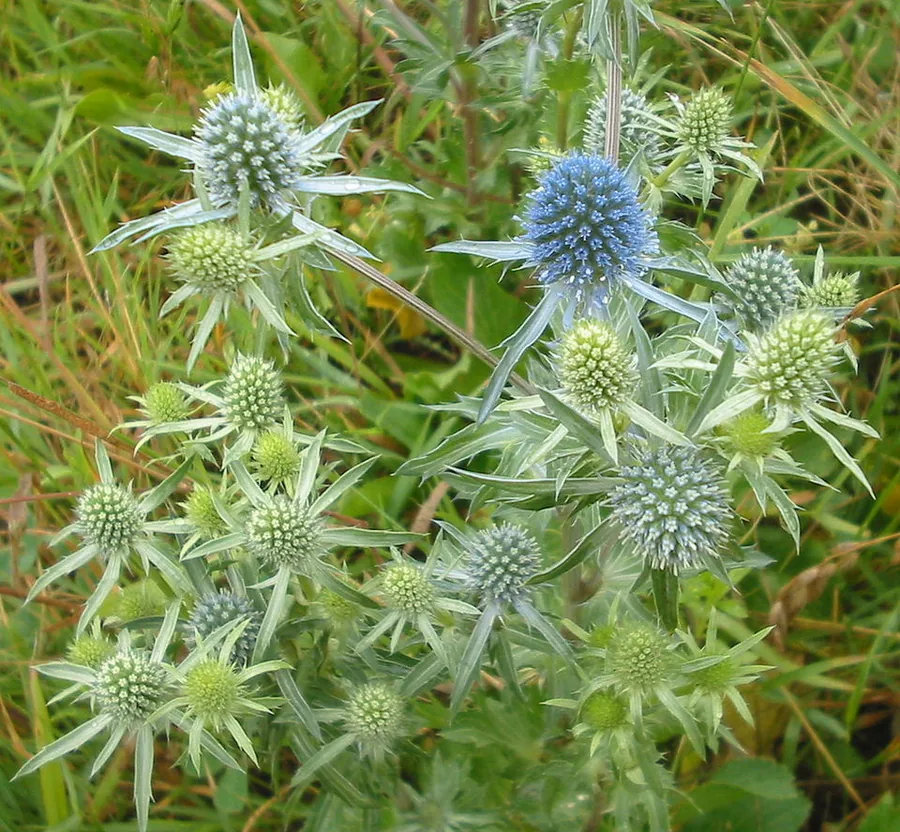
So here's the thing about sea holly: despite the name, it isn't a holly at all. It's actually part of the carrot family, and it grows as a tough perennial that comes back year after year across USDA zones 5 to 9. Those cone-shaped blooms sit inside a ruff of stiff, silvery bracts, and they hold that steel-blue color from June right into September.
What makes it such an easy plant? It barely asks for anything. It's happiest in lean, dry soil with lots of sun, the sort of spot where pickier perennials would just give up. Treat it too well with rich soil or lots of water, though, and you'll get floppy, leggy stems, so doing less really is the way to go.
And the flowers pull double duty. Bees and other pollinators love them all summer, and if you cut a few stems they dry beautifully, holding their blue long after the garden's gone quiet. There's a deep taproot underneath keeping the plant steady through dry spells, but that same root is why sea holly really doesn't like being moved once it's comfortable.
Care
The short version: full sun, poor soil that drains fast, and hardly any water or food once it's settled in. Leave that deep taproot where it is, and the same plant will keep going for years.
Light
Sea holly really wants full sun, and that's what keeps its stems standing up straight. It'll put up with a little partial sun, sure, but stick it in real shade and the stems start to stretch and flop, so give it the sunniest spot you've got.
Water
Once it's established, this is a proper drought-tolerant plant that likes to dry out all the way between drinks. Watering every 10 to 21 days is plenty, and really only when things get bone-dry. If anything, too much water is what does it in, so it's fine to forget about it now and then.
Soil
Give it dry, sandy or loamy soil that drains quickly, and don't stress if the ground's poor or gritty, because that's exactly what it's after. It's easygoing about pH too, happy anywhere from 5.5 to 8.5. The one thing it won't forgive is rich, soggy soil, which leads to floppy growth and rot.
Temperature
This one's genuinely tough. It takes winter cold down to around -20°F (-29°C) and summer heat up to about 90°F (32°C) without any fuss. That's more than enough to keep it happy through zones 5 to 9, so you can just leave it outside.
Humidity
Low humidity? No problem at all, and there's no number you need to hit. What it doesn't love is damp, stuffy air sitting around the leaves, so good airflow matters way more than any moisture in the air.
Feeding
This is one of those plants that does better when you basically ignore it. It needs little to no fertilizer, and one light feed in spring is more than enough if you feel like bothering. Feed it too much and you just get soft, leggy stems that flop over.
Pruning
Just deadhead the spent blooms to keep it tidy, and cut the stems back once it's done flowering. When things wind down, you can chop the foliage right to the ground in late fall or early spring, and it'll bounce back with fresh growth.
Repotting
You'll almost never need to dig this one up or repot it, which is kind of the point. Its deep taproot hates being disturbed, so it's best to just leave it put once it's established. Only get the spade out if an old clump is clearly crowded or starting to look tired.
Size & spacing
In bloom, you're looking at a plant about 2 to 3 feet (61 to 91 cm) tall and spreading 12 to 24 inches (30 to 61 cm) wide. Give each one roughly that much space so the clumps can fill in and air can move through them.
When to plant
Sea holly runs on a pretty simple cold-winter schedule. Start the seed indoors in late winter after giving it a cold, damp chill, pop the young plants outside in spring once the frost has passed, and you'll see those steel-blue flowers from June through September.
Northern hemisphere
Southern hemisphere
Typical months for a temperate climate: start earlier in warm zones, later where spring frosts linger.
- Sow: Late winter, 8-10 weeks before last frost; seed germinates best after cold-moist stratification
- Plant: Spring after last frost, while young so the taproot is undisturbed
- Harvest: June to September
Hardiness
USDA hardiness zones: 5–9
Temperature: down to -29°C
Troubleshooting
Honestly, sea holly is about as low-drama as perennials get, and when something does go sideways it's usually from being too nice to it. Too much water, rich soil, and shade cause way more grief than a dry summer ever could. Find your problem below, and most of the time the fix is just to ease off.
Wilting plant with a soft, rotting base
When the plant wilts and the base goes soft and mushy, that's root rot, and it comes from soil staying too wet rather than any bug you can spray. The roots go brown and squishy and the whole crown caves in. Mix some sand or grit into the soil to help it drain, back off the watering so it can dry out, and toss any plant that's rotted past saving.
Fix:
- Improve drainage by amending with sand or grit
- Stop supplemental watering and allow soil to dry
- Remove and discard severely rotted plants
Stems flopping and getting leggy
If the stems are leaning and stretching out, don't worry, because it's usually just soil that's too rich or a spot that's too shady, not anything you did. Sea holly likes it lean and sunny, and that's what keeps the stems standing on their own. So ease up on the feeding, move it somewhere brighter if you can, and trim those sprawling stems back after it flowers.
Fix:
- Grow in lean, dry, well-drained soil and avoid fertilizing
- Site in full sun for stiff, self-supporting stems
- Cut back floppy stems after flowering
Twisted new shoots and chewed-up leaves
This usually comes down to two culprits. Aphids pile onto the tender new shoots and leave them all twisted, and slugs and snails chew ragged holes and leave slimy trails behind. Just spray the aphids off with a blast of water or use insecticidal soap, pick the slugs off by hand or put out some bait, and clear away the damp junk they like to hide under.
Fix:
- Spray aphids off with a strong jet of water or use insecticidal soap
- Hand-pick slugs and snails or use bait
- Keep area free of debris that shelters slugs
Toxicity
Good news if you've got pets or kids around: sea holly has nothing toxic in it and is totally safe to have nearby. Sure, the name says holly, but the two aren't related, and there's nothing poisonous in the leaves, stems, or roots. The only thing worth a heads-up is those spiny bracts and leaf edges, which can prick, so grab some gloves before you cut the stems.
Safe for
People · Cats · Dogs · Horses · Rabbits · Livestock · Birds
Cats None
Sea holly won't poison your cat, so if a curious one takes a nibble, no harm done. The only thing to watch is those stiff, prickly bracts, since a sharp point could scratch a nosy little face.
Dogs None
Same goes for dogs, who can chew the leaves without any risk of poisoning. Really, the spiny flower heads are way more likely to send a dog off looking for something comfier to chew.
Horses Safe
Nothing here is toxic to horses, so that's one less thing to think about. Those rigid, thistle-like bracts tend to keep them grazing elsewhere anyway, so it rarely comes up.
Rabbits Safe
Rabbits won't get poisoned by sea holly either. And honestly, the prickly leaves and stems usually put them off before they even bother trying it.
Livestock Safe
Cattle, goats, and sheep can hang out near sea holly no problem, since there's no toxin in it. The sharp, spiny growth just makes it a bit of a chore to eat, so they tend to skip it.
Birds Safe
Birds have nothing to fear here, and plenty of them actually drop by for the seeds. The stiff bracts are pretty much the only thing standing in their way.
People Safe
It's safe around both kids and grown-ups, with no poisonous bits to worry about. The real catch is those spiny bracts and leaf edges, so it's smart to put gloves on before you cut or arrange the stems.
The spiny, stiff bracts and leaf margins can prick or scratch skin; wear gloves when handling or cutting stems.
Varieties
There are a few named cultivars out there that tweak the wild plant in handy ways, from little dwarfs to heavy bloomers and even a frosty, variegated one. Here are the ones worth knowing about.
Blue Hobbit
Blue Hobbit's a cute little dwarf that forms a neat, ball-shaped mound just 8 to 12 inches tall when it flowers.
Blue Glitter
Blue Glitter piles on the glittering steel-blue flower heads, all held up on stems that branch freely.
Jade Frost
Jade Frost is the fancy one, with variegated blue-green leaves trimmed in creamy white under its violet-blue blooms.
Tiny Jackpot
Tiny Jackpot stays small and stands up on strong stems to only about 14 inches tall, which is handy in a tight spot.
Companions
Sea holly looks its best next to other plants that share its taste for sun and dry, lean ground, where their colors and textures play off its steel-blue spikes.
Plant near
Black-eyed Susan: Shares full-sun, dry, well-drained conditions and contrasts with the steel-blue flower heads.
Ornamental grasses: Thrive in the same lean, sunny, drought-tolerant settings and complement the spiky texture.
Yarrow: Drought-tolerant, full-sun perennial that pairs well in dry borders and pollinator plantings.
How to propagate
Want more sea holly? The easiest path is from seed, since that deep taproot makes anything that messes with the roots a bit of a gamble.
SeedModerate
Sow in late winter to spring; cold-moist stratification improves germination · Blooms typically in the second year from seed
Seed is hands-down the most reliable way to get more sea holly. Sow it from late winter into spring, and give the seed a cold, damp chill first to wake it up. Start the plants young and get them outside before that taproot digs in deep, and most will flower for the first time in their second year.
DivisionDemanding
Spring, only if necessary · Slow and unreliable to recover
Dividing is really a last-ditch option with this plant. That deep taproot hates being cut and lifted, so a divided clump transplants badly and is slow and unreliable to bounce back. Only give it a go in spring, and only if you've really got no other choice, since a plant that's left alone always does better.
Myths
Sea holly's a real holly, so it must be poisonous like holly berries.
Nope, the name's just throwing you off. Sea holly is part of the carrot family, not the true hollies at all, and no source calls it toxic to pets or people. The only real hazard is the spiny bracts, not anything you'd actually swallow.
You've got to dig up and divide sea holly clumps regularly to keep them healthy.
Actually, that's the opposite of what it wants. Sea holly grows from a deep taproot that hates being moved, so dividing it usually sets it back instead of perking it up. Just leave an established clump alone, and if you want more, start them from seed or root cuttings instead.