Ornamental · Apocynaceae
Milkweed
Asclepias syriaca
Grow it for the monarchs, hand it sun and lean soil, and a native milkweed pretty much runs itself.
Full sun
Every 7–14 days
USDA 3–9
2–5 ft · 0.6–1.5 m
Overview
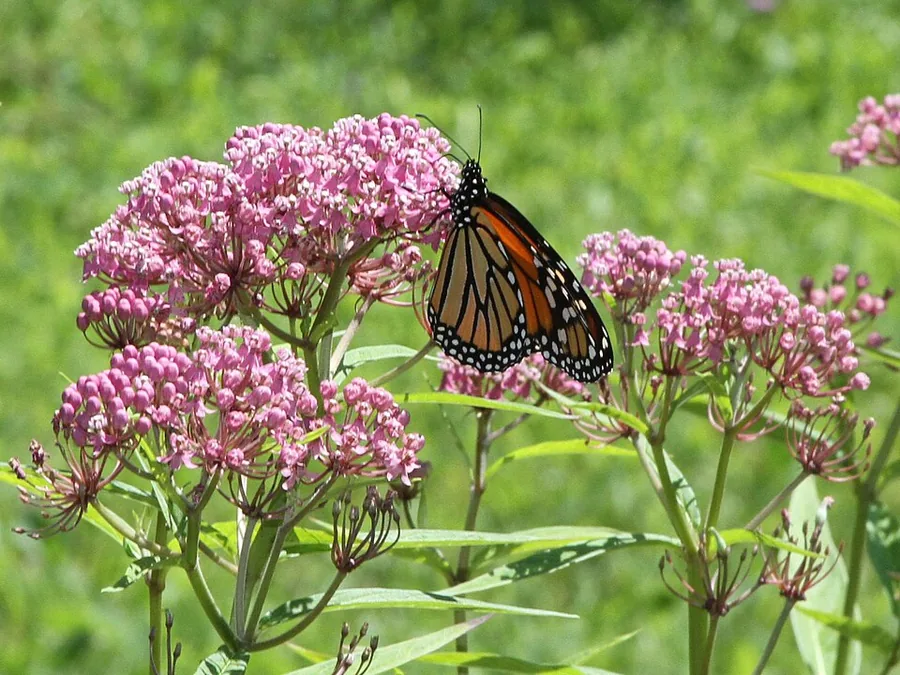
Milkweed is the one plant a monarch butterfly just can't do without. Its caterpillars won't eat anything else, and the cardiac glycosides they pull from the leaves make them taste terrible to birds, which is exactly why gardeners bother with it. All summer, those clusters of pink to mauve flowers keep the bees and other pollinators coming back for more.
The name covers a bunch of native species, and the two you'll bump into most are pretty different neighbors. Common milkweed (A. syriaca) roams around underground on rhizomes and builds wide colonies, which is great in a meadow but kind of a handful in a small bed. Swamp milkweed (A. incarnata) keeps to a tidy clump and likes damper ground, so it slips into a border without ever taking over.
These are tough, hardy perennials that ask for almost nothing once they've settled in. The one catch? That milky sap, which carries the same toxins that keep the monarchs safe and irritates skin and eyes, so keep the gloves on and keep grazing animals well away.
Care
The short version: full sun and plain, well-drained soil are all milkweed really wants, and once it's settled in it barely needs any extra water or feeding. Match the species to your spot, give it room to grow, and handle the sap with gloves.
Light
Milkweed loves full sun and blooms best with light all day long. It'll put up with a bit of partial shade, but the plants get leggier and flower less when the sun's in short supply.
Water
Once it's settled in, common milkweed is genuinely drought tolerant and gets by on rain alone in dry to medium soil. Water new plantings until the roots take hold, and then you can ease off. Swamp milkweed's the exception, though, since it wants steadily moist to wet ground.
Soil
Just about any well-drained clay, loam, or sandy soil works, and common milkweed even thrives on poor, dry spots that would stump fussier plants. Swamp milkweed's the one that likes moist or wet ground, so pick the species to match the spot rather than the other way around.
Temperature
These are cold-hardy perennials that shrug off winters down to -40°F (-40°C) and take summer heat up to around 86°F (30°C) without complaint. That wide range is what lets milkweed grow across so much of the country.
Humidity
Outdoor humidity? Not something milkweed cares about, so there's no number to chase. The plants just take whatever the local air hands them and keep on going.
Feeding
Skip the fertilizer entirely. These natives are built for lean soil, and feeding them does nothing useful while it can push soft, floppy growth, so just leave them be.
Pruning
Cut the spent stems to the ground in late fall or early spring to tidy up the clump. Want to slow the self-seeding? Remove the pods before they split and scatter their seed. Keep gloves on for it, since the sap's an irritant.
Size & spacing
Plants get 2 to 5 feet (60 to 150 cm) tall and spread anywhere from 9 to 36 inches (23 to 91 cm) depending on the species. Give the running common milkweed plenty of elbow room, and set the clump-forming kinds closer where you want a neat little stand.
When to plant
Milkweed runs on the seasons, and its seed won't wake up without a cold spell first. So sow it outdoors in fall and let winter do the chilling, or stratify the seed in the fridge and start it indoors in late winter, then watch for blooms from early summer on, mostly in the plant's second year.
Northern hemisphere
Southern hemisphere
Typical months for a temperate climate: start earlier in warm zones, later where spring frosts linger.
- Sow: Start seed indoors 6 to 8 weeks before last frost after 30 days of cold-moist stratification in the refrigerator
- Plant: Transplant after last frost; direct-sow seed in fall or early winter so natural cold stratification occurs over winter
- Harvest: Blooms June to August (common milkweed); swamp milkweed July to September
Hardiness
USDA hardiness zones: 3–9
Temperature: down to -40°C
Troubleshooting
Most of what goes sideways with milkweed is about where it spreads and who shows up to feed, not disease. A lot of the insects you'll find are supposed to be there, so figure out what you're looking at before you act. Match what you see below, and remember the sap alone is worth a little care.
Shoots showing up nowhere near where you planted
That's just common milkweed (A. syriaca) doing its thing, creeping along shallow rhizomes underground and dropping seed once the pods pop open. Want to rein it in? Dig out the strays and cut the pods before they split. And if you'd rather not chase it around, swamp milkweed is the clump-forming type that stays right where you put it.
Fix:
- Remove unwanted rhizome shoots by digging them out
- Cut and remove seed pods before they split to limit self-seeding
- Site common milkweed where spread is acceptable, or choose clump-forming swamp milkweed for small beds
Bright orange aphids caked onto the stems and buds
Those are oleander aphids, a milkweed regular that clusters into dense yellow-orange colonies and leaves a sticky honeydew mess behind. A hard jet of water knocks them loose, or you can just wipe the colonies off by hand. Skip the bug spray, though, since it'd wipe out the monarch eggs and caterpillars you planted the milkweed for in the first place.
Fix:
- Dislodge aphids with a strong spray of water
- Wipe off or hand-remove colonies
- Avoid insecticides, which kill monarch eggs and caterpillars
Chewed-up leaves and stripped stems with colorful bugs on them
Milkweed feeds a whole crew of specialists, so take a look at who's actually eating before you do anything. The black-and-orange milkweed bugs and beetles are harmless, and you can pick them off if they get out of hand. But those yellow, white, and black striped feeders? Those are monarch caterpillars, which is the whole reason you've got the plant, so leave them be and never spray a host plant.
Fix:
- Identify the insect before acting; tolerate monarch caterpillars as this is the plant's purpose
- Hand-pick pest milkweed bugs or beetles if damage is excessive
- Do not spray insecticides on host plants
A rash or stinging eyes after the sap gets on you
The milky latex sap has cardiac glycosides and resinoids in it, and they'll irritate skin and eyes the moment they touch. Got some on you? Wash the skin with soap and water, flush your eyes out well if any sap gets in there, and call a doctor if the sting won't quit. Gloves at pruning time and keeping your hands off your face makes the whole thing a non-issue.
Fix:
- Wash affected skin with soap and water
- Flush eyes with water and seek medical care if irritation persists
Toxicity
Milkweed is a poisonous plant, and honestly that poison is the whole point, since it's what keeps the monarchs safe. Every part holds cardiac glycosides in the milky sap, which makes it toxic to cats, dogs, horses, rabbits, birds, and livestock, and a real cause of fatal poisoning in grazing animals. People shouldn't eat it either, and the sap stings skin and eyes, so wear gloves and keep kids and pets away from the plant.
Toxic to
Cats · Dogs · Horses · Rabbits · Livestock · Birds · People
Cats Moderate
If a cat nibbles the leaves or sap, you'll usually see drooling, throwing up, no interest in food, and a weak, dull look. A bigger mouthful can take it further, into seizures, labored breathing, a faint pulse, and dilated pupils.
Dogs Moderate
Once a dog chews any part, keep an eye out for vomiting, diarrhea, a heavy low mood, and weakness. Bigger amounts can bring on seizures, trouble breathing, and a fast, thready pulse, so that's a get-to-the-vet-now situation.
Horses Severe
Horses really take it hard, with colic, diarrhea, weakness, and a dull, listless look about them. The glycosides throw the heartbeat off rhythm and can slide into seizures, struggling breath, and death.
Rabbits Toxic
Those cardiac glycosides are just as bad for a rabbit, so there's no part of the plant that's okay to offer. You'd be looking at digestive upset and weakness, so keep both fresh stems and dried trimmings well out of reach.
Livestock Severe
Cattle and sheep can be down within hours, staggering and weak before seizures and collapse kick in. A pretty small amount of green plant has killed grazing animals inside a day or two, so keep stock off it completely.
Birds Toxic
Birds aren't off the hook with the cardenolides either, so don't let them feed on any part of it. Treat garden and poultry birds alike as at risk, and fence the plant off from coops and runs.
People Caution
No part of milkweed belongs on the dinner table, and eating much of it brings stomach upset, weakness, and an unsteady heartbeat. Keep kids from chewing the pods or stems, and wash the irritating sap off skin and out of eyes.
The milky sap is an eye and skin irritant; wear gloves when handling and keep grazing animals away from plants and trimmings.
Helpline numbers

United States
ASPCA Animal Poison Control: (888) 426-4435 (fee applies)
Poison Control: (800) 222-1222



Canada
Poison Centres: 1-844-764-7669
Varieties
Milkweed isn't one plant so much as a whole group of native species, and which one's right for you really just comes down to whether you want a colony in a wild patch or a single clump in a bed.
Asclepias syriaca (common milkweed)
This is the tall 3 to 5 foot one with broad oval leaves and rounded pink-purple flower clusters, and it's the runner that spreads hard by rhizomes and builds big colonies in dry to medium soil.
Asclepias incarnata (swamp milkweed)
This one's the polite 3 to 5 foot clump former with narrow leaves and pink to mauve flowers, and it wants moist to wet ground, sits on a deep taproot, and never runs by rhizomes.
Asclepias incarnata subsp. pulchra (eastern swamp milkweed)
It's an eastern take on swamp milkweed with hairier stems and leaves that's happy in wet meadows and along stream banks.
How to propagate
Milkweed's grown mostly from seed, which needs a cold spell before it'll sprout, though you can also split common milkweed at the root.
SeedModerate
Sow outdoors in fall or early winter, or stratify cold-moist for about 30 days and sow indoors 6 to 8 weeks before last frost · Seedlings germinate in spring; plants typically flower in their second year
Seed's the usual way to go, but it won't wake up without a cold spell and some light. So either sow it outdoors in fall or early winter and let the season chill it, or give it about 30 days of cold-moist stratification in the fridge and start it indoors 6 to 8 weeks before your last frost. Just press the seed onto the surface instead of burying it, watch for sprouts in spring, and hang in there, since most plants won't bloom until their second year.
DivisionModerate
Early spring as new growth emerges · One growing season
Common milkweed's easy to split, or you can take rhizome and root cuttings in early spring as the new growth pushes up, and it'll settle in within a single season. Leave swamp milkweed out of it, though, because that deep taproot hates being moved and does best just left where it is.
Myths
All milkweed is a noxious weed that should be wiped out.
Native milkweeds are big-deal pollinator plants and the one thing a monarch caterpillar will eat, so they're worth having around. Sure, common milkweed can get a bit rowdy in a garden, but it more than pulls its weight, and clump-forming species like swamp milkweed behave themselves in a bed.
Any milkweed helps monarchs, tropical milkweed included.
Not quite, since non-native tropical milkweed (A. curassavica) hangs around all year in mild climates, which messes with monarch migration and diapause and lets the OE parasite pile up. Better to stick to species native to your area instead.