Shrub · Apocynaceae
Dipladenia
Mandevilla sanderi
Hand it full sun, warmth, and sharp drainage, and dipladenia keeps the trumpet flowers coming from early summer to fall.
Full sun
Every 3–7 days
45–84°F · 7–29°C
USDA 9–11
Overview
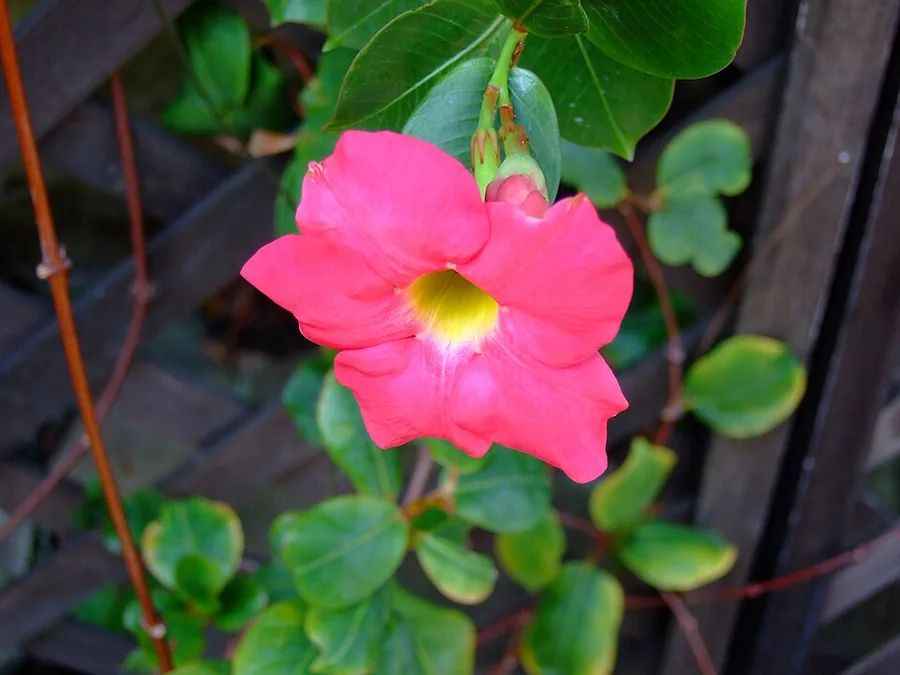
Dipladenia is the bushy, mounding side of Mandevilla sanderi, a tropical vine out of Brazil grown for glossy leaves and a nonstop parade of trumpet-shaped flowers. It sits in the dogbane family alongside oleander and periwinkle, and just like those relatives, it runs a milky sap through every stem. Gardeners love it as a patio and container plant that just keeps flowering once the warm weather settles in.
Honestly, the name comes down to trade habits and growth habit. Anything sold as Dipladenia stays compact and bushy with a bit of a trailing streak, which makes it great for pots, baskets, and window boxes, while the Mandevilla-labeled plants climb harder and get bigger. Hardy only in zones 9 to 11, it can stay outside all year in the warmest gardens and gets grown as a summer annual or kept indoors over winter everywhere else.
Give it sun and it shines; let it sit wet and it sulks. With heat, light, and quick-draining soil, it flowers hard right through fall. But leave the roots soaking or let a cold snap catch it, and those blooms turn into yellow leaves and dropped buds instead.
Care
The short version: full sun and warmth, soil that drains fast so the roots never stay wet, a high-phosphorus bloom feed across the growing season, and gloves on every time you prune those sappy stems.
Light
Dipladenia puts on its best show in full sun, and the more direct light it soaks up, the more buds it forms. It'll get by in partial shade or bright indirect light indoors, but without strong sun the flush of bloom drops off in a hurry.
Water
Through summer, keep the soil moist but never soggy, letting the top of the pot dry out between drinks. This plant can't stand wet feet and will rot at the root if it sits waterlogged, so ease right off the watering in winter once growth slows down.
Soil
Set it in rich, sharp-draining soil, whether that's a sandy mix with humus or a peat-based potting medium. It isn't fussy about acidity and does fine anywhere from pH 6.0 to 8.0, though fast drainage counts for a lot more than hitting the exact number.
Temperature
It's content cruising between 45°F and 84°F (7°C to 29°C) and needs steady warmth to keep the flowers coming. Nights under about 50°F (10°C) put the brakes on it, and frost will finish it off, so get it inside before the chill sets in.
Humidity
Dipladenia is a fan of high humidity and lets you know it dislikes dry air by falling prey to spider mites indoors. Cluster it with other plants or sit it over a pebble tray through winter to keep some moisture in the air around it.
Feeding
All through spring and summer, feed it every two weeks with a high-phosphorus bloom fertilizer like a 10-20-10. That extra phosphorus nudges it toward flowers instead of leaf, which is exactly what you're after here.
Pruning
Pinch off the tips of new shoots to keep it bushy and compact, and trim a little to shape it up and clear out the spent blooms. Wear gloves while you're at it, because the cut stems weep an irritating milky sap.
Repotting
Bump it up a pot size every 1 to 2 years in spring. When roots start circling out the drainage holes, water runs straight through, or growth and flowering taper off, that's your cue it's time.
Size & spacing
12–59 in (30–150 cm) tall
When to plant
Dipladenia is all about warmth and has zero patience for frost. Keep it indoors or under cover until the cold has properly cleared and nights settle above about 50°F (10°C), pop it outside for the season, and it'll flower from early summer all the way through fall.
Northern hemisphere
Southern hemisphere
Typical months for a temperate climate: start earlier in warm zones, later where spring frosts linger.
- Plant: After all danger of frost has passed and nights stay above about 50 degrees F
- Harvest: Early summer through fall
Hardiness
USDA hardiness zones: 9–11
Temperature: down to -7°C
Troubleshooting
Most of what goes wrong with dipladenia shows up on the leaves, either from sap-sucking pests or roots left too wet. Spot it early and the fix is easy. Find what matches what you're seeing below, then jump on it before it spreads.
A pale, speckled look on the leaves with a hint of webbing
When you spot this, think spider mites, the pest that loves the warm, dry indoor air a plant meets after it comes inside for the cold months. Flip a leaf over and check for the tiny crawling specks and faint webbing, or give the leaf a tap above a sheet of white paper and watch what lands. Hose the foliage down hard, follow with insecticidal soap or horticultural oil, and bump up the humidity so the mites no longer feel at home.
Fix:
- Rinse foliage with a strong spray of water
- Treat with insecticidal soap or horticultural oil, repeating per label
- Raise humidity around the plant
Fluffy white patches and a tacky film along stems and leaf joints
That's a sure sign of mealybugs or scale, and sometimes whitefly or aphids tag along too. Peek into the leaf axils and along the stems for the fuzzy white bugs, the hard little bumps that don't budge, or a puff of whiteflies that scatters when you nudge the plant. Touch up the small spots with an alcohol-soaked swab, come back with insecticidal soap or oil, and shift the plant away from its neighbors so the bugs stay put.
Fix:
- Wipe off light infestations with an alcohol-dipped cotton swab
- Apply insecticidal soap or horticultural oil and repeat as needed
- Isolate affected plants to prevent spread
Yellowing, drooping leaves and buds falling before they open
Nine times out of ten this comes down to root rot in waterlogged soil, or a chilly draft that's given the plant a fright. Ease it out of its pot and have a feel of the roots: the healthy ones stay firm and pale, but rotten ones go soft, mushy, and brown. Wait for the top of the soil to dry before watering again, sort out the drainage, and park it somewhere warm above about 50°F (10°C) where no cold draft can reach it.
Fix:
- Let the top of the soil dry before watering again
- Improve drainage and ensure pots have drainage holes
- Move the plant to a warm spot above about 50 degrees F away from cold drafts
Tan to brown spots that turn the leaf yellow before it falls
This one is anthracnose, a fungus that moves in when leaves stay damp for too long. Keep an eye out for tan to brown spots that grow, yellow the leaf, and eventually drop it. Pluck off the spotted leaves and throw them out, keep water off the foliage, and only reach for a labeled fungicide if the problem won't quit.
Fix:
- Remove and dispose of affected leaves
- Avoid overhead watering and keep foliage dry
- Apply a labeled fungicide if the problem persists
Toxicity
Give this plant a bit of respect. Every part carries a milky latex sap that can irritate skin and eyes and upset the stomach if something chews it, and nothing on it is safe to eat. Glove up before you prune, and keep the leaves away from pets, livestock, and small children.
Toxic to
Cats · Dogs · Horses · Rabbits · Livestock · Birds · People
Cats Mild
If a cat nibbles the leaves, you might see some drooling and a touch of tummy upset, maybe a little vomiting too. It stays mild and usually clears up by itself.
Dogs Mild
A dog that gets the foliage in its mouth tends to drool a bit and feel off in the stomach, with the occasional vomit. It rarely lasts long.
Horses Caution
Most horses turn their noses up at the bitter milky sap, but even a mouthful can sting the mouth and gut. Keeping the plant clear of the paddock is the safe call.
Rabbits Caution
This is no snack for a rabbit. The irritant latex can burn the mouth and upset the gut, so keep it off the menu completely.
Livestock Caution
Goats, sheep, and cattle don't usually go looking for it, but that same sap can irritate the mouth and digestion if they take a bite. Fence it off from anywhere they graze.
Birds Caution
There's just no reason to let a pet bird near the leaves or sap, and the irritant latex could trouble a small bird in no time. Keep it well out of the way.
People Caution
None of this plant counts as food. That milky sap can leave skin red and sore and sting the eyes, so glove up before you prune and keep curious kids from chewing on it.
Wear gloves when pruning, as cut stems release a milky latex sap that can irritate skin and eyes; wash hands afterward and keep sap away from the face.
Helpline numbers

United States
ASPCA Animal Poison Control: (888) 426-4435 (fee applies)
Poison Control: (800) 222-1222



Canada
Poison Centres: 1-844-764-7669
Varieties
Nearly all the dipladenia you'll find today traces back to a handful of breeding series, each chosen for compact, free-flowering plants that work in pots and baskets. Here are the names you're most likely to run into.
'Rio' series
A tidy, bushy Dipladenia that flowers freely and was bred with containers and baskets in mind, putting out blooms in red, pink, and white.
'Sundaville' (Sun Parasol)
A mounding-to-trailing series with glossy leaves and trumpet flowers all summer long, including compact picks made for hanging baskets and window boxes.
'Madinia' series
A well-branched, bushy Dipladenia sold for patios and pots, valued for big flowers and dark, glossy leaves.
How to propagate
Want more dipladenia from the one you've already got? You can either root a cutting or layer a stem while it's still joined to the plant. Both take a bit of patience, and both leak that same irritating sap, so keep your gloves close.
Stem cuttingsModerate
Spring to summer · 4 to 8 weeks to root
Snip tip cuttings from shoots that aren't flowering in spring or summer, and glove up first because the cut stems ooze an irritating milky sap. Settle them into a moist, well-drained medium somewhere warm with bright indirect light, and roots come along over the next 4 to 8 weeks.
LayeringModerate
Spring to summer · Several weeks to months
Come spring or summer, bend a low, bendy stem down onto moist soil, pin it there, and give it time to root in place, which can take anywhere from several weeks to a few months. Once those new roots have a good grip, snip the rooted piece away from the parent plant.
Myths
Dipladenia and Mandevilla are two separate plants.
Nope, they sit in the same genus, and Dipladenia is just an old trade name for the bushier forms of Mandevilla sanderi. What sets them apart is habit: the Dipladenia types stay bushy and mounding, while the ones sold as Mandevilla climb vigorously and reach a bigger size. Botanically they are one and the same, and the genus Mandevilla takes in everything once called Dipladenia.