Houseplant · Orchidaceae
Oncidium Orchid
Oncidium
Hand it bright indirect light and a bark mix that drains fast, and the dancing lady orchid pays you back with sprays of fall flowers.
Bright indirect
Every 2–10 days
55–84°F · 13–29°C
USDA 9–12
Overview
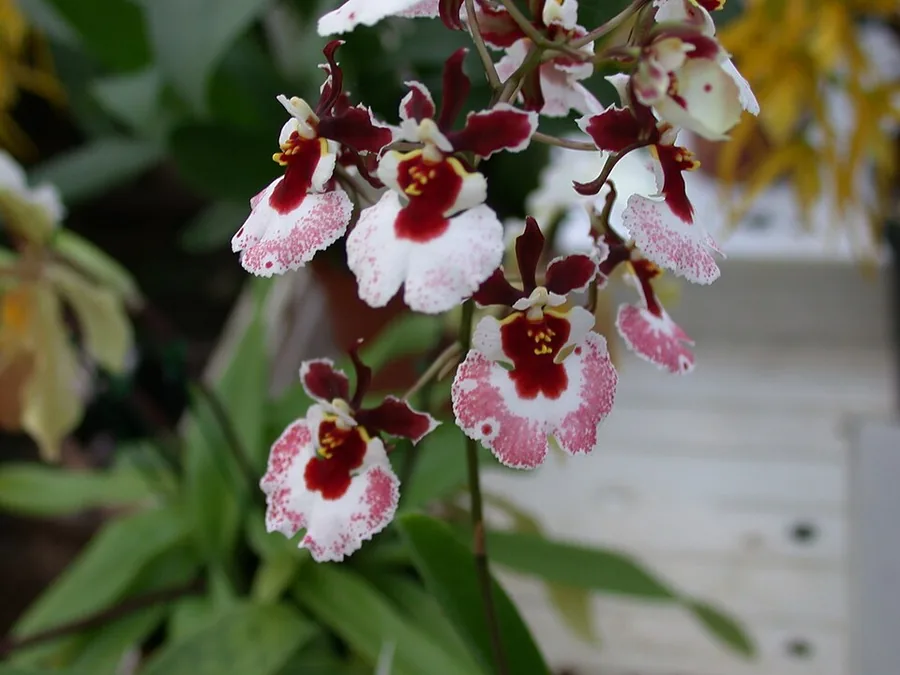
So this is the orchid folks call the dancing lady, and the name comes from that ruffled lip on each bloom that flares out like a skirt mid-twirl. It's from the warm forests of the Americas, where it lives as an epiphyte, meaning it sits on tree bark instead of digging into the ground. And that little detail? It shapes just about everything about growing one at home.
Forget soil, because an oncidium wants a loose bark mix that drains the moment water hits it. Those chunky stem bases, called pseudobulbs, stash water to get the plant through dry spells, so the roots really don't want to sit wet. Most of the genus blooms in fall, pushing up branching sprays that can carry dozens of small flowers at once and keep them around for three weeks or more.
It's rated moderate, but that's not because it's fussy. It just wants the right setup instead of plain old houseplant care. Nail the light, the bark, and the watering rhythm and it'll settle in for years and give you a fresh round of blooms every season.
Care
The short version: give it bright indirect light, plant it in a fast-draining orchid bark mix, and only water once the bark's dried about halfway, backing off in winter.
Light
Oncidiums want bright, indirect light for most of the day. An east-facing window with gentle morning sun is just about perfect, while harsh midday sun scorches the leaves and deep shade leaves you with dark foliage and, well, no flowers.
Water
Water it well with room-temperature water once the bark mix has dried about halfway, which might mean every few days in summer heat or as little as every 10 days when it's cool. Back off in winter. The big thing to remember? Never let the fine roots sit soggy, because that's the quick road to rot.
Soil
Skip the potting soil completely and grab a well-drained epiphytic orchid bark mix instead. It's a lot like the loose tree bark the plant grows on in the wild, keeps a slightly acidic pH around 5.0 to 6.0, and drains fast so the roots can breathe.
Temperature
Regular room temperatures work great, anywhere from 55°F to 84°F (13°C to 29°C). It's pretty easygoing about the range, so just keep it clear of cold drafts and the hot air from heating vents.
Humidity
This one likes the air a bit moist, around 50% to 70% humidity. If your place runs dry, set the pot on a tray of damp pebbles or run a humidifier close by, and keep the air moving so the leaves don't stay wet.
Feeding
All through the spring-to-summer growing season, feed it weekly with a balanced orchid fertilizer mixed to quarter or half strength. Do it right after watering so the diluted feed never lands on dry roots.
Pruning
Once the flowers fade, cut the spent flower spike back to its base, and that's pretty much it. The only other trimming it needs is the removal of dead or rotted roots and yellowed leaves.
Repotting
Repot it about every 2 years in spring, when new growth is roughly half mature. That's your cue when you see roots climbing over the rim, pseudobulbs crowding the edge, or bark that's crumbled into fine bits and stopped draining.
Size & spacing
Size is all over the map across the genus, from little miniatures around 6 inches (15 cm) tall to big plants hitting 10 feet (3 m) in bloom, spreading anywhere from 3 to 48 inches (8 to 122 cm) wide. Just pick a variety that fits the spot you've got in mind.
Troubleshooting
Most oncidium problems start where you can't see them, down in the roots, or they show up as a change in leaf color. Catch those early hints and you can usually turn things around. Just find what matches below, then step in before it spreads.
Soft brown roots, and a plant that wilts even right after a drink
That's root rot, and here's the twist: it usually comes from too much water, not too little. When the bark breaks down it quits draining, so the fine roots end up smothered and mushy. Slide the plant out of its pot, snip off every brown, hollow root with clean tools, pop it into fresh bark, and hold off watering for a bit.
Fix:
- Remove the plant from the pot and trim away all rotted roots with sterile tools
- Repot into fresh, well-drained orchid bark
- Resume watering only when the mix approaches half-dryness
White cottony tufts or brown bumps with a sticky film
Sticky film plus white fuzz or hard little brown specks? That's mealybugs or scale settling into the leaf joints and around the pseudobulbs. Dab each one away with a cotton swab dipped in isopropyl alcohol, then go over the plant with horticultural soap or oil. Keep it away from your other orchids until they're all gone, and you'll be fine.
Fix:
- Wipe insects off with a cotton swab dipped in isopropyl alcohol
- Treat with horticultural soap or oil
- Isolate the plant until the infestation clears
Leaves going reddish, washed out, or weirdly dark
Wondering what the leaf color is telling you? It's all about light. A reddish or bleached look means the sun's a bit too intense and it's scorching the foliage, while soft, super dark green leaves are asking for more. Nudge it into bright, indirect light, keep it out of that harsh midday sun, and the color drifts back to a healthy mid-green.
Fix:
- Move the plant to bright, indirect light
- Shield from harsh midday direct sun
Toxicity
Good news if you've got pets or kids around: the oncidium is non-toxic from root to flower. The ASPCA lists the dancing doll orchid as safe for cats, dogs, and horses, and the wider orchid family has no known poisons. Sure, a pet that chews a leaf might drool or feel a little off, but there's nothing here that'll actually hurt it.
Safe for
People · Cats · Dogs · Horses · Rabbits · Livestock · Birds
Cats None
If the cat sneaks a nibble, there's really nothing toxic to sweat over. Worst case, a chewed leaf brings a bit of drool or one round of vomiting, and it sorts itself out.
Dogs None
Dogs can chomp the leaves and be totally fine. A curious pup that shreds one might get a quick upset stomach, but there's no poisoning in the picture.
Horses None
Horses have nothing to worry about here either. A mouthful would do no more than stir up a mild, short-lived tummy ache.
Rabbits None
Rabbits won't run into any toxic trouble with this orchid. Like any new green, though, a big helping at once could loosen things up for a day.
Livestock None
Goats, sheep, and cattle can browse the leaves without a hitch. There's simply nothing in it that would make them sick.
Birds None
Pet birds can perch on it or peck at it and stay perfectly safe. No part of it is poisonous to them.
People None
It's harmless to people too, kids handling the flowers included. It's just not a plant you'd eat, so there's no reason to give it a taste.
No toxic compounds, but ingested fertilizer or pesticide residue on leaves could cause mild stomach upset, and eating plant material may cause transient vomiting.
Varieties
There are thousands of oncidium species and hybrids out there, but only a handful keep popping up in shops and on windowsills. These are the ones worth knowing by name.
Oncidium 'Sharry Baby'
This crowd-favorite hybrid throws a scent so rich, like chocolate and vanilla, that it drifts across a whole room.
Oncidium 'Twinkle'
It's a tiny thing that still crams loads of small fragrant blooms onto a plant that fits right on a windowsill.
Oncidium sphacelatum
People call it the popcorn orchid, and it sends up long branching sprays loaded with bright yellow-and-brown flowers.
How to propagate
Give an oncidium some time and it grows into a clump, and honestly the easiest way to make more is to split that clump the next time you repot.
DivisionModerate
At repotting in spring, when new growth is about half mature · About 1-2 years to re-establish and bloom
Want more oncidiums? Wait until you're repotting in spring, once the new growth is about half mature, and just split the clump. Leave at least three pseudobulbs and some healthy roots on each piece, because if you go smaller they tend to sulk and skip flowering. Then be patient, since each new one takes 1 to 2 years to settle in and bloom again.
Myths
Orchids are parasites that feed off the trees they grow on.
Not true at all, since an oncidium is an epiphyte rather than a parasite. It just holds onto a tree for a place to sit and gets its water and food from rain, air, and whatever debris collects around its roots. It doesn't take a thing from the tree itself.
Watering any orchid with ice cubes is the right way to do it.
Here's the catch: oncidiums like it intermediate-to-warm, and a slow drip of cold meltwater never really soaks the bark the way they want. Just water them well with room-temperature water once the mix has dried partway, and forget the ice.