Ornamental · Solanaceae
Petunia
Petunia × atkinsiana
Give it full sun and steady feeding, and your petunia keeps the color coming from late spring right up to frost.
Full sun
Every 2–7 days
50–86°F · 10–30°C
70–90 days
Overview
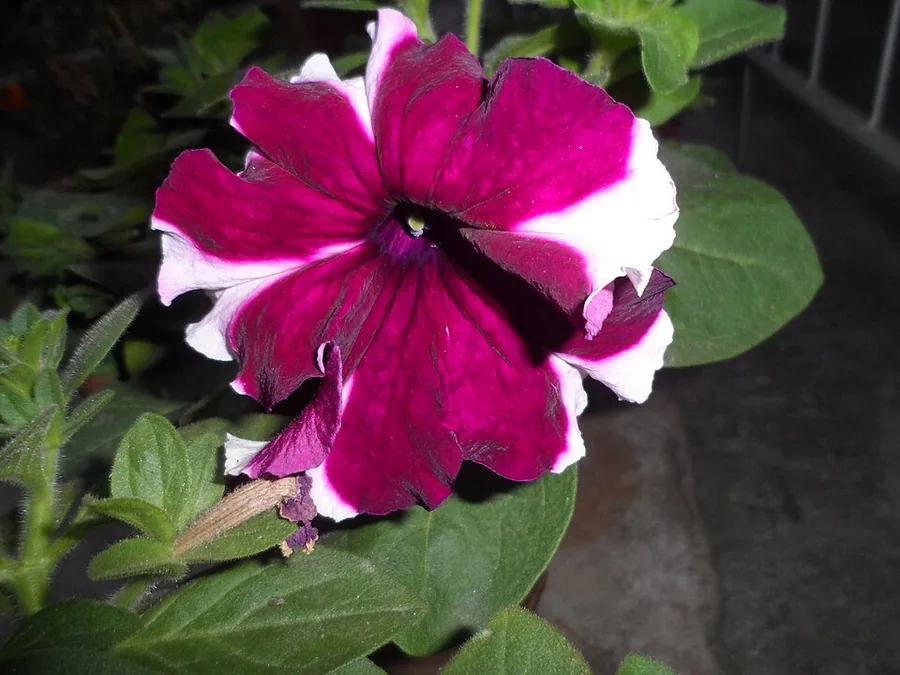
Petunias are that reliable summer flower everyone seems to grow, and they bloom hard from late spring all the way to the first frost. They're part of the nightshade family, the same crew as the tomato and the potato, and there are hundreds of hybrids now in just about every color except a true black. You'll see them spilling out of hanging baskets, running along walkways, and packing window boxes anywhere a sunny spot could use a splash of color.
Most people meet petunias as one of four broad types, and knowing yours makes life easier. The old Grandifloras have the biggest, flashiest flowers, the Multifloras swap size for weather-tough abundance, the tiny Millifloras stay neat and compact, and the spreading Wave types roam across beds and baskets while tidying up after themselves. Once you know which one you've got, you'll know how much deadheading and pinching it'll ask of you.
They're easygoing but pretty hungry, so keep that in mind. Give them full sun, rich soil, and a steady stream of food and water, and they'll pay you back with months of bloom. Forget to feed them or let a container bake dry, though, and you'll end up with leggy stems and just a thin scatter of flowers instead.
Care
The short version: full sun, soil that stays evenly moist but never soggy, and regular feeding, since petunias are heavy feeders that bloom their best when they're well fed and well watered.
Light
Petunias bloom best in full sun, ideally six or more hours a day. They'll take a bit of partial sun, but stick them in too much shade and the plants stretch, flop, and give you way fewer flowers.
Water
Try to keep the soil evenly moist but never soggy, letting the top inch start to dry between waterings. Containers and hanging baskets dry out fast and might need daily watering in summer heat, so check them often. And watch out for soggy, poorly drained spots, since those invite rot, so drainage matters just as much as moisture.
Soil
Plant them in well-drained, fertile loam that's rich in organic matter. A pH between 6.0 and 7.0 suits them nicely, and good drainage keeps the roots happy even through a wet spell.
Temperature
Petunias do well across a wide range, roughly 50°F to 86°F (10°C to 30°C). They love the summer warmth but won't make it through frost, which is why they're grown as annuals in cold-winter climates.
Humidity
Average humidity around 40% to 60% is all they're after, so this one's easy. What matters more than the number is airflow, since still, damp air around crowded plants is what gives gray mold its opening.
Feeding
Petunias are heavy feeders, especially in pots, so feed them every two weeks through the growing season. A balanced water-soluble fertilizer from spring to fall keeps the flowers coming instead of fizzling out by midsummer.
Pruning
Pinch young plants to get them branching, and deadhead the spent blooms on older Grandiflora and Multiflora types to keep them reblooming. Cut leggy stems back by about half in midsummer to freshen things up, though the spreading and Wave types clean themselves and hardly ever need it.
Repotting
Container petunias usually get replanted each year instead of carried over. Keep an eye out for roots circling the pot or poking out the drainage holes, fast wilting between waterings, and stalled growth with fewer flowers, since those all tell you the plant's outgrown its home.
Size & spacing
Plants stand 6 to 12 inches (15 to 30 cm) tall and spread 12 to 35 inches (30 to 90 cm) wide, depending on the type. Give the spreading kinds room to sprawl, and the airflow that comes with it helps keep disease down.
When to plant
Petunias love warmth and can't handle frost at all, so timing's the trick here. Start the fine seed indoors 10 to 12 weeks before your last spring frost, then set the plants out once the cold's passed and the soil has warmed, and they'll bloom from late spring through fall until frost finally shuts things down.
Northern hemisphere
Southern hemisphere
Typical months for a temperate climate: start earlier in warm zones, later where spring frosts linger.
- Sow: 10 to 12 weeks before the last spring frost
- Plant: after the last spring frost when soil has warmed
- Harvest: late spring through fall until frost
Troubleshooting
Most petunia problems pop up on the flowers and the soft new growth, since that's where the pests gather and rot gets a foothold. Catch them early and a quick response keeps a small issue from turning into a big one. Find what matches below, then step in while it still does some good.
Quick wilting with dark, mushy roots
If a petunia wilts, yellows, and flops even though the soil's still wet, that's usually root and crown rot from too much water. Slip the plant out and give the roots a feel, since healthy ones are firm and white while rotted ones turn brown, soft, and smelly. A badly rotted plant is a goner, so toss it, sort out the drainage, and let the soil dry a bit between waterings on the ones that pull through.
Fix:
- Remove and discard severely affected plants
- Improve soil drainage and reduce watering frequency
- Replant in well-drained soil or containers with drainage holes
Chewed-up buds and torn petals with dark bits
Seeing torn blooms and little dark crumbs? That's budworms, the caterpillars of the tobacco or geranium budworm moth, and they tunnel right into the buds as they form. Head out at dusk and peek inside a few buds for small green, tan, or reddish caterpillars and that gritty frass they leave. Pick off the ones you spot, pull the ruined buds, and treat young larvae with Bacillus thuringiensis before they get in too deep.
Fix:
- Handpick and destroy larvae
- Remove and dispose of infested buds
- Apply Bacillus thuringiensis (Bt) or another labeled product targeting young larvae
Silvery specks on leaves and twisted, faded blooms
That silvery sheen with black flecks and warped petals is the calling card of thrips, slim little insects that scrape away at the leaves and flowers. Want to know for sure? Tap a bloom over a sheet of white paper and watch the tiny pale or dark specks tumble out. Pull the worst flowers, treat with insecticidal soap, and set out reflective mulch or sticky traps, because thrips can carry viruses from one plant to the next.
Fix:
- Remove heavily infested blooms and debris
- Apply insecticidal soap or a labeled insecticide
- Use reflective mulch or sticky traps to reduce populations
Fuzzy gray mold on old flowers and leaves
When the weather turns cool and damp, you might spot Botrytis blight, which most folks just call gray mold, settling onto tired blooms and crowded foliage. During those humid stretches, look for the grayish, fuzzy spore patches sitting on rotting tissue. Clear out the infected flowers and leaves, open things up so air can move through, and water down at the base to keep the leaves dry.
Fix:
- Remove and dispose of infected flowers and leaves
- Improve air circulation and spacing
- Water at the base and avoid wetting foliage
Crinkled new growth with a sticky coating
If the new growth looks crinkled and feels sticky, you've probably got aphids clustered on the shoot tips and leaf undersides, sipping sap and leaving that film behind. A sharp jet of water knocks most of them off, and then insecticidal soap or horticultural oil handles the ones still hanging on. Lady beetles and other bugs do a lot of the cleanup for you, so there's no need to go heavy with sprays.
Fix:
- Spray plants with a strong stream of water to dislodge aphids
- Apply insecticidal soap or horticultural oil to affected growth
- Encourage natural predators such as lady beetles
Toxicity
Good news if you've got pets: petunias are safe. The ASPCA lists them as non-toxic to cats, dogs, and horses, and they're no real poisoning risk to other animals or to people either. The worst a curious nibble might bring is a quick, mild stomach upset.
Safe for
People · Cats · Dogs · Horses · Rabbits · Livestock · Birds
Cats None
No need to panic if the cat sneaks a bite, since petunia is listed as non-toxic to cats. If one really goes to town on any plant, you might see a quick upset stomach, but that's about it.
Dogs None
Your dog can chew the leaves or flowers without any poisoning worry. The worst you'd likely see is a bit of passing tummy trouble if one scarfs down a big mouthful.
Horses Safe
Horses are fine around petunias too, and the ASPCA clears them as safe right along with cats and dogs. A few blooms grazed here and there won't do any harm.
Rabbits Safe
Rabbits can nibble the leaves and flowers without any toxic trouble. Like any rich snack though, a big sudden helping might loosen things up, so it's smart to keep the portions small.
Livestock Safe
Cattle, goats, and sheep have nothing to fear from petunias either. The plant just isn't a poisoning risk for grazing animals, so a stray mouthful is no big deal.
Birds Safe
Petunias don't carry any known toxin for pet or backyard birds. So if a bird pecks at a bloom, there's really nothing to worry about.
People Safe
Petunias aren't poisonous to people, so if a curious kid grabs a taste, it's no big deal. They're grown for their color and not for eating, though, so there's no reason to put them on your plate.
No special handling precautions for toxicity are needed, though ingestion of any plant material may cause mild, transient stomach upset in sensitive animals.
Varieties
There are hundreds of named petunia hybrids out there, but they all sort into four broad groups that shape a plant's flower size, weather toughness, and habit. These are the ones worth getting to know.
Grandiflora
This is your go-to for big, showy flowers, with blooms up to 4 to 5 inches across, though those big petals do bruise pretty easily in rain and rough weather.
Multiflora
If you'd rather have loads of flowers that laugh off a storm, Multiflora gives you tons of smaller blooms that handle rain and rough weather way better than the Grandifloras.
Milliflora
This is the little one of the bunch, staying neat and compact with dainty 1 to 1.5 inch flowers.
Spreading/Wave
These low, trailing types sprawl across beds and baskets and tidy up after themselves, so you can pretty much skip the deadheading.
How to propagate
You can grow petunias from their tiny seed or take cuttings to copy a plant you already like. Seed gets you the widest variety, while cuttings clone a favorite exactly as it is.
SeedModerate
Germination in about 7 to 14 days; bloom roughly 70 to 90 days from sowing
Want to grow petunias from seed? Start them about 10 to 12 weeks before your last frost by sprinkling the dust-fine seed right on top of a moist seed-starting mix. Don't cover it, because the seed needs light to sprout, and just keep the mix warm and damp until it comes up in roughly 7 to 14 days. The seedlings take their sweet time early on and hit bloom around 70 to 90 days from sowing, so wait to move them outside until the frost's gone and the soil has warmed up.
Stem cuttingsModerate
Roots typically form in about 2 to 3 weeks
Got a plant you love and want another just like it? Cuttings are the way. Snip 3 to 4 inch tips from healthy, non-flowering stems, strip off the lower leaves, and tuck them into a moist, well-drained rooting mix. Keep them warm and humid, and roots usually show up in about 2 to 3 weeks, and then you can pot each cutting up on its own.
Myths
Petunias are poisonous to cats and dogs.
Nope, that's not the case. The ASPCA lists petunia as non-toxic to cats, dogs, and horses, so a nibble won't poison your pet. A big mouthful might cause a quick stomach upset, but honestly that's the worst of it.
Every petunia needs constant deadheading to keep blooming.
It really comes down to which type you're growing. The older Grandiflora and Multiflora petunias do bloom better if you pluck off the spent flowers. But the modern spreading and Wave types clean themselves and barely need any deadheading at all.
Petunias are true annuals that live only one season by nature.
Not really, they're actually tender perennials underneath it all. Gardeners in temperate spots just grow them as annuals because frost does them in. Keep one somewhere frost-free and that same plant can keep going well past a single season.