Vegetable · Solanaceae
Eggplant
Solanum melongena
Hand it heat, full sun, and steady water, and eggplant keeps the glossy fruit coming all season.
Full sun
Every 3–7 days
61–90°F · 16–32°C
65–80 days
Overview
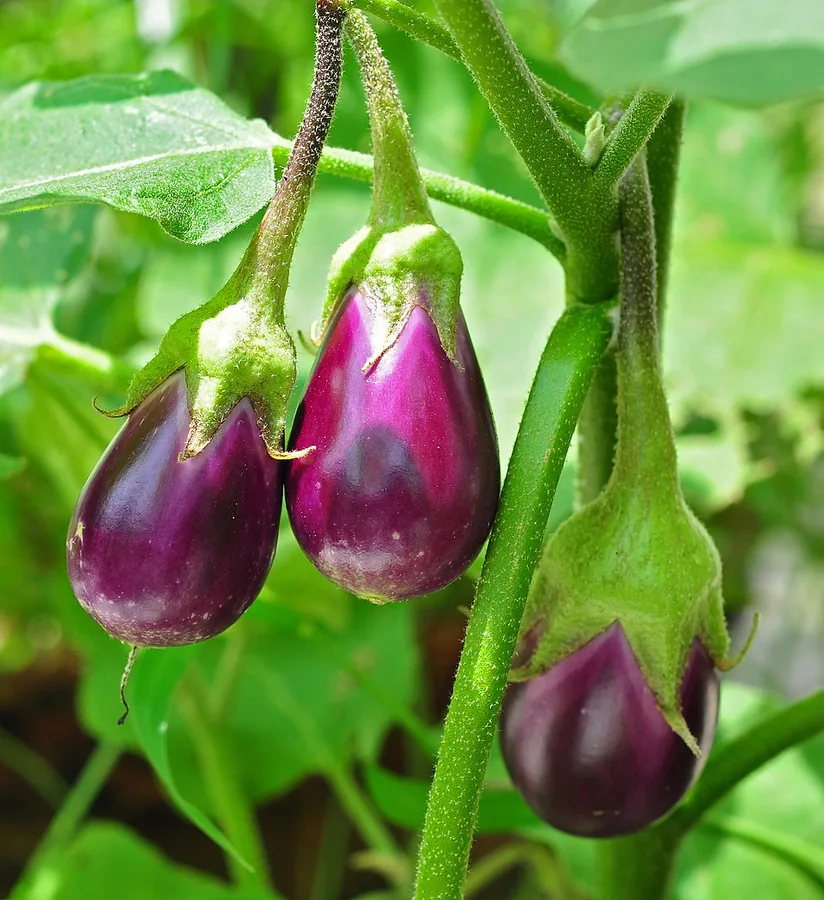
Eggplant's a heat-loving nightshade that's grown for its glossy, meaty fruit. It started out in South and East Asia and has shown up in kitchens everywhere for centuries, from Italian parmigiana to grilled Japanese nasu. You'll hear it called aubergine or brinjal, and yes, it's related to tomatoes, peppers, and potatoes.
Of all the warm-season veggies, eggplant's the one that asks you to wait. It needs a long, warm stretch to crop well, which is why most folks start it indoors and don't set it out until the nights are dependable. Give it that warmth, though, and it'll keep cranking out fruit right up until the cold comes back.
Think eggplant only comes one way? Not even close. There's the big purple-black ovals, the slim Asian types, and even white-skinned kinds. Pick them early while the skin's still shiny and they stay sweet instead of turning bitter.
Care
The short version: full sun and warm soil, steady moisture at about an inch of water a week, rich and well drained ground, an easy hand with the nitrogen, and picking while the skin's still glossy.
Light
Eggplant wants full sun, and honestly the more direct hours, the better. Shade isn't its friend, and a plant stuck in dim light gets leggy and barely sets any fruit.
Water
Go for steady, even moisture, which works out to about an inch of water a week, instead of letting it dry out and then soaking it. Why bother? Because uneven watering turns the fruit bitter and shrinks your harvest. Water at the base and keep it off the leaves to keep disease down.
Soil
Plant it in fertile, well drained loam with lots of organic matter mixed in. Eggplant's pretty relaxed about pH and takes anything from 5.5 to 7.5, so most decent garden soil works just fine.
Temperature
It's a true warm-season crop, happiest between 61°F and 90°F (16°C to 32°C). Cold really slows it down, and nights below 50°F (10°C) will make the flowers drop before they ever set fruit.
Humidity
Regular outdoor humidity is fine, so there's no number to fuss over. What matters more is good airflow, since crowded, damp leaves are how fungal trouble gets going.
Feeding
Side-dress with a nitrogen source like calcium nitrate three to four weeks after planting, then once more later on. Just go easy on the nitrogen, because too much grows a leafy plant that puts off fruiting.
Pruning
Eggplant barely needs pruning, which is nice. Pull off any beat-up or diseased leaves, and stake or cage the tall, heavily fruiting plants so the fruit isn't sitting on the ground.
Size & spacing
Plants get 2 to 4 feet (60 to 120 cm) tall and spread 18 to 30 inches (45 to 75 cm) wide. Give each one some elbow room so air can move and the fruit hangs clear of the dirt.
When to plant
Eggplant runs on heat, and cold just isn't its thing. Start the seeds indoors about 8 weeks before your last frost, hold off setting plants out until nights stay above 50°F (10°C), and you'll be picking from midsummer on, roughly 65 to 80 days after transplanting.
Northern hemisphere
Southern hemisphere
Typical months for a temperate climate: start earlier in warm zones, later where spring frosts linger.
- Sow: About 8 weeks before the last spring frost
- Plant: After all danger of frost, when nighttime temperatures stay consistently above 50°F (10°C)
- Harvest: Harvest 65 to 80 days after transplanting, when fruit is large, glossy, and uniformly colored
Hardiness
USDA hardiness zones: 4–12
Temperature: down to -34°C
Troubleshooting
Most eggplant headaches show up on the leaves or the fruit, and here's the catch: the warm, humid weather it loves is exactly what pests and disease love too. Spot the early signs and you can jump in before things get out of hand. Find the symptom that matches below, then act while it still does some good.
Plant drooping, leaves going yellow, brown streaking inside a cut stem
This one's verticillium wilt, a soilborne fungus that clogs the plant from the inside and gets worse once fruit starts forming. Slice a stem near the base and you'll spot brown streaking in the tissue, which is the giveaway. There's no cure, so pull and destroy the badly hit plants, don't compost them, and keep eggplant away from tomato, pepper, and potato for several years.
Fix:
- Remove and destroy severely affected plants
- Do not compost infected material
Tiny round holes peppering young leaves
Those little pinholes? That's flea beetles, tiny dark bugs that hop away when you touch the plant and pile onto tender transplants. Throw floating row covers over the young plants before the beetles even show up, and keep the nearby weeds down since they give the pest a place to hang out. The good news is a strong, well-fed plant usually just outgrows the early nibbling.
Fix:
- Use floating row covers on young plants
- Apply labeled insecticides if infestations are heavy
- Keep plants vigorous so they outgrow early damage
Blossoms showing up but falling off before any fruit appears
Eggplant's kind of picky about temperature, and blossom drop comes after nights below 60°F (16°C), bouts of brutal heat, or too much nitrogen pushing leaves instead of fruit. Keep an eye out for cold or hot snaps around flowering and for a lush plant with hardly any blossoms. Set transplants out only once the nights stay warm, and feed by soil-test rates instead of guessing.
Fix:
- Transplant only after nights stay warm
- Avoid over-fertilizing with nitrogen
Fruit turning bitter on the plate
Bitter fruit comes from uneven soil moisture or from leaving the eggplant on the plant too long. Pick while the skin's still glossy, and keep the moisture steady with mulch and regular watering. Once fruit's gone dull and seedy past its prime, it rarely tastes good no matter how you cook it.
Fix:
- Maintain even soil moisture
- Harvest fruit while skin is still glossy
Toxicity
The ripe, cooked fruit? Great to eat. The rest of the plant? Leave it be. The leaves, stems, and unripe green parts hold a natural compound called solanine that upsets the stomach, and it's mildly toxic to cats, dogs, horses, and other animals if they eat the foliage. So keep those green parts away from pets and curious kids.
Toxic to
Cats · Dogs · Horses · Rabbits · Livestock · Birds
Safe for
People
Cats Mild
If a cat nibbles the leaves or stems, it might drool, throw up, or get loose stools from the solanine they carry. It's the foliage that's the worry, not the fruit.
Dogs Mild
Chewing the green parts can leave a dog drooling with an upset stomach for a bit. Most cases stay mild, but a big mouthful's worth a vet call.
Horses Mild
Horses that graze the foliage can end up with colic-style stomach upset and a dull, sluggish mood. Best to keep them away from the plants and any trimmings.
Rabbits Mild
The leaves and stems hold solanine and just don't belong in a rabbit's diet. Even a small taste of foliage can bring on soft stools and a poor appetite.
Livestock Mild
If cattle, goats, or sheep get into the green tops, their stomachs can pay for it. A good fence keeping the herd away from both the rows and any clippings saves everyone the trouble.
Birds Mild
Pecking at the leaves or green parts can unsettle a bird's gut. Backyard hens usually leave the bitter foliage alone, but don't toss them the trimmings.
People Ripe fruit safe
Ripe, cooked eggplant is a kitchen staple and totally safe to eat. Just skip the raw leaves and stems, which carry the same solanine that troubles animals.
Keep pets and children from chewing leaves, stems, or green/unripe fruit; the cooked ripe fruit is edible.
Helpline numbers

United States
ASPCA Animal Poison Control: (888) 426-4435 (fee applies)
Poison Control: (800) 222-1222



Canada
Poison Centres: 1-844-764-7669
Varieties
Eggplant's got way more shapes than the one your store usually carries. Here are the types worth knowing by name.
Black Beauty / Italian types (e.g., Dusky, Epic)
These are the classic eggplants, the ones with the big, glossy purple-black oval fruit that probably pops into your head first.
Ichiban (Asian type)
An Asian type that grows long, slender fruit with thin skin and tender flesh that cooks up fast.
Casper
A specialty variety loved for its smooth white skin, a fun change from the usual purple.
Hansel
A compact plant that sets clusters of small, slender fruit, which makes it great for pots and tight beds.
Companions
Eggplant grows best beside beans and marigolds, and worst beside its nightshade cousins like potatoes, which trade the same pests and diseases back and forth.
Plant near
Beans: Listed as a beneficial companion for eggplant in extension companion-planting guidance
Marigolds: Listed as a beneficial companion; marigolds are associated with pest/nematode suppression
Keep apart
Potatoes: Listed as incompatible with eggplant; both are nightshades sharing pests and diseases
How to propagate
Eggplant grows from seed, and the whole trick is just giving it enough warmth and a good head start indoors before the season turns.
SeedModerate
Start indoors about 8 weeks before the last frost · 6 to 8 weeks to transplant size indoors
Eggplant grows from seed you start indoors about 8 weeks before your last frost. The seed needs warmth to wake up, so pop the tray on a heat mat and keep the soil around 75°F to 85°F (24°C to 29°C). Give the seedlings 6 to 8 weeks to reach transplant size, and only move them out once the nights are reliably warm.
Myths
Eggplants are toxic through and through, so even the fruit isn't safe to eat.
Here's the thing: the solanine-type glycoalkaloids gather in the leaves, stems, and unripe green parts, not in the fruit you actually cook. Ripe eggplant is a safe, everyday food, and people have eaten it around the world for centuries.