Vegetable · Solanaceae
Tomato
Solanum lycopersicum
Hand it full sun, steady water, and good airflow, and the tomato keeps paying you back all summer long.
Full sun
Every 3–7 days
70–84°F · 21–29°C
50–90 days
Overview
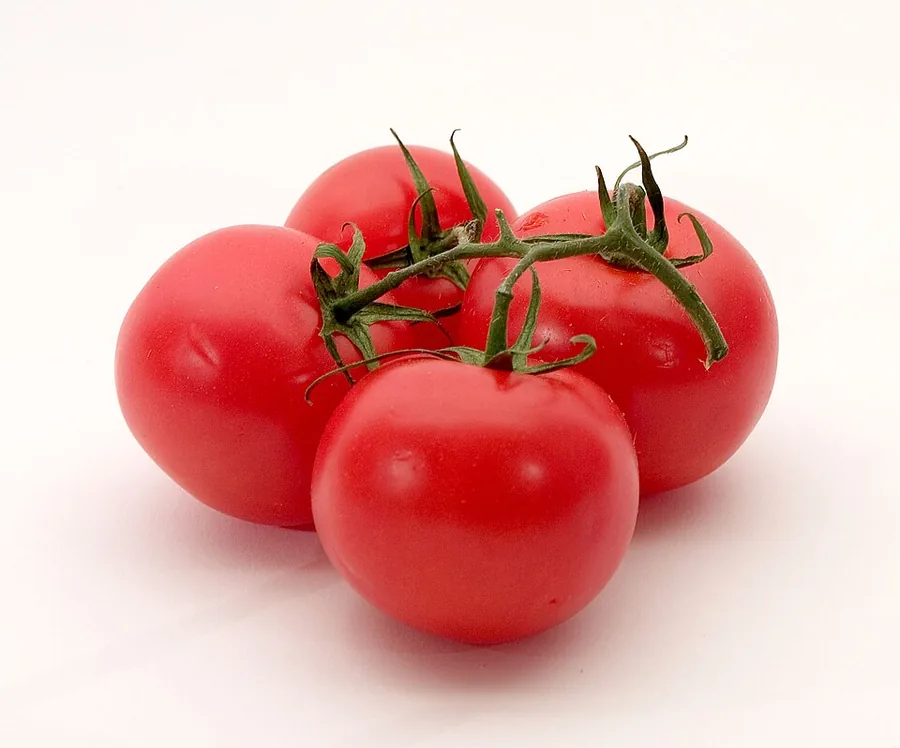
Is there anything that says garden summer like a ripe tomato? It's part of the nightshade clan and started out in the Andes, where it was being grown long before it made its way around the rest of the globe. These days it'll grow just about anywhere as a warm season annual, perfectly content in a backyard bed or sitting in a pot on a sunny balcony.
You've got loads of options here. Some plants keep low and bushy and finish their whole crop inside a week or two, while others climb and sprawl and just keep setting fruit clear up to frost. The first sort gets called determinate and the second indeterminate, and figuring out which you've got tells you how to prune it and prop it up.
A beginner can get away with a lot here, and yet a bit of care really does pay off. Hand them even water, full sun, and some breathing room, and the fruit shows up sweet and plentiful. Skimp on any of that and you swap good flavor for split skins and bare stems.
Care
The short version: full sun, plus a bit of afternoon shade if your summers get fierce. Hold the soil evenly moist at roughly an inch of water a week, get them into rich, fertile ground, and give each plant elbow room to breathe.
Light
Tomatoes are after 8 or more hours of direct sun every day. A bit of afternoon shade can help out where the summers get punishing, but real shade just hands you tall, floppy plants and a lot less fruit.
Water
Go for steady, even moisture rather than a big soak and then a dry spell. That comes out to roughly an inch of water a week, with extra when a heat wave rolls in or when they're in a pot. That even watering is exactly what keeps the skins from splitting.
Soil
Set them in rich, well drained ground loaded with compost. They're happiest at a pH of 6.0 to 6.8, just slightly acidic, and loose soil gives those deep roots somewhere to run.
Temperature
Their sweet spot sits between 70°F and 84°F (21°C to 29°C). Fruit set grinds to a halt once nights stay warm or days run hot, and even a light frost is the end of the road.
Humidity
Whatever your outdoor humidity is doing is fine, so don't sweat any target number. Good airflow matters far more out here, because crowded, damp leaves are how most tomato diseases get their start.
Feeding
Hand them a balanced feed at planting time, then feed again once that first fruit sets. Go easy on the nitrogen, or you'll end up with a big leafy plant and barely anything to pick.
Pruning
On the tall indeterminate kinds, pinch off the side shoots so you're left with one or two main stems. The bushy determinate ones you can just leave alone, since pruning those only robs you of fruit.
Repotting
Bump seedlings into bigger pots before they go outside so the roots never wind up coiling. Once a plant lands in its final bed or big container, it stays put for the rest of the season.
Overwintering
Treat the tomato like an annual. Deep down it's a tender perennial, but the first frost wraps it up, so most folks just replant come spring.
Size & spacing
Depending on the kind, plants stretch anywhere from 2 to 10 feet (60 cm to 3 m) tall. Leave each one 1.5 to 3 feet (45 to 90 cm) of space so air can pass through and disease stays away.
When to plant
Tomatoes are all about warmth and won't put up with frost at all. Kick the seeds off indoors during late winter, move the plants outside once the cold's behind you, and you'll be picking fruit from midsummer right up until that first frost calls it a season.
Northern hemisphere
Southern hemisphere
Typical months for a temperate climate: start earlier in warm zones, later where spring frosts linger.
- Sow: 5–8 weeks before last frost (start seeds indoors before last frost)
- Plant: at last frost to 2 weeks after (after frost, soil ~60°F (16°C))
- Harvest: July–October (midsummer to first frost)January–April (midsummer to first frost)
Hardiness
USDA hardiness zones: 10–11
Temperature: down to -1°C
Troubleshooting
With tomatoes, the first hints of trouble usually turn up on the fruit or the bottom leaves. Once you can read those early signals, you can jump in before something small turns into something big. Find what matches what you're seeing below, then move while it can still do some good.
Slick gray smears, and the plant caving in quickly
Late blight spreads fast when the weather goes cool and damp, and it can flatten a healthy plant in just a few days. Your best move is to pull the whole thing, seal it in a bag, and throw it out. Don't ever compost it, because that just passes the disease right along to next year's beds.
Fix:
- Pull and bag plants immediately
- Do not compost
- Preventive fungicide on neighbors
Bottom leaves going yellow and limp as the plant fizzles out
When a soil fungus like fusarium or verticillium wilt takes hold, it plugs up the stem from inside, and once that happens there's really no saving the plant. Pull it out and begin again next year in a pot of clean mix, or look for varieties bred to brush this off.
Fix:
- No cure; remove plant
- Grow in containers with fresh mix
A dark, caved-in spot showing up under the fruit
What you're seeing is blossom end rot, and it has more to do with watering than with what's in your soil. When the roots dry out and then get flooded, calcium just can't reach the fruit in time. So keep your watering regular, lay down mulch to hold the moisture in, and toss any tomatoes that already show the mark.
Fix:
- Maintain even soil moisture
- Mulch root zone
- Remove affected fruit
Brown target-like rings turning up on the bottom leaves
That ringed pattern is early blight, a fungus that loves warm, soggy weather and gets going down near the soil. Trim away the marked leaves, thin things out so air can flow through, and try to keep the watering off the foliage.
Fix:
- Remove infected lower leaves
- Improve airflow
- Apply fungicide if severe
Loads of little gray dots with darker rims
Those freckled lower leaves point to septoria leaf spot, which shows up once the weather turns wet. Pull off the spotted leaves the moment you spot them, mulch the ground so spores can't bounce back up, and aim your water at the base rather than over the top.
Fix:
- Remove infected leaves
- Improve air circulation
- Fungicide if severe
Leaves gone by morning with dark crumbs scattered underneath
Stripped branches and dark crumbs underneath usually mean a tomato hornworm paid a visit, and one of them can strip a stem in a single night. Head out at dusk and pluck the chunky green caterpillars off by hand. If you find one wearing little white cocoons, just leave it be, because wasps are already handling that one for you.
Fix:
- Hand-pick caterpillars
- Leave any with white wasp cocoons
- Spray Bt if heavy
Blossoms going yellow and dropping off with nothing behind them
Ever notice the blossoms falling off with no fruit behind them? That happens once nights hold above 70°F (21°C) or days push past 85°F (29°C). Just keep the plants watered and be patient, because they'll go right back to setting fruit once the heat backs off.
Fix:
- Keep plants irrigated
- Wait for favorable temperatures
Splits looping around or running out across the fruit
Skins crack when a dry stretch is followed by a big drink, and the fruit puffs up quicker than its skin can keep pace. Watering on a regular rhythm with a layer of mulch smooths out those swings. If a downpour is coming, go ahead and pick a bit early.
Fix:
- Pick fruit before fully ripe
- Keep watering even
Fruit looking wrinkled and scarred down at the bottom
This one's called catfacing, and it usually goes back to a cold spell while the flowers were still forming. Good news is the fruit tastes just fine. Just wait to set your transplants out until the soil has warmed up and the real chill is behind you.
Fix:
- No cure for set fruit; remove affected
Those oldest leaves down low starting to go yellow
A couple of yellow leaves right down at the bottom are usually nothing more than old age, since the plant is busy throwing all its energy at the fruit. But if the yellow keeps creeping up the plant or the whole thing looks washed out, give it a balanced feed and take a closer look for any spots or wilting.
Fix:
- Apply balanced fertilizer if deficient
- Remove diseased tissue
Toxicity
The ripe fruit is great eating, but the rest of the plant? Not so much. The leaves, stems, and unripe green tomatoes carry a natural compound called solanine that'll upset a stomach. Keep those green bits out of reach of pets, livestock, and any curious kids.
Toxic to
Cats · Dogs · Horses · Rabbits · Livestock · Birds
Safe for
People — the ripe fruit
Cats Moderate
You'll likely see drooling, a queasy belly, and a tired cat. If a lot goes down, the pupils can get bigger and the heartbeat can slow.
Dogs Moderate
Once a dog gnaws on the leaves or stems, watch for drooling, a picky appetite, a churning stomach, and a bit of weakness.
Horses Moderate
Chewing the green growth can leave a horse with an unsettled gut, a flat mood, and some weakness.
Rabbits Toxic
There's solanine in the leaves and stems, so those are off the table. Stick to a small bite of ripe fruit now and then as a treat.
Livestock Moderate
Cattle, goats, and sheep can run into gut and nervous system trouble if they get into the solanine in the leaves.
Birds Caution
Since the green growth is toxic, hand over ripe fruit only and just on occasion. A ripe tomato is fine for backyard hens to peck at.
People Ripe fruit safe
Ripe tomatoes are a kitchen favorite and perfectly fine to eat. Just steer kids clear of the leaves and any green fruit.
Ripe fruit is non-toxic; keep pets away from leaves, stems, and green fruit
Helpline numbers

United States
ASPCA Animal Poison Control: (888) 426-4435 (fee applies)
Poison Control: (800) 222-1222



Canada
Poison Centres: 1-844-764-7669
Varieties
There are thousands of tomato varieties out there, but only a handful show up in most gardens. Here are the ones really worth knowing by name.
Early Girl
A quick climbing type that gets ripe slicers into your hands in roughly 60 days, well before the rest of the pack.
San Marzano
The go-to paste tomato, its long low-seed fruit melting down into a thick, full-bodied sauce.
Roma
A short bushy plant favored for canning and sauce, and it ripens nearly its whole crop in one quick stretch.
Celebrity
A reliable jack-of-all-trades that brushes off most of the diseases tripping up other tomatoes.
Beefsteak types
Tall climbing slicers packed with the richest flavor, though that hefty fruit tends to crack more than the rest.
Cherry types
Tiny sweet fruit hanging in long clusters that just keep producing all season, names like Sungold and Sweet 100.
Companions
Tomatoes grow best beside herbs and flowers that pull pests away, and worst beside their nightshade cousins, which trade the same diseases back and forth.
Plant near
Basil: Studies show basil can reduce thrips on tomato and intercropping may promote tomato growth
French marigold: Slows glasshouse whitefly population through airborne limonene when planted early in season
Nasturtium: Non-host plant shown to reduce whitefly numbers on tomato
Keep apart
Corn: The corn earworm and tomato fruitworm are the same insect, so the pest builds up on both crops; both are heavy feeders competing for nutrients
Potato: Same Solanaceae family; shares early and late blight, so avoid planting together or in sequence
Pepper: Solanaceous relative sharing tomato diseases; avoid adjacent planting and rotation
Eggplant: Solanaceous relative sharing soilborne diseases and pests with tomato
Black walnut: Roots release juglone; tomatoes are highly sensitive, causing yellowing, wilting, and death near the dripline
How to propagate
Tomatoes are some of the easiest plants going to multiply, whether you're tearing open a fresh seed packet or grabbing free copies off a plant you already have.
SeedEasy
Indoors 5-8 weeks before last frost · Germinates 5-10 days at 75-85°F (24-29°C)
Seed is where most people begin with tomatoes. Get them going indoors 5 to 8 weeks before your last frost, keep the tray cozy at around 75°F to 85°F (24°C to 29°C), and you'll see sprouts in 5 to 10 days. Come planting day, set them in deep and bury a chunk of the stem, since every inch underground sprouts brand new roots.
Stem cuttingsEasy
During active growth · Roots in 1-2 weeks in water or moist soil
Want a free copy? Tomatoes hardly put up a fight. Break off a healthy sucker from a plant that's actively growing, pop it in a glass of water or a pot of damp soil, and within a week or two it roots into a fresh plant that's a dead ringer for its parent.
Myths
Just add calcium or some crushed eggshells and blossom end rot clears right up.
The hitch is in how the plant shuttles calcium around, not how much of it is sitting in the dirt. Eggshells break down way too slowly to do any good, and a spray on the leaves never makes it to the fruit anyway. Steady, even watering is the real fix.
Toss in a scoop of Epsom salt and you'll get bigger plants and more fruit.
Unless your soil happens to be low on magnesium, which doesn't happen often, it won't do a thing. Too much can even make blossom end rot worse by elbowing out the calcium your fruit is counting on.
Water sitting on the leaves in bright sun burns them, sort of like a magnifying glass.
Those droplets evaporate well before they could ever scorch a thing. Spotted, scorched leaves trace back to disease, pests, or weather, and never to sunlight passing through a bead of water.
Marigolds keep every garden pest away.
The payoff is pretty narrow. French marigolds do slow whiteflies and might nudge a few thrips along, but they won't sweep your pests away across the board, and a lot of companion advice leans on old garden lore instead of actual trials.
Nip off all the suckers and you're guaranteed more tomatoes.
With the tall climbing types, pruning does bring bigger fruit sooner, but you often end up with a smaller total harvest and more sunscald. With the bushy determinate kinds, just let the suckers stay.
Feed it more nitrogen and you'll pick more tomatoes.
Pile on nitrogen and you'll get a lush, leafy plant with little fruit, plus the few tomatoes you harvest are quicker to crack. A balanced feed gets you a far better result.
Sources
- ASPCA Animal Poison Control
- University of Minnesota Extension
- University of Maryland Extension
- Clemson Cooperative Extension HGIC
- University of Maryland Extension
- Clemson Cooperative Extension HGIC
- Clemson Cooperative Extension HGIC
- University of Minnesota Extension
- Penn State Extension
- University of Minnesota Extension
- PLoS One (peer-reviewed)
- University of Wisconsin-Madison Extension (Wisconsin Horticulture)
- Penn State Extension
- University of Maryland Extension
- University of Illinois Extension
- Penn State Extension