Vegetable · Solanaceae
Tomatillo
Physalis philadelphica
Grow a pair for a real crop, hand them full sun, and tart green husks keep coming all season.
Full sun
Every 4–7 days
59–86°F · 15–30°C
60–100 days
Overview
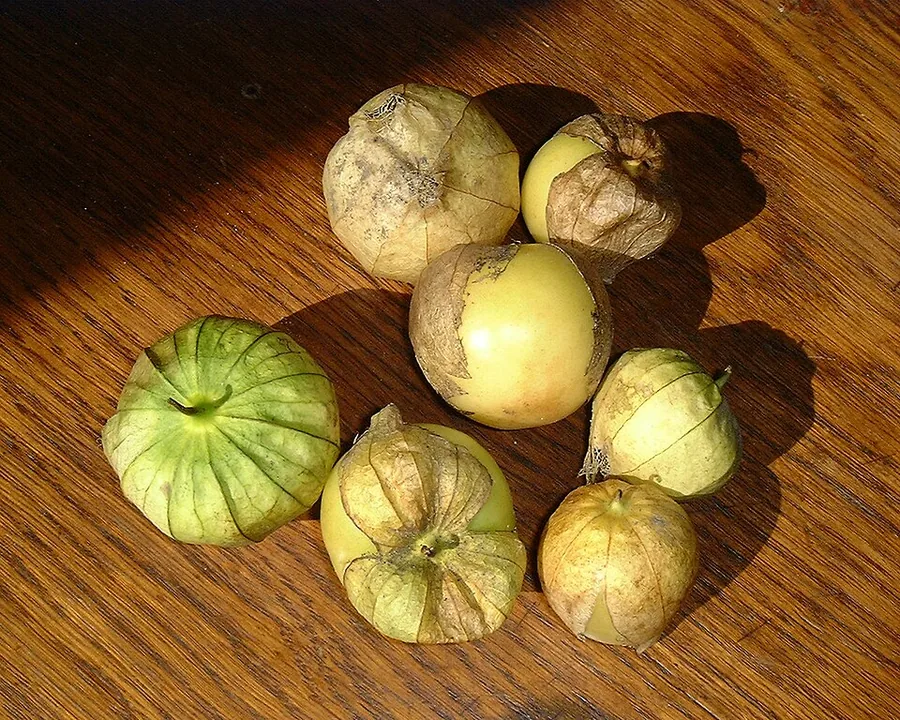
So what's a tomatillo? It's the tangy green fruit that makes salsa verde sing, and it grows inside its own little papery husk. It's in the nightshade family right alongside the tomato, but it's really its own thing, Physalis philadelphica, with a sharper, brighter taste and firmer flesh. Folks have grown it across Mexico and Central America for ages, and the fruit's ready to pick while it's still green.
It's fast and easy to grow, a warm-season annual that spreads out into a big, branching plant, so it'll want a cage or stake to stay off the ground. Here's the one thing to know up front though: a tomatillo won't really fruit on its own. Plant two or more together so they can pollinate each other, and the husks fill up instead of coming out empty.
Give it full sun, regular water, and some room to sprawl, and honestly, one pair of plants can make more than a small family will eat. When's it ready? Wait until the husk turns tan and starts to split, and pick the fruit while it's still firm rather than soft.
Care
The short version: give tomatillos full sun and rich, well-drained soil, keep them to roughly an inch of water weekly, and grow a couple of plants near each other so they can pollinate and fruit for real.
Light
Tomatillos really want full sun, so give them as many hours of direct light a day as you can. Skimp on it and they'll get leggy and won't flower or fruit much, so a nice bright spot is the way to go.
Water
Give them about 1 inch of water a week and try to keep the soil evenly moist, since that's what gives you the best, most even fruit. Once they're settled in, they can take a little dry spell, so water deeply once or twice a week instead of a bit every day. Water at the base and keep the leaves dry, and you'll head off a lot of disease.
Soil
Plant them in rich, well-drained sandy or silty loam with lots of organic matter, and steer clear of heavy, wet clay. A pH somewhere around 6.0 to 7.0 is just right for them.
Temperature
They're happiest in the warm zone of 59°F to 86°F (15°C to 30°C). They can't take a frost either early or late, so wait to put them out until the cold's really done for the season.
Humidity
Regular outdoor humidity is totally fine, so there's no number to worry about. What matters way more is good airflow, because damp, crowded leaves are usually where disease gets going.
Feeding
Feed them a little at planting time in spring and go easy on the nitrogen, adding phosphorus and potassium only if a soil test says you need it. Too much nitrogen? You'll get a big leafy plant that's slow to flower and fruit.
Pruning
Tomatillos don't really need pruning. Just stake or cage these sprawling, indeterminate plants and pull off the low leaves that touch the soil to keep disease down, but skip the heavy cutting.
Size & spacing
Each plant gets about 3 to 4 feet (90 to 120 cm) tall and spreads roughly as wide, so give every one around 3 to 4 feet (90 to 120 cm) of space. That way air can move through and the big, branching plants aren't fighting each other for room.
When to plant
Tomatillos are all about warmth, and they can't handle frost at all. So start the seeds indoors in late winter, move the plants outside once the soil warms up in late spring, and you'll be picking from midsummer into fall as the husks fill and split.
Northern hemisphere
Southern hemisphere
Typical months for a temperate climate: start earlier in warm zones, later where spring frosts linger.
- Sow: 6-8 weeks before the last spring frost
- Plant: After all danger of frost has passed and the soil has warmed (late spring)
- Harvest: Harvest about 60-75 days after transplanting, when fruit fills the husk and the husk turns tan and begins to split
Hardiness
USDA hardiness zones: 5–11
Temperature: down to -29°C
Troubleshooting
Most of the time, tomatillo trouble comes down to one of three things: empty husks, chewed-up leaves, or stems lying flat on the ground. Catch them early and they're pretty easy to fix. Find what matches below and deal with it while it still makes a difference.
Husks that fill out but stay empty inside
This one's almost always a pollination thing, not a soil problem. A tomatillo needs a buddy to fruit, so a plant on its own gives you papery husks with little or nothing inside. Grow two close together, go easy on the nitrogen, and bring in some bees with flowers nearby, and you'll get fruit.
Fix:
- Grow at least two plants, ideally two different varieties, for cross-pollination
- Encourage pollinating insects
- Avoid high-nitrogen fertilizer
Leaves chewed up or stripped to the veins
A few pests like the leaves, mainly the three-lined potato beetle, plus tomato hornworms, cutworms, and flea beetles. The nice part? The papery husk protects the fruit even while the leaves take a beating. On a small patch, just pick the beetles and caterpillars off by hand, squish any egg masses, and keep an eye out so a little problem doesn't get away from you.
Fix:
- Handpick beetles, larvae, and hornworms on small plantings
- Remove and destroy egg masses
- Scout plants regularly
Lots of leaves but hardly any flowers or fruit
Too much nitrogen sends a tomatillo into all leaves, not much fruit. It'll look deep green and really vigorous, but the flowers and fruit lag way behind. Cut out the high-nitrogen feed and add just the phosphorus and potassium your soil test asks for.
Fix:
- Stop applying high-nitrogen fertilizer
- Apply phosphorus and potassium per soil test only as needed
Stems that flop over onto the soil
Tomatillos turn into big, branching, indeterminate plants, and once the fruit piles on, the stems bend right down to the ground. Cage or stake them and tie the main stems up as they climb. Get that support in at transplanting, before the plant's too big to deal with.
Fix:
- Stake or cage plants for support
- Tie up main stems as they grow
Toxicity
Here's the deal: the ripe, husked fruit is great to eat, but the rest of the plant isn't. The leaves, stems, and unripe green fruit have a natural compound called solanine in them that'll upset a stomach. So keep those green parts away from pets, livestock, and curious kids, and only the firm ripe fruit should end up in the kitchen.
Toxic to
Cats · Dogs · Horses · Rabbits · Livestock · Birds
Safe for
People
Cats Caution
If a cat nibbles a leaf or an unripe fruit, it might drool, skip its food, and get a bit of an upset stomach. Those green parts have solanine in them, so it's best to keep the foliage where the cat can't get to it.
Dogs Caution
A dog that chews the leaves or green fruit can end up drooling, throwing up, and acting tired. It's usually mild, but the leaves and stems still aren't something you want a dog snacking on.
Horses Caution
The green parts can leave a horse drooling and a little off with a sour stomach. So keep an eye on grazing horses if there are any stray plants along the edge of a paddock.
Rabbits Caution
Since the leaves and stems have solanine, the foliage isn't a good choice for rabbits. It's safer to skip the greens altogether than to risk a tummy upset.
Livestock Caution
Cattle, goats, and sheep can react to the solanine in the leaves and unripe fruit with gut and nervous-system trouble. Fence them away from the plants and clear out any stems and husks they might chew.
Birds Caution
The green parts are best kept away from poultry and pet birds, since that same compound affects them too. A bird's much better off with a piece of the ripe, husked fruit.
People Ripe fruit safe
For people, the ripe, husked tomatillo is a kitchen staple and totally safe to cook and eat. Just leave the leaves, stems, and unripe green fruit out of the pot, since those have solanine.
The ripe, husk-filled, firm fruit is safe to eat and is the harvested vegetable. Only the leaves, stems, and unripe (immature) fruit are the concern; keep pets and children from chewing green plant parts and discard unripe fruit and husks.
Helpline numbers

United States
ASPCA Animal Poison Control: (888) 426-4435 (fee applies)
Poison Control: (800) 222-1222



Canada
Poison Centres: 1-844-764-7669
Varieties
There are just a handful of tomatillos worth knowing, from early green ones to bigger-fruited and purple types. Here are the names you'll want to recognize.
Toma Verde
An early favorite that ripens flat, apple-green fruit with a bright, tangy bite.
Purple de Milpa
It's got smaller fruit that turn purple and taste sharper and more intensely tart than the green ones.
Grande Rio Verde
A green tomatillo bred to crank out heavy yields of big, sizable fruit.
Gigante
A vigorous grower that puts out really big green fruit.
How to propagate
Tomatillos are easy to start from seed indoors, pretty much like tomatoes, as long as you remember one thing: plant more than one.
SeedEasy
Start seeds indoors 6-8 weeks before the last spring frost; transplant after frost danger passes and soil warms · Transplant-ready in roughly 6-8 weeks; fruiting begins about 60-100 days after transplanting
You can start tomatillos from seed indoors pretty much like tomatoes, about 6 to 8 weeks before your last spring frost. The seedlings are good to go outside in about that same window, once the frost's passed and the soil's warmed up. Sow two or more plants so they can cross-pollinate, and look for your first fruit around 60 to 100 days after transplanting.
Myths
Tomatillos are just unripe green tomatoes, right?
Nope, they're a totally different plant, Physalis philadelphica, growing inside a papery husk that no tomato has. They ripen while they're still green and stay firmer and a lot tarter than any tomato.
One tomatillo plant will give you a full crop by itself.
A single plant sets almost nothing, because tomatillos count on cross-pollination. Grow at least two together, ideally two varieties, and the fruit shows up.
The whole tomatillo plant is edible, just like the fruit.
Only the ripe, husked fruit is safe to eat. The leaves, stems, and unripe fruit carry solanine-type alkaloids and are poisonous, so they stay out of the kitchen and away from grazing animals.