Ornamental · Asteraceae
Marigold
Tagetes
Give it full sun and well-drained soil and marigold just keeps blooming from early summer until frost.
Full sun
Every 5–7 days
59–86°F · 15–30°C
45–90 days
Overview
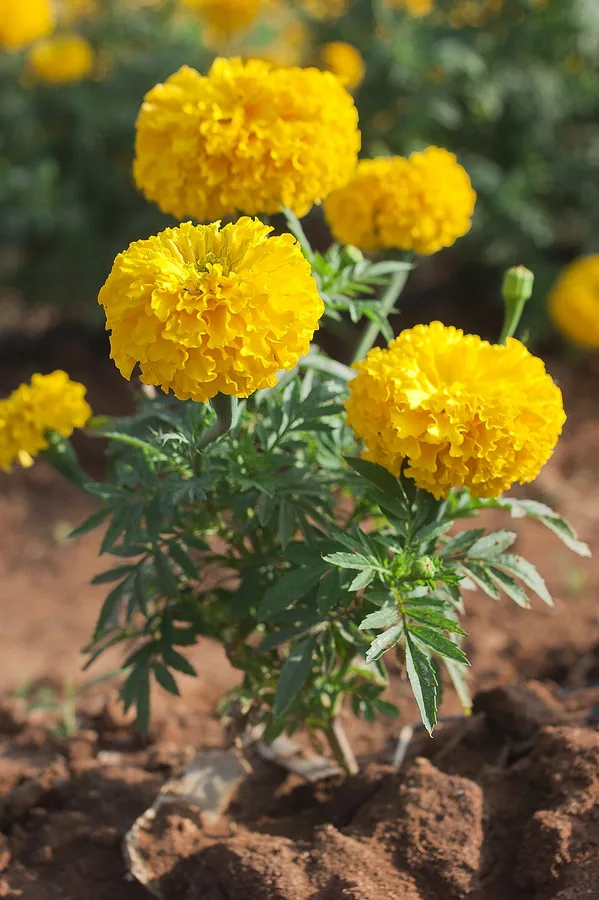
Want a flower that pretty much grows itself? That's the marigold. It's part of the daisy family, it made its way north from Mexico and Central America, and now it grows just about anywhere as a fast, easygoing annual. You'll get bright single and double blooms in gold, orange, and red from early summer all the way to the first frost.
There are a few different types in the genus, and they're easy enough to tell apart. French marigolds stay short and bushy, African types shoot up to about knee height with big pompon heads, and the little Signet marigolds mound up under lacy, citrus-scented leaves. Once you know which one you've got, you know how much room it needs and how tall it'll get.
The best part? Marigolds are super forgiving of beginner slip-ups. Give them sun and soil that drains, deadhead every now and then, and they'll bloom hard for months. But overwater them or squeeze them into damp shade and you'll swap those flowers for mites, rot, and mildew instead.
Care
The short version: give marigolds full sun and well-drained soil, water only when the top of the soil dries out, feed lightly at planting, and deadhead the spent flowers to keep the blooms coming.
Light
Marigolds want full sun, meaning at least six hours of direct light a day, if you want the best blooms. They'll put up with a bit of partial sun, but stick them in real shade and you'll end up with leggy, floppy plants and hardly any flowers.
Water
Let the top half of the soil dry out between waterings, which usually works out to about every 5 to 7 days once they're established. Marigolds handle drought just fine and would much rather be a little dry than soggy, since overwatering is what invites rot and disease.
Soil
Plant them in well-drained loam with a pH of 6.0 to 7.0, so pretty close to neutral. They're not picky about how rich the soil is, but they really won't put up with ground that stays wet, so drainage matters way more than fertility.
Temperature
They love the warmth, somewhere between 59°F and 86°F (15°C to 30°C). Frost is the one thing they can't handle, so wait for settled weather before you set them out.
Humidity
Marigolds like it on the dry side, around 30% to 50% humidity. Damp, muggy air is what brings on gray mold, so honestly, airflow matters a lot more than whatever the humidity reading says.
Feeding
Just work a balanced general-purpose fertilizer into the bed at planting and call it done. Marigolds rarely want more than that, and too much feed grows leaves instead of flowers.
Pruning
Deadhead the spent flowers as they fade and the plant just keeps cranking out new ones for months. Pinching off those old blooms also clears away the soft, rotting tissue that gray mold loves when it's humid.
Repotting
Marigolds hardly ever need repotting, since most of them live out their whole season right where you plant them. Just watch for roots circling the cell or poking out the drainage holes on a seedling that's been waiting too long to go in the ground.
Size & spacing
Depending on the type, plants run anywhere from 6 to 47 inches (15 to 120 cm) tall, from the little French marigolds to the towering African ones. Give each one a spread of 6 to 12 inches (15 to 30 cm) so air moves freely and the leaves dry out between waterings.
When to plant
Marigolds just want warm soil and no frost, and that's really it. Start the seeds indoors in spring or sow them straight into the ground once the cold's gone, and you'll get flowers from early summer right up until the first fall frost wraps things up.
Northern hemisphere
Southern hemisphere
Typical months for a temperate climate: start earlier in warm zones, later where spring frosts linger.
- Sow: 6 to 10 weeks before the last spring frost
- Plant: After the last spring frost when the soil has warmed
- Harvest: Early summer until the first fall frost
Hardiness
USDA hardiness zones: 2–11
Temperature: down to -46°C
Troubleshooting
Most marigold problems show up first on the leaves or the fading flowers, usually after a stretch of weather the plant wasn't crazy about. Learn to catch those early signs and you can jump in before a little issue turns into a big one. Find what matches below, then act while it still does some good.
Speckled yellow leaves with a hint of webbing
Seeing yellow speckles and a whisper of webbing? That's spider mites, and they really take off when the weather turns hot and dry. Hold a leaf over white paper, give it a tap, and you'll spot the specks moving around. Hose the plants down hard, treat the worst leaves with insecticidal soap, and keep the soil from drying out so the mites can't get comfortable.
Fix:
- Spray plants with a strong jet of water to dislodge mites
- Apply insecticidal soap or horticultural oil to affected foliage
- Remove heavily infested leaves
Chewed-up leaves and flowers with shiny trails
Ragged holes in the leaves and flowers, plus shiny trails in the morning? That's slugs and snails, and they do their munching after dark when it's damp. The easiest thing is to pick them off by hand in the evening, or scatter a little iron phosphate bait where they hang out. Clearing away mulch and old debris helps a lot too, since it takes away the cool, damp spots they duck into during the day.
Fix:
- Handpick slugs and snails in the evening
- Set out traps or iron phosphate slug bait
- Remove debris and mulch that provide hiding places
Fuzzy gray mold spoiling the flowers and buds
A soft gray fuzz on your older or damaged blooms is Botrytis gray mold, and it moves in when the air stays humid and wet. Pluck off the affected flowers and toss them, then stay on top of deadheading so old blooms don't sit around and rot. Water at the base to keep the leaves dry, and give each plant a little elbow room so the air can move through.
Fix:
- Remove and discard affected flowers and debris
- Deadhead spent blooms promptly
- Improve air circulation around plants
Sticky new shoots covered in little soft bugs
Those tiny green or black clusters on the fresh shoots are aphids, and that sticky film they leave behind is honeydew. Good news though, a strong stream of water washes most of them right off, and insecticidal soap mops up the rest if things get out of hand. Go easy on nitrogen feed too, since all that soft, leafy growth is exactly what aphids are after.
Fix:
- Spray aphids off with a strong stream of water
- Apply insecticidal soap if populations are high
- Encourage beneficial insects such as ladybugs
Toxicity
Marigold is one of the easier flowers to keep around pets, livestock, and kids. Garden marigold's basically non-toxic, and the petals are even edible, so they're fun tossed into salads and used as garnishes. The one small thing? The sap can mildly irritate sensitive skin, so gloves are handy if you're working with a big batch of them.
Safe for
People · Cats · Dogs · Horses · Rabbits · Livestock · Birds
Cats Safe
Garden marigold's basically harmless to cats, so a curious nibble isn't going to hurt. The worst you'd see in a sensitive cat is a bit of mouth or skin irritation from the sap, and that's about it.
Dogs Safe
A dog can chew on marigold and be perfectly fine. At most the sap causes a little drooling or some mild skin irritation, and it clears up all by itself.
Horses Safe
Marigold's fine around horses and isn't known to poison them. If a sensitive horse brushes past the leaves, it might pick up a faint bit of skin irritation, but nothing more than that.
Rabbits Safe
Rabbits can munch marigold without any worry, and the flowers make a harmless little treat. Every now and then the sap might cause a touch of irritation, but that's pretty rare.
Livestock Safe
Cattle, goats, and sheep handle marigold just fine, no ill effects to speak of. The mild sap's the only thing worth a passing thought, and even that hardly ever adds up to anything.
Birds Safe
Birds are in no danger from marigold, and plenty of them love pecking at the bright petals. Honestly, there's nothing here to fuss over.
People Safe
The petals are edible and turn up in salads and as garnishes, so marigold's perfectly safe for people. The only thing to remember is that the sap can bug sensitive skin a little, so gloves help if you're handling a big batch.
Wear gloves when handling, as the sap may irritate skin.
Helpline numbers

United States
ASPCA Animal Poison Control: (888) 426-4435 (fee applies)

United Kingdom
Animal PoisonLine: 01202 509000 (fee applies)

Australia
Animal Poisons Helpline: 1300 869 738
Varieties
Marigolds come in all kinds of sizes and shapes, but most gardens stick with a few familiar types. These are the ones worth knowing by name.
French marigold (Tagetes patula)
These stay nice and compact at 6 to 12 inches tall, with smaller single or double blooms that are often bicolored in red, orange, and yellow.
African/American marigold (Tagetes erecta)
These are the tall ones, hitting 3 to 4 feet and topped with big pompon double flowers that can reach 5 inches across.
Signet marigold (Tagetes tenuifolia)
These stay low and mounded at 6 inches or less, with small edible citrus-scented single flowers sitting above lacy foliage.
Triploid hybrids
These are sterile crosses of French and African types that keep blooming all season long, since they barely set any seed.
Companions
Marigolds earn their keep beside vegetables, but only when grown as a full-season cover crop in the soil you plan to plant later.
Plant near
Vegetable crops: French and African marigolds grown as a season-long pre-plant cover crop produce alpha-terthienyl that suppresses root-knot nematode populations, benefiting susceptible vegetables grown in the same soil afterward.
How to propagate
Marigolds are about as easy to multiply as flowers get, growing fast from seed and often sowing themselves for the year after.
SeedEasy
Spring
Most folks just grow marigolds from seed in spring, and honestly, they sprout and take off fast with next to no fuss. Sow them right where you want them or start them indoors ahead of time, and once a planting settles in, it'll often self-sow and pop back up on its own the next year.
Myths
Pot marigold and true marigold are the same plant.
Nope, they're actually from totally different genera. Pot marigold is Calendula officinalis, which is non-toxic to pets, while the true marigolds are Tagetes species. The names sound alike, sure, but you can't swap one for the other.
A few marigolds among the vegetables instantly protect them from root-knot nematodes.
It's a nice thought, but the effect only kicks in when marigolds grow as a dense pre-plant cover crop for a whole season in the same soil. Tucking a handful in among your vegetables just won't hold nematodes back the way people hope.