Vegetable · Fabaceae
Soybean
Glycine max
Hand it full sun and warm soil, and this self-feeding legume pretty much stocks its own pods.
Full sun
Every 5–7 days
59–95°F · 15–35°C
75–100 days
Overview
Soybean's a warm-season legume in the bean family, and it pulls double duty: pick it young for tender green edamame, or let it dry for the beans behind tofu, soy milk, and oil. Here's the neat part. It basically fertilizes itself, since little root nodules team up with Rhizobium bacteria to grab nitrogen from the air, so it barely asks anything of your soil. That's exactly why it's such a forgiving crop, and an easy one to start with.
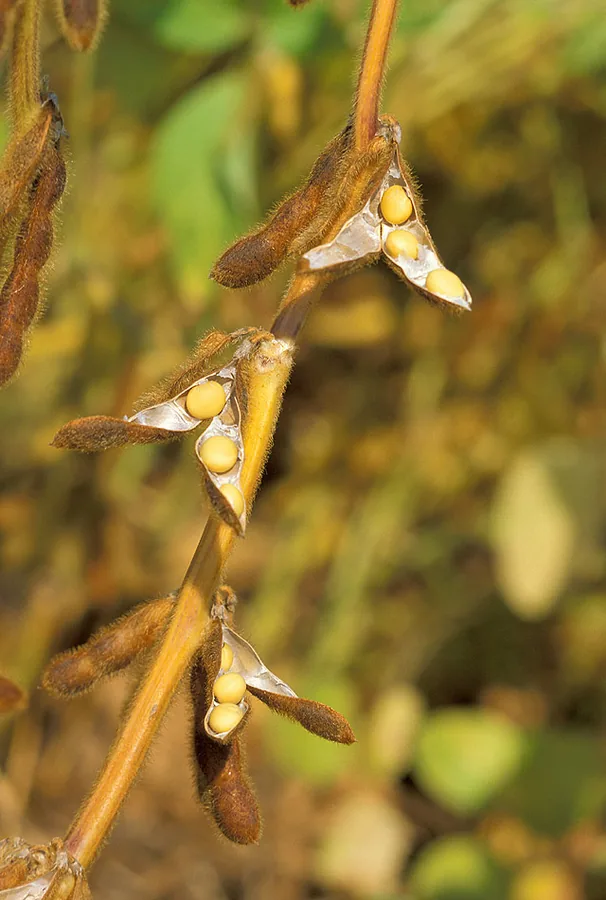
Don't expect a sprawler. Soybean grows into a tidy, upright bush around 1.5 to 3 feet (45 to 100 cm) tall, with fuzzy stems and pods that puff up in clusters along the branches. Grab them young and bright green? That's edamame for dinner. Leave them be and they'll dry right on the plant, so the same beans rattle loose for winter storage.
There's one catch, and it's an easy one to live with. Unlike snap beans or garden peas, you can't just snack on mature soybeans raw, because they hold compounds that get in the way of digestion until heat sorts them out. So cook them first, every time, and you're good.
Care
The short version: soybean likes full sun and warm, well-drained soil, plus about 1 inch of water a week kept steady while it flowers and fills its pods. And don't bother with heavy nitrogen, because this legume already makes its own.
Light
Soybean wants full sun, think eight or more hours of direct light a day. Give it less and the plants get leggy and thin, and you'll end up with way fewer pods.
Water
Aim for about 1 inch of water a week and keep it steady, since moisture matters most while it's flowering and filling pods. Just don't let the bed turn into a swamp, because soggy roots invite rot in a warm-season legume like this.
Soil
It's not picky, but it does best in well-drained loam with plenty of organic matter mixed in. Shoot for a pH of 6.0 to 6.8, that slightly acidic to neutral zone, which honestly is where most garden soil already sits.
Temperature
This one's all about warmth, and it's happy anywhere from 59°F to 95°F (15°C to 35°C). Cold soil really slows down germination, so it pays to wait for the ground to warm up before you sow.
Humidity
Regular outdoor humidity, somewhere around 40% to 70%, is totally fine, so don't sweat it. What helps more is airflow, because crowded, damp leaves give rust and other diseases an easy way in.
Feeding
Go easy here. Being a legume, soybean makes its own nitrogen in those root nodules, so a low-nitrogen starter usually covers it, with a bit of phosphorus and potassium at planting if your soil's poor. Pile on the nitrogen, though, and you'll actually shut those nodules down.
Pruning
Good news, there's nothing to prune. Just pull weeds early while the plants are still small, and be gentle down low so you don't mess with the roots and their nitrogen-fixing nodules.
Size & spacing
Figure on plants that hit 1.5 to 3 feet (45 to 100 cm) tall and about 12 to 24 inches (30 to 60 cm) wide. Give each one a little elbow room so air moves through the rows, which keeps disease from getting comfortable.
When to plant
Soybean just wants to be warm, and it won't do a thing in cold, soggy ground, so no need to rush it. Once the frost is done and the soil's up to at least 60°F (16°C), sow it straight into the bed. Then you'll be picking edamame by late summer, or you can let the pods dry on the plant for beans to store.
Northern hemisphere
Southern hemisphere
Typical months for a temperate climate: start earlier in warm zones, later where spring frosts linger.
- Plant: Direct sow after the last spring frost once soil has warmed to at least 60°F (about 15-16°C); soybean germinates poorly in cold, wet soil.
- Harvest: For edamame, harvest when pods are plump and bright green and seeds fill 80-90 percent of the pod (about the R6 stage); for dry soybeans, leave on the plant until pods and seeds dry and rattle.
Hardiness
USDA hardiness zones: 3–10
Temperature: down to -40°C
Troubleshooting
Good news: soybean usually tells you something's off through its leaves first, whether that's a chewing beetle, a sticky aphid, or a rusty spot. Catch it early and it's an easy fix before a few bad leaves turn into a real setback. So take a peek below, match what you're seeing, and step in while it still counts.
Rusty spots under the leaves and early leaf drop
Tan to reddish-brown spots on the underside of the leaves, plus yellowing and dropping? That's soybean rust. It can move fast where the weather suits it, so if rust is a thing in your area, get it confirmed through your local extension diagnostic service. Then a labeled fungicide early on, plus clearing out infected debris at season's end, keeps it from snowballing.
Fix:
- Apply a labeled fungicide preventively or at first detection in regions where rust occurs
- Remove and destroy severely infected debris at season end
Round holes and chewed-up, lacy leaves
This one's usually down to a couple of beetles. Bean leaf beetles are reddish to tan with black spots, and Japanese beetles have that metallic green-bronze shine. In a small patch, just pick them off into soapy water, and only break out a labeled insecticide if they chew through about 20 to 30 percent of the leaves during leafy growth, or 10 to 15 percent once the pods start filling.
Fix:
- Hand-pick beetles into soapy water in small plantings
- Use a labeled insecticide only if defoliation exceeds roughly 20-30 percent during vegetative stages or 10-15 percent during pod fill
Sticky leaves and clusters of tiny green bugs
See little clusters on the new growth and leaf undersides? Those are soybean aphids, and the sticky honeydew they leave tends to bring ants and black sooty mold along with it. Small numbers usually sort themselves out once lady beetles show up, so there's no rush to spray. Hold off until counts climb toward 250 aphids a plant and keep going up.
Fix:
- Tolerate low populations, which natural enemies often control
- Treat only when populations reach economic thresholds (about 250 aphids per plant with rising counts)
Flowers and little pods dropping off
When it gets hot and the soil dries out during flowering, soybean will just drop its blossoms and baby pods instead of holding onto them. That's heat and drought stress, not a disease, so no need to panic. Keep the soil evenly moist right through flowering and pod fill, and a little mulch helps hold both the temperature and the water steady.
Fix:
- Maintain even soil moisture through flowering and pod fill
- Mulch to moderate soil temperature and conserve water
Toxicity
Worried about the pets? Don't be. Soybean's a food crop, not a poison, so it's no threat to cats, dogs, horses, or grazing animals, and soy even shows up in plenty of pet foods. The only thing to remember is a kitchen rule, since raw mature beans need a cook before anyone digs in.
Safe for
People · Cats · Dogs · Horses · Rabbits · Livestock · Birds
Cats None
A curious cat can chew on soybean without any worry, since it's not on the ASPCA's toxic list.
Dogs None
Dogs are totally fine around it too, and soy actually turns up in some commercial pet foods.
Horses Safe
A horse can graze the leaves no problem, and soybean meal is a common protein in lots of feeds.
Rabbits Safe
Rabbits do fine with the leaves, though it's smart to keep the green pods and beans to a moderate share of a mixed diet.
Livestock Safe
Cattle, goats, and sheep will happily graze soybean, and it's grown all over as forage and feed.
Birds Safe
Backyard hens and other birds can eat it too, since it's in plenty of poultry feeds, though raw mature beans are better cooked first.
People Safe
For people, soybeans are a staple and totally safe once they're cooked. Raw mature beans have trypsin inhibitors, so boil or steam edamame and dry beans before they go on the plate.
This is a food-preparation note, not a poisoning hazard: raw mature soybeans contain trypsin inhibitors and lectins and should be thoroughly cooked before eating. Edamame is boiled or steamed before consumption.
Varieties
Most folks grow soybean for edamame, and honestly a few varieties come up over and over. These are the ones worth getting to know.
Midori Giant
It's a popular large-seeded edamame that's grown for big, sweet beans and yields you can count on.
Be Sweet
This early edamame is a favorite for its sweet flavor and its knack for ripening when the season's short.
Tohya
A compact little edamame that comes in fairly early and still sets plenty of pods.
Envy
If your season's short up north, this early-harvest edamame is the one to reach for.
Companions
Soybean pairs well with corn, which feeds on the nitrogen the legume leaves behind, but it sulks next to onions and garlic, which hold back bean growth.
Plant near
corn: Corn is a traditional non-competitive companion that benefits from the nitrogen fixed by the legume.
How to propagate
There's just one way to start soybean, and lucky for you it's the simple one: pop the seed right where it'll grow.
SeedEasy
Direct sow in late spring after the last frost once soil reaches at least 60°F (about 15-16°C). · Seedlings typically emerge in 7-14 days under warm soil conditions.
Soybean's grown straight from seed, and it couldn't be much easier. Wait for late spring, once the frost is gone and the soil's hit at least 60°F (16°C), then drop each seed about 1 to 1.5 inches down. In warm soil you'll see seedlings in 7 to 14 days, and if soybeans have never grown in your spot before, giving the seed a Rhizobium inoculant helps those nitrogen-fixing nodules get going.
Myths
You can munch soybeans raw right off the plant, just like garden peas.
Not really, and it's an easy thing to get wrong. Raw mature soybeans have trypsin inhibitors and lectins, so they need a cook first. Boil or steam edamame and you're all set, since that quick step makes it both safe and easy to digest.
Soybeans need a big hit of nitrogen fertilizer to do well, like a lot of veggies.
Nope. Soybean teams up with Rhizobium bacteria in its roots and makes most of its own nitrogen. So piling on extra nitrogen is a waste, and too much can actually switch off the nodules that are doing all the work.