Vegetable · Cucurbitaceae
Summer Squash
Cucurbita pepo
Hand it plenty of sun, rich ground, and even water, and summer squash pays you back with more fruit than one household can cook.
Full sun
Every 2–4 days
59–95°F · 15–35°C
45–55 days
Overview
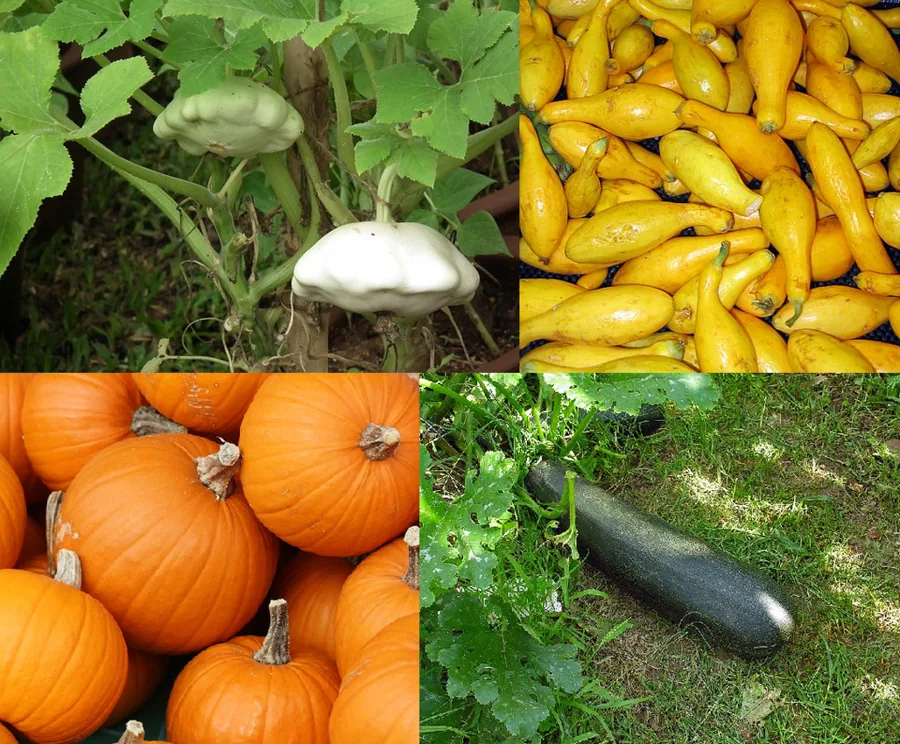
Summer squash is about the friendliest crop a new gardener can try, and it tends to leave you with more than you can eat. It's part of the gourd family, and it covers the yellow crookneck, the straightneck, the saucer-shaped pattypan, and zucchini too, which all turn out to be the same species, Cucurbita pepo. So what makes it 'summer' squash? You pick it young and eat it skin and all, back when the rind is still soft, instead of letting it harden like its winter relatives.
These plants stay bushy and compact instead of running all over the garden, and they top out around 18 to 35 inches (45 to 90 cm) tall while spreading out wide. Each plant grows separate male and female flowers, and bees do the work of carrying pollen between them, so a spot with plenty of bee traffic gives you the biggest harvest. And here's the catch: once fruit starts, it swells fast, and a squash you skip for a few days can balloon into a baseball bat instead of something tender.
None of this takes much know-how, but it does ask you to stay on top of things. Pick often, keep the water even, and keep an eye out for borers and bugs, and just a couple of plants will feed the whole house through the season.
Care
The short version: give it full sun, rich soil that stays evenly moist, and pick the fruit often. Keep the water steady at roughly an inch a week, feed once when you plant, and grab the squash while it's still young and tender.
Light
Summer squash really wants full sun, which means 6 or more hours of direct light every day. Give it any less and you'll end up with a leggy plant that flowers poorly and sets far less fruit.
Water
Keep the soil evenly moist down to about 6 inches, which comes to roughly an inch of water a week. Water in the morning and aim low at the roots, because wet leaves are an open door for mildew. When the fruit is setting and filling out, that's the stretch where you really can't let things dry out.
Soil
Go for fertile, well-drained loam and work in plenty of compost or aged manure. A pH somewhere between 6.0 and 6.5 is the sweet spot, and all that rich ground is what feeds the big appetite these plants have.
Temperature
Warm weather is what summer squash is after, ideally between 59°F and 95°F (15°C to 35°C). Frost will finish it off at either end of the season, so hold off planting until the soil has warmed up.
Humidity
Whatever humidity your garden naturally has is fine here, so there's no number to chase. What really counts is good airflow, since crowded, damp leaves are exactly how powdery mildew gets going.
Feeding
Work a balanced fertilizer like 5-10-10 into the bed before you plant, then give a light nitrogen side-dressing once the vines get going. Just go easy on the nitrogen, or you'll grow a jungle of leaves and hardly any squash.
Pruning
There's no real pruning to do here. Just pull off any diseased or mildewed leaves when you spot them, and keep picking the fruit, because regular harvesting is what keeps a plant cranking out more.
Size & spacing
Plants grow 18 to 35 inches (45 to 90 cm) tall and spread 2 to 4 feet (60 to 120 cm) wide. Thin the seedlings so they stand 12 to 15 inches apart, which lets air move through and keeps mildew from settling in.
When to plant
Summer squash loves warmth and can't handle frost, but it really takes off once the ground heats up. Start seeds indoors a few weeks ahead of your last frost, or just wait and sow them straight into warm soil, then move plants outside once the cold is gone. From there, you'll be picking fruit from the middle of summer right up to the end of the season.
Northern hemisphere
Southern hemisphere
Typical months for a temperate climate: start earlier in warm zones, later where spring frosts linger.
- Sow: 2 to 4 weeks before the last spring frost
- Plant: After the last frost when soil reaches 60-70°F at planting depth
- Harvest: Harvest fruit when young and tender: crookneck/straightneck at 1.5-2 in diameter, scallop at 3-4 in diameter
Hardiness
USDA hardiness zones: 3–11
Temperature: down to -40°C
Troubleshooting
Most of what goes wrong with summer squash shows up on the stems, the leaves, or the fruit, and the nastiest problems move quick. Catch the early signs and you can often rescue a plant that would otherwise be gone in a day. Find your symptom below, then act while it still makes a difference.
Your squash suddenly flops over with sawdust by the stem
This one's the squash vine borer, and its larva burrows into the stem and shuts off the water heading up the plant. Check low on the stem for an entry hole that's oozing damp, sawdust-like frass. Slit the stem lengthwise, dig the white grub out, then heap soil over the wound so the vine can put down fresh roots above the damage.
Fix:
- Slit the stem and remove the larva, then mound soil over the wound to encourage rooting
- Remove and destroy severely infested vines at season end
White, powdery dust creeping over the leaves
That dusty coating is powdery mildew, a fungus that tends to arrive late in the season when the days are warm and the nights turn cool. It wipes off part way, and the leaf underneath goes yellow and tired-looking. Strip off the worst leaves, open the plant up so air moves through, and only reach for a labeled fungicide if it keeps spreading.
Fix:
- Remove and dispose of heavily infected leaves
- Apply a labeled fungicide if needed and improve air circulation
Flecked, drooping leaves with brown bugs and bronze eggs beneath
Those are squash bugs, shield-shaped insects that suck out the sap and leave the leaves speckled yellow and sagging. Turn a leaf over and you'll spot the adults along with tidy clusters of bronze eggs tucked into the vein angles. Crush the eggs, pick off the adults by hand, and clear away the garden debris where they like to hole up for winter.
Fix:
- Hand-pick adults and crush egg masses
- Remove plant debris where bugs overwinter
A dark, sunken patch on the flower end of the squash
This is blossom end rot, and it isn't a bug at all. It comes from uneven watering that stops the fruit from pulling in enough calcium. The spot shows up at the blossom end and goes dark and leathery. Water on a steady schedule, mulch to lock that moisture in, and back off on the nitrogen and potash.
Fix:
- Maintain even soil moisture and mulch
- Avoid over-application of nitrogen and potash
Toxicity
If you've got pets or little ones around, summer squash is an easy one to relax about, because the whole plant is safe. The fruit, flowers, and seeds are all edible, and there's nothing in the leaves or vines that would poison a cat, a dog, livestock, or a person. The one thing worth knowing? A rare squash tastes sharply bitter, and if you hit one, just spit it out and toss it.
Safe for
People · Cats · Dogs · Horses · Rabbits · Livestock · Birds
Cats None
Cats are fine around it. If one chews a leaf or sneaks a bite of cooked squash, there's no poisoning to worry about, though rich extras outside their normal food can upset a stomach.
Dogs None
Nothing here is toxic to dogs. A little plain cooked squash is a mild, well-liked add-on to their bowl, and even a swiped mouthful of the raw plant won't hurt them.
Horses None
Horses can nibble the vines and eat the fruit without any trouble. Just bring in any new food slowly so their gut has time to settle into it.
Rabbits None
Rabbits do just fine with the leaves, flowers, and fruit. Offer a bit of fresh squash as one piece of a mixed diet rather than the whole dinner.
Livestock None
Goats, sheep, and cattle can safely munch the leaves and any spare fruit, so a big squash glut actually makes handy feed.
Birds None
Wild birds and backyard poultry alike will peck at the seeds and soft flesh, and there's no risk in it for them.
People None
The fruit, flowers, and seeds are all good eating, raw or cooked. Every so often a squash tastes bitter from a buildup of cucurbitacin, so if a bite tastes harsh, just spit it out and throw the rest away.
Fruit, flowers, and seeds are edible; no special handling precautions required.
Varieties
Summer squash shows up in a handful of familiar shapes, mostly sorted by what the fruit looks like. Here are the ones you'll run into most.
Yellow Crookneck (e.g., 'Summer Crookneck', 'Gold Star')
It's got yellow fruit with a curved, slim neck, and it tastes best picked young at 1.5 to 2 inches across.
Yellow Straightneck (e.g., 'Early Prolific Straightneck', 'Multipik')
Same yellow fruit, but with a straight, even neck, and it grows on neat little bush-type plants.
Pattypan / Scallop (e.g., 'Early White Bush', 'Peter Pan', 'Sunburst')
These are round and flat with a pretty scalloped edge, and you pick them small at 3 to 4 inches wide.
Companions
Summer squash grows best beside the partners of the old three-sisters planting and the flowers that pull its pests away.
Plant near
corn: In the three-sisters planting, corn provides structure and acts as a visual deterrent to squash insects such as squash vine borer.
beans: Beans fix nitrogen for the heavy-feeding squash in the three-sisters system.
nasturtium: Research-supported companion that helps reduce and confuse squash bug populations.
How to propagate
Summer squash is grown from seed and not much else, and it comes up so easily that most gardeners just sow it right where they want it to grow.
SeedEasy
Direct-sow after the last frost when soil is 60-70°F; or start indoors 2-4 weeks earlier · Germinates in about 7-10 days; transplants establish within 1-2 weeks
Summer squash could hardly be easier from seed. Once the frost is behind you and the soil sits at 60°F to 70°F (16°C to 21°C), tuck the seeds in 0.5 to 1.5 inches deep, or get a head start indoors 2 to 4 weeks earlier. They'll sprout in about 7 to 10 days. Thin the seedlings to stand 12 to 15 inches apart, and be gentle with any transplants, since squash really doesn't like having its roots messed with.
Myths
Plant summer squash near cucumbers or melons and it'll cross with them and wreck the taste of this year's fruit.
Not so. Summer squash will only cross with other Cucurbita pepo types, never with cucumbers or melons, and even when it does cross, that shows up only in the seeds. The squash you harvest this year tastes just the way it should, whatever happens to be growing next door.