Herb · Caprifoliaceae
Valerian
Valeriana officinalis
Hand it full sun and steady moisture, and valerian gives back fragrant summer flowers plus a root your cat won't stop rolling in.
Full sun
Every 3–7 days
USDA 4–9
3–5 ft · 0.9–1.5 m
Overview
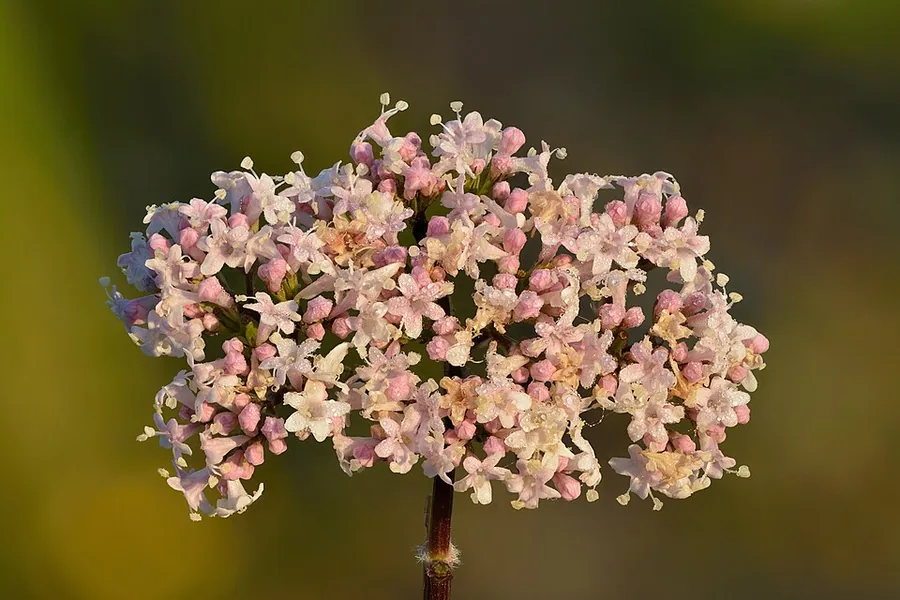
Valerian's one of those old cottage-garden perennials that earns its keep twice over, once for the scented summer flowers and once for the handy root underneath. Give it a season and those tall stems will push up soft, domed heads of pink and white bloom in early to midsummer, and the bees will find them fast. It's a tough, easygoing plant, happiest in cool, damp ground, and honestly it doesn't ask for much once it's dug in.
So what's the deal with that root? Dried and steeped into a tea, it's been a go-to herbal sedative for hundreds of years, the kind of thing people reach for to sleep better or calm down, which is how it picked up the old nickname all-heal. Here's the fun part: the same root drives cats a bit wild, just like catnip does, so don't be surprised if the patch turns into their favorite hangout. No harm done.
Now for the catch, because there's always one. Valerian grows fast, throws seed around like confetti, and creeps sideways on rhizomes, so in some places it's slipped out of gardens and landed on invasive plant lists. Nothing to panic about though. Keep it somewhere sunny and moist, snip the flowers before they set seed, and it'll behave itself just fine.
Care
The short version: full sun, keep it moist in rich soil, and deadhead before it seeds so it doesn't spread everywhere. It's not fussy about soil and it laughs at the cold, so really it just comes down to watering and a bit of snipping.
Light
Valerian flowers its best in full sun, which also keeps those tall stems standing up nice and straight. It'll cope with partial shade, sure, but plants stuck out of the light tend to get leggy and flop, so give it an open, sunny spot if you've got one.
Water
Keep the soil nicely moist, because valerian likes it damp and rich and really doesn't enjoy drying out. A drink every 3 to 7 days does the trick, more when it's hot, and it'll grow all the better for it. It'll survive the odd dry stretch, but why make it struggle?
Soil
Plant it in rich, moist, well-drained loam if you can, since the better the ground, the happier it is. It's not picky though, taking clay, loam, or sand in stride, and it likes a pH around 6.0 to 7.5, which covers pretty much any normal garden soil.
Temperature
This one's seriously cold-tough, shrugging off winters as low as -31°F (-35°C) and handling summer heat up to about 86°F (30°C). It's really a cool-weather plant at heart, so long, sweltering summers can wear it down a bit.
Humidity
Don't stress about humidity. Ordinary outdoor air, somewhere around 40% to 70%, is fine, and since it's a garden perennial it just rolls with whatever the weather does.
Feeding
A light feed in spring as it wakes up is all it wants, either a balanced fertilizer or some compost worked in. One go a year is plenty, and piling on more just gives you soft, floppy stems instead of extra flowers, so go easy.
Pruning
Snip off the faded flower heads as soon as they're done, and you'll cut way down on all that self-seeding. Trim the stems back once it's finished blooming, then clear away the dead leaves as the plant sinks back to the ground for winter.
Repotting
Valerian isn't really a pot-for-life kind of plant, but settled clumps do like being divided every 2 to 3 years to keep them going strong. See a crowded crown, fewer flowers, or roots stuffing a container? Time to lift it and split the crown.
Size & spacing
Grown well it reaches about 3 to 5 feet (90 to 150 cm) tall, so it's a back-of-the-border sort of plant. Leave each one 2 to 4 feet (60 to 120 cm) of space so air and light can get around those airy flower heads.
When to plant
Valerian's a cool-season kind of plant, and the timing's pretty forgiving. Start seeds indoors in late winter or early spring, pop the plants outside once the hard frosts are done, and you'll get fragrant flowers through early to midsummer. After the root for tea? Dig it up in the fall of the second year, when it's at its strongest.
Northern hemisphere
Southern hemisphere
Typical months for a temperate climate: start earlier in warm zones, later where spring frosts linger.
- Sow: Late winter to early spring, 6-8 weeks before last frost
- Plant: Spring after danger of hard frost
- Harvest: Fragrant pinkish-white flower clusters in early-to-mid summer (June-July); harvest roots in fall of the second year for medicinal use
Hardiness
USDA hardiness zones: 4–9
Temperature: down to -34°C
Troubleshooting
There's not much that goes wrong with valerian, and the two things that do come up are about how it stands and how far it wanders, not bugs or disease. Find what matches below and deal with it early, before a small quirk turns into a big one.
Seedlings turning up all over the place
Valerian's a real enthusiastic self-seeder, and it creeps around on rhizomes too, so one plant can become a whole crowd pretty quick. Keep an eye out for seedlings near the parent and in the beds, ditches, and wild bits nearby. Deadhead before it seeds, pull the young volunteers while they're easy to yank, and dig out any rhizomes that have gone walkabout.
Fix:
- Deadhead before seed set
- Remove volunteer seedlings while young
- Dig and discard escaped rhizomes
Tall stems leaning and flopping about
Leaning, floppy stems? That's usually just not enough sun. Stuck in shade or planted in soil that's too rich, valerian gets soft and lax and can't hold itself up, but it's an easy fix. Shift it into full sun, ease up on the nitrogen, and prop up the tallest stems with a stake if they still need it.
Fix:
- Site in full sun
- Provide staking or grow-through support for tall stems
- Avoid excess nitrogen
Toxicity
Got pets? Good news, because valerian is non-toxic and totally pet-safe. Sure, the root gets cats excited the way catnip does, but that's just harmless fun, not poisoning, and the very same root is used as a gentle calming herb for people and animals alike.
Safe for
People · Cats · Dogs · Horses · Rabbits · Livestock · Birds
Cats None
Lots of cats are totally smitten with the root, just like they are with catnip, and they'll roll, rub, and act delightfully goofy around it. It's a harmless little high, not poisoning, so let them have their fun and tidy up once they're done.
Dogs None
Dogs are perfectly fine with it. There's nothing in the plant that'll bother them, and the root's actually used as a gentle calming herb for anxious pups.
Horses Safe
Horses have nothing to worry about, since munching the leaves won't poison them at all.
Rabbits Safe
Rabbits can nibble the foliage safely enough, though like any new green it's smart to start with just a little.
Livestock Safe
Grazing livestock won't be harmed by valerian, since it's a mild, ordinary forage plant and not some toxic weed.
Birds Safe
Birds are safe around it too, with no toxic bits to worry about if they peck at the leaves or seed heads.
People Safe
Folks have used valerian as a herbal sedative forever, taking the dried root to help with sleep and calm. The plant's non-toxic, though if you're using it medicinally it's smart to stick to sensible doses.
The root acts as a catnip-like attractant: many cats become excited, playful or euphoric around it. This is a benign behavioral response, not toxicity. Store dried root away from cats if you do not want them disturbing it.
Varieties
No need to wade through a list of fancy named types here, because valerian's almost always grown as the plain wild species, so there's really just the one to know.
Valeriana officinalis (species)
This is the everyday medicinal garden valerian, the one with airy domed clusters of fragrant pale pink and white flowers on tall stems, sitting above those aromatic, sedative roots that gave the whole plant its name.
How to propagate
Want more valerian? Easy. You can sow seed for a whole batch of new plants, or just split an established clump to copy one you already like.
SeedEasy
Sow indoors late winter to early spring or direct sow in spring; self-sows readily · Germinates in roughly 2-3 weeks; establishes and flowers within the first to second season
Seed's the simplest way to get a bunch of new plants going. Sow it indoors in late winter or early spring, or just scatter it straight outside once spring shows up, and leave the seed sitting on the surface since a little light helps it sprout. You'll usually see it come up in around 2 to 3 weeks, with plants settling in and flowering that first or second season. Let a few flowers ripen and it'll reseed itself no problem, often more than you bargained for.
DivisionEasy
Spring or early fall · Divisions re-establish within a few weeks to a single growing season
Already got a valerian you love? Division's the quick way to make another. Come spring or early fall, dig up an established clump, break the crown into chunks, and replant them in moist, fertile soil. Those divisions root in within a few weeks to a single growing season.
Myths
Valerian gets cats as high as catnip, so surely it's some kind of drug that's bad for them?
Looks a bit wild, doesn't it? But it's the exact same harmless pull cats feel toward catnip, set off by valerian's aromatic compounds and nothing poisonous at all. The plant's considered non-toxic, and it's even used as a gentle calming aid for jittery pets. That catnip-style buzz is just play, not poisoning.