Shrub · Caprifoliaceae
Beautybush
Kolkwitzia amabilis
An easygoing, arching shrub that drapes itself in pink, bell-shaped flowers every spring.
Full sun
Every 7–14 days
USDA 4–8
6–10 ft · 1.8–3 m
Overview
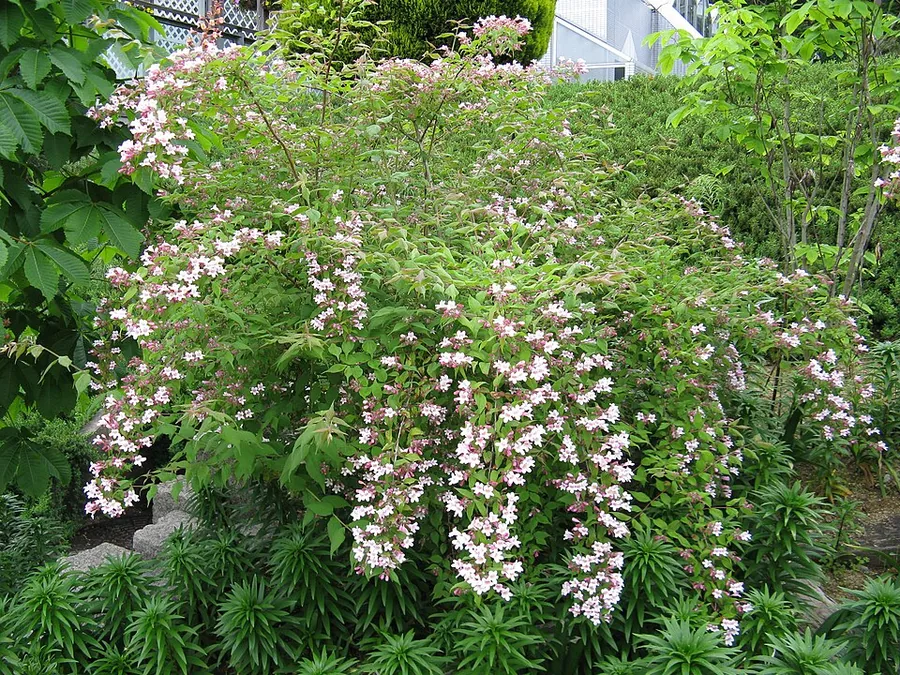
For one stretch in mid spring, beautybush really lives up to the name, when its arching, vase-shaped branches just about vanish under hundreds of soft pink bells, and every one of them has a little yellow throat. The rest of the year? It's the quiet backbone of the garden, and its peeling bark even gives you something to look at in winter. It's part of the honeysuckle family, and it grew wild in China before gardeners brought it west.
Here's the thing about this shrub: it's tough to mess up. It shrugs off clay and drought, takes cold all the way down to -29°F (-34°C), and has basically no pest or disease problems to speak of. Deer usually walk right by it too, which is a real plus if browsing's been driving you nuts.
Give it room and it'll use every bit of it. A grown shrub gets to 6 to 10 feet (1.8 to 3 m) tall and just as wide, and it fountains outward instead of standing up stiff. So plant it where that loose, sprawling shape can spread out, and it won't ask for much beyond a prune at the right time.
Care
The short version: full sun and average, well-drained soil, water it through that first season so the roots go deep, and after that just leave it alone and only prune once it's done blooming.
Light
Beautybush flowers best in full sun, which just means six or more hours of direct light a day. It'll still grow in partial shade, but every hour of shade you give it trades away a bit of that spring bloom.
Water
Water it regularly through its first growing season so the roots can reach way down. After that it pretty much handles itself, drought and heavy clay included, so a good soak every 7 to 14 days during a dry spell does the job.
Soil
Average, well-drained ground is all it's really after. It takes clay, loam, or sand without complaint and copes with a wide pH range from 5.5 to 8.0, acid through alkaline, so most garden soils will work just fine.
Temperature
It's hardy across USDA zones 4 to 8, so beautybush handles winters down to -29°F (-34°C) and summer heat up to 100°F (38°C) without blinking.
Humidity
Outdoor humidity? Not an issue for this shrub, so there's no level to fuss over. It does just as well in a muggy summer as it does in a dry one.
Feeding
Being a low-maintenance shrub, it doesn't ask for much feeding. A balanced general-purpose fertilizer or a topdressing of compost in spring is plenty, and lots of gardens skip even that.
Pruning
Timing's the whole ballgame here, because beautybush blooms on old wood. Prune right after the flowers fade, taking out a few of the oldest stems at the base to keep things open. And steer clear of late-winter or early-spring cuts, which strip off that season's flower buds.
Repotting
This is a landscape shrub, so it rarely needs repotting. If you do start a young one in a container, bump it up when you see roots circling the pot or the soil drying out fast, and then get it into the ground.
Size & spacing
A full-grown beautybush hits 6 to 10 feet (1.8 to 3 m) tall and spreads just as wide. Give it that much room from the get-go so those arching branches have space to fountain out.
When to plant
Plant beautybush in spring or fall, while it's mild out and the roots have a chance to settle before the heat or hard cold shows up. The big moment lands in mid to late spring, roughly April into May, when those pink flowers open along last year's wood.
Northern hemisphere
Southern hemisphere
Typical months for a temperate climate: start earlier in warm zones, later where spring frosts linger.
- Plant: Spring or fall
- Harvest: Mid to late spring (April to May)
Hardiness
USDA hardiness zones: 4–8
Temperature: down to -34°C
Troubleshooting
This shrub honestly doesn't give you much trouble, and just about anything that does go sideways comes back to pruning at the wrong time. Find what matches below, and the fix is usually just about timing.
Few or no flowers in spring
Wondering where the flowers went? Beautybush makes its buds on old wood, so if it got a haircut in late winter or early spring, those cuts took the buds right along with them. Shade can dial the bloom back too. Keep it in full sun, and just hold off on the pruning until the flowers are done for the year.
Fix:
- Prune only immediately after flowering ends
- Relocate or thin surrounding plants to provide more direct sun
A dense, twiggy shrub that looks unkempt with age
Leave beautybush to its own devices for years and the middle can turn into a crowded thicket that doesn't flower like it used to. The good news? Renewal pruning sorts it out. Right after bloom, cut a few of the oldest canes down to the ground, and the plant opens back up and puts its energy into fresh wood that'll actually flower.
Fix:
- Remove a portion of the oldest stems at ground level after flowering
- Thin congested growth to open the form
Toxicity
If you've got pets, livestock, or kids around, beautybush is a safe pick for the garden. It isn't on the ASPCA's toxic list, and there's no known poison anywhere in the leaves, stems, or fruit. It's grown to be looked at, not eaten, so there's really nothing to stress about.
Safe for
People · Cats · Dogs · Horses · Rabbits · Livestock · Birds
Cats Safe
Got a curious cat? No problem here, because beautybush isn't on the ASPCA toxic list and a sniff of the leaves won't do a thing. A big mouthful might lead to a bit of a stomachache, but there's no actual poison to deal with.
Dogs Safe
A dog can push past the branches or grab a leaf and walk away just fine, since there's no real risk in this shrub. The worst you'd see from a greedy nibble is some mild, short-lived tummy trouble.
Horses Safe
If a horse grazes near it, there's nothing in beautybush that's known to cause harm. It's an ornamental and not feed, so honestly it won't draw much interest anyway.
Rabbits Safe
Rabbits, pet or wild, can nibble the leaves without any harm coming of it. And here's a bonus: deer and rabbits both usually steer clear of the shrub to begin with.
Livestock Safe
Cattle, goats, and sheep won't run into any toxic trouble if they reach a stray branch along the fence line. It's just not the kind of plant that causes them problems.
Birds Safe
Birds are perfectly safe around this shrub, and they'll often tuck into its arching, twiggy growth for cover. Even the dry, capsule-like fruit has nothing toxic in it.
People Safe
Beautybush is a landscape shrub rather than something you'd eat, and it has no known toxin, so there's nothing here to worry a gardener or a kid. Just remember it's grown for looks, not the dinner table.
No special handling precautions noted; routine garden hygiene (wash hands after pruning) is sufficient.
Varieties
The plain species is tough to beat, but a couple of named selections take the flowers or the leaves up a notch. These are the ones worth hunting down.
Pink Cloud
Want even more color? This one's got clear pink flowers a touch bigger than the wild form, and it covers itself so thickly you can barely see the branches.
Dream Catcher ('Maradco')
This one's all about the leaves, which start out copper, move through yellow and golden chartreuse, and wrap up the year in orange and gold.
How to propagate
There are a few ways to make more beautybush, whether that's cuttings, splitting up an old clump, or seed, and the one you go with pretty much sets how long you'll be waiting.
Stem cuttingsModerate
Late spring to early summer using softwood cuttings · Several weeks to root; one or more seasons to establish
Want the surest bet? Go with softwood cuttings. Take them in late spring or early summer while the stems are still bendy and green. They'll root over several weeks, and then they just need a season or more in the ground before they really settle in.
DivisionModerate
Dormant season · One growing season
An older clump tends to throw up suckers and basal shoots, and you can lift those and replant them somewhere else. Do it in the dormant season, while the plant's resting and won't mind being disturbed. Each piece needs about a growing season to get going.
SeedModerate
After collecting ripe capsules · Multiple years to reach flowering size
Seed is the slow lane, no two ways about it. Collect the dry, capsule-like fruits once they ripen and sow them, but don't expect quick results, because a seedling takes several years to reach flowering size. That's exactly why most folks stick with cuttings.
Myths
Beautybush should be cut back hard in late winter like many summer-blooming shrubs.
It's an easy mix-up, since loads of summer bloomers do want that hard late-winter cut, but beautybush is the opposite. It flowers on old wood, so cutting in late winter or early spring chops off the very stems that were about to bloom. Let the flowers finish first, then prune.