
Introduction
Alpine plants are tough little mountain survivors that grow where almost nothing else can. They cling to thin soil, shrug off hard frost, and bloom fast when the snow finally clears. If you have ever wondered whether they belong in your garden, the answer is yes, and they are far more forgiving than they look.
These plants come from some of the harshest ground on Earth. In Colorado the alpine zone sits above the tree line, from 11,500 to 14,431 feet (3,505 to 4,399 m). Up there the growing season lasts only about 1.5 months. A plant that handles that can shrug off a cold snap in your yard.
Most guides hand you a quick list of rock garden plants and a note about drainage, then stop. This one goes further. You get real alpine plant care steps, from grit and sun to watering. You also get the cited science behind why these plants survive extremes. Knowing how cushion plants trap heat in the wild tells you how to treat them at home.
Most alpines are hardy perennials that come back year after year. Give them sharp drainage and a sunny spot and they thrive. The pages ahead cover the best types to grow and where to plant them. You will also see how mountain botany shapes each choice in your own rockery or trough.
Common Alpine Plants to Grow
Silver cobwebs lace the tight rosettes of a Saxifraga that has crusted right over the rim of the stone trough by my back path. I tucked it in three springs ago, and even now, long before its flowers open, those lime-edged leaves hold the eye. That is the quiet trick of the best common alpine plants. They earn their place through year-round form, not just a brief show of bloom.
The genera below dominate the best-of lists for a simple reason. They are widely sold, tough, and forgiving, which makes them the safest place for a new grower to start. Treat this as a reliable starter set rather than a ladder of winners. Each one holds its own in a trough, a crevice, or a gravelly bed.
One quirk worth clearing up early: a few of these, like Sempervivum, are true succulents that hoard water in fleshy leaves. Most alpines are not succulents at all. The list mixes both forms on purpose. The label that matters in your garden is sharp drainage, not leaf type. Several of these also work as pollinator plants. Their flowers feed the bumblebees and flies that pollinate alpines.
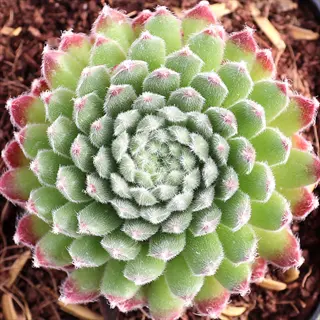
Sempervivum (Houseleeks)
- Form: Tight evergreen rosettes that spread into colonies of offsets, staying just an inch or two (2 to 5 cm) tall.
- Why grow it: Among the toughest and most forgiving alpines, thriving in cracks, troughs, and shallow gravel with almost no soil.
- Light and soil: Wants full sun and very sharp drainage, and rot is the main risk when it sits wet in winter.
- Succulent note: This is a true succulent alpine, storing water in fleshy leaves to ride out dry spells.
- Color: Rosettes range from green to deep red and bronze, often shifting color with the seasons.
- Care: Almost hands-off once established, needing only the removal of any rosette that has flowered and died.
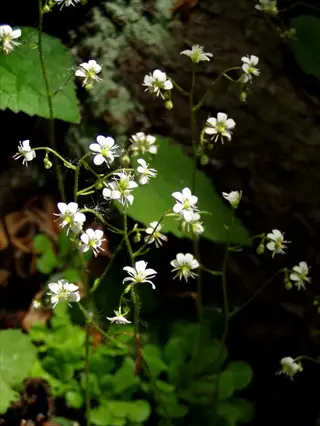
Saxifraga (Saxifrage)
- Form: Many form low cushions or mats of small rosettes, some encrusted with a silvery lime crust along the leaf edges.
- Why grow it: Offers early spring flowers and neat evergreen texture that holds interest in troughs and crevices all year.
- Light and soil: Cushion types like sun with sharp drainage, while some woodland saxifrages tolerate light shade.
- Flowers: Dainty white, pink, or yellow blooms rise on short stems above the foliage in spring.
- Use: A classic choice for stone troughs, crevice gardens, and the gaps between paving and rocks.
- Care: Low maintenance, needing only protection from winter wet and occasional grit top-dressing.
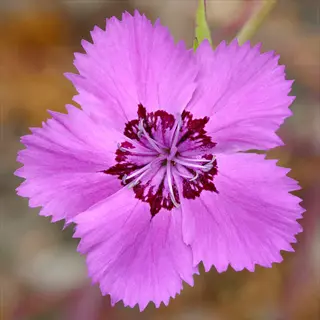
Dianthus (Alpine Pinks)
- Form: Compact mounds of blue-grey foliage topped by fragrant flowers, usually staying well under six inches (15 cm) tall.
- Why grow it: Combines scent, long flowering, and tidy evergreen mats, making it a favorite for sunny rock gardens.
- Light and soil: Needs full sun and gritty, free-draining soil, and resents heavy or wet ground.
- Pollinators: The flowers draw bees and other pollinators through late spring and summer.
- Flowers: Blooms come in pink, white, and crimson, many with a clove-like fragrance.
- Care: Deadhead spent flowers to extend blooming and keep the plant compact.
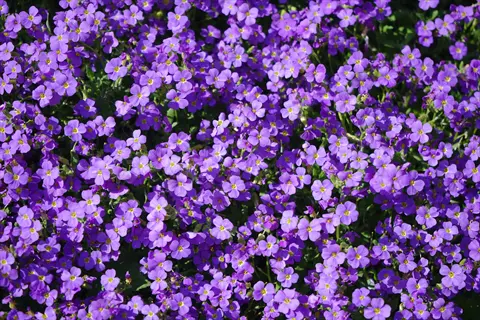
Aubrieta
- Form: A vigorous trailing mat that spills over walls and rocks, covering itself in flowers each spring.
- Why grow it: Few alpines give such a dramatic spring sheet of color over dry-stone walls and raised bed edges.
- Light and soil: Full sun and free-draining soil suit it best, and it copes well with dry, poor ground.
- Flowers: Masses of purple, violet, or pink flowers smother the foliage in April and May.
- Pollinators: The early flowers are a useful nectar source for emerging bees.
- Care: Trim hard after flowering to keep the mat dense and encourage fresh growth.
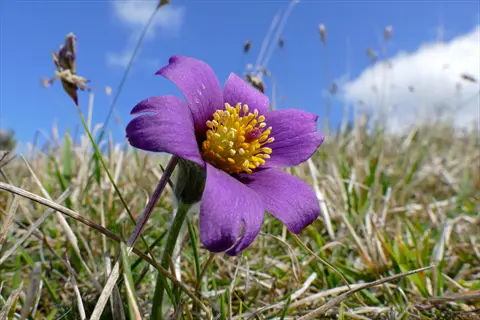
Pulsatilla (Pasque Flower)
- Form: A clump-forming perennial with finely divided, silky-hairy leaves and large upright spring flowers.
- Why grow it: Stands out for its furry buds, jewel-toned blooms, and fluffy silver seed heads that follow.
- Light and soil: Wants full sun and sharp drainage, and dislikes being moved once settled.
- Flowers: Bell-shaped purple, red, or white flowers open in spring, each cupped in silky hairs.
- Seed heads: Spun-silk seed heads extend the display long after the flowers fade.
- Care: Leave it undisturbed and avoid winter wet, which is its main weakness.
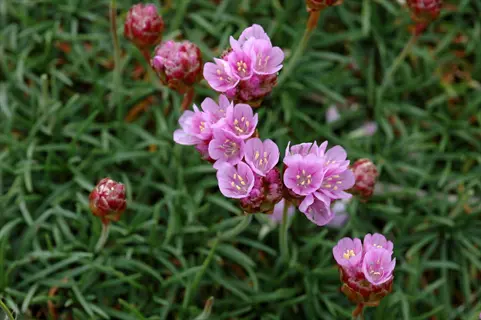
Armeria maritima (Thrift)
- Form: Neat grassy hummocks topped with round flower heads on slender stems, a true coastal and mountain native.
- Why grow it: Compact, salt-tolerant, and reliably perennial, it suits exposed, dry, and coastal gardens well.
- Light and soil: Full sun and free-draining soil are ideal, and it shrugs off wind and poor ground.
- Flowers: Pink or white pompom flowers appear from late spring into summer.
- Pollinators: The flower heads attract bees and butterflies during the warmer months.
- Care: Very low maintenance, needing only spent-flower removal to stay tidy.
Plant any two or three of these and you cover the whole season. The fragrant mounds of Dianthus and the trailing sheets of Aubrieta carry your spring and summer color. The furry pasque flower and salt-tough thrift add form that lasts well past the blooms. Get your drainage right and this group will reward you for years. You will spend very little time fussing over them.
What Alpine Plants Are
Here is the alpine plant definition you can actually use. These are plants that grow in a cold mountain climate above the tree line, in low communities called alpine tundra. The group covers perennial grasses, sedges, forbs, cushion plants, mosses, and even lichens. Many of these mountain plants hug the ground and never rise more than an inch or two tall.
The tree line is the simplest way to picture where they live. Climb a mountain and at some point the trees just stop around you. Above that line the air gets too cold, the wind too harsh, and the warm season too short for any tree to hold on. So low, tough plants take over the whole slope. Picture a lawn replacing a forest, except this lawn survives snow, ice, and brutal sun.
These plants push survival to limits you would not believe. The highest flowering plant on record is Arenaria bryophylla, found growing at 6,180 m (20,280 ft). Moss has turned up even higher, recorded at 6,480 m on Mount Everest. At that height your season to grow, flower, and set seed lasts only weeks, yet the plants come back year after year.
One thing trips up almost every new gardener. The word alpine covers two different things. Wild alpine plants live in true mountain tundra at the top of the world. Garden alpines are the small, tidy plants sold for rockeries and troughs, many of them bred far from any peak. They share a love of sharp drainage and lean soil, but they are not the same population. Knowing which one you mean saves a lot of confusion at the garden center.
Do not let the bare look of alpine tundra fool you either. The Colorado alpine zone holds higher plant diversity than the dense forests sitting below it. It also carries a large share of species found nowhere else on Earth. That bare, windy ground is one of the richest plant homes you can find. It is packed with cushion plants and tough perennials that quietly run the whole system.
The extremely harsh conditions of the alpine have created one of the most delicate of ecosystems, small disruptions have big impacts.
How Alpines Survive Harsh Places
Mountains punish almost everything that tries to live up high. The cold cracks cells, the wind never stops, the soil is thin, and the sun burns harder than it does at sea level. Yet alpine plants thrive in that exact spot. Their alpine plant adaptations are not magic. They are chemistry, shape, and root depth working together against four threats at once.
Cold is the first test, and these plants beat it on the inside. They build antifreeze proteins. They also reshape the fatty acids in their cell walls, so the walls stay soft near freezing. Many also pull water out of their cells on purpose, so ice forms in the gaps and not inside living tissue. That controlled trick is the heart of their freeze tolerance, and it lets them shrug off nights that would kill the annuals in your border.
High peaks also flood plants with hard light. The thin mountain air lets more ultraviolet radiation through, so alpines make their own sunscreen. They make their own sunscreen from two plant compounds, flavonoids and phenylpropanoids. These soak up the rays before the rays can reach soft tissue. Then they back that chemistry with thicker, smaller leaves, which cuts the surface exposed to harm. That two-part UV protection keeps them working through bright days that would scorch your lowland leaves.
Shape solves the wind and the heat problem. Cushion plants grow as tight, low mounds that hug the ground, and the mound traps warmth and moisture inside itself. Think of it as a living greenhouse pressed against the soil, warming its own core while it shelters whatever grows in its shade. These cushions act as nurse species, so seedlings of other plants get a foothold on bare, exposed ground they could never colonize alone. Below the surface, deep roots and taproots reach two feet (60 cm) or more, anchoring the plant against gusts and pulling water from thin alpine dirt. You see the same depth at work when an alpine survives a dry summer in your rockery.
Cold and Freeze Tolerance
- Antifreeze chemistry: Alpine plants synthesize antifreeze proteins and change their cell-membrane fatty-acid composition to keep membranes intact at low temperature.
- Survival tactics: Many use freezing-point depression, supercooling, and controlled cell dehydration to avoid lethal ice damage in their tissues.
- Hidden buds: Below-ground meristems and perennating buds let plants regrow each season even after a brutal winter at the surface.
UV and Light Defense
- Sunscreen compounds: Plants make UV-absorbing flavonoids and phenylpropanoid compounds that shield their tissues from intense high-altitude radiation.
- Leaf engineering: Many increase leaf thickness and reduce leaf area to limit how much UV exposure their surfaces receive.
- Timing: Their stomata tend to open most around midday, unlike lowland plants, matching the short, bright alpine day.
Cushion Form and Deep Roots
- Living greenhouse: Cushion plants hug the ground in dense mounds that trap heat and moisture, forming their own warmer microclimate.
- Nurse species: These foundation plants shelter seedlings of other species, helping them colonize bare, exposed soil.
- Anchored deep: Taproots can reach two feet (60 cm) or more, securing the plant and reaching water and nutrients in thin alpine soils.
Drought and Wind Resistance
- Water savers: Waxy cuticles, hairy leaves, and small leaf size cut water loss in dry, windy, exposed positions.
- Low profile: Short, ground-hugging growth keeps plants below the worst of the drying, battering wind.
- Special pathways: Some alpine succulents use CAM photosynthesis, taking in carbon dioxide at night to conserve precious water.
High-altitude plants enhance low-temperature tolerance by synthesizing antifreeze proteins and by changing the fatty acid composition of cell membranes.
These wild tricks explain everything your alpines do in the garden. A plant built for thin mountain soil hates sitting wet, which is why sharp drainage matters so much and why soggy roots rot it fast. The same plant evolved to survive on little, so it tolerates poor ground and dry spells that would starve a fussier flower. Give an alpine the lean, gritty, sunny home it expects, and the toughness it earned on the mountain works for you.
How to Grow and Care for Alpines
Good alpine plant care comes down to one idea above all others, sharp drainage. You will see every guide repeat the mantra, but the reason matters more than the rule for you. Your plants evolved on thin mountain grit where rain runs straight through, so your alpines never sit in standing water for long.
Recreate that at home with free-draining soil and you have won most of the battle. Plant your alpines into open ground or a 50:50 mix of compost and horticultural grit in your trough or pot. Your grit opens up the mix so water drains in seconds, not hours, and your roots get the air you want for them.
Here is how watering alpines should go. You soak them in well at planting, then leave them alone unless you hit a long dry spell. Once your plants settle in, they need very little water. Spread a layer of gravel mulch around the collar to keep the neck dry. The grit also blocks weeds and copies the thin soil of a real mountain slope. Feed them lightly or not at all, since rich food makes alpines soft and short-lived.
Your real danger is not cold. The killer is wet, and the way you lose plants is collar rot. When the neck and crown sit in moisture, the tissue at the base blackens and your plant collapses from the middle out. This is why you want grit around the collar and a free-draining base, and why overwintering matters more than you might expect. A cushion alpine can shrug off hard frost yet drown in your soggy winter trough.
A cushion Saxifraga in my back-path trough turned black at the crown and caved in over one wet winter. The center went soft and dark while the outer rosettes still looked fine, and within a week the whole dome had slumped into the grit. I dug out the plant and found the base sitting in a damp hollow where rain had pooled. I set the crown proud of the surface again and jammed sharp grit hard around the neck. I checked the trough through spring and watched fresh tight rosettes push out from the edges and close back over.
Get the drainage right and the rest is light work for you. The steps below cover planting and overwintering in order. You start by building the drainage and finish by sheltering soft cushions through the worst of the rain.
Plant into free-draining ground or a 50:50 mix of compost and horticultural grit, since standing water is the biggest killer of alpines.
Position the crown level with or slightly proud of the surface so the neck never sits in a wet hollow.
Spread a layer of grit or gravel around the collar to keep the neck dry, suppress weeds, and mimic thin alpine soils.
Water in well at planting, then water only in dry spells, because established alpines need very little and resent soggy roots.
Use little or no fertilizer, as alpines are adapted to poor soil and lush feeding makes them soft and short-lived.
Shelter vulnerable cushions from constant rain with a pane of glass or a rain-shadow spot, since wet, not cold, is the danger.
Do not plant alpines in rich, moisture-retentive soil or water them like bedding plants. Wet roots and a damp neck cause collar rot, which kills far more alpines than cold ever does.
Where to Plant Alpines
Every good home for alpine plants shares one thing: sharp drainage and full sun. The structure you build is just a way to deliver those two conditions. A rock garden, a stone trough, a raised bed, or a gravel garden can all work. So can a narrow crevice between rocks. The right pick comes down to your space and your budget.
A raised, gritty bed works best because it copies the thin, fast-draining soil of real mountain ground. Water runs straight through, so roots get the air they need and the crown of the plant stays dry. That dry crown matters more than almost anything else, since alpines rot fast when they sit wet at the neck.
If you garden in a small space, alpine troughs and gritty containers are your easiest start. A trough sits at viewing height, lets you mix the soil yourself, and is simple to shelter from winter rain. Renters and patio gardeners love them because you can move the whole thing if you move house.
Gravel gardens scale that same idea up for modern, low-water plots. You spread a deep gravel layer over free-draining ground, plant straight into it, and let the stones keep the soil cool and the necks dry. These beds ask for little water once the plants settle, which suits dry summers and tight water bills.
Crevice gardens take more planning but give you the most natural look. You stand flat stones on edge, packed close, and leave thin gritty gaps between them. Roots run deep and cool down inside each crack while the surface stays bone dry. Start by laying your stones in the same direction, like pages in a book. Then fill each gap with a 50/50 mix of grit and soil. Tuck small plants in as you go.
For years one corner of my back garden stayed soggy and green with moss. Bedding plants there always sulked, rotted off by August, and I replaced them three springs running. I stripped out the top 8 inches, laid in rubble and a low raised gravel bed, and planted a few houseleeks and saxifrage. By the next June that same dead corner was a tight carpet of rosettes and pink flowers.
Stone troughs, sinks, and gritty pots suit small spaces and let you control the soil mix and drainage completely. They sit at viewing height, are easy to shelter from winter wet, and are ideal for renters and patio gardens.
Rock gardens, raised gravel beds, and crevice gardens give roots more room and a permanent home. They handle larger plantings, mimic natural scree and fell-field conditions, and look most at home when alpines knit into sweeps over stone.
Alpine Plants and Climate Change
Think of a mountain as a thermometer for the whole planet. The slow-growing plants near the top sit at the very edge of where life can hold on. The smallest shift in heat shows up in them first. This is why scientists who study alpine plants climate change read these summits like a gauge. The plants in your rock garden matter more than you might guess.
The numbers are hard to argue with. Across 302 European summits tracked for 145 years, the rate of new species arriving jumped sharply. Summits gained plants five times faster between 2007 and 2016 than they did fifty years earlier. In the Rocky Mountains, alpine plants pushed their bloom dates forward by about 13 days over 38 years of records.
19th century
Tree-ring dating confirms the tree line advanced upslope, a shift that squeezes the alpine zone above it.
1957 to 1966
Baseline surveys across European summits recorded a slow, steady pace of new plant species arriving.
1973 to 2011
Rocky Mountain alpine plants advanced their flowering time by about 13 days over these 38 years.
2007 to 2016
European summits gained species five times faster than fifty years earlier, synchronized with accelerated warming.
That rising species richness sounds like good news, but it hides a harder story. Warm-adapted plants from lower down are climbing into ground that used to be too cold for them. This upward migration packs more plants onto each summit. The cold-loving alpine species get squeezed against the top, with nowhere higher to go.
We find a continent-wide acceleration in the rate of increase in plant species richness, with five times as much species enrichment between 2007 and 2016 as fifty years ago, between 1957 and 1966.
The same pressure shows up from below. The National Park Service dated tree rings to confirm a 19th-century treeline shift upslope. It warns that the rising tree line eats away at the alpine zone above it. Trees push up from one side and new plants crowd in from the other. The rarest cold specialists get caught in the middle, and many now face real extinction risk.
Earlier flowering carries its own danger. Warmer winters and faster snowmelt push blooms forward, but the heat is rising quicker than these plants can adapt. When a flower opens before its pollinators show up, the math stops working. Your rockery is a tiny version of the same system, and these mountain records are the clearest sign yet of how fast the climate is moving.
5 Common Myths
Alpine plants are difficult and fussy, so only expert gardeners with special equipment should attempt to grow them at home.
Many alpines are tough and low maintenance. Given sharp drainage and sun, beginners can grow them easily in troughs or gravel.
Alpine plants need constant watering because they come from high, exposed mountains where conditions always feel dry and harsh.
Established alpines need little water and dislike soggy soil. Overwatering and poor drainage kill far more alpines than drought ever does.
All alpine plants are succulents, since they store water in thick fleshy leaves to cope with their dry mountain homes.
Only some alpines, such as Sempervivum and Sedum, are succulents. Most are perennials, grasses, sedges, forbs, cushion plants, or sub-shrubs.
Alpine plants are tiny annuals that die off completely each winter and must be replanted again every single spring.
Most alpines are long-lived hardy perennials that return yearly. Some wild alpine clones are estimated to be around 2,000 years old.
Alpine plants only grow in the Alps, which is exactly why people everywhere call them alpine plants in the first place.
Alpines grow above the tree line on mountains worldwide, including the Rockies, Himalayas, Andes, and the Qinghai-Tibet Plateau.
Conclusion
Alpine plants give you two gifts at once. They are some of the easiest rock garden plants you can grow. They are also tough mountain survivors with a story most flowers cannot match. A trough of houseleeks asks almost nothing from you. Yet the same plants cling to bare rock above the tree line, where trees give up.
If you take away one thing about alpine plant care, make it this. Sharp drainage and full sun matter more than anything else. Most alpines shrug off hard frost, but they rot fast when their roots and necks sit wet. Cold is not what kills them. Wet feet are. Get the grit and the gravel right, and these hardy perennials come back year after year with very little work from you.
These small plants carry a big story too. Some wild alpine clones are thought to be around 2,000 years old, far older than most trees you will ever stand under. They live right at the edge of what life can take. That makes them quiet alarms for a warming world. Mountain summits gained new plant species 5 times faster in recent years than half a century ago. So the alpines on those peaks show you change before you feel it yourself.
So the next time you meet an alpine, look twice. In a gravel bed by your door, you see a neat, thrifty plant for a small, low-water garden. On a windswept ridge, you see part of one of the most delicate living systems on Earth. The same plant ties your patio to a whole mountain world. That is what makes this little group such a fine thing for you to grow.
Glossary
- Alpine tundra
- The cold, treeless plant community found high on mountains above the tree line where alpine plants grow.
- Antifreeze proteins
- Natural proteins some alpine plants make to stop ice from forming inside their cells in freezing cold.
- Collar rot
- Decay of a plant's neck and crown caused by sitting in wet soil, a common killer of alpine plants.
- Cushion plant
- A low, dense, mound-forming alpine plant that traps heat and moisture and shelters other plants like a living greenhouse.
- Flavonoids
- Plant compounds that absorb ultraviolet light and help protect high-altitude plants from intense mountain sunlight.
- Nurse species
- A plant whose shelter lets seedlings of other species establish nearby in harsh, exposed ground.
- Perennial
- A plant that lives for several years and regrows each season rather than dying after one year.
- Tree line
- The elevation on a mountain above which it is too cold and exposed for trees to grow.
External Sources
Frequently Asked Questions
What is an alpine plant?
An alpine plant is a plant that naturally grows above the tree line on mountains, in cold, exposed conditions called alpine tundra.
What are common alpine plants?
Common garden alpines include:
- Sempervivum (houseleeks)
- Saxifraga (saxifrage)
- Dianthus (alpine pinks)
- Aubrieta
- Pulsatilla (pasque flower)
- Armeria maritima (thrift)
Do alpine plants like sun or shade?
Most alpine plants prefer full sun and an open position, though a few tolerate light or partial shade.
Do alpines grow back every year?
Yes, most alpine plants are hardy perennials, so they grow back every year for many seasons.
Are alpines the same as succulents?
No. Some alpines, like Sempervivum and Sedum, are succulents, but most alpine plants are not succulents.
Do alpine plants need a lot of water?
No. Alpines need little water once established and far prefer sharp drainage over frequent, heavy watering.
Do alpine plants survive winter?
Yes. Most alpines are very hardy and handle cold well, but winter wet at the roots is the real risk.
How big do alpine plants get?
Most alpine plants stay low and compact, often only a few inches tall, while spreading into mats or mounds.
When should you plant alpines?
Plant alpines in spring or early autumn, when soil is workable and roots can settle before extreme weather.
Where do alpine plants grow?
Alpine plants grow above the tree line on mountains worldwide, and in gardens within rockeries, troughs, and gravel beds.