

Introduction
Few crops give you as much for so little work as beet plants. You plant one seed and you get two foods from it. The fat root goes into the roasting pan or a jar of pickles, and the leafy tops cook down like spinach. That is two crops from a single patch of dirt, which makes beets one of the best picks for a new gardener.
They move fast too. Iowa State University Extension says beets are ready to pull in about 50 to 70 days from planting. A few slower types stretch that out to 80 days, says Utah State University Extension. So in roughly two months you go from a tiny seed to dinner. You also don't need a sun-drenched yard. These plants do fine on just 4 to 6 hours of light a day, per University of Maryland Extension.
Here is the gap this guide fixes. Most beet pages teach you how to grow them or they tell you why they are good for you, but almost none do both with sources you can trust. This one does. You get a full walk from beet seeds to harvest, plus nutrition and health facts backed by university research and USDA data. No guesswork, no fluff.
Beets are a cool season crop, so they shine in the mild stretches of spring and fall. That timing makes growing beets easy to fit around the rest of your garden. Next we'll dig into when to plant and how to get those tricky seeds to sprout, plus how to harvest both the roots and the beet greens without hurting the plant.
How to Grow Beet Plants
One spring my row of Detroit Dark Red in the sunny back-fence raised bed pushed out lush, knee-high tops but the roots stayed the size of marbles. I dug into a cluster and found five seedlings crammed shoulder to shoulder in one spot. So I snipped the weak ones and left a single plant every few inches. Within weeks the survivors finally had room, and the roots swelled into proper beets.
That crowding is normal, and it points to the first thing you need to know about how to grow beets. Each of the beet seeds you plant is really a small fruit that holds several seeds inside one cluster. Several seedlings sprout from that one spot, which is why a bed can look packed even when you sow with care.
Beets like cool weather, so you direct sow them right into the garden. Skip starting them indoors. Wait until the soil temperature hits at least 40°F (4°C). The seeds sprout fastest in the sweet spot of 55 to 75°F (13 to 24°C). To help cool spring soil along, soak the seed in warm water for 24 hours first. That speeds up sprouting and cuts down on seed maggots and rot.
Good soil sets up everything that follows. Pick a sunny spot, work the bed loose, and pull out stones so the roots have room to push down. Beets do best in soil with a pH of 6.0 to 7.0, so mix in compost to feed the bed and keep it draining well. The five steps below take you from a prepped bed to thinned seedlings ready to grow.
Loosen a sunny bed, pull out stones, and mix in compost so roots swell in loose, fertile soil with a pH near 6.0 to 7.0.
Direct sow seeds about 2 inches (5 cm) apart and 1/2 to 1 inch (1.3 to 2.5 cm) deep once the soil sits at 40°F (4°C) or warmer.
Seedlings come up in about 7 to 15 days, and they sprout fastest when soil holds between 55 and 75°F (13 to 24°C).
Each seed is a multigerm fruit, so snip the extra seedlings until plants stand 3 to 4 inches (7.5 to 10 cm) apart.
Keep rows 12 to 18 inches (30 to 45 cm) apart so plants get airflow and room to grow full-size roots.
The step that trips up most new growers is thinning beets, and it is the one my marble-size harvest taught me not to skip. Snip the crowded seedlings at the soil line instead of pulling them, so you don't tug the keeper's roots loose. Tight seed spacing at sowing still works, but the thinning is what lets each beet bulk up into a real root.
Each 'seed' that is sown is actually a fruit that contains several seeds. So, even if you sow the 'seeds' properly, you may still have to thin the seedlings.
Best Beet Varieties to Grow
My knife went through the first Chioggia of the season and the slice fell open to candy-stripe rings of pink and white. Right beside it on the cutting board sat a wedge of deep red Detroit Dark Red, pulled from the same back-fence raised bed an hour earlier. For years I had grown one red type and called it good, so two beet plants from one bed in two wild colors stopped me cold.
That single bed taught me how much beet varieties shape what lands on the plate. The different types of beets bring deep red, golden, white, and ringed roots to the same patch of soil. You get to grow color and flavor far beyond the plain red beet most people picture.
Most of these beets reach harvest size in about 50 to 70 days, with a few slower types needing up to 80 days. That tight window lets you plan succession sowings and keep fresh roots coming all season. Pick a couple of varieties with staggered timing and you will rarely run short.
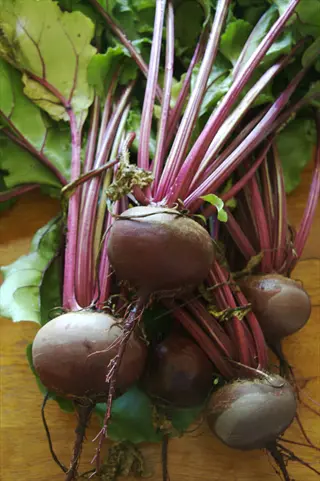
Detroit Dark Red
- Color: Classic deep red root with smooth round shape, the standard beet most gardeners picture and a reliable heirloom choice.
- Flavor: Sweet and earthy with tender flesh that roasts, boils, and pickles well for everyday cooking.
- Maturity: Reaches harvest size in roughly 55 to 65 days, fitting comfortably inside the typical 50 to 70 day window.
- Greens: Produces sturdy green tops with red stems that cook up much like spinach or chard.
- Storage: Holds well in the fridge or a cool root cellar, making it a dependable keeper for winter.
- Best for: Beginners who want a forgiving, all-purpose red beet that performs in most home gardens.
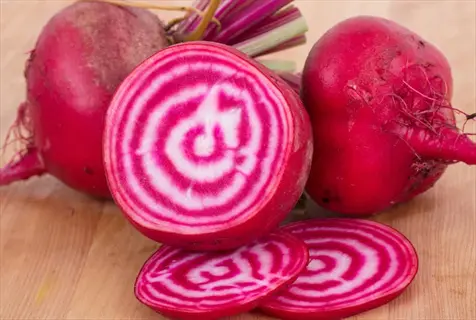
Chioggia
- Color: Italian heirloom that hides pink-and-white candy-stripe rings revealed only when the root is sliced open.
- Flavor: Notably sweet and mild, a favorite for raw slices in salads where the rings show off.
- Maturity: Ready in about 55 days, landing near the early end of the standard beet timeline.
- Appearance: Rings fade with cooking, so serve it raw or lightly cooked to keep the striped pattern visible.
- Greens: Offers tender tops that work as another helping of cooked greens from the same plant.
- Best for: Cooks who want a showy, sweet beet that brightens a fresh plate.
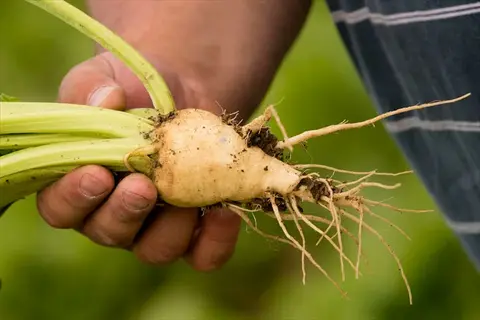
Golden Beet
- Color: Warm orange-gold root that keeps its sunny color when cooked and does not bleed onto other foods.
- Flavor: Milder and a touch sweeter than red beets, with less of the earthy edge some people avoid.
- Maturity: Matures in roughly 55 to 65 days, similar to the common red types.
- Kitchen use: A tidy choice because it will not stain hands, cutting boards, or nearby ingredients red.
- Greens: Grows mild, edible tops that round out the plant as a two-in-one crop.
- Best for: Anyone who wants beet flavor without the deep red mess on the plate.
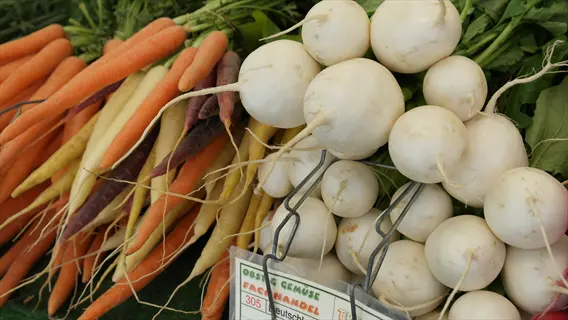
White Beet
- Color: Pale, almost ivory root that stays light through cooking and adds none of the usual red color.
- Flavor: The mildest and sweetest of the common types, gentle enough for those new to beets.
- Maturity: Reaches harvest in about 55 to 60 days alongside the other garden favorites.
- Kitchen use: Blends into dishes without staining, useful when you want sweetness but not the color.
- Greens: Yields tender green tops that cook down like other beet greens for an extra harvest.
- Best for: Gardeners who want a stain-free, beginner-friendly beet with a soft, sweet taste.
Your variety choice changes both the look and the taste of every harvest. Chioggia shows off its pink-and-white rings only when you slice it, so serve it raw to keep the stripes. Golden beets will not bleed color onto the rest of your plate, and white beets are the mildest of the bunch.
Try mixing a dependable heirloom beets favorite like Detroit Dark Red with one or two showier types this season. You get a steady main crop and a few surprises that make harvest day worth the wait.
Watering and Seasonal Care
"Those cracked beets have a disease," my neighbor said over the back fence, poking at the split roots in my hand. I told him the raised bed had just baked through a hot week while I forgot to water. The next sowing got steady moisture the whole way, and not one root split open.
That swing from bone dry to soaked is what wrecks roots, and good watering beets is the fix. Aim for about 1 inch (2.5 cm) of water per week, more in heat, and check the soil with a finger before you reach for the hose. Even moisture is the whole game here.
Solid beet care starts in the first 6 weeks, when water stress does the most damage. Let the bed dry out early and the plants often respond with bolting, sending up a flower stalk and giving you small, woody roots. Utah State University Extension links that early stress to early flowering and low yields.
Root cracking is the other side of the same problem. When beets dry out and then get a heavy soak, the roots swell too fast and split. It is not bad luck or a bug. It is the moisture swing, so water little and often to keep the soil steady.
A layer of mulch does the quiet work between waterings. Two or three inches of straw or shredded leaves holds the even moisture beets want and keeps the soil from baking on a hot afternoon. It also blocks weeds that would steal water from your roots.
Go easy on the feed. Pick a fertilizer for beets that runs low in nitrogen, because too much nitrogen grows lush leafy tops while the root underneath stays small. A light feeding once the plants are up keeps the energy headed where you want it, down into the beet.
Weeks 1 to 2
Keep the seedbed evenly moist so seeds germinate; sprouts usually appear within 7 to 15 days.
Weeks 2 to 6
Thin seedlings, water steadily toward 1 inch (2.5 cm) per week, and avoid dry spells that trigger bolting.
Weeks 6 to 8
Apply mulch to hold even moisture and feed lightly with a low-nitrogen approach to favor roots over tops.
Weeks 8 and on
Maintain steady water as roots swell, since moisture swings now are what crack the maturing beets.
Do not let beets dry out and then soak them; that swing in moisture is the main cause of cracked, woody roots, so water little and often instead.
Common Beet Pests and Diseases
Beets stay healthy most of the season, but a few beet pests and diseases show up often enough that you should know them on sight. The good news is that you only need to learn a handful, and each one leaves a clear clue on the plant. Read the leaves like a dashboard. Shot holes, winding trails, and round spots each point to a different fix.
Most beet diseases trace back to two things you can control. Crowded plants trap damp air, which feeds fungus, and poor rotation lets last year's problems wait in the soil. Cercospora leaf spot is the fungus you will meet most, and it spreads fast in warm, humid weather. Give plants room to breathe and the spots rarely get out of hand.
Insects do their worst damage early. Flea beetles chew tiny pits in young leaves, and a leaf miner tunnels pale trails just under the surface. A floating row cover stops both before they ever land on your seedlings. Two problems are easy to miss because they hide inside the plant. Leafhoppers carry curly top virus, and black heart comes from a boron shortage in sandy soil that leaves dark spots inside the root.
The table below pairs each problem with what you see and a simple organic fix. Use it to spot trouble fast and act before it spreads.
Notice how often crop rotation shows up as the fix. Moving beets to a fresh bed each year, plus steady water and space between plants, prevents most of this list before it starts. Healthy, unstressed plants shrug off trouble that flattens crowded, thirsty ones.
Harvesting and Storing Beets
Harvesting beets at the right moment makes the difference between sweet, tender roots and woody ones you end up tossing. The good news is that beets give you clear signals when they are ready, so you do not have to guess.
When to harvest beets comes down to size more than the calendar. Pull the roots once they reach 1 to 3 inches across, which is roughly golf-ball to tennis-ball size. Beets that grow past 3 inches turn tough and fibrous, so do not let them sit too long in hopes of a bigger crop.
Watch the shoulders of each root, too. As a beet swells, the top pushes up and peeks above the soil line. That little hump of color is your cue to start pulling.
You can get a second harvest from the same plant before you ever pull a root. Snip up to one third of a plant's foliage for beet greens and the root keeps growing without harm. Toss the young leaves into salads or cook them like spinach.
Try to harvest before heavy frosts and hard freezes hit your beds. A light frost can sweeten the roots, but a deep freeze ruins their texture and cuts your storage life short.
Storing beets the right way keeps them firm for months. First twist or trim the tops to about an inch above each root, since leafy tops pull moisture from the beet and shorten its shelf life. Leave the skins on and brush off loose dirt without washing.
Stash the trimmed roots in a cold, humid spot like a root cellar. Held at 32 to 35°F (0 to 2°C) with high humidity, beets stay crisp for 3 to 4 months. A box of damp sand or sawdust in the cellar works well, and the crisper drawer of your fridge is a fine backup for smaller batches.
Pull beets while they are golf-ball to tennis-ball size; roots left to grow past 3 inches (7.5 cm) across often turn tough and fibrous.
Beet Nutrition and Health
All that work in the garden pays off on your plate. Beet nutrition is the real reason this root earns a spot in your rows, and the numbers come straight from the USDA, not from a wellness blog. Raw beets are light on calories but rich in a few nutrients that matter.
Per 100 grams, raw beets give you about 43 calories, 9.6 grams of carbohydrate, and 2.8 grams of fiber. You also get 109 mcg of folate and 325 mg of potassium in that same handful. Folate helps your cells grow and repair, and potassium supports a normal blood pressure.
The headline beet health benefits come from one thing in particular. Beets hold a high level of dietary nitrate, and your body turns that nitrate into nitric oxide. Nitric oxide relaxes the walls of your blood vessels, so blood moves with less push behind it. That single mechanism drives most of the heart and exercise results you read about.
The blood pressure effect is well measured. A 2022 study pooled the trials on this. Nitrate from beetroot juice dropped systolic blood pressure by about 4.95 mmHg in adults with high blood pressure. The drop showed up in the top number and not the bottom one.
The NO derived from BRJ reduces SBP, but not DBP in patients with arterial hypertension.
Athletes get a different payoff from the same nitrate. A 2017 review looked at the right dose and timing. It found that 6 to 8 mmol of nitrate worked best. You take it about 90 minutes before you exercise. That dose improved endurance and pushed back the point of exhaustion at steady efforts. More nitric oxide means your muscles use oxygen with less waste.
Keep these results in their lane. Beet nitrate is a helpful nudge for your heart and your legs, not a medicine. The benefits came from set doses of beetroot juice in trials. So a daily beet on your plate is a smart habit, not a cure for any disease.
5 Common Myths
A beet seed is a single seed, so wherever it lands, only one neat beet plant will ever sprout from it.
Each beet seed is actually a fruit holding several seeds, so a cluster of seedlings emerges and must be thinned to 3 to 4 inches apart.
Beets need full, all-day sun and will simply refuse to grow in any spot that gets even a little afternoon shade.
Beets tolerate partial shade and grow well with just 4 to 6 hours of direct light per day, making them flexible for many gardens.
Bigger beets are always better, so you should leave roots in the ground as long as possible to maximize their size.
Beets harvested over 3 inches across often turn tough and fibrous, so roots are best pulled at 1 to 3 inches in diameter.
Beets only need a quick drink now and then and shrug off dry spells without any effect on the roots below.
Water stress in the first 6 weeks causes premature bolting and low yields, and moisture swings make roots crack.
Eating beets will instantly cure high blood pressure and replace the need for any medical care or prescribed treatment.
Beetroot nitrate modestly lowered systolic blood pressure in studies, but it supports a healthy diet and is not a cure or a substitute for medical care.
Conclusion
Growing beets comes down to a short, repeatable routine you now know by heart. Choosing a variety you like is step one. Then you sow the multigerm seed and thin the crowded seedlings to 3 to 4 inches (7.5 to 10 cm) apart. Keep the soil evenly moist, watch the leaves for flea beetles and leaf spot, and pull the roots before they get too big. That full routine is the checklist this post delivered.
The numbers are easy to keep in mind. Most beet plants mature in about 50 to 70 days, so you don't wait long for a return. Pull each root once it reaches 1 to 3 inches (2.5 to 7.5 cm) across. Go past that size and the texture turns tough and woody, which is the one mistake that trips up new growers.
Here is the part that makes the work pay off. Beets feed you twice from a single plant. The root is a low-calorie source of folate, potassium, and fiber, with about 109 mcg of folate per 100 grams in USDA data. The tops are real beet greens you can cook like chard. Peer-reviewed studies also tie beetroot nitrate to lower blood pressure in adults who already run high. So beet nutrition gives you a solid reason to keep a row going.
You can stretch the beet harvest across most of the season with a little planning. Succession sowing puts a fresh batch in the ground every 2 to 3 weeks in spring, then you plant again for a fall crop. That steady rhythm means fresh roots and greens for months instead of one big pile all at once. It is worth reminding yourself that timing turns one bed into a long supply.
Beets forgive small mistakes, which makes them a great starter crop. Here is the encouraging part. Give them steady water and a bit of weekly attention. They reward you with a reliable harvest almost every time. Plant a row this season and see how simple, calm care turns into food on your table.
Glossary
- Beeturia
- The harmless pink or red coloring of urine or stool that some people notice after eating beets.
- Black heart
- Internal dark spots inside a beet root caused by a boron shortage, most common in sandy soils.
- Bolting
- When a beet plant sends up a flower stalk early, usually after water or temperature stress, which stops the root from developing well.
- cool season crop
- A plant that grows best in the mild temperatures of spring and fall rather than the heat of summer.
- Dietary nitrate
- A natural compound in beets that the body converts to nitric oxide, which relaxes blood vessels.
- Multigerm seed
- A beet seed that is actually a dried fruit holding several seeds, so one planting spot sprouts a cluster of seedlings that must be thinned.
- Nitric oxide
- A molecule the body makes from dietary nitrate that widens blood vessels and can help lower blood pressure.
- Systolic blood pressure
- The top number in a blood pressure reading, measuring the pressure when the heart beats.
External Sources
Frequently Asked Questions
What is the secret to growing beets?
The secret is steady moisture, early thinning to 3 to 4 inches apart, and harvesting roots small.
What are common mistakes to avoid when growing beets?
The biggest mistakes are skipping thinning, watering unevenly, over-fertilizing, and harvesting too late.
Why can't you eat beets every day?
Most people can eat beets daily in normal amounts, though a few groups should be cautious.
What happens to your body after eating beets?
You may notice harmless pink urine, a dietary nitrate boost, and fiber that supports digestion.
Who should not drink beet juice?
People on blood pressure medicine or with health concerns should check with a doctor before regular beet juice.
Can beets remove plaque from arteries?
No, beets do not remove plaque, but their nitrate lowered systolic blood pressure in studies.
Is beetroot a natural Viagra?
Beet nitrate boosts nitric oxide and blood flow, but it is not a proven substitute for medication.
Does beetroot lower LDL?
Strong evidence supports beets for blood pressure, not specifically for lowering LDL cholesterol.
Do beets lower A1C?
There is no strong evidence that beets lower A1C; the clearest benefit is for blood pressure.
Is beetroot good for lowering triglycerides?
Strong evidence supports beets for blood pressure, not specifically for lowering triglycerides.