
Introduction
The scent is the whole point. When most people picture a sweet pea vine, they want the one that fills a warm evening with perfume. That plant is Lathyrus odoratus, a fragrant annual. It comes from southern Italy, Sicily, and Crete. It is easy to grab the wrong cousin. That one is the perennial Lathyrus latifolius. It comes back each year, but it barely smells.
Get the right one and you get a serious climber. I planted a row against a back fence one spring, and the vines hit 5 to 7 feet (1.5 to 2.1 m) by early summer. They bloomed in every color except yellow. These flowers have been a cottage garden favorite for generations. Gardeners keep growing them as cut flowers for one simple reason. The more you cut, the more they bloom, so a single plant can feed your vases for weeks.
Three questions tend to nag at new growers. Will the plant return next year? Are the pods safe around your dog or your kids? Why do the buds keep dropping? This guide answers all three head on. You get a clear split between the annual flowers and the perennial. You get honest pet and human safety facts. And you get a full plan for when things go wrong.
From here you will learn how to plant, support, water, and feed this fragrant climber. You will learn how to keep the blooms coming and how to handle the safety and problem questions. Let's start with how to grow sweet pea vines from seed to first flower.
How to Grow Sweet Pea Vines
My first tray of Old Spice sweet peas went into the ground along the sunny back fence, and barely 4 seeds out of 20 ever broke the surface. The next spring I dropped the same seeds in a bowl of cold water for a full day before sowing them. Almost every one sprouted, and the fence filled in by early summer.
That soak is the first real step in how to grow sweet peas well. Cornell recommends you soak the seeds in cold water for 24 hours before planting, which softens the hard coat and gets water to the embryo faster. Skip it and you fight slow, patchy results all season.
Sweet peas are a cool-season crop, so knowing when to plant sweet peas matters more than warmth. Start seed indoors about 6 to 8 weeks before your last spring frost. In warm-winter areas you can sow in fall or late fall instead, and the plants bloom from winter into spring. The seedlings handle cold well and survive down to about 25°F (-4°C), so early sowing beats waiting for hot weather that sweet peas hate.
When sowing sweet pea seeds, planting depth is simple. Set each seed half an inch (1.3 cm) deep in loose, rich, well-drained soil, whether you use pots or sow straight into the bed. Keep the soil evenly moist and near 60°F (16°C) for good sweet pea germination. At that temperature most seedlings show in 10 to 21 days.
Move seedlings out once they reach at least 3 inches (8 cm) tall, lining them up along the support they will climb. When the young plants hit 4 to 6 inches (10 to 15 cm), pinch off the growing tip. This one cut pushes side shoots and gives you a bushier, stronger vine instead of a single thin stem. The steps below walk you through the same routine in order.
Soak sweet pea seeds in cold water for 24 hours before sowing to soften the seed coat and improve germination.
Plant seeds half an inch (1.3 cm) deep in loose, rich, well-drained soil, either in containers or directly where they will grow.
Keep the soil evenly moist at around 60 degrees Fahrenheit (16 degrees Celsius); seedlings usually appear within 10 to 21 days.
Move seedlings out once they reach at least 3 inches (8 cm) tall, spacing them along their support structure.
Pinch the growing tip when plants are 4 to 6 inches (10 to 15 cm) tall to encourage bushier, stronger climbing growth.
Annual vs Perennial Sweet Pea
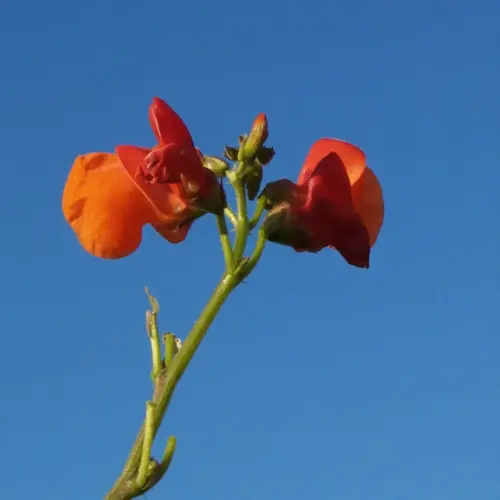
Two plants share the name sweet pea. That is why you may wonder if the vine comes back each year. The annual sweet pea is Lathyrus odoratus, a fragrant annual vine you grow as a twining climber. It belongs to the bean family, Fabaceae, and comes from southern Italy, Sicily, and Crete. Its showy blooms run 1 to 2 inches (2.5 to 5 cm) across in white, pink, blue, purple, or red.
The perennial sweet pea is a separate species, Lathyrus latifolius, and it does not behave the same way at all. It returns each year from its established roots, so you plant it once and it keeps coming back on its own. The catch is scent. This one is near-scentless, and its flowers usually show up in pink to magenta rather than the wide color range of its cousin.
Picking between them comes down to fragrance versus low maintenance. The annual gives you the strong perfume sweet peas are famous for, but you replant it every spring once it dies back after one season. The perennial spares you that yearly work, yet it can spread fast and gets treated as a noxious weed in parts of North America. I planted a single perennial vine along a back fence, and within two seasons it had claimed the whole stretch. Here is how the two stack up side by side.
- Strongly fragrant flowers in many colors except yellow.
- Lives for a single growing season and is replanted each year.
- Grown as a cottage-garden and cut-flower favorite.
- Native to southern Italy, Sicily, and Crete.
- Near-scentless flowers, usually pink to magenta.
- Returns every year from established roots.
- Can spread aggressively and is a weed in some regions.
- Often seen naturalized along roadsides and fences.
Support, Spacing, and Height
How tall do sweet peas grow? A standard vine climbs 5 to 7 feet (1.5 to 2.1 m) when you give it room. Dwarf and bush types stay low, around 8 inches to 3 feet (20 to 90 cm), so they fit a pot or a border edge. The catch is that height depends on the support you offer. Put up a tall trellis and the vine climbs the whole thing, or use a low one and you keep it short on purpose.
Any support for sweet peas needs to be thin enough for the plant to grab. The vine climbs with tendrils, and those tendrils work like tiny grasping hands that wrap around whatever they touch. A thin string or wire fits in that grip, but a smooth wide post does not. That is why a sweet pea trellis with netting beats a flat board every time.
Good climbing support comes in many forms. Trellis netting, a fence, hung strings, thin stakes, or a bamboo pyramid all give the vine something to hold. Your spacing on trellis netting matters too. Set plants 8 to 12 inches (20 to 30 cm) apart so each one gets light and air. If you grow in field rows instead, plant 2 to 4 per foot and leave 4 to 6 feet between rows.
Not every plant needs a structure at all. The dwarf variety Supersnoop needs no staking, so it holds itself up as a tidy mound. That makes it a smart pick for a windowbox or a small bed where a trellis would look out of place. For the tall fragrant climbers, though, set your support in place before you plant. Chasing a vine with string once it has flopped is a job nobody enjoys.
Watering, Feeding, Cool Roots
Good sweet pea care comes down to one rule that most guides rush past. The vines want full sun up top, but their roots need to stay cool and moist all season long. Get that balance right and the plants reward you with steady flowers.
Start the work before you ever sow a seed. Dig compost and well-rotted manure into the bed so the roots land in rich, moisture-holding soil from day one. A handful of bone meal or a balanced organic fertilizer worked in at the same time sets the plants up for months of growth.
Watering sweet peas is where steady flowering is won or lost. Water deep at the base and keep the moisture even, so the soil never swings from soaked to bone dry. Skip the overhead spray, which wets the leaves and invites mildew. A soak two or three times a week beats a light daily splash that never reaches the roots.
Vague advice on fertilizing sweet peas fails you. Feed the vines with a balanced fertilizer in liquid form every two weeks through the active growing months. That steady drip of nutrients keeps fresh buds coming. Stop feeding and the flowers thin out fast, even on a healthy-looking plant.
My back-fence Old Spice vines slowed to a trickle one July and yellowed at the base during a dry spell. I piled on a thick layer of mulch and switched to a long, deep soak twice a week. Within two weeks the lower leaves greened up and the flowers came back in a rush. The mulch held the cool moist soil the roots had been missing.
Mulch does double duty in hot climates. A generous layer over the root zone locks in water and shades the soil so it stays cool through warm spells. In the hottest gardens you can add light shade at the base of the vines while the tops still bask in sun. Cool roots drive the bloom, so protect them and the flowers keep coming.
- Soil prep: Work compost and well-rotted manure into the bed before planting so roots start in rich, moisture-holding soil.
- Watering: Water deeply and evenly at the base, keeping roots cool and moist, and avoid wetting the foliage from overhead.
- Feeding: Apply a balanced liquid feed every two weeks during active growth to support steady flowering.
- Mulch: Spread a layer of mulch over the root zone to hold moisture and keep the soil cool through warm spells.
- Check that vines sit in full sun while their roots stay shaded and cool.
Blooms, Fragrance, and Cutting
Here is the part that surprises new growers. The more sweet pea flowers you cut, the more your vine gives you back. Picking blooms for a vase does not shorten the show. It stretches it out for weeks longer.
Think of the vine like a faucet. The more you draw from it, the wider it opens. Leave the blooms on and the plant slows down, but cut sweet peas often and fresh buds keep flowing. That one habit is the whole secret to a long, heavy season.
The bloom time runs from mid-spring into early summer, with flowers in nearly every color except yellow. Each one measures 1 to 2 inches (2.5 to 5 cm) across and carries that classic sweet fragrance people grow these for. Use the tips below to keep them coming.
Cut Flowers Often
- Why it works: Removing blooms signals the vine to keep producing instead of setting seed, so frequent cutting raises the flower count.
- How to do it: Harvest stems 10 to 14 inches (25 to 36 cm) long in the cool of the morning when buds are just opening.
- Vase life: Fresh-cut sweet peas last about 5 days at room temperature, so cut regularly for a steady supply of fragrant stems.
Deadhead Spent Flowers
- Why it works: Once flowers fade and form pods, the plant slows blooming, so removing them keeps energy going into new buds.
- How to do it: Pinch or snip faded blooms before they develop seed pods, checking the vine every few days during peak season.
- Bonus: Deadheading also keeps the plant looking tidy and prevents the inedible seed pods from forming on the vine.
Choose for Fragrance
- Why it works: Scent varies by cultivar, so picking known fragrant types gives the classic sweet pea perfume rather than scentless modern blooms.
- How to do it: Check variety descriptions for fragrance notes, since some cultivars are bred mainly for color or size.
- Color range: Blooms come in white, pink, blue, purple, and red, in nearly every shade except yellow, for varied cottage-garden bouquets.
Enjoy the Bloom Window
- Why it works: Sweet peas flower most heavily from mid-spring to early summer, so timing your sowing for that window maximizes the display.
- How to do it: Keep up watering and feeding through the bloom season to sustain flower size as the weather warms.
- Heads up: Flower size and yield decline as temperatures climb, so the cool early-season weeks deliver the best blooms.
Sweet peas actually benefit from having their blooms cut, so the more you cut them, the more they bloom.
Harvest stems 10 to 14 inches (25 to 36 cm) long while the lowest buds are just opening. Cut in the cool morning and the vase life runs about 5 days at room temperature. Snip every few days and you trade one bouquet for a steady supply all season long.
Pet and Human Safety
Here is the safety answer, plain and split by who you are protecting. The short version: the plant is safe to touch, but the seed pods are the part to respect.
People ask are sweet peas poisonous because the pods look just like edible garden peas. They are not the same plant. The Missouri Botanical Garden says the fruits are inedible. The pods are poisonous to humans. The real risk is eating them, not the vine itself.
On pets, the picture is calmer than scary headlines suggest. The ASPCA lists sweet pea as non-toxic to dogs and cats, and toxic to horses. So the question of sweet pea toxic to dogs has a clear answer: handling and proximity are fine for cats and dogs. The toxin builds up over time and sits mostly in mature seeds, so you should still stop any pet from chewing the plant day after day.
Here is how the safety facts line up for each audience at a glance.
The takeaway is simple. Touch all you want, eat none of it. Keep the inedible pods away from small children, pets, and grazing animals, and you can enjoy the blooms without worry.
The pods look like edible peas but are poisonous to people, so keep the inedible seed pods away from children and pets even though touching the plant is safe.
Common Problems and Fixes
One hot, humid week in July, my back fence Old Spice vines went from full bloom to crispy brown almost overnight. The flowers shrank, the buds dropped before they opened, and a wall of color faded in days. The next spring I planted in cool early weather instead, and those vines bloomed for weeks before the heat ever caught up to them.
Most common sweet pea problems trace back to a few simple causes, not to the plant being fussy. You may ask why are sweet peas hard to grow, and the honest answer is that they usually are not. Your trouble is almost always timing, water, support, or heat, and each one has a clear fix.
Use this list like a quick reference for your own garden. Scan to your symptom, check the cause, then jump to the fix. The four issues below cover poor germination, heat decline with bud drop, dry roots, and weak climbing.
Poor Germination
- Symptom: Seeds are slow to sprout or fail to come up evenly after sowing.
- Cause: A hard seed coat and warm, dry soil both slow germination for these cool-season seeds.
- Fix: Soak seeds in cold water for 24 hours before sowing and keep soil evenly moist at around 60 degrees Fahrenheit (16 degrees Celsius).
Heat Decline and Bud Drop
- Symptom: Flowers shrink, buds drop, and the whole plant fades as the weather warms.
- Cause: Sweet peas have low heat tolerance, so flower size and yield decline as temperatures rise and plants fail in hot, humid summers.
- Fix: Sow early for cool-season bloom, keep roots cool and moist, and accept that vines may need removing once summer heat sets in.
Dry, Stressed Roots
- Symptom: Lower leaves yellow, growth slows, and flowering tapers off during dry spells.
- Cause: Sweet peas need cool, consistently moist roots and suffer quickly when the soil dries out.
- Fix: Water deeply and evenly, mulch the root zone, and shade the base in hot climates to keep roots cool.
Weak or Floppy Climbing
- Symptom: Vines sprawl, tangle, or grow poorly instead of climbing upward.
- Cause: Sweet pea tendrils need thin supports to grip, and without them the climbers cannot rise cleanly.
- Fix: Provide netting, strings, stakes, or a bamboo pyramid early, and pinch tips at 4 to 6 inches (10 to 15 cm) for bushier, stronger growth.
Two habits prevent most of these disappointments before they start. Sow early so your vines bloom through cool weather and beat the worst of summer heat decline. And rotate your planting spot each year, since planting in the same place two years running invites trouble. Do those two things and you sidestep the issues most gardeners report.
5 Common Myths
All sweet pea vines come back every year, so you never need to replant the fragrant annual once it is established.
The fragrant Lathyrus odoratus is an annual that you replant yearly; only the near-scentless perennial Lathyrus latifolius returns from its roots.
Sweet pea pods are just like garden peas, so the young pods are perfectly fine to snack on straight from the vine.
Sweet pea fruits are inedible and poisonous to humans, unlike edible vegetable peas, so the pods should never be eaten.
Sweet peas are deadly to dogs and cats, so you should never plant them anywhere a curious pet might wander.
The ASPCA classifies sweet pea as non-toxic to dogs and cats, though it is toxic to horses and no pet should chew the pods.
Sweet peas love hot summer weather, so the warmer it gets, the more flowers your vines will keep producing.
Sweet peas prefer cool conditions; flower size and yield drop as temperatures rise, and plants decline in hot, humid summers.
You should leave every bloom on the vine, because cutting the flowers will only reduce how many sweet peas you get.
Cutting and deadheading actually increases flowering, since the more blooms you remove, the more the vine produces.
Conclusion
The through-line of this whole guide is one early choice and a few good habits. Pick the right sweet pea vine first. The annual Lathyrus odoratus gives you that famous scent. The perennial Lathyrus latifolius comes back each year, but it has almost no smell. Once you know which one you planted, support it, feed it, and cut it well, and the rest of sweet pea care falls into a simple rhythm.
Let me reinforce the facts that carry the load one last time. Plant in cool weather and give the seeds a 24-hour cold soak before they go in the ground. Set up support early, because most vines climb 5 to 7 feet (1.5 to 2.1 m) and want something to grab. Keep the roots cool and moist, feed them through the season, and cut the flowers often. The more you snip, the more blooms you get, so growing sweet peas rewards a busy pair of scissors.
Here is the plain fact on safety, so you can relax around your animals. The ASPCA lists sweet pea as non-toxic to dogs and cats, so touching the plant or letting it grow near a pet bed is fine. Only the seed pods cause trouble, and just for people. They look like garden peas but are not edible, so keep curious hands and mouths away from the pods and you have nothing to worry about.
Get the timing, the support, and the watering right, and you can plant with confidence. This fragrant climber is far more forgiving than its reputation suggests, and that surprises most first-time growers. A little cool-season planning buys you months of cut color and one of the best scents in any cottage garden. So soak a few seeds, set a trellis, and let your sweet pea flowers do the rest.
Glossary
- Aminopropionitrile
- The toxic compound in sweet pea that affects grazing animals such as horses, concentrated in the mature seeds.
- Deadhead
- To remove faded flowers before they form seed pods, which keeps the plant producing new blooms.
- germination
- The point when a seed begins to sprout and grow into a young seedling.
- Lathyrus latifolius
- The botanical name for the perennial sweet pea, a near-scentless vine that returns each year and can spread aggressively.
- Lathyrus odoratus
- The botanical name for the fragrant annual sweet pea, the climbing flower most gardeners grow for scent and cut blooms.
- pinch the tip
- Removing the soft growing point at the top of a stem so the plant branches out and grows bushier.
- tendrils
- Thin, coiling stems a climbing plant uses to grab and wrap around a support.
- Twining climber
- A plant that climbs by wrapping its tendrils or stems around a thin support such as netting or string.
External Sources
Frequently Asked Questions
Do sweet pea vines come back every year?
It depends on the species:
- The fragrant annual Lathyrus odoratus dies after one season and is replanted yearly
- The perennial Lathyrus latifolius regrows each year from the same roots
Is sweet pea vine invasive?
The annual is not invasive; the perennial Lathyrus latifolius can spread aggressively and is treated as a weed in some regions.
Are sweet pea vines toxic to dogs and cats?
The ASPCA lists sweet pea as non-toxic to dogs and cats, though it is toxic to horses and pets should not chew the pods.
Are sweet pea flowers safe to touch with bare hands?
Handling sweet pea flowers and foliage is safe; the risk comes from eating the inedible, poisonous seed pods, not from touching the plant.
Do sweet peas grow better in pots or in the ground?
Both work well:
- The ground suits long climbing rows with cool, deep roots
- Large pots suit small spaces, balconies, and dwarf varieties
How tall do sweet pea vines grow?
Standard climbing sweet peas reach 5 to 7 feet, while dwarf and bush types stay between 8 inches and 3 feet.
Do sweet pea vines need a trellis?
Most climbing sweet peas need a trellis, netting, or strings to grip, while dwarf varieties can grow without staking.
What should you not plant next to sweet peas?
Avoid planting them right next to edible garden peas to prevent confusion at harvest, and keep them away from heavy shade.
Why are sweet peas hard to grow?
Most struggles come from sowing too late, heat decline, dry roots, or weak support rather than the plant being truly difficult.
What is the lifespan of a sweet pea plant?
The annual sweet pea lives for a single growing season, blooming from mid-spring then declining in hot summer weather.