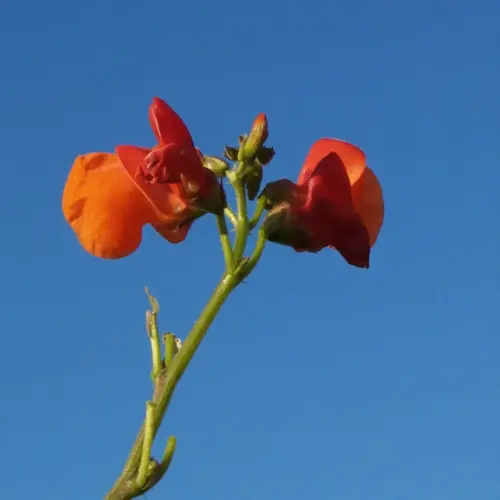

Keep sweet peas away from edible peas, shade trees, and tall crops that block the sun. Good sweet pea companion planting comes down to one rule. Skip any neighbor that confuses you at harvest or steals the light, water, and root space your vines need to bloom.
On the vine, an ornamental sweet pea and an edible pea look almost the same. Both throw out green pods on twisting tendrils, and the two patches blur together fast. That look-alike trap is the biggest reason to think hard about planting next to sweet peas before you set out your trellis. Once the vines tangle, telling one row from the other gets hard.
Here is why the mix-up matters. Sweet pea pods are poisonous and should never go in your mouth. They hold a toxin that can make you sick, so they are grown for scent and color, not for the dinner plate. Grow them right next to a food crop with matching pods and a quick harvest grab becomes a real risk. Kids and helpers who pick for you may not know the difference at all.
The other problem is competition. Sweet peas want full sun for at least 6 hours a day with cool, moist roots underneath. A vigorous shade tree throws a wide shadow and drinks up the soil moisture with its roots. Plant your vines in that shadow and you get long stems with few flowers. The vine looks healthy, but the blooms never really come.
Tall crops cause the same trouble in a smaller way. Sweet corn, staked tomatoes, and sunflowers all climb above the sweet pea trellis and cast shade across it by midday. Your vines lean and stretch toward the light instead of putting energy into buds. Give them an open spot where nothing tall stands to the south. A wall or fence on the north side is fine and can even block cold wind.
Watch out for aggressive spreaders too. Mint and other plants that send out fast runners will crowd the sweet pea root zone and fight for every drop of water. Sweet peas have a fussy root system that hates to dry out, so a thirsty neighbor sets your flowers back during the warm weeks of summer. Once mint moves in, it is hard to pull out without disturbing your vines.
Good neighbors do exist, and they help you make the most of the bed. Low herbs like basil or short, well-behaved annuals such as alyssum sit below the trellis without stealing light. They shade the soil a little and keep those cool roots happy. The trick is height. Pick partners that stay short and stay put, and you turn the base of the trellis into useful ground instead of bare dirt.
The fix is simple. Give your sweet peas their own sunny spot or trellis, set well apart from any edible garden peas you grow for food. Even a few feet of space and a clear marker stops a harvest mix-up before it can happen. Treat the two as separate beds in your head and on the ground. A plant tag at each end of the row removes any doubt when you pick.
One more habit pays off over time. Rotate the spot each year so your sweet peas do not return to the same soil season after season. This keeps soil-borne disease from building up and gives the roots fresh ground to work. Plant them where the air moves, the sun lands, and no greedy neighbor stands in the way, and you will get the full, scented show you planted them for.
Read the full article: Sweet Pea Vine: Complete Grow Guide