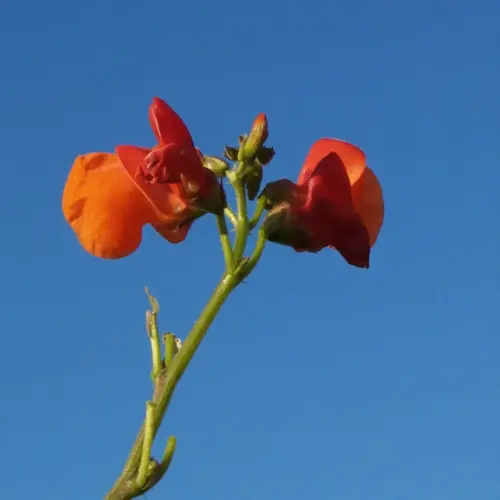

The pods scare most owners. A vine full of small green seed pods looks like trouble, so you assume the worst. But is sweet pea toxic to dogs? No. The ASPCA lists the perennial sweet pea as safe for them. And is sweet pea toxic to cats? Also no. So if your pet grabs a nibble from the garden, you are not facing a poisoning. You can relax about the leaves and the flowers.
The plant here is Lathyrus latifolius, the everlasting or perennial sweet pea. The ASPCA lists it as non-toxic to dogs and cats. So a leaf in the mouth or a chewed flower is not a poisoning event. It may upset a sensitive stomach. But that is true of almost any plant your pet swallows. You do not need to panic over a single bite.
Here is where you should stay careful. The same plant is toxic to horses and other grazing animals. The harmful agent is a compound the books call aminopropionitrile. Its effects build up over time. They do not hit all at once. The danger is not one bite. It is steady grazing, and the strongest dose sits in the mature seeds inside those pods. A horse that eats the vine for weeks takes in more and more of it.
That slow buildup is why the risk shows up in animals that eat the plant day after day. In affected grazers, you may see weakness, lethargy, and pacing. Some animals show head pressing and tremors. In worse cases there are seizures. You would not expect these signs from a dog that grabs one pod in the yard. They come from chronic feeding over weeks.
Perennial sweet pea (Lathyrus latifolius) is non-toxic to dogs and cats, but toxic to horses through cumulative seed exposure. Keep your pets from chewing the pods anyway.
So why warn dog and cat owners at all? Because toxicity here is about how much and how often, not a hard line between safe and deadly. The poison concentrates in the seeds, and the effect adds up. A dog that finds the pods tasty and strips the vine again and again starts to copy what harms a horse. That is a habit you want to break early.
Your practical move is simple. Let your dog or cat share the garden, but stop them from chewing the pods. Pick the ripe pods off the vine before they split and drop seeds at ground level. If you grow the vine on a low trellis, a quick fence or a raised bed keeps the pods out of mouth range. Sweep up any pods that fall after a windy day. A dog that chews one pod is fine. A dog that snacks on a fallen pile of them every afternoon is the case you want to avoid.
One more point is worth knowing. The fragrant annual you plant for cut flowers is Lathyrus odoratus, a close cousin of this vine. It carries the same family of compounds in its seeds. So the same advice holds for you. Enjoy the blooms, and keep the pods away from curious pets. The flowers are the part to show off, not the part to worry about.
The takeaway from the ASPCA sweet pea listing is reassuring for you. It sits on the non-toxic list for dogs and cats, so you do not need to pull the vine out of a pet-friendly yard. Treat the seed pods as the one part to manage. Keep them picked, keep them off the ground, and let the rest of your plant grow.
Read the full article: Sweet Pea Vine: Complete Grow Guide