Introduction
The first celery plant I grew came up stringy and so bitter I spat out the first bite. The stalks were thin and tough, nothing like the crisp ones at the store. I blamed my soil. I blamed bad luck. The real cause was water all along. Once I fixed that, everything else fell into place.
Celery, known by botanists as Apium graveolens, is a long cool-season crop that asks for patience. It needs about 130 to 140 days from seed and likes steady temperatures between 55 and 65°F. That long, slow timeline is exactly why timing and climate choices show up again and again in this guide.
Here is the part that trips up so many gardeners. Celery needs 1 to 2 inches of water every week, and it punishes any dry spell with tough, harsh stalks. It also runs about 95% water itself, so steady moisture is not a nice extra. It is the whole game. Treat it well and it rewards you. Neglect it and you taste the difference.
This guide goes past the usual how to grow celery steps. It ties the problems you hit back to a real cause, then pairs that with honest, checked nutrition facts. You get the full path of celery care from seed to plate. And you get straight answers about what the stalks are really worth as food.
So whether you are starting your first tray of seeds or growing celery for years and still fighting bitter stalks, you are in the right place. Let's start at the very beginning with seeds.
How to Grow Celery From Seed
The tray sat under a grow light on my raised-bed bench for nearly three weeks and showed nothing but bare seed mix. I checked it every morning, misted the surface, and started to think I had bought a dead packet. Then a haze of thin green threads broke through, and once I kept the watering even the seedlings caught up fast and filled the cells.
That slow start is normal, so do not panic if you want to start celery indoors and see nothing for a while. The RHS notes celery seed can take up to three weeks to germinate. It also needs a minimum soil temperature of 59°F (15°C) to wake up. Plan for a long runway, because a full crop needs about 130 to 140 days from seed to harvest.
Here is the detail most people miss with celery seed starting: the seed needs light to sprout. You surface sow it and press it onto the mix, but you never bury it under more soil. That single mistake stops germination cold and leaves you staring at an empty tray that was always going to fail.
Timing keeps the rest simple. In most temperate gardens you sow indoors from mid-March to early April, then plant out about 10 weeks after sowing once the frost risk passes. The steps below walk through how to grow celery from seed in clean order, from the first sowing to transplanting celery into the bed.
Surface sow celery seed onto moist seed-starting mix in early spring; press it in lightly but do not bury it, because the seed needs light to germinate.
Hold the tray around 59 to 70 degrees Fahrenheit (15 to 21 degrees Celsius) in bright light; germination is slow and can take up to three weeks.
Once seedlings have a few true leaves, move them into individual pots so roots can develop before transplanting.
About 10 weeks after sowing, gradually expose plants to outdoor conditions over a week so they adjust to sun and wind.
Set plants out after frost into fertile, moisture-retentive soil; water them in well and keep the bed consistently damp from day one.
One step earns more care than the rest: you must harden off celery before it ever touches the open bed. Give the plants a week of slow outdoor exposure to sun and wind, and they shrug off the move instead of stalling. Skip that week and the shock can set growth back for days.
Sun, Soil, Water, and Spacing
Get four things right and your celery plant rewards you with crisp, tender stalks all season. Light, soil, water, and spacing each pull their weight, and a slip in any one shows up fast in the stalks you cut. Most quality problems trace straight back to one of these four.
Start with sun and warmth. A full sun celery spot gives the crop steady energy. A little afternoon shade helps in a hot stretch. The best celery temperature runs 55 to 65 degrees Fahrenheit (13 to 18 degrees Celsius). The plant takes cold down to about 36 degrees Fahrenheit. Push past 85 degrees Fahrenheit and the heat drives fiber and bitterness into the stalks.
Celery soil requirements come down to one word: fertile. The plant has a small, weak root system that forages poorly for nutrients, so it leans on rich, moisture-holding soil instead of digging for food. Aim for a soil pH of 5.8 to 6.8 and work a high-potassium feed into the top few inches before you plant. Steady feeding beats a single heavy dose every time.
Now for the part that makes or breaks the crop. Celery water needs run 1 to 2 inches (2.5 to 5 cm) per week from rain or watering all season. The link is blunt. Full sun plus steady weekly water gives you tender stalks. A dry spell does the damage. Utah State University Extension warns that any water stress leaves stalks stringy and strong in flavor.
Celery spacing works best as a range, not one fixed number. Utah State Extension sets rows 2 feet apart with plants 12 inches apart in the row, which gives each plant room to bulk up. For self-blanching types, the RHS blocks plants 9 inches (23 cm) apart so they shade each other and self-blanch. Pick the spacing that matches your variety and how much elbow room your bed allows.
Celery never recovers well from drying out, so use a soaker hose or mulch to hold steady moisture; a single hot, dry week is enough to turn stalks stringy and bitter.
Celery Varieties and Types
I snapped a stalk from the middle of my block of self-blanching celery and it came up pale yellow and mild, while the outer stalks stayed deep green and sharp. The plants sat close enough in the raised bed to shade each other, so the inner stems never saw much sun. That paler crunch is blanching at work, and the plants did the job for me without a single shovel of soil.
Picking among celery varieties comes down to your climate more than your taste buds. The RHS splits celery into two main camps, and your local frosts decide which one belongs in your beds. Once you know that, the rest gets easy. Named cultivars like Pascal, Tall Utah, or Tango each fall under one of the two types of celery below.

Self-Blanching Green Celery
- Type: Modern celery planted in a tight block so neighboring plants shade each other and pale, milder inner stalks naturally.
- Best for: Gardeners in mild spring and summer climates who want low-effort blanching without mounding soil.
- Hardiness: Most self-blanching types are not frost-hardy and should be harvested before the first hard frost.
- Examples: Includes popular green stalk varieties grown widely across home gardens for crisp, upright bunches.
- Spacing: Set plants about 9 inches (23 centimeters) apart in each direction in a block, per RHS guidance.
- Flavor: Produces familiar crisp, juicy stalks with a clean taste when grown with steady moisture.
Trench Celery
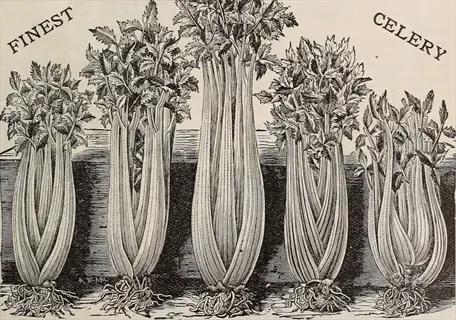
- Type: Traditional celery grown in a single row and earthed up with soil over weeks to blanch the long stalks.
- Best for: Cold-climate gardeners willing to mound soil and tie stalks for pale, tender, long-keeping celery.
- Hardiness: Tolerates harder frost than self-blanching types, making it suited to longer, colder seasons.
- Effort: Needs more hands-on work, since earthing up and blanching happen gradually through the season.
- Availability: RHS notes traditional trench types are now rarely sold compared with modern self-blanching celery.
- Flavor: Blanching reduces bitterness and produces especially pale, mild stalks prized by traditional growers.
Leaf or Cutting Celery
- Type: A leafy relative grown for its strongly flavored leaves and thin stems rather than thick blanched stalks.
- Best for: Cooks who want a hardy, cut-and-come-again herb-like celery for soups, stocks, and seasoning.
- Hardiness: Generally tougher and more forgiving than stalk celery, tolerating tighter spacing and partial shade.
- Use: Snip outer leaves repeatedly through the season much like an herb, leaving the plant to regrow.
- Flavor: Delivers a concentrated celery taste, useful where you want flavor without bulky stalks.
- Ease: Often the easiest celery for beginners because it tolerates less-than-perfect conditions.
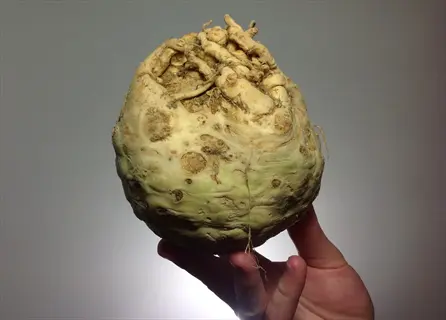
Celeriac (Celery Root)
- Type: A close celery relative grown for its swollen, knobbly root rather than its stalks or leaves.
- Best for: Gardeners who want a storable winter root vegetable with a mild celery flavor.
- Hardiness: Handles cool conditions well and stores for weeks after harvest in cool, humid storage.
- Use: Peeled and cooked in soups, mashes, and roasts, offering a celery taste in root form.
- Season: Like stalk celery, it is a long-season crop needing steady moisture throughout growth.
- Note: Same species group as celery, so growing needs for water and fertile soil are similar.
Here is the simple rule. Self-blanching celery suits mild spring and summer growing, since most types are not frost-hardy and need to come out before the first hard frost. Trench celery earns its keep in cold regions, because it shrugs off harder frost and you can earth it up and overwinter the hardier plants. The RHS even notes that trench types are now rare to buy, so most gardeners reach for the self-blanching kind.
Do not box yourself in to thick stalks either. Leaf celery and celeriac sit in the same species group as classic stalk celery, so they want the same steady water and rich soil. Leaf celery hands you a hardy, snip-as-you-go herb for soups, while celeriac trades stalks for a knobbly root you can store through winter. Match the type to your weather and your kitchen, and the growing gets a lot easier.
Fixing Common Celery Problems
Most celery plant problems trace back to one thing: water. Celery is about 95% water and grows from a small root system that cannot store much moisture. When the soil dries out, even for a few days, the plant pays for it in tough stalks and stunted growth.
The good news is that each common defect gives you a clear signal. Match the symptom you see to the cause below, then take the fix, and you can turn a struggling bed around fast. The four problems here cover almost every complaint home growers run into.
Stringy or Bitter Stalks
- Symptom: Tough, fibrous, strong-tasting stalks that are unpleasant to eat raw.
- Cause: Water stress during the season, which USU Extension links directly to stringy, strong-flavored stalks.
- Fix: Keep the soil consistently moist with 1 to 2 inches of water weekly and mulch to hold moisture.
- Prevent: Never let the bed dry out, especially during heat above 85 degrees Fahrenheit when fiber develops fastest.
Premature Bolting
- Symptom: Plants send up a flower stalk and turn tough before producing a full harvest.
- Cause: Cold exposure, since USU Extension notes several weeks below ideal temperatures can trigger flowering.
- Fix: Transplant only after frost danger passes and protect young plants from cold snaps.
- Prevent: Hold seedlings near the ideal 55 to 65 degrees Fahrenheit and avoid setting them out too early.
Black Heart
- Symptom: Dark, dead tissue forming in the center of the plant where new growth should be.
- Cause: A localized calcium deficiency, which USU Extension identifies as the source of black heart.
- Fix: Keep watering steady, since erratic moisture limits calcium movement to the growing tips.
- Prevent: Maintain fertile soil and even moisture so calcium reaches the heart of the plant reliably.
Cracked or Hollow Stems
- Symptom: Stalks split lengthwise or develop hollow centers as they grow.
- Cause: Boron deficiency is a common driver, as noted in problem-focused grower resources.
- Fix: Use a balanced, fertile soil and avoid extreme swings between wet and dry conditions.
- Prevent: Feed steadily and keep moisture even so growth stays smooth rather than fast and uneven.
Notice how three of these four fixes come back to steady moisture. Stringy celery and bitter celery both start with dry spells. Even black heart celery gets worse when uneven watering keeps calcium from the growing tips. Only celery bolting breaks the pattern. Cold, not water, drives that one.
Any water stress during the year causes the stalks to become stringy and gives them a strong flavor.
Harvest, Store, and Regrow
A tuft of pale green leaves pushed out of a grocery-store celery base on my windowsill. It took just a few days. I had set the base cut-side up in a shallow dish of water. I changed the water often and watched the little shoots reach for the light. Those leaves stayed thin and floppy, though, and never grew into anything you could chew. They only turned into real stalks after I dug a hole and dropped the base into my raised-bed soil.
That windowsill trick is the start of how to regrow celery from base, but soil does the heavy lifting. Water wakes the plant up and gets roots going fast. Soil is what gives the new center room and food to bulk up into usable stalks instead of staying leafy. So treat the dish of water as step one, not the whole plan.
Knowing how to harvest celery the smart way keeps a single plant feeding you for weeks. Use the cut-and-come-again method: cut the outer stalks first and leave the center to keep growing. The plant fills back in from the middle, so you get a steady supply instead of pulling the whole head at once. The outer petioles are ready once they reach at least 1 foot (30 centimeters) long.
Want a full head? Take the whole plant once the base hits at least 3 inches (7.5 centimeters) across. The steps below walk you through harvesting, how to store celery, and saving a base to regrow.
Once outer petioles reach at least 1 foot (30 centimeters) long, cut or snap them off at the base and leave the center to keep growing.
For a full head, harvest the whole plant when it reaches at least 3 inches (7.5 centimeters) in diameter at the base.
Refrigerate harvested celery for up to 2 weeks; wrap it to hold moisture, and chop and freeze extra stalks for cooking.
Set a leftover grocery-store base cut-side up in a shallow dish of water on a bright sill; change the water every few days.
When new leaves and roots appear, plant the base in soil so it can bulk up into usable stalks rather than staying leafy.
Fresh celery keeps in the refrigerator for up to 2 weeks when you wrap it to hold in moisture. Got more than you can use that fast? Freezing celery is your friend here. Chop the stalks, spread them on a tray to freeze, then bag them. Frozen celery loses its crunch but works great in soups, stocks, and stews all winter long.
Celery Nutrition and Health
Celery nutrition is easy to sum up in one line. A 100 gram serving has just 14 calories and is about 95% water, so it fills your plate without filling out your calorie count. That is why so many people ask is celery good for you when they want a low-calorie crunch.
The real value sits in the micronutrients. You get about 29.6 mcg of vitamin K in that same serving. That covers around 25% of your Daily Value. Celery vitamin K helps your blood clot, and you also get about 260 mg of potassium plus roughly 36 mcg of folate. The figures below come straight from the USDA, so you can trust them.
Now for the celery health benefits you read about online. A 2019 review by Hedayati ran in the journal Phytotherapy Research. It found the active compounds in celery showed three effects. They were hypolipidemic, so they may lower fat in the blood. They were antidiabetic, so they may help blood sugar. And they were hypotensive, so they may bring blood pressure down.
Read that finding with care. Most of those studies used animals or concentrated extracts, not whole celery eaten by people. So the benefits may apply to you, but the human proof is thin. Treat the claims as promising leads, not settled medical advice you can bank on.
One more thing on the celery calories question and the juice trend. Whole celery keeps its 1.6 grams of fiber, which feeds your gut and slows down how fast you eat. Juicing strips that fiber out, and the popular detox claims have no human clinical support at all. Eat the stalk, skip the hype, and you get the best of what this plant offers.
Most celery health claims come from animal or extract studies, not human trials, and celery juice detox claims lack clinical support. Whole celery, with its fiber intact, is the better choice over juicing.
5 Common Myths
Many people believe celery has negative calories, meaning your body burns more energy digesting it than the stalk actually provides.
Celery is very low in calories at about 14 per 100 grams, but digestion does not burn more energy than it supplies.
A common claim says drinking celery juice detoxifies the body and flushes out built-up toxins for better health.
No human clinical trials support celery juice detox claims, and juicing removes the fiber that whole celery provides.
Gardeners often assume celery is purely a winter vegetable that grows best during the coldest months of the year.
Celery is a cool-season crop preferring 55 to 65 degrees Fahrenheit, but hard frost and prolonged cold can damage most types.
Many believe stringy, bitter celery is just how the homegrown vegetable naturally tastes compared to store-bought stalks.
Stringy, bitter stalks usually come from water stress, so consistent moisture produces tender, mild celery at home.
A widespread belief holds that celery is nearly all water and therefore offers no meaningful nutrition at all.
Celery is about 95 percent water yet still supplies vitamin K, potassium, folate, fiber, and antioxidant plant compounds.
Conclusion
The celery plant asks for patience more than skill. It needs 130 to 140 days from seed to a full harvest, and it does best in a cool window of 55 to 65 degrees Fahrenheit. Get the timing right and you spare yourself a cold snap that pushes the plant to bolt early.
Everything from the growing stage to the harvest comes back to one thing. Steady water is the master variable that makes or breaks a stalk. Give your plants 1 to 2 inches of water each week and you head off the stringy, bitter problems that send most beginners away frustrated.
I skipped watering my celery bed through a dry July week and came back to limp stalks. I bit into one and it was all string and bitter. That single habit ties the whole guide together. Solve your watering and you solve most of what goes wrong with growing celery. The stringy texture, the strong off flavor, the thin stalks all trace back to a plant that dried out at the wrong moment. Even celery care during a hot spell is mostly about giving the roots more water, not more fuss.
The payoff at the celery harvest is a crisp, mild stalk you grew yourself. And the celery nutrition is honest reward too, with just 14 calories per 100 grams and a real dose of vitamin K. You won't find a cleaner snack coming out of your own soil.
Start small. A row of 5 to 10 plants per person is plenty for a first try, and it keeps the watering easy to stay on top of. Tend that small patch with even moisture and good timing, and celery turns from a fussy reputation into a crop you can count on.
Glossary
- Biennial
- A plant that grows leaves in its first year and flowers, sets seed, and dies in its second year.
- Black heart
- A disorder where the center of a celery plant turns dark and dead, caused by a localized calcium deficiency.
- Blanching
- Covering celery stalks from light as they grow so they turn pale and taste less bitter.
- Bolting
- When a plant prematurely sends up a flower stalk and stops producing good stalks, often triggered in celery by cold exposure.
- Celeriac
- A close relative of celery grown for its swollen, knobbly root rather than its stalks, with a mild celery flavor.
- Petiole
- The stalk part of the celery plant that connects the leaf to the base and is the part most often eaten.
- Self-blanching celery
- A modern type of celery planted close together in a block so the plants shade each other and naturally produce paler, milder inner stalks.
- Trench celery
- A traditional type of celery grown in a row and mounded with soil over time to blanch and tenderize the stalks.
External Sources
Frequently Asked Questions
What is the best month to plant celery?
Start celery seeds indoors in early spring, around mid-March to early April, then transplant outdoors after frost.
How many months does celery take to grow?
Celery needs about 130 to 140 days from seed, which is roughly four to five months total.
Why is celery so difficult to grow at home?
Celery is tricky because it needs steady moisture, a long cool season, and slow light-dependent germination.
Can you grow celery in pots or containers?
Yes, celery grows in containers at least 8 inches deep, but pots dry out fast so water often.
Does celery come back every year?
Celery is a biennial grown as an annual, so it usually does not regrow as a productive plant.
Is it better to grow celery in water or soil?
Water regrows small leafy shoots from a base, but soil produces full stalks worth harvesting.
Do celery plants need full sun?
Celery prefers full sun for most of the day but tolerates light afternoon shade in hot climates.
What should you not plant next to celery?
Avoid planting celery near corn and potatoes, which compete heavily for nutrients and water.
What are the main health benefits of celery?
Celery is low calorie and hydrating, supplying vitamin K, potassium, fiber, and antioxidant plant compounds.
Does celery have any side effects to know about?
For most people celery is safe, but it can trigger allergic reactions in sensitive individuals.