Introduction
Carrot growing is one of those garden jobs that looks easy on the seed packet and turns fussy the moment you try it. The seeds are tiny, they take weeks to sprout, and the roots love to come up forked or stubby. Get a few small things right, though, and you pull sweet, straight roots out of your own soil.
Most beginners hit the same two walls. Their seeds never come up. Or the carrots that do grow look twisted and split. Both problems trace back to a few numbers, like soil temperature, planting depth, and how steady your watering needs to be.
This guide ties every key figure to a named university extension source. So you know where each number comes from and why it matters. Carrots are a cool season crop, happiest in spring and fall. Most kinds are ready 55 to 100 days after sowing, says Michigan State University Extension.
You will also learn why sandy loam soil beats heavy clay, and why loose, stone-free ground gives you smooth roots instead of forked ones. This is a full seed-to-storage walkthrough of growing carrots, from picking the right spot to keeping the harvest for months.
By the end you will know how to grow carrots that come up reliably and size up sweet and straight. No more bitter, stunted, or split roots. Let's start with the soil and site, since that one choice shapes almost everything that follows.
How to Grow Carrots
Learning how to grow carrots comes down to one season-long flow that moves from soil to sow to thin to water to harvest. Each stage builds on the last. Get the order right and the rest falls into place.
The timeline is easy to hold in your head. The right carrot planting depth is about a quarter inch deep, and then you wait. Carrots are slow to start, so germination runs 14 to 21 days once the soil sits at 45°F (7°C) or warmer. The days to harvest carrots range from 55 to 100 days after sowing, depending on the variety you chose.
One rule shapes everything else. You must direct sow carrots straight into the bed, because they cannot be moved later. Lifting and replanting a seedling damages the young taproot. A damaged taproot grows into a forked or stunted carrot. There is no transplant shortcut here, so skip the pots and seed cells.
Carrot growing success rests on three things you control more than luck or weather. Deep, loose soil lets the root drive down straight. Uniform moisture keeps it sweet and crisp. And direct sowing protects the taproot from day one. You cannot fix a late frost or a hot spell, but nail those three and you stack the odds in your favor.
Here is the whole season at a glance before we break down each step in detail.
Dig and loosen deep, stone-free sandy loam at pH 6.0 to 7.0 so the taproot can grow straight without obstruction.
Sow seeds about a quarter inch (0.6 cm) deep straight into the bed once soil reaches at least 45°F (7°C). Never transplant carrots.
Water gently and keep the surface from crusting while seeds germinate over 14 to 21 days, the slowest and trickiest stage.
Once seedlings stand a couple of inches tall, thin them to 2 to 3 inches (5 to 7.5 cm) apart so each root has room to size up.
Give steady, uniform moisture and a light low-nitrogen feed; ease off watering near harvest to prevent cracking.
Pull or lift roots 55 to 100 days after sowing, before they get woody. After a fall frost, flavor turns noticeably sweeter.
Soil and Site Preparation
Get the soil pH for carrots right and half the battle is won. Carrots like a slightly sour to neutral bed, so aim for a pH of 6.0 to 7.0. The University of Minnesota backs that range. It lets the roots take up food without stress.
Texture matters even more than pH. The best soil for carrots is a deep, loose, well drained sandy loam that crumbles in your hand. Two big extension labs point to this same mix. The roots can push straight down with no fight. Heavy clay packs tight and holds water, and that is the last thing a carrot wants.
Depth and stones decide root shape. Loosen the bed a full 12 inches (30 cm) deep and pull out every rock you find. Michigan State is blunt about why. Stony or packed soil is the direct cause of forked, stubbed roots. The tip splits when it hits a rock or a hard layer. You also want loose well drained soil that will not crust over the seeds after rain.
Do not add fresh manure or high-nitrogen fertilizer before sowing. It drives leafy tops and causes forked, hairy roots; use well-rotted compost instead.
My first long, straight roots came out of a raised bed I filled with sifted sandy loam and crumbled compost. They slid out clean, ten inches each, no splits. The two seasons before that, I sowed the same seed into a heavy clay row in the same yard. Those carrots came up forked, stubby, and twisted around the small stones I never bothered to sift. I built the bed, swapped nothing else, and the roots changed.
If your native ground is heavy clay or full of rock, build a raised bed instead of fighting it. Fill it with sifted compost and loosened soil so the roots get a clear run down. Raised bed carrots also drain faster, which keeps the crowns from sitting in wet ground.
Stuck with shallow or heavy soil and no bed? Pick short, stubby varieties that mature in a few inches, a tip from the UC Statewide IPM Program. A Chantenay or a round type will fill out where a long Imperator would only fork. Match the carrot to the soil you have and you skip most of the trouble.
Sowing and Germination
Sowing is the stage where most beginners lose the crop before it starts. Carrot seeds are about as fine as ground pepper, so you sow them thin and barely cover them. Set the seed about a quarter inch deep (0.6 cm) and keep your rows close. Get the depth and moisture right here and the rest of growing carrots from seed gets much easier.
Timing comes down to soil temperature for carrots, not the calendar. The soil needs to hit at least 45°F (7°C) before you start, which answers the real question of when to plant carrots. The University of Maryland Extension points to spring and fall as the best windows, since carrots struggle in summer heat. Mix your seed with a bit of dry sand before you sow, and you spread it more even across the row.
Now the part competitors gloss over. Carrot germination is slow and uneven, and it runs best when the soil sits around 55 to 65°F (13 to 18°C). Even then, sprouting takes 14 to 21 days, so the surface has to stay moist that whole time. Let the top dry out once and you can lose the lot. This is the make-or-break stage, so treat it like one.
The next table breaks down the numbers that decide whether your seeds come up.
Crust prevention is the other half of the battle. Rain hits bare soil and dries into a hard cap, and that thin crust traps the delicate seedlings below before they ever reach light. There is a simple fix that pros lean on. Sow a few fast-sprouting radish seeds in the same row, and the tough radish shoots break the crust so the carrots can push through behind them.
Sowing radish seeds with carrots may help solve the emergence problem. The quickly germinating, sturdy radish seedlings break up the crust so the delicate carrot seedlings can get through.
One last habit keeps your kitchen stocked. Sow a fresh short row every two to three weeks through the season instead of one big planting. This succession trick gives you a steady supply of young, sweet roots rather than a single flood that all matures at once.
Watering, Thinning and Feeding
The roots came out of the raised bed cracked down the middle, with deep splits running the length of each carrot. I had let the soil go bone dry through a hot week, then soaked the bed hard once I noticed the wilting tops. The next batch, watered a little every couple of days, pulled out smooth and whole. Steady moisture beats a heavy drink every time, and the bed proved it side by side.
Three care tasks decide whether your carrots size up sweet or stay thin and bitter. Once the seeds sprout, your main jobs are thinning carrots, watering carrots, and fertilizing carrots. Get these right and the soil does most of the rest for you.
Thinning matters most because one seed makes one carrot. Crowded seedlings fight for space and stay small and twisted, so you have to thin to 2 to 3 inches (5 to 7.5 cm) apart to let each root fill out. Snip the extras at soil level instead of pulling, and you won't disturb the keepers.
Water is the other half of root quality. Uniform soil moisture is critical to sweet, crisp carrots, and swings between dry and wet cause cracking and a bitter taste. Aim for steady moisture in the root zone, then ease off once roots reach about three-quarters of mature size to stop them from splitting near harvest.
Feeding takes the lightest touch of all. Carrots need little food, and too much nitrogen grows leafy tops and forks the roots. Side-dress a bit of low nitrogen fertilizer about six weeks after the seedlings come up. Skip fresh manure, high-nitrogen blends, and weed-and-feed mixes that can hurt the plants.
Thinning Seedlings
- Why it matters: One seed makes one carrot, and crowded seedlings compete for space, staying small, twisted, or stunted instead of sizing up.
- When to do it: Thin once seedlings are a couple of inches tall, snipping or pulling extras to leave plants 2 to 3 inches (5 to 7.5 cm) apart.
- How to do it: Snip crowded seedlings at soil level rather than yanking them, so you avoid disturbing the roots of the carrots you keep.
- Bonus: The tender thinnings, tops and tiny roots alike, are edible and can go straight into a salad or stock.
Watering Evenly
- Why it matters: Uniform soil moisture produces sweet, crisp roots, while swings between dry and wet cause cracking, splitting, and bitter flavor.
- How much: Aim for steady moisture in the root zone, roughly an inch of water per week, adjusting for rain and heat rather than soaking heavily.
- Method: Use drip irrigation or a gentle wand at soil level to keep moisture even and avoid washing out or crusting the surface.
- Near harvest: Ease off watering once roots reach about three-quarters of mature size to lessen the chance of splitting.
Feeding Lightly
- Why it matters: Carrots need only modest fertility; too much nitrogen drives leafy tops and causes forked, hairy roots instead of clean ones.
- What to use: A light low-nitrogen feed works best; you can side-dress a small amount about six weeks after the seedlings emerge.
- What to avoid: Skip fresh manure, high-nitrogen blends, and weed-and-feed products, which can damage or even kill carrot plants.
- Soil first: Well-prepared soil enriched with compost usually supplies most of what carrots need for the season.
Weeding And Mulching
- Why it matters: Slow-growing carrot seedlings are easily smothered by weeds, which compete for water, light, and root space.
- How to weed: Pull weeds by hand while they are small and shallow, taking care not to disturb the developing carrot roots.
- Mulching: A light mulch between rows holds moisture steady, suppresses weeds, and helps keep the soil surface from crusting.
- Timing: Stay on top of weeds early, since the bed fills in and becomes much easier to manage once carrots are established.
Resist the urge to skip thinning to save plants. Crowded carrots stay finger-thin, while thinned ones fill out, so removing extras actually gives you a bigger harvest.
Best Carrot Varieties to Grow
The best way to pick from the many carrot varieties is to match the root shape to your soil, not the name on the packet. Most folks choose by color or what sounds nice. But your dirt decides whether you pull straight roots or a tangle of forked stubs.
Here is the simple rule. Long, slender types want deep, loose ground with no stones in the way. Short rooted carrots like Chantenay and Parisian thrive in shallow, heavy, or rocky beds where the long types would split and bend. Pick the type your soil can actually grow.
These are the types of carrots worth growing at home, sorted by how you plan to use them. Some shine for fresh snacking, others store for months, and a few fit in a pot on a balcony. Find the one that matches your space and your plate.
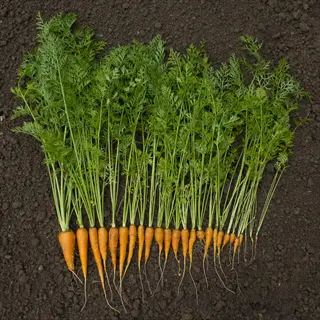
Nantes (Scarlet Nantes)
- Shape: Cylindrical with a blunt, rounded tip, growing about 6 to 7 inches (15 to 18 cm) long and very uniform.
- Best for: Beginners and fresh snacking, thanks to a sweet, crisp, tender texture that holds up well.
- Soil fit: Does well in loose beds and tolerates a range of garden soils better than the longest types.
- Maturity: A reliable mid-season carrot, typically ready toward the shorter end of the 55 to 100 day range.
- Why grow it: Among the most forgiving and consistently sweet carrots, which is why it is a classic home-garden pick.
- Tip: A great default if you are growing carrots for the first time and want dependable results.
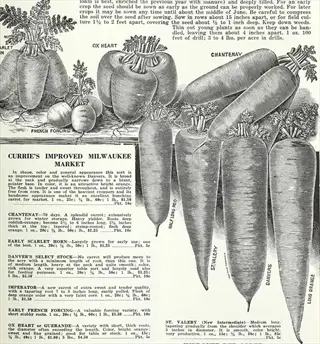
Danvers
- Shape: Tapered and broad-shouldered, narrowing to a point, sturdy and around 6 to 8 inches (15 to 20 cm) long.
- Best for: Storage and cooking, with strong flavor that holds well over the winter months.
- Soil fit: Its strong roots push through heavier soils better than delicate types, a dependable all-rounder.
- Maturity: A classic main-season carrot that sizes up well when given even moisture and room to grow.
- Why grow it: A heritage favorite that balances flavor, yield, and toughness in less-than-perfect soil.
- Tip: Pick for a big fall harvest you plan to store rather than eat all at once.
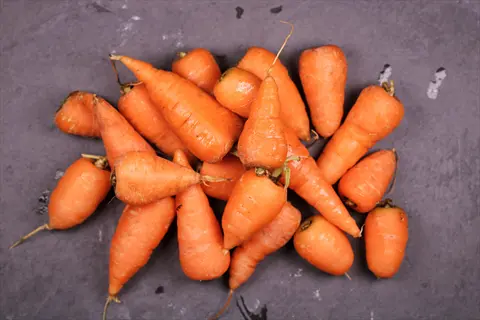
Chantenay
- Shape: Short, broad, and stubby, usually 4 to 5 inches (10 to 13 cm) long with thick shoulders.
- Best for: Shallow, heavy, or rocky soils where longer carrots would fork or struggle to grow straight.
- Soil fit: One of the best choices for clay or container gardens because it does not need deep ground.
- Maturity: Vigorous and quick to bulk up, giving a solid harvest even in tougher conditions.
- Why grow it: Solves the forked-root problem for gardeners without deep, loose, sandy soil.
- Tip: Reach for this type if your in-ground soil is dense or stony.
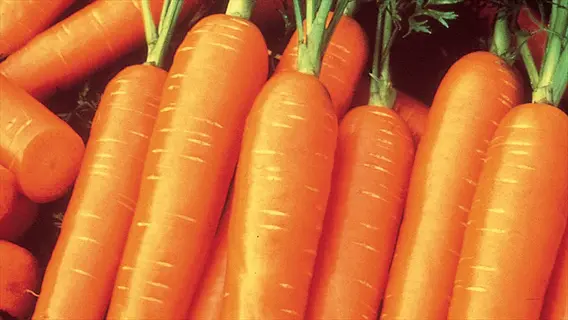
Imperator
- Shape: Long, slender, and pointed, often 8 to 10 inches (20 to 25 cm), the classic supermarket carrot look.
- Best for: Deep, loose, stone-free sandy loam where the long taproot can grow down without obstruction.
- Soil fit: Needs the deepest, most carefully prepared soil of the common types to grow straight.
- Maturity: Tends toward the longer end of the days-to-harvest range and rewards patient soil prep.
- Why grow it: Produces the long, elegant roots many gardeners aim for once their soil is ready.
- Tip: Only choose this if you have loosened a deep, stone-free bed; otherwise expect forking.

Parisian (Round)
- Shape: Small and round, about the size of a golf ball, an unusual heirloom-style carrot.
- Best for: Containers, shallow beds, and very heavy or rocky soil where nothing long would thrive.
- Soil fit: The top choice when soil depth is the limiting factor, since it barely needs any.
- Maturity: Quick to harvest and fun for small-space growers and children to pull.
- Why grow it: Turns impossible soil into a workable carrot crop and adds variety to the plate.
- Tip: Ideal for pots at least a few inches deep on a balcony or patio.
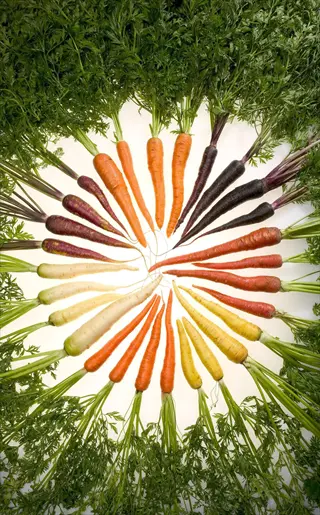
Colorful Carrots (Cosmic Purple)
- Shape: Varies by type, with purple, red, yellow, and white roots alongside familiar orange.
- Best for: Adding color to meals and showing that orange is only one of many natural carrot colors.
- Soil fit: Grow like their orange counterparts, with depth needs depending on the specific shape.
- Maturity: Comparable to standard carrots, though pigments can shift slightly with cooking.
- Why grow it: A standout at the table and proof that color reflects the cultivar, not ripeness.
- Tip: Mix a rainbow blend for a striking harvest and a fun project with kids.
If you are still unsure, start with Nantes. It is sweet, forgiving, and grows well in a wide range of garden soils, so it rewards first-time growers. Once you know your soil, branch out to Danvers for winter storage or a round Parisian type for pots and clay.
And do not write off the rainbow blends as a gimmick. Color comes from the cultivar and its pigments, not ripeness, so a purple or yellow root is just as ready as an orange one. Mix a few in and you get a harvest that looks as good as it tastes.
Pests, Problems and Harvest
Most carrot pests and root defects trace back to one or two simple causes you can fix in the bed. Forked carrots come from stones, compacted ground, or fresh manure that splits the growing root in two. Cracking shows up when soil moisture swings from dry to soaked, so steady water all season is your best guard.
The pest that does the most damage is carrot fly, whose larvae tunnel through the roots and leave brown trails inside. The RHS rates a fine insect-proof mesh or row cover as the most effective barrier, since it stops the adult fly from laying eggs near your plants. Cover the bed right after sowing and you sidestep the problem before it starts.
Knowing when to harvest carrots comes down to days and size. Most varieties are ready 55 to 100 days after sowing. Lift them before the roots pass about 1 to 1.5 inches (2.5 to 4 cm) across. Bigger than that and they turn woody and lose their sweet snap.
The bright orange shoulder of a carrot pushed up through the raised bed soil last fall, just after the first hard frost. I cleared the leaves, worked my fingers down beside the root, and eased it up with a clean snap and a spray of cold dirt. That one tasted sweeter than anything I pulled in summer, and the rest of the row went the same way over the next week.
Never pull carrots by the tops, because the foliage snaps off and leaves the root stuck in the ground. Loosen the soil with a fork first, then lift from the base of the root. For fall crops, leave them in place until after a good frost, which deepens the flavor and makes the wait worth it.
Storing carrots the right way keeps your crop crisp for months. Twist or cut off the green tops, then hold the roots at 32°F (0°C) with 90 to 95% humidity, and they keep for 4 to 5 months. A box of damp sand in a cold garage works well, and you can even leave mulched carrots in the ground over winter in milder zones.
Do not store carrots next to apples or pears. The ethylene gas the fruit releases turns the roots bitter over time.
5 Common Myths
Carrots grow best in rich, heavily fertilized soil packed with nitrogen for big, fast, leafy top growth.
Too much nitrogen drives leafy tops and forked, hairy roots. Carrots prefer loose, moderately fertile soil with low nitrogen.
You can start carrots indoors in pots and transplant the seedlings into the garden like tomatoes.
Carrots must be direct seeded. Transplanting damages the taproot and produces stunted, forked, or misshapen roots.
Carrots grow well all summer long and actually taste sweetest when grown in the hottest months.
Carrots are a cool-season crop. High summer heat slows growth and causes bitter, off flavors; cool weather and frost build sweetness.
If your carrots come up thick, you can leave them crowded and they will all size up just fine.
Crowded carrots compete and stay small, twisted, or stunted. Thinning to two to three inches apart lets each root size up.
Carrots are always bright orange, so any other color means the carrot is unripe or has gone bad.
Carrots come in purple, red, yellow, and white too. Color reflects the variety and pigments, not ripeness or spoilage.
Conclusion
Good carrot growing follows one clear path from seed to storage. You loosen the soil, sow shallow, keep the bed damp through germination, thin the seedlings, then feed and water until harvest. Pick the right variety for your bed and you fill the season from spring through a late fall crop.
The numbers behind that path stay simple. Aim for deep, loose soil at pH 6.0 to 7.0, then sow the seed a quarter inch deep. Carrots take 14 to 21 days to sprout, so stay patient. Thin them to 2 to 3 inches apart once they stand a few inches tall. Most roots are ready 55 to 100 days after sowing, depending on the type you planted.
Strong growing carrots comes down to three things you control, not luck. You need loose, stone-free soil so the roots run straight. You need uniform soil moisture so they swell without cracking or turning bitter. And you must direct sow carrots in the bed, because the tap root snaps if you try to move a seedling. Get those three right and the rest takes care of itself.
Do not chase a perfect crop on your first try. A forked or stubby carrot tastes just as good as a magazine-straight one, so plant, pull, and learn from what comes up. For the sweet carrots everyone hopes for, sow a second batch in late summer and leave it in the ground until after a hard frost. The cold turns those roots into the best you will grow all season.
Glossary
- Direct sowing
- Planting seeds straight into the garden bed rather than starting them indoors, which carrots require.
- Germination
- The stage when a seed sprouts and the first seedling emerges, taking 14 to 21 days for carrots.
- Sandy loam
- A loose, well-draining soil that blends sand, silt, and a little clay, ideal for letting carrot roots grow straight.
- Side-dressing
- Applying a small amount of fertilizer alongside growing plants partway through the season.
- Soil crusting
- A hard surface layer that forms after rain dries, which can trap delicate carrot seedlings before they break through.
- Soil pH
- A measure of how acidic or alkaline soil is, with carrots growing best in the slightly acidic to neutral range of 6.0 to 7.0.
- Taproot
- The single main root that grows straight down and becomes the edible carrot, which is why root disturbance ruins the shape.
- Thinning
- Removing extra seedlings so the ones left behind have enough space to grow to full size.
External Sources
Frequently Asked Questions
How long do carrots take to grow?
Most carrots are ready to harvest 55 to 100 days after sowing, depending on the variety and growing conditions.
What month should you plant carrots?
Plant in spring once the soil reaches at least 45F, then again in mid to late summer for a fall harvest.
Do carrots need a lot of water?
Carrots need consistent, uniform moisture rather than heavy watering. Aim for steady moisture in the root zone.
Why are carrots difficult to grow?
Carrots are tricky mainly because of slow germination, soil crusting, stony soil, and inconsistent watering.
What should not be planted near carrots?
Avoid planting dill and fennel near carrots, as they compete poorly and can cross or attract problems.
Do coffee grounds help carrots grow?
Coffee grounds add some organic matter when composted first, but heavy raw use can harm carrot roots.
Will carrots grow back every year?
No. Carrots are biennials grown as annuals, so you sow fresh seed each season rather than expecting regrowth.
How many carrots grow from one seed?
One seed grows one carrot. Because seeds are tiny and sown thickly, thinning seedlings is essential.
Can I plant carrot seeds in October?
In mild climates you can sow in October for an overwintered crop, but cold regions usually miss the window.
How do you grow carrots for beginners?
Loosen deep soil, direct sow seeds shallowly, keep the surface moist, thin the seedlings, and harvest on time.