
Introduction
The corkscrew rush stops people in their tracks at the garden center. Its curly green stems twist and coil like someone sat down and curled each one by hand. There are no flat leaves to speak of, just dozens of contorted spirals that tangle into a wild green mound. This guide gives you the full, source-backed care plan that this odd little plant deserves.
Here is the one fact that every plant authority agrees on. The corkscrew rush is a wetland plant that needs constantly moist soil to wet ground, and it stresses fast when it dries out. The team at UW Botanic Gardens is blunt about it being easily drought stressed. The plant stays small too, reaching about 1 to 1.5 feet (30 to 45 cm) tall and wide, according to NC State Extension. So you get a compact clump, not a sprawling monster.
Most guides you find online stop right there, with the same thin basics. You get more here. You will learn the troubleshooting you need when your tips turn brown. You will get a clear answer on whether the plant is safe for pets. You also get a real seasonal calendar with a winter plan. And you will see how it works as a true wetland species.
It helps to know what you are growing first. Corkscrew rush is an ornamental form of the common soft rush. Botanists call the species Juncus effusus. The curly type you buy is the cultivar Juncus effusus Spiralis. Growers bred it for those twisted stems, not for its tiny summer flowers. Those blooms are easy to miss. That is why you will see it sold as a specimen plant and a favorite for rain gardens and pond edges.
Ahead you will learn what this plant is, plus its needs for light, water, and soil. Then we cover planting it in pots and ponds. After that comes seasonal and winter care, fixes for browning and spread, the top cultivars, and the plant's wider wetland role.
What Is Corkscrew Rush?
Corkscrew rush is a plant with a long name. Its full name is Juncus effusus Spiralis. It is a twisted form of the common rush you find in wet meadows and at the edge of a pond. People call the plain species soft rush or common rush, and it sits in the family Juncaceae. You grow this one for its stems, not its flowers.
Here is the part that trips up new growers. There are no true leaves at all. Those green corkscrew stems are bladeless basal sheaths, so what looks like foliage is really the stem itself. Each stem runs about 1/4 inch (6 mm) thick, spirals tight near the crown, and uncoils a little as it stretches out.
Think of the clump as a tangle of green springs erupting from the ground. Some people picture party ribbon that someone ran a scissor blade down. It mounds to about 1 to 1.5 feet (30 to 45 cm) tall and just as wide, which makes it a tidy, rounded plant for the front of a wet bed.
The summer flowers are nothing to plan around. From July to September you get small yellowish-green to pale brown cymes under 1 inch across, and most people never notice them. That is why this herbaceous perennial works as a specimen for stem texture rather than a flowering show.
As an ornamental cultivar, your corkscrew rush keeps the same wetland roots as its parent. The straight species grows wild in many regions. You find it across North America, South America, Europe, Africa, and Asia, so it is a marsh plant the whole world knows. The leafless stems are the only thing the breeders twisted.
Light, Water and Soil Needs
A lavender and a rosemary went into the damp back corner of my yard, the spot where the lawn dips toward the downspout. Both rotted out by midsummer. Then I dropped a single corkscrew rush into that exact soggy patch, and the thing took off and stayed lush all season.
That contrast is the whole secret to corkscrew rush care. This is a marsh and wetland plant, so the way you kill it is by letting it dry out, not by keeping it wet. If you treat it like a drought-tolerant ornamental, you will lose it fast.
It wants constantly moist soil that never fully dries, and it will happily sit in standing water over the crown. Give it full sun for 6 or more hours a day and the spirals stay tight and the clump grows dense. It tolerates partial shade of 2 to 6 hours, but the form can loosen up and look floppy. Soil texture matters little, since clay, loam or sand all work as long as the ground stays damp at a neutral pH of 6.0 to 8.0.
NC State Extension puts hard numbers on all of this. The plant can grow with 1 to 6 inches (2.5 to 15 cm) of water sitting over its crown. It even shrugs off occasional flooding along pond margins. So the question is never whether you are watering too much. The real risk is the soil drying out between waterings and stressing the roots.
Corkscrew rush is not susceptible to many pests or diseases but is easily drought stressed.
Planting in Pots and Ponds
Planting corkscrew rush starts with one rule that shapes every choice you make. This is a wetland plant, so it wants its roots wet at all times, whether you grow it in a pot or sink it into a pond. Get the water right and the rest is simple.
It earns a spot as a pond plant because the straight species holds soil along banks and margins. That is why nurseries sell it for water features in the first place. It suits rain gardens, pond edges, and boggy corners where most plants would rot, and it asks for almost nothing in return.
For container gardening, reach for a 2-gallon container or larger and fill it with a mix that holds moisture rather than one that drains fast. A pot with a saucer kept full of water works well, since the goal is to mimic a soggy bog. The water garden crowd often sinks the whole pot into the pond so it stays drenched.
Planting depth matters more than people expect with this plant. In a bed, set the crown level with the soil surface so it sits even with the ground. In a pond, you can let 1 to 6 inches (2.5 to 15 cm) of water sit over the crown and it will thrive. Follow these steps and you will not go wrong.
Choose a constantly moist to wet site in full sun to part shade, such as a pond margin, rain garden, bog, or a saucer-kept container.
Use a 2-gallon or larger pot of moisture-holding mix, or loosen a wet bed; for ponds, sink the potted plant so water can sit over the crown.
Place the plant so the crown sits level with the soil surface, or with 1 to 6 inches (2.5 to 15 cm) of water above it in a pond.
Soak the planting until the soil is saturated; this wetland plant cannot be overwatered in the way most ornamentals can.
Check moisture often, especially in containers, which dry out fast and need very frequent watering through the growing season.
Corkscrew rush creeps by rhizomes and self-seeds, so sink the plant in a pot with the lip just above the soil line to keep the clump from escaping into the pond or bed.
A 2-gallon pot of corkscrew rush sits by my back step where I catch it from the kitchen window each morning. All summer it begged for water near-daily, and a day or two of heat left the soil pulling away from the sides. The same plant, split off and sunk into the wet corner of the yard, barely asked for a drop. I watered the pot 20 times for every once I touched the clump in the ground.
Pruning and Seasonal Care
Here is the good news about seasonal care for this plant. You barely have to touch it. The pruning routine is light, and most of the year your job is just keeping the soil wet.
The part that trips up new growers is its semi-evergreen habit. In warm-winter zones the spiraled stems stay green all year. In cooler zones the foliage yellows, browns, and dies back as the plant slips into dormancy. NC State Extension confirms both behaviors, so what you see in winter depends on your local zone.
How much dieback you get changes with where you live. NC State lists the cultivar at zones 5a to 11b, while UW Botanic Gardens rates the straight species across zones 1 to 11. So expect more browning the colder your winters run, and treat heavy dieback in a cold zone as normal.
There is no deadheading to fuss over and no complex schedule. The only routine cut is to prune corkscrew rush once a year. You trim the dead or browned stems in late winter to very early spring, right before new growth starts.
Late winter to early spring
Cut back browned or dead stems before new growth begins so fresh green spirals can fill the clump cleanly.
Spring
New shoots emerge from the crown. Keep soil constantly moist and divide crowded clumps now if needed.
Summer
Maintain steady moisture, water containers very frequently, and watch for self-seeding around the clump.
Fall
Growth slows. Keep the soil wet and leave foliage in place to protect the crown through winter.
Winter
Mostly hands-off. It stays evergreen in mild zones but yellows and dies back in colder zones until spring.
Notice how the work clusters in spring. That one early cut, plus dividing crowded clumps, sets up the whole season of fresh green spirals.
The smartest move for winter care is to leave dead foliage standing instead of cutting it in fall. Those browned stems shield the crown from cold, and you clean them up in spring anyway. Cut too early and you strip away that natural protection right when the plant needs it most.
Browning and Spread Problems
Seeing your corkscrew rush turning brown sets off alarm bells, but the good news lands fast. NC State Extension reports no significant pest or disease problems with this plant. So when the stems go brown, the cause is almost always how it is grown, not some bug or blight you have to hunt down.
The first suspect is dryness. This is a wetland plant, and UW Botanic Gardens stresses it is prone to drought stress, so it browns the moment the soil dries out. Before you blame anything else, check the water. Restoring constant moisture fixes most cases of browning stems on its own.
A few other culprits show up too. Normal cold dieback hits the whole clump over winter, salt buildup crisps the tips in pots, and the plant spreads hard through creeping rhizomes and self-seeding. The list below pairs each cause with a clear fix so you can match what you see to what you do.
Browning from drought stress
- Cause: The soil was allowed to dry out, and because corkscrew rush is easily drought stressed it responds by browning its tips and stems faster than most ornamentals.
- Signs: Stems pale, dry from the tips downward, and may flop or lose their tight spiral when the plant has gone too long without enough water.
- Fix: Restore constant moisture immediately, move containers to a saucer kept filled with water, and trim the worst browned stems so fresh growth can take over.
Normal cold dieback
- Cause: In cooler zones the semi-evergreen foliage naturally yellows, browns and dies back over winter, which is a seasonal response rather than a sign of disease.
- Signs: Widespread browning that arrives with cold weather and affects the whole clump fairly evenly, often after the first hard frosts of the season.
- Fix: Leave the foliage through winter for crown protection, then cut the browned stems back in late winter to very early spring before new growth begins.
Salt or mineral buildup
- Cause: Containers and pots without drainage can accumulate salts and minerals over time, especially when only topped up rather than occasionally flushed with clean water.
- Signs: Browned or crispy stem tips in an otherwise well-watered potted plant, sometimes with a visible crust on the soil surface or pot rim.
- Fix: Periodically flush the pot with plenty of clean water to leach out built-up salts, and refresh the potting medium if buildup keeps returning.
Aggressive spread
- Cause: Corkscrew rush spreads by creeping rhizomes and self-seeding, the single most consistent caution across growing references, and clumps can expand well beyond their original footprint.
- Signs: New shoots appearing outside the intended clump, seedlings popping up nearby, and the plant slowly crowding pond margins or neighboring plants.
- Fix: Sink the plant in a buried pot with the lip above the soil to contain rhizomes, divide crowded clumps in spring, and remove unwanted seedlings early.
Spread is the one caution that shows up in most reliable sources, so be straight with yourself about it. The plant is native across much of its range, but it is a vigorous spreader, not some dainty clump that stays put. Calling it invasive overstates the case. Treat it as a plant you just need to keep contained.
The buried-pot trick does most of the work here. Sink it with the lip just above the soil and the spreading rhizomes stay corralled. Pull stray seedlings while they are small and you stop self-seeding before it gets ahead of you. Stay on top of those two habits and browning, dieback, and spread all become easy to manage.
Cultivars and Wetland Role
From my kitchen window the corkscrew rush I planted three springs ago sits in the wet back corner where nothing else would take. That soggy patch killed two hostas and a fern before this clump moved in. Now it holds a year-round tangle of green springs that catches frost in winter and shrugs off the puddles that drowned everything else.
Most of what you buy traces back to one plant, but the corkscrew rush cultivars on the shelf carry different names. The classic is 'Spiralis', sold beside selections like Big Twister and Curly Wurly. They look close enough that you should pick by the stem character you want, not the label.
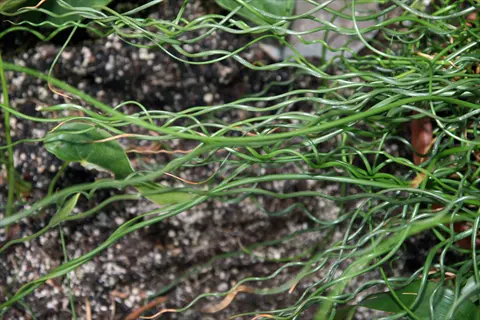
Juncus effusus 'Spiralis'
- Habit: This is the classic corkscrew rush, forming a clump of tightly coiled, leafless green stems that mound to 1 to 1.5 feet (30 to 45 cm) tall and wide.
- Look: The stems spiral and tangle like green springs, giving year-round sculptural texture that stays interesting long after the insignificant summer flowers fade.
- Best use: Works beautifully as a specimen or accent in a rain garden, pond margin, or moisture-holding container where it can be seen up close.
- Light: Grow it in full sun for the tightest curls and densest clump, accepting part shade where the form can loosen a little.
- Care: Keep it constantly moist, never letting the soil dry, since this is the cultivar most widely sold and the one most care advice describes.
- Note: Treat the authoritative 1 to 1.5 foot (30 to 45 cm) mature size as your planning figure for this selection.
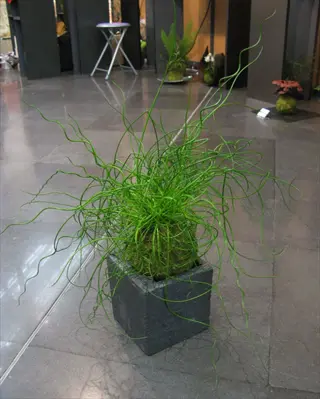
Named selections such as 'Big Twister' and 'Curly Wurly'
- Variety: Garden retailers commonly sell selections including 'Big Twister', 'Curly Wurly' and 'Quartz Creek', each offered for slightly different stem character.
- Look: These selections share the same signature corkscrew stems, marketed for variations in twist, height or vigor rather than dramatically different care.
- Best use: They fill the same roles as 'Spiralis' in water features, bog gardens and containers, so choose by the look you prefer and what is locally available.
- Care: Give all of them the same constantly moist soil and full sun to part shade, since they are selections of the same wetland species.
- Buying tip: Because mature sizes quoted for these names vary widely between sellers, treat retailer height claims as approximate rather than authoritative.
- Note: Confirm the specific selection's habit with the grower, as naming overlaps and is not always consistent across nurseries.
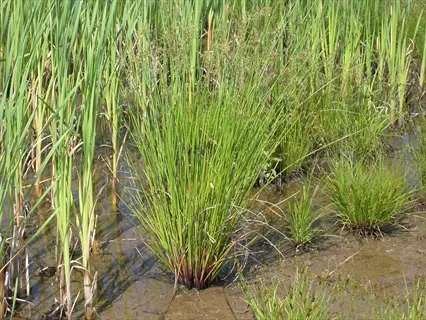
The straight species as a wetland workhorse
- Identity: The corkscrew cultivars are bred from the common soft rush, Juncus effusus, a wetland species native across temperate regions worldwide.
- Ecology: Researchers treat the species as a model wetland plant, studied for contaminant removal, nitrogen remediation and metal accumulation in constructed wetlands.
- Garden value: That same filtering ability is why rushes earn a place in rain gardens and pond margins, doing real ecological work beyond looking good.
- Spread: The species spreads readily by rhizomes and seed, which makes it effective for soil retention but also means it needs containment in small gardens.
- Growth: Its growth traits, including height and biomass, respond strongly to soil nitrogen, so richer wet soils tend to produce larger, more vigorous plants.
- Note: Grow the ornamental corkscrew cultivars for display, but understand they carry the same wetland biology as their wild parent.
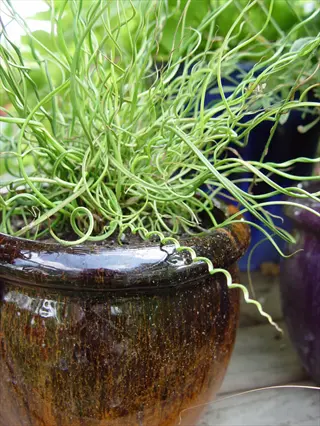
Container and rain garden displays
- Setting: Corkscrew rush shines as a specimen or accent in a moisture-holding container, a rain garden, or along a pond margin where its curls draw the eye.
- Pairing: It mixes well with other moisture-loving plants in a bog or rain garden, providing fine, curling texture against broader leaves and upright foliage.
- Container note: In a 2-gallon or larger pot it needs very frequent watering, so a pot that holds moisture or sits in a filled saucer keeps it looking its best.
- Year-round value: Because it keeps structure through the seasons and stays evergreen in mild zones, it earns its spot long after summer flowers fade.
- Placement: Set it where it can be seen up close, since the appeal is in the detail of the spiraling green stems rather than any showy bloom.
- Note: Treat it as a feature plant for wet spots rather than a filler, and give it the constant moisture every display use depends on.
The pretty curls hide real work. The parent plant, common soft rush, is a model wetland plant that researchers study for cleaning dirty water. A 2019 study in PLOS ONE tested how it pulls contaminants and strips nitrogen. It also stores metals, and its growth tracks the nitrogen in the soil.
That filtering knack is why you should give a rush a spot in a rain garden and not just a flower bed. The same phytoremediation that scientists test in built wetlands runs in the wet corner of your yard. So when you tuck one in beside a pond or a downspout, you get sculpture and a small water filter in one clump.
5 Common Myths
Corkscrew rush is an annual that you have to replace every single year because it dies off completely each winter.
It is a hardy perennial that returns yearly, staying evergreen in mild zones and resprouting from the crown in cold ones.
Corkscrew rush will dry out and grow best if you treat it like a typical low-water ornamental grass in dry soil.
It is a wetland plant that needs constantly moist to wet soil and is easily drought stressed, so it should never dry out.
Corkscrew rush is poisonous, so it is unsafe to grow anywhere that curious dogs, cats, or children might reach it.
Botanical garden references report it non-toxic to pets and people, though it is still wise to discourage any chewing or ingestion.
When corkscrew rush stems turn brown, the plant has a disease or pest infestation that needs a chemical treatment.
It has no significant pest or disease problems, so browning is almost always cultural, usually drought stress or normal cold dieback.
Corkscrew rush stays in a neat clump and never spreads, so it is safe to plant directly in a small pond margin.
It spreads aggressively by creeping rhizomes and self-seeding, so sinking the pot in soil is the reliable way to contain it.
Conclusion
The whole care story for corkscrew rush comes down to one habit. Keep it wet. This is a wetland perennial, so it wants constantly moist soil and never minds a soggy spot. Grow it in full sun to part shade and give it room to reach 1 to 1.5 feet (30 to 45 cm) tall and wide. Do that and you get those tightly curly green stems with almost no work.
What makes this plant so forgiving is that it has no significant pest or disease problems. That changes how you troubleshoot it. When the stems brown or fade, the cause is almost always cultural, not a bug or a blight, so check the moisture first. Every browning plant I have rescued came back after I moved it somewhere wetter and let the roots drink. Dry roots are the usual culprit, and a good soak fixes most of it. In a pond, set the crown under 1 to 6 inches (2.5 to 15 cm) of water and it will be happy.
Two things deserve your long-term attention. The first is that constant water. The second is containment, because it spreads hard by rhizome and seed, so bury the pot or give it a clear edge. On the safety side, botanical garden references report it as non-toxic to pets and people. It still makes sense to keep curious dogs from chewing it.
That small amount of watering attention buys you a lot. Corkscrew rush turns a boggy edge, a pond margin, or a rain garden into a year-round sculptural feature. It is the rare low maintenance plant that looks strange in the best way, and the wet, awkward corners other plants hate are exactly where it thrives.
Glossary
- crown
- The base of the plant where the stems meet the roots, the point used as a reference for planting depth.
- cultivar
- A plant variety produced by selective breeding and grown for a specific desirable trait, such as the twisted stems of corkscrew rush.
- cyme
- A branched flower cluster in which the central flowers open first, the form taken by corkscrew rush's tiny summer blooms.
- marginal plant
- A plant grown at the wet edge of a pond, with its crown at or just below the water line.
- phytoremediation
- The use of plants to absorb or filter pollutants such as metals and excess nutrients out of soil or water.
- rhizome
- An underground stem that spreads sideways and sends up new shoots, which is how corkscrew rush expands into a clump.
- self-seeding
- When a plant drops its own seeds that sprout into new plants nearby without being planted on purpose.
- semi-evergreen
- A plant that keeps its foliage in mild winters but browns and dies back in colder ones, then regrows in spring.
External Sources
Frequently Asked Questions
Does corkscrew rush come back every year?
Yes. Corkscrew rush is a hardy perennial that returns each year, staying evergreen in mild zones and dying back then resprouting in cold ones.
Is corkscrew rush a pond plant?
Yes. It is a wetland marsh plant that thrives in pond margins and can grow with 1 to 6 inches of water over its crown.
Can you grow corkscrew rush as an indoor plant?
Yes, with effort. It survives indoors in a bright spot but needs constant moisture, so it works best in a pot that holds water.
Is corkscrew rush toxic to dogs?
Botanical garden references report corkscrew rush as non-toxic to pets and people, though you should still discourage dogs from chewing it.
Should you prune corkscrew rush?
Light pruning helps. Trim dead or brown stems in late winter to very early spring so fresh green spirals can fill in.
How deep do you plant corkscrew rush?
Plant it so the crown sits level with the soil surface. In ponds, keep 1 to 6 inches of water over the crown.
How do you care for corkscrew rush in winter?
Keep the soil moist, leave foliage until spring for protection, and cut back browned stems in late winter before new growth.
What problems does Juncus cause in the garden?
Its main problem is aggressive spread by creeping rhizomes and self-seeding, which you can control by sinking the pot in the soil.
Why is my corkscrew rush turning brown?
Browning is usually drought stress, since this plant is easily drought stressed, or normal cold dieback rather than any disease.
What are the benefits of corkscrew rush?
It adds year-round sculptural texture, suits wet problem spots and rain gardens, and is a low-maintenance, pest-free wetland perennial.