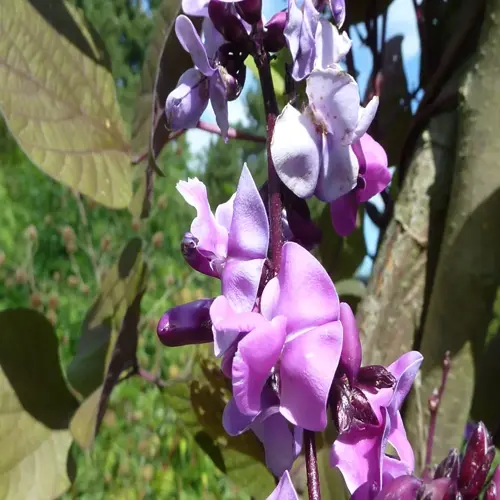

A new moonflower vine showed up on the arbor by my back porch one June. It climbed the same post where last year's plant had blackened and died after the first hard frost. I pulled those dead stems in October and wrote the spot off. The vine that came back grew from a seed the old plant had dropped. It did not grow from the frozen roots. A moonflower vine is perennial only where winters stay warm. So the moonflower vine perennial habit shows up just in mild zones. Whether yours returns each year comes down to your zone, and not much else.
In my zone 6 garden the old roots were dead and gone. What looked like a comeback was a fresh seedling. This is the part that trips people up when they ask if a moonflower come back every year. In cold gardens the plant does not live through winter. Its dropped seed does the work. The seed sprouts once your soil warms past 60°F (16°C).
The plant here is Ipomoea alba, a tender perennial from warm parts of the Americas. It cannot take a freeze. One frost kills the leaves, stems, and roots in a single night. So most of the country grows it for just one season. Yet the moonflower vine perennial root lives for years where the weather stays mild.
Your USDA hardiness zone is the one number that settles the question. Here is what to expect at each level.
In zones 10 to 12 your vine acts as a real perennial. The roots thicken into a tuber under the soil. Each spring the plant pushes new growth from that same crown. Frost never reaches deep enough to kill it. If you garden in south Florida or along the Gulf Coast, you will see the same plant climb its trellis year after year. You never have to replant it.
Everywhere colder, you have three honest options. The simplest is to grow it fresh as an annual. You start new seeds each spring and let the vine die at frost. Soak the hard seeds overnight, or nick them with a file, so they sprout faster for you. Your second option leans on the plant itself. It self-seeds well, and the dropped seeds often sprout the next year right where your old vine stood. That is how mine came back on the arbor.
Your third option is overwintering moonflower by saving the tuber. This works best in zones 8 and 9, where the root has time to grow big enough. Wait until the first light frost browns the leaves. Then dig the tuber, brush off the soil, and let it dry for a day. Store it in a box of dry peat or sand. Keep that box somewhere cool and dark that stays above 40°F (4°C). Replant it after your last spring frost, and it picks up where it left off.
Check your zone before you plant, then match your plan to it. If you sit in zones 10 to 12, plant once and let it ride for years. In zones 8 and 9, dig and store the tuber for a faster start next June. In colder gardens, save a handful of seed each fall, or just trust the plant to drop its own. To collect seed, let a few flowers fade and form fat pods, then pick them once they turn brown and dry. That dropped seed is what carries the vine back to your arbor, frost or no frost.
Read the full article: Moonflower Vine Growing and Care Guide