
Introduction
I planted my first ivy geranium in a porch basket and forgot it for a week in July. It came back covered in bloom, stems trailing down in long ropes of glossy leaves and color. One plant can turn a plain railing into a wall of bloom. This is the trailing geranium you see in Swiss window boxes. A Balcon type can spill about two feet (60 centimeters) from one box, even on the shady north side of a house.
The plant behind that show is Pelargonium peltatum. It is a tender perennial from the Cape Province of South Africa. Growers have bred it into more than 75 types over the years. So the ivy leaf geranium you buy could be any one of dozens. The thick, waxy, shield-shaped leaves set it apart from the upright zonal kind most people picture.
Here is the problem with most care guides online. They repeat the same six steps. They never explain why the leaves break out in corky bumps. They never name a real type you can buy. And they never tie watering or light to the climate you live in. This guide fixes all three. You get sourced answers on edema, named series like Balcon and Cascade, and care that shifts with your heat and your zone.
I will walk you through the whole plant in order. We start with the varieties worth growing, then light and heat. Next comes watering and the edema problem. It hits these plants harder than any other geranium. After that you get feeding and pruning, pests and pet safety, and how to carry a favorite plant through winter. Get the trailing habit right, and one hanging basket can carry your whole porch all summer.
Ivy Geranium Care Basics
Good ivy geranium care works like a recipe with four key ingredients in balance. You manage light, water, temperature, and soil together, and too much of any one will spoil the result. Water is the one that trips up most people, so go light on it.
This plant comes from the Cape region of South Africa. There the days are bright and the nights stay cool. That origin shapes how it grows. Mild weather, not maximum heat, grows the best plants, so your baskets often look their finest in late spring and early fall.
The ivy geranium light requirements shift with the temperature. Give the plant full sun at 65 to 80°F (18 to 27°C), per Iowa State Extension. Once the air climbs above 85°F (29°C), move it to partial shade in the afternoon. Too much heat turns the leaves small and cup-shaped, and the blooms shrink too.
Soil is the other half of the water story. These trailers want well-draining soil with a pH of 5.3 to 6.0, a range UMass Extension recommends. A fast-draining mix lets the top dry between waterings, which is the single best defense against root rot. The quick guide below sums up the basics at a glance.
The single most common ivy geranium mistake is overwatering. Soggy, poorly drained soil triggers edema and root rot, so always let the top of the mix dry slightly before watering again.
Keep one more thing in mind as you set up. Ivy geraniums are heavy feeders that bloom from late spring into fall, so they need steady food across a long season. Nail these four basics first, and the deeper sections on watering, feeding, and pests will all make more sense.
Best Ivy Geranium Varieties
One June my south-facing window box went from a bare rail to a solid curtain of red blooms in about six weeks. The switch was simple. That summer I swapped my old trailing geranium for a Balcon-type cascade. The rail filled in front to back.
The year before, a traditional type grew long and leggy in that same box. It threw a few big flowers, but the stems stretched out bare and the rail showed through the gaps. The Balcon plant stayed dense from the start and never left a hole.
Iowa State counts more than 75 commercial cultivars, so the choices get confusing fast. The trick is to pick by how you garden, not by the label. Below I sort the main ivy geranium varieties into four groups, each with the real series names attached.
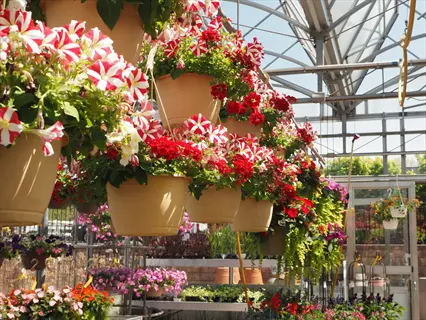
Traditional Ivy Geranium
- Habit: Long, loose trailing stems with classic shield-shaped peltate leaves that spill freely over basket edges.
- Flowers: Larger individual blooms in white, pink, red, lavender, and gold, carried in loose umbels through summer.
- Best use: Roomy hanging baskets and tall containers where the stems have space to cascade naturally.
- Strength: The biggest, showiest single flowers of the group, ideal when you want bold color up close.
- Watch for: Stems can grow leggy and brittle, so occasional pinching keeps the plant full rather than stringy.
- Good to know: This is the standard type most garden centers stock under the plain ivy geranium label.
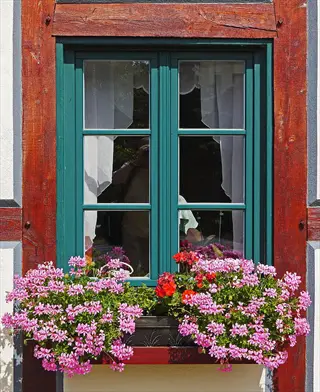
Balcon and Cascade Series
- Habit: Mini-cascade growth with closely spaced leaves and dense, trailing stems that form a solid sheet of color.
- Flowers: Smaller blooms than traditional types but produced in far greater numbers for a mass-of-bloom effect.
- Best use: Window boxes and balcony rails, the famous look of Swiss and European window displays.
- Strength: Exceptionally floriferous and self-cleaning enough to stay tidy with little deadheading.
- Origin: The Balcon group is an alpine cross of the ivy vining and bush zonal geranium per Colorado State.
- Good to know: They bloom a little later in the season but reward the wait with the heaviest flowering.
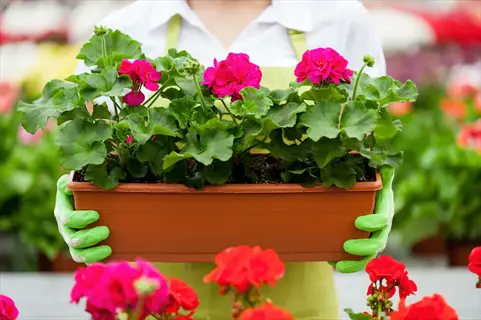
Miniature and Dwarf Types
- Habit: Compact, shorter trailing stems that stay neat in small pots and mixed plantings.
- Flowers: Proportionally sized blooms that keep small containers colorful without overwhelming companions.
- Best use: Small balcony pots, table planters, and tight spaces where a full-size trailer would be too vigorous.
- Strength: Easy to manage and slow to outgrow their containers, so they need less pinching.
- Pairing: They mix well with other compact container flowers without crowding them out.
- Good to know: A smart pick for first-time growers testing ivy geraniums in a modest space.
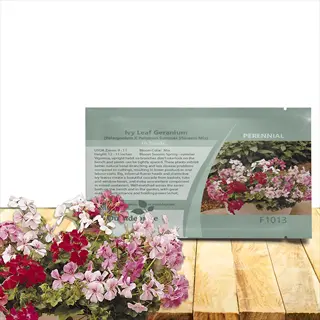
Seed Series and Hybrids
- Examples: Tornado and Summer Showers are seed-grown series, and ivy-zonal hybrids blend trailing and upright traits.
- Flowers: Reliable color across a uniform batch, useful when filling several baskets to match.
- Best use: Gardeners who want to grow many plants affordably from seed sown indoors in January per Iowa State.
- Strength: Predictable, even growth and the chance to grow uncommon shades from a single packet.
- Hybrid note: Ivy-zonal crosses offer the heat tolerance of zonals with the trailing look of ivy types.
- Good to know: Seed types take longer to reach flowering size than rooted cuttings from named cultivars.
If you want the famous European look, reach for the Balcon series first. Colorado State explains the group as an alpine cross of the ivy vining geranium and the bush zonal geranium. That cross gives you closer leaf spacing and a heavier flush of bloom than the older types.
These Balcon plants do bloom a little later and the flowers run smaller. You trade size for sheer numbers. A single plant can trail about two feet (60 centimeters) from a window box. It stays packed with color the whole way down. A named red like Barrock from Colorado State shows the look well.
For the best ivy geranium for hanging baskets, your choice comes down to space. A roomy basket with depth to spare suits a traditional trailer or a vigorous cascade geranium. A tight balcony pot does better with a dwarf type that stays neat. The expert below sums up why the cascade types win on window boxes.
The ivy geraniums seen in the Swiss window boxes or balconies are often the mini-cascade types of the Balcon or Balcon-type geraniums. Although they begin to bloom a bit later and have smaller flowers than common ivy geraniums, they are much more floriferous and become a mass of bloom trailing two feet from a window box, even on the north side of a house.
Light, Heat and Best Spot
The same plant wants more sun in a cool coastal summer but begs for afternoon shade in a hot inland one. That is why a single fixed number for ivy geranium sun or shade confuses so many gardeners. The honest answer is that light depends on your heat, so tie the spot to a thermometer instead of a clock.
Iowa State Extension gives the cleanest rule for ivy geranium light requirements. The plant takes full sun at 65 to 80 degrees Fahrenheit (18 to 27 Celsius). Once highs climb past 85 degrees Fahrenheit (29 Celsius), give it afternoon shade. NC State lists 2 to 6 hours of direct sun. Colorado State asks for a minimum of 4 to 5 hours of full sun to flower well.
The reason for the heat tolerance ceiling sits in the plant's family tree. One wild parent comes from South Africa, where bright days pair with cool nights. Lowland summers that stay warm after dark stress the plant, so high heat does more damage than bright light alone.
Watch the leaves to know if your spot runs too hot. Iowa State notes that too much harsh sun causes small cup-shaped leaves and small blooms, an early sign the spot is too bright. When you see that, move the pot somewhere it skips the worst midday glare and let the cooler hours do the work.
- Daytime temperatures stay between 65 and 80 degrees Fahrenheit (18 and 27 Celsius).
- You garden in a cool-summer or coastal climate with mild afternoons.
- The plant gets at least 4 to 5 hours of direct sun to flower well.
- Nights are cool, matching the plant's South African origin.
- Afternoon temperatures climb above 85 degrees Fahrenheit (29 Celsius).
- You see small, cup-shaped leaves and shrinking blooms from too much sun.
- You garden in a hot inland or southern region with intense midday light.
- Flowering slows or stalls during a summer heat wave.
Watering, Soil and Edema
The undersides of the older leaves on my balcony hanging basket had gone strange that first summer. Rows of corky, scab-like bumps ran along the veins, rough as sandpaper under my thumb. I had been soaking that basket almost every day in the heat, sure I was doing the plant a favor. I eased way off the water, swapped to a looser mix, and the new leaves came in clean.
Those bumps are edema, and they are the signature leaf problem of this plant. UMass Extension ties ivy geranium edema to three big things. They are too much water, high humidity, and poor drainage. A few other things feed it too. Low nitrogen, phosphorus, magnesium, and iron all play a part. So can a soil pH above 6 and high salt levels in the mix. Most of the time, though, the cause is plain overwatering.
Here is what happens inside the leaf. The roots pull up more water than the plant can move out through its pores, so water and dissolved solutes build up in the leaf tissue. The cells in the outer layer stretch to hold it all, and some of them burst and collapse. That dead, scarred tissue is the rough blister you feel on the underside. It shows up first on the lower, older leaves because they have been drinking the longest.
One thing matters before you reach for any spray. Edema is a physiological problem, not a disease or a pest, so no fungicide will fix it. People often mistake the bumps for scale insects and treat the wrong thing. The fix is your watering habit and your drainage, nothing in a bottle. Get the watering ivy geranium routine right and the new growth comes in smooth.
Prevention starts in the pot. Use a light, well-draining soil with plenty of perlite. Keep it on the same slightly acidic range I use across this guide, a pH of 5.3 to 6.0. A mix that drains fast gives the roots air. It also stops water from pooling where it does the most harm. The steps below turn this into a routine you can follow without guessing.
Pot in a light, porous mix amended with perlite so excess water drains away fast instead of sitting around the roots.
Feel the top of the mix and water only when it has dried slightly. The soil should never stay constantly soggy or go fully bone dry.
When you do water, soak until it runs from the drainage holes, and remove any saucer so baskets never sit in standing water.
Water at soil level rather than over the leaves, since high humidity and wet foliage both raise the risk of edema and disease.
Inspect the undersides of older leaves for corky blisters. If they show up, ease off watering and improve airflow and drainage right away.
This is the soak and dry method, and it is the single best habit for keeping the plant healthy. You water hard, let the pot drain free, then wait for the top to dry before the next round. Hanging baskets dry out faster than ground beds, so check yours more often in a heat wave and back off when the weather turns cool and gray.
Edema of ivy geraniums is mainly caused by too much water, high humidity, and/or poor drainage.
Feeding, Pruning and Winter
Feeding, trimming, and winter prep are three jobs, but they run on one timeline through the season. Get the order right and your plant keeps trailing flowers from spring until the first hard frost.
Steady food matters most. A light dose of ivy geranium fertilizer every two weeks during growth beats one big feed, and Iowa State backs that pace. Keep soil pH around 5.3 to 6.0 and go easy, because all geraniums hate high soluble salts. Overfeed and that salt buildup can push the plant toward edema.
Deadheading ivy geranium is mostly your choice. The Balcon and cascade types clean themselves, so they drop old blooms and rebloom on their own. You can still snip faded flowers to keep the plant neat. Save real pruning for the older traditional types. A regular pinch there stops long, brittle stems and builds a fuller plant.
Last November I cut back the lavender ivy geranium and the red Balcon-type in my south window box. I lifted both root balls and carried them to a bright, cool spare room before the frost hit. They sat by that window all winter on barely any water. In May I set them back out, and I eased them into the sun over a week.
That tug indoors is the price you pay for a plant this tender. It is hardy only in the warmest zones, roughly 9 or 10 through 11. So overwintering ivy geranium is a yearly job if you live where it gets cold. You can also root a few ivy geranium cuttings as backup. The grid below sets out each step in the order you will tackle it.
Feeding for Blooms
- Schedule: Feed with a soluble plant food roughly every two weeks during the growing season, as Iowa State recommends.
- Target: Aim to keep soil pH between 5.3 and 6.0, the range UMass identifies as best for ivy geraniums.
- Caution: All geranium types are intolerant of high soluble salts, so avoid overfeeding, which builds up salts and can trigger edema.
- Goal: Steady, moderate feeding supports continuous flowering far better than occasional heavy doses.
Pruning and Deadheading
- Self-cleaning: Balcon and cascade types drop spent blooms on their own, so deadheading is optional for rebloom.
- Appearance: Removing faded flowers and seed heads still keeps the plant looking neat and tidy.
- Pinching: Pinch back traditional types regularly to prevent long, brittle, leggy stems and encourage bushier growth.
- Timing: Light, ongoing trimming through summer beats one hard cut, keeping the trailing display full.
Overwintering Indoors
- Houseplant route: Before frost, bring the plant into a bright, cool window and reduce watering through winter.
- Dormant route: Cut the plant back, lift it, and store it cool, dark, and barely moist until spring.
- Hardiness: This is necessary because ivy geranium is hardy only in the warmest zones, roughly 9 or 10 through 11.
- Spring return: Move overwintered plants back outside after the last frost, easing them into sun gradually.
Propagating New Plants
- Cuttings: Take stem cuttings in late summer and root them in a moist, porous, well-drained medium such as perlite.
- Seed: Seed cultivars like Tornado and Summer Showers can be sown indoors in January, per Iowa State.
- Why bother: Cuttings let you carry a favorite cultivar through winter without keeping the whole parent plant.
- Patience: Seed-grown plants take longer to reach flowering size than rooted cuttings from named varieties.
Take a few stem cuttings in late summer as insurance. Even if winter storage of the parent plant fails, rooted cuttings give you fresh, true-to-type plants ready for spring.
Pests, Diseases and Safety
Good news first. Ivy geraniums are fairly pest-free compared to most basket plants, and Iowa State backs that up. Get the airflow right and keep the flowers and leaves dry, and you stop most trouble before it starts.
When something does go wrong, the fix depends on the cause. I sort ivy geranium pests into buckets so you treat the real problem instead of spraying the wrong thing. There are four buckets in all. One is a watering issue called edema. The next two are insects and the ivy geranium diseases that strike in damp weather. The last is the safety of your pets.
Start with the watering issue, because people mix it up with a bug. Edema shows up as corky blisters under older leaves. It is most common on ivy geraniums. It is not a disease and no spray will help. Cut back on water, fix the drainage, and let air move through the plant.
The two diseases worth knowing are both worse in damp, crowded conditions. Botrytis is the most common geranium disease, a gray mold that creeps in during cool, wet, cloudy stretches. Bacterial blight is rarer but far more serious because it spreads fast, so pull and bin any plant with wedge-shaped papery spots and wilting leaves.
Insects are the third bucket. Catch them early and insecticidal soap or horticultural oil clears most of them. The one to respect is whitefly. It runs through its whole life cycle in about 5 weeks. It also shrugs off many sprays, so treat it the moment you see tiny white flecks lift off the leaf undersides. Iowa State also lists mealybugs, spider mites, and thrips, but none of these is common on a healthy plant.
The fourth bucket is your animals. Ivy geranium toxic to pets is a real but low-severity worry. The leaves carry geraniol and linalool, which upset cats, dogs, and horses. Cats are the most sensitive, so keep curious pets from chewing the foliage.
5 Common Myths
Ivy geranium is a true climbing vine that will scramble up a trellis or wall if you give it something to grab onto.
It does not climb or cling. The long stems trail and cascade, so it spills from baskets and boxes rather than climbing any support.
Ivy geraniums need constant watering and should be kept evenly moist at all times to keep their trailing stems lush and full.
Overwatering is their biggest threat. Soggy soil and poor drainage cause edema, so let the mix dry slightly between thorough waterings.
Geraniums love heat, so the hotter and sunnier the spot, the more flowers an ivy geranium will produce all summer long.
They prefer mild temperatures and cool nights. Above 85 degrees Fahrenheit (29 Celsius) they need afternoon shade, and intense heat can stop blooming.
Ivy geraniums are perennials, so if you plant them in the garden they will reliably come back on their own every spring.
They are tender perennials hardy only in zones around 9 or 10 through 11. In colder areas frost kills them unless you overwinter them indoors.
Ivy geraniums are completely safe houseplants, so it does not matter if a curious cat or dog nibbles the leaves.
The leaves contain geraniol and linalool and are low-severity toxic to cats, dogs, and horses, causing irritation and stomach upset if chewed.
Conclusion
Good ivy geranium care comes down to a few facts that hold up no matter where you garden. This is a trailing tender perennial from the Cape of South Africa, and it grew up under bright days and cool nights. That heritage tells you almost everything. It wants full sun at 65 to 80°F (18 to 27°C). Once the air climbs past 85°F (29°C), give it afternoon shade. Skip that and the leaves shrink and the flowers fade.
The biggest mistake people make is kindness with the watering can. Too much water, high humidity, and poor drainage are the real cause of edema, those corky blisters on the older leaves. So water for drainage, not constant moisture, and let the top of the soil dry between drinks. Feed lightly every two weeks, and pick a cultivar that fits your spot. The right choice among the many ivy geranium varieties matters as much as anything you do after planting.
Climate sets the calendar too. These plants are hardy only in the warmest zones, roughly 9 or 10 through 11, and grow as annuals everywhere else. If your winters bite, plan on overwintering ivy geranium indoors before the first frost rather than losing it. A bright window and a careful hand on the watering keep a favorite plant going for years instead of one season.
Here is the part that should put you at ease. Once the watering and heat balance is right, this is a forgiving, high-reward plant that asks little and gives a lot. Mild conditions and good drainage, not maximum heat and a soaked root ball, are what produce the cascading mass of bloom these plants are famous for. Give a trailing geranium a sunny hanging basket and a few weeks, and you will see why gardeners keep coming back to it.
Glossary
- Balcon series
- A group of mini-cascade ivy geraniums, famous as Swiss window box plants, that produce masses of small flowers on closely spaced trailing stems.
- botrytis blight
- A common gray-mold fungal disease of geraniums that spreads in cool, cloudy, humid, wet weather.
- edema
- Corky blisters that form on the undersides of older leaves when a plant takes up more water than it can use, usually from overwatering.
- Pelargonium peltatum
- The botanical name for ivy geranium, a trailing tender perennial in the geranium family.
- peltate leaves
- Shield-shaped leaves with the stalk attached near the center rather than the edge, the leaf shape that gives ivy geranium its name.
- Soak and dry method
- A watering habit where you water deeply until it drains, then wait for the top of the mix to dry before watering again.
- soluble salts
- Dissolved fertilizer and mineral residues in soil, measured as EC; high levels stress ivy geraniums and are linked to edema.
- tender perennial
- A plant that lives for several years but is killed by frost, so in cold climates it is grown as an annual.
External Sources
Frequently Asked Questions
Do ivy geraniums come back every year?
Only in frost-free zones. Ivy geranium is a tender perennial hardy in roughly zones 9 or 10 through 11, so most gardeners treat it as an annual or overwinter it indoors.
Where do ivy geraniums grow best?
They grow best in containers, baskets, and window boxes with full sun in mild weather and afternoon shade above 85 degrees Fahrenheit (29 Celsius).
Do ivy geraniums bloom all summer?
Yes, with enough sun, mild temperatures, and steady feeding, ivy geraniums bloom from late spring into fall. Heat above 85 degrees Fahrenheit (29 Celsius) can pause flowering.
Is ivy geranium a climbing vine?
No. Despite the ivy-shaped leaves, it does not climb or cling. It is a trailing plant whose long stems cascade and spill over the edges of baskets and boxes.
How do you keep ivy geraniums over winter?
Bring them indoors before frost using one of two methods:
- Grow as a houseplant in a bright, cool window with reduced water
- Store dormant: cut back, lift, and keep cool, dark, and barely moist
- Take stem cuttings in late summer to start fresh plants
How long do ivy geraniums live?
As tender perennials they can live for several years if protected from frost. Many gardeners grow them as one-season annuals or refresh them from cuttings.
Are ivy geraniums toxic to cats and dogs?
Yes, with low severity. The leaves contain geraniol and linalool, which can cause vomiting, skin irritation, and stomach upset in cats, dogs, and horses, with cats most sensitive.
Are ivy geraniums hard to grow?
No. They are beginner-friendly in containers as long as you avoid overwatering, give them good drainage, and offer afternoon shade during heat.
What is another name for ivy geranium?
Its botanical name is Pelargonium peltatum. It is also called ivy leaf geranium, trailing geranium, cascading geranium, and ivy vining geranium.
Can you leave geraniums outside over winter?
Only in frost-free climates, roughly zones 9 or 10 through 11. In colder regions frost kills them, so bring them indoors or overwinter them dormant.