Introduction
The dipladenia plant pumps out bright trumpet flowers from late spring straight through fall. It blooms in red, pink, and white, and it barely takes a break all summer. That nonstop show is why you see it on so many porches and patios. Few container plants give you this much color for so little fuss.
Here is the part that trips up most shoppers. Dipladenia is just the trade name for the bushy, non-climbing forms of Mandevilla. Mandevilla is the climbing cousin you also see at the garden center. Both belong to the same genus in the dogbane family. So the whole dipladenia vs mandevilla debate comes down to growth habit, not two separate plants. One stays a compact mound, and the other wants a trellis to climb.
This is a tender tropical from Brazil, so it loves heat and hates frost. Across most of the country you grow it in a pot and carry it indoors before winter. It only lives outside year-round in the warmest spots, roughly USDA zones 10a to 11b. Treat it as an annual or a houseguest everywhere colder, and you will get years of bloom out of one plant.
Two facts matter more than the usual quick tips, and this guide covers both. First, the milky sap can irritate skin and may be harmful if eaten, so gloves help when you prune. Second, there is a clear reason this plant dies over winter, and you can prevent it. The answers come straight from university extension sources, not guesses.
Below you will get the full picture on dipladenia care, in plain steps. You will learn how much sun it needs, how often to water, the right way to feed it for more blooms, and how to keep it alive through winter. We will settle the mandevilla question and walk through safety, so you can enjoy this flowering plant without worry.
Dipladenia Care at a Glance
Think of the dipladenia plant as a sun-loving pot plant. It wants warmth and sharp drainage above all else. Give it those two things and good dipladenia care mostly takes care of itself for the season.
This plant blooms best in full sun, which means at least 6 hours of direct light each day. I moved a stalled plant from a shady corner to a south-facing rail, and buds showed up within two weeks. Less light than that and you trade flowers for leaves, so a south-facing porch or a bright open patio works best.
Water it only when the top 1 to 2 inches of soil feel dry, and plant it in well-drained soil with a pH between 6.0 and 8.0. Feed every 2 weeks through spring and summer with a high-phosphorus mix such as 10-20-10 to keep the buds coming.
Warmth is the other half of the deal. Dipladenia stops tolerating cold near 45 to 50°F. It only stays outdoors all year in USDA hardiness zone 10a to 11b. A grown plant reaches 3 to 10 ft tall and about 3 to 4 ft wide. The tubular blooms pull in hummingbirds and butterflies all summer.
The quick facts below put every target in one place, so you can scan it before you read the deep sections.
Dipladenia vs Mandevilla
The dipladenia vs mandevilla debate trips up most shoppers. The short answer surprises a lot of people. These are not two plants at all. They share the same genus, Mandevilla. That genus sits in the dogbane family. The formal name for it is Apocynaceae.
Dipladenia used to be its own genus. Botanists folded it into Mandevilla back in 1933. So the name is an old one with no formal standing now. The genus holds about 180 species that come from Brazil. That root is why stores often sell these flowers as Brazilian jasmine.
So what is the real difference between dipladenia and mandevilla? It comes down to body type. Dipladenia is the bushy, mounding form that stays compact and never climbs. Its leaves are smaller, glossier, and a touch darker. Mandevilla is the trade name for the vigorous climbing vines. Some types like Red Velvet push 20 ft of stem in one season.
Think of it as one family tree with two nicknames for two builds. It is a bit like calling one dog a lapdog and the other a runner. Both are the same breed underneath, just shaped for different lives.
- Mounding, shrub-like habit that does not climb a support.
- Smaller, glossier, darker leaves on compact stems.
- Ideal for pots, hanging baskets and the edge of a porch.
- Stays naturally fuller without a trellis or frame.
- Vigorous twining vine that wraps around any support.
- Larger leaves and larger flowers on long stems.
- Wants a trellis, fence or arch to climb and show off.
- Some cultivars push 20 ft (6 m) of stem in one season.
The bushy vs climbing split is the only thing you need to track when you shop. Here is the part that takes the pressure off: because stores use both names so loosely, the core care stays the same no matter which tag your plant wears. Every light, water, and feeding tip in this guide works for both forms.
Dipladenia, which rhymes with gardenia, has a shrub-like growing habit and does not climb.
Light, Water and Soil Basics
Get three things right and this plant rewards you with months of color. Run through them in order whenever something looks off: light first, then water, then soil. Most problems trace back to one of these, and checking them in that sequence saves you from guessing.
Start with sun, because the dipladenia light requirements are the simplest to fix. The plant needs at least 6 hours of direct sun, and 6 to 8 hours daily gives you the heaviest flowering. A spot that gets less sun will keep the leaves green but leave you waiting on blooms that never come. In extreme afternoon heat, a little shade helps, since harsh midday sun can cause leaf scorch that browns the foliage.
My red dipladenia started dropping its lower leaves one humid August. The leaves yellowed first, then fell. I had two of them in terracotta pots on my south-facing porch, and I was watering both every morning. I cut back to soaking only when the top inch felt dry. Within two weeks the plant pushed out fresh growth and never lost another leaf that season.
That points straight to the second check. There is no fixed schedule for how often to water dipladenia. Let the top 1 to 2 inches of soil dry, then water deeply and let it drain. When you are unsure, wait a day. Soggy roots cause root rot, and that kills far more plants than thirst ever does. Yellowing, dropping leaves almost always mean too much water, not too little. Pots in summer heat may need a drink every day or two, while ground beds hold moisture much longer. Heat and pot size matter more than any calendar.
Soil is the last piece, and it is forgiving. Use a loose, well-drained soil and a pot with drainage holes so water escapes instead of pooling at the roots. Aim for a soil pH between 6.0 and 8.0, a wide range that suits most garden and potting mixes. Roots grow most actively when the soil stays warm, around 65 to 70°F (18 to 21°C). Nail these three basics and the rest of the care year gets a lot easier.
Sunlight and Bloom Power
- Hours needed: Give at least 6 hours of direct sun, with 6 to 8 hours daily producing the heaviest flowering.
- Heat exception: In very hot climates, a little afternoon shade prevents the leaf scorch that can brown foliage.
- Indoor light: Set winter plants at the brightest window you have, since weak light quickly stalls flowering.
- Why it matters: Too little sun is the most common reason a healthy plant simply refuses to bloom.
Watering the Right Way
- The dryness rule: Let the top 1 to 2 inches (2.5 to 5 cm) of soil dry, then water deeply and let it drain.
- Err toward dry: When unsure, wait a day, because soggy roots cause far more deaths than thirsty ones.
- Container speed: Pots in summer heat may need water every day or two, while cooler spells need much less.
- Warning sign: Yellowing, dropping leaves almost always mean overwatering rather than a lack of water.
Soil and Drainage
- Drainage first: Use a loose, well-drained mix, since the plant tolerates many soils but never standing water.
- Target pH: Aim for a soil pH of 6.0 to 8.0, a wide and forgiving range for most garden and potting mixes.
- Pot choice: Always use a container with drainage holes so excess water escapes instead of pooling at the roots.
- Best growth: Roots grow most actively when soil stays warm, around 65 to 70°F (18 to 21°C).
Warmth and Placement
- Heat lover: The plant is a tropical from Brazil, so it thrives in warmth and sulks in cold, drafty spots.
- Shelter: Choose a sheltered position out of harsh wind, which can dry and tatter the foliage quickly.
- Frost limit: Outdoors it survives year-round only in USDA zones 10a to 11b and must come inside below 45 to 50°F (7 to 10°C).
- Container edge: Growing it in a pot lets you move it into the sun and indoors before frost in cooler regions.
Feeding and More Blooms
One fact explains nearly every bloom question. It also answers why is my dipladenia not blooming before you even ask. Flowers form only on fresh growth. So anything that pushes new shoots, like steady feeding, pinching, and deadheading, gives you more flowers. Plants that just sit there with old wood and old leaves have nowhere to set new buds.
This is where the right dipladenia fertilizer earns its keep. Feed every two weeks through spring and summer with a high-phosphorus fertilizer such as 10-20-10. The middle number is phosphorus, and that is the nutrient most tied to bud production. Think of it as fuel for flowers the way protein fuels muscle. Skimp on it, and your plant builds leaves instead of color.
Now you know how to get dipladenia to bloom without guesswork. Because blooms on new growth is the rule, even a plant you cut hard or a small 4-inch potted one still flowers the same summer on the fresh shoots it sends up. The steps below put feeding, pinching, deadheading, and sun together so the flushes keep coming.
Through spring and summer, apply a high-phosphorus fertilizer such as 10-20-10, since phosphorus is the nutrient most closely tied to flower production.
Pinch off growing tips regularly so each stem branches, because more branches mean more new growth, and flowers form only on new growth.
Remove faded blooms so the plant channels energy into fresh buds instead of seed, keeping the flush of color going for weeks.
Maintain 6 to 8 hours of direct sun daily, since even a well-fed plant in too much shade will produce leaves at the expense of flowers.
A couple of small tricks make this easier. A snug pot can actually push more flowers, so do not rush to move your plant into a huge container. Maybe a strict two-week feeding schedule sounds like a chore. If so, mix a slow-release fertilizer into the soil. It keeps nutrients steady with almost no effort. Stay on top of deadheading either way, since pulling spent blooms tells the plant to make buds instead of seed.
If an established plant stops blooming, it often is not pushing new growth. A light cutback plus feeding usually triggers a fresh wave of flowering shoots.
Winter Care and Overwintering
"Those will be dead by Thanksgiving," my neighbor said one October. He was leaning over the fence at my two red porch dipladenias. I cut both plants back and hauled the pots into my unheated garage. All winter I watered them just enough to keep the soil from going bone dry. The next May I dragged them back out, and by July both were covered in red blooms again. A frost-free garage and near-dry soil carried them through a zone 7 winter.
Good dipladenia winter care starts with one hard fact about cold. This plant survives outdoors year-round only in USDA zones 10a to 11b, and it will not live through frost no matter how much mulch you pile on. So gardeners in colder zones face a simple choice. You either overwinter the plant indoors or you treat it as an annual and buy fresh ones each spring.
If you want to keep yours, plan to bring indoors before frost. The minimum it tolerates is 45 to 50°F (7 to 10°C). So move container plants inside well ahead of the first freeze, by early October in many areas. Store the plant somewhere just above freezing with very little water. Then prune it hard and repot it in spring. A cool dim garage or basement works fine because the plant rests semi-dormant on little water.
Early Fall
Before the first frost, by early October in many areas, plan to move container plants indoors, since the plant will not survive a freeze outdoors.
Move-In Day
Bring it to a lighted spot kept above 45 to 50°F (7 to 10°C), checking the foliage for pests before it joins your other indoor plants.
Through Winter
Water sparingly and skip fertilizer while growth slows; a frost-free garage or cool room just above freezing is enough to keep it alive.
Spring
As warmth returns, prune the plant hard, repot it with fresh soil, resume feeding, and move it back outside once nights stay reliably mild.
Since 45 to 50°F is the minimum temperature that can be tolerated by mandevilla, plants should be moved indoors for the winter.
The dark garage route beats fighting to keep the plant in active growth at a bright warm window. A semi-dormant rest on barely any water asks far less of you. If you do want indoor growth instead, aim for night temperatures of 60 to 65°F and days above 70°F. The dipladenia as annual vs perennial question comes down to two things. One is your hardiness zone. The other is how much effort you want to spend. Overwintering a plant you already own costs almost nothing.
Pests, Problems and Safety
Most dipladenia problems trace back to three things: water, light, or pests. Read the symptom first and the fix becomes obvious. Yellowing leaves that drop almost always mean you watered too much, so let the top inch or two of soil dry before you reach for the can.
Soggy soil leads to root rot, the one issue that can kill the plant fast. You'll see mushy stems and a sudden wilt that no amount of water fixes. Improve the drainage, ease off the water, and repot into fresh mix if the roots already smell sour.
A few dipladenia pests show up most. Watch for mealybugs, scale, whiteflies, aphids, thrips, and spider mites. Knock them back with a strong spray from the hose first. Dab scale and mealybugs with an alcohol swab. Then treat what's left with insecticidal soap. Water at the soil, not over the leaves. Long leaf wetness feeds fungal trouble like anthracnose.
So is dipladenia toxic? Treat it with care. The plant sits in the dogbane family, and its milky sap can irritate your skin and may be harmful if eaten. The safe rule is simple. Keep curious pets and children away from the sap. Wear gloves when you prune, and wash your hands after.
Dipladenia is in the dogbane family, and its milky sap can irritate skin and may be harmful if eaten. Wear gloves when pruning and keep pets and children away.
Varieties and Where to Grow
Two red dipladenias sat in terracotta pots on my south-facing front porch. They glowed against the white siding so hard that the color stopped traffic. I watched a hummingbird find them from my kitchen window in week one. The flowers were only a few inches wide. Yet the deep color carried clear across the yard.
That bold color is the real reason to grow this plant. The dipladenia varieties on the market give you plenty of it. Your blooms can run from white to soft pink to red and yellow. The showy tubular flowers reach 3 to 6 inches wide. Those rich dipladenia colors read from a distance, so a single plant can carry your whole entryway.
The tubular flower shape also makes this plant a pollinator magnet. That trumpet form is built for long beaks and tongues. So the plant attracts hummingbirds and butterflies. The show runs all summer. Set a few near a window or your patio chairs. You'll see a steady stream of visitors most warm days.
Classic Red Bush Types
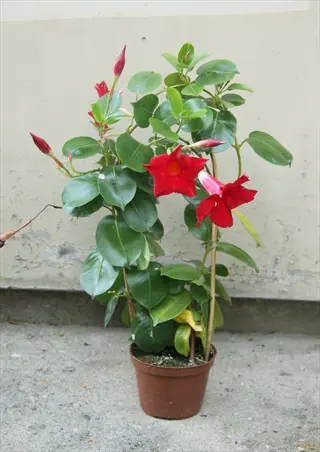
- Look: Deep red trumpet flowers on a compact, mounding plant that never needs a support to stay full.
- Best spot: Front-porch pots and entryway containers where the bold color reads from a distance all summer.
- Wildlife: The tubular red flowers are a reliable draw for hummingbirds throughout the warm months.
- Care note: Pinch the tips often to keep the mound dense and covered in fresh, flower-bearing growth.
- Size: Stays naturally bushy at the lower end of the 3 to 10 ft (0.9 to 3 m) range for the genus.
- Why pick it: The most popular, fuss-free choice for gardeners who want instant color in a single pot.
Pink and White Series
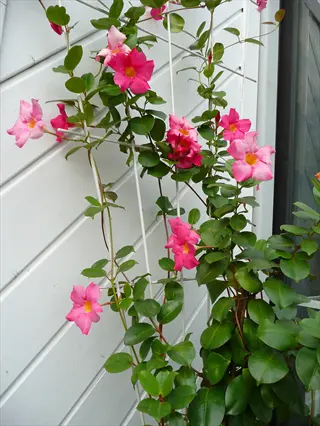
- Look: Soft pink, rose or pure white blooms, often with a bright yellow throat, on tidy compact plants.
- Best spot: Mixed containers and window boxes where lighter colors brighten a shaded corner of a sunny patio.
- Pairing: Blends easily with other warm-season annuals without overpowering them with heavy color.
- Care note: Deadhead regularly so the lighter petals keep coming and the plant looks consistently fresh.
- Wildlife: Still attracts butterflies and hummingbirds thanks to the same showy tubular flower shape.
- Why pick it: A softer, more versatile palette for gardeners who want elegance over a single bold red.
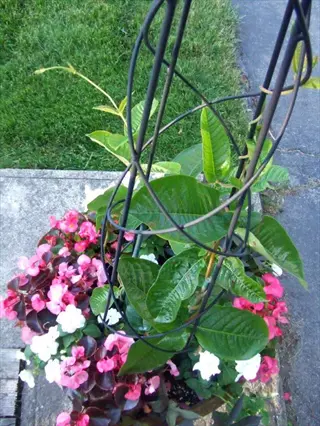
Hanging Basket Picks
- Look: Trailing, free-flowering selections that spill over the rim of a basket or tall planter.
- Best spot: Hanging baskets under a porch roof or on a sunny shepherd's hook where they get full light.
- Watering: Baskets dry out fast in heat, so check them daily and water once the top inch feels dry.
- Care note: Trim straggly trails to keep the basket balanced and push branching for more blooms.
- Mobility: Easy to lift down and carry indoors before the first frost when overwintering in cold zones.
- Why pick it: The simplest way to add color overhead where ground space for containers is limited.
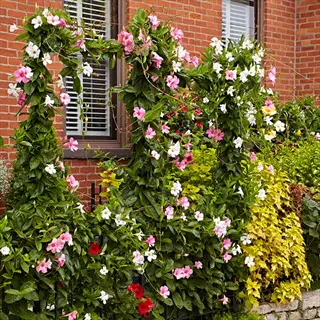
Climbing Trellis Types
- Look: The vining mandevilla form, with larger leaves and flowers on long stems that twine up a support.
- Best spot: A trellis, arch, fence or mailbox post where the stems have something firm to climb and show off.
- Vigor: Some cultivars push up to 20 ft (6 m) of stem in a single season, so give them real room.
- Care note: Guide young stems onto the support early, since they wrap on their own once they find it.
- Naming: These are usually sold as mandevilla rather than dipladenia, though care needs are the same.
- Why pick it: The right choice when you want vertical height and screening rather than a tidy mound.
The trick is to match the form to the spot. Bushy dipladenia types stay tidy and round. They shine in containers, window boxes and hanging baskets where you want color without sprawl. Climbing mandevilla cultivars want to twine. Save those for a trellis, arch, fence or mailbox post.
Get that pairing right and the plant does the rest of your work. A compact red in your porch pot gives you instant summer color. A trailing pick spills over your basket rim. And a vining type turns your bare fence into a wall of blooms by midseason. Pick the form that fits your space and you can't go wrong.
5 Common Myths
Dipladenia and mandevilla are completely different plants from separate plant families that just happen to look similar.
They are the same genus, Mandevilla. Dipladenia is simply the trade name used for the bushy, non-climbing cultivars.
Dipladenia is a hardy plant that will survive winter outdoors anywhere if you mulch it heavily before the first frost.
It will not survive frost outdoors regardless of mulching. Below 45 to 50F it must come inside, surviving year-round only in zones 10a to 11b.
Watering dipladenia often and keeping the soil constantly wet is the best way to keep it lush and full of flowers.
Constant wet soil causes root rot, the top killer. Let the top 1 to 2 inches dry between waterings and always use well-drained soil.
Cutting a dipladenia back hard will shock the plant and stop it from flowering for the rest of the season.
It blooms the same summer on new growth. A hard prune in late winter or early spring actually renews growth and encourages more flowers.
Dipladenia is a harmless plant, so its sap and leaves are perfectly safe to handle and have around pets and children.
Its milky sap can irritate skin and may be harmful if eaten. Wear gloves when pruning and keep pets and children away from it.
Conclusion
Good dipladenia care really does come down to a few steady habits. Give the plant a spot with full sun for at least 6 hours a day, and let the top 1 to 2 inches of soil dry out before you water again. Feed it through the warm months, and you give the roots everything they need to push out flowers.
Those flowers form on new growth, and that one fact shapes everything else. Steady sun, regular feeding and a bit of light pruning push fresh shoots, and fresh shoots are where the color comes from. Keep that cycle going and your dipladenia plant stays covered in blooms from late spring right through fall.
When nights start to slide toward 45 to 50°F, bring the plant inside before the cold sets in. This single step is the heart of overwintering, and it is what lets one plant come back year after year instead of dying off as an annual. The same rule holds whether your tag says dipladenia or mandevilla, since the two are simply different forms of the same plant.
One last safety habit is worth keeping. The milky sap can irritate your skin and may be harmful if swallowed. So wear gloves when you prune, and keep cuttings away from curious pets and small children. Match the sun, the drainage and the winter shelter, and a dipladenia rewards you far beyond the small effort it asks. It is a forgiving, high-reward plant, and once these basics click, the long run of color makes the whole season feel easy.
Glossary
- Anthracnose
- A fungal disease that causes leaf spots and is worsened by leaves staying wet.
- Apocynaceae
- The dogbane plant family, known for milky sap and including dipladenia.
- Deadheading
- Removing faded flowers so the plant puts energy into new buds instead of seeds.
- Dipladenia
- The horticultural trade name for the bushy, non-climbing cultivars of the genus Mandevilla.
- High-phosphorus fertilizer
- Plant food richer in phosphorus, the nutrient most linked to flower production, such as a 10-20-10 blend.
- Mandevilla
- The genus that includes both the bushy dipladenia forms and the vigorous climbing vine forms.
- Overwintering
- Protecting a tender plant through cold months, usually by moving it indoors before frost.
- USDA hardiness zone
- A standard map system that rates how cold a region gets, used to judge whether a plant survives winter outdoors.
External Sources
Frequently Asked Questions
Is Dipladenia an annual or a perennial?
Dipladenia is a tender perennial. It lives for years in USDA zones 10a to 11b, but in colder zones gardeners treat it as an annual or move it indoors for winter.
Does Dipladenia like sun or shade?
Dipladenia likes full sun. It needs at least 6 hours of direct sun, and 6 to 8 hours daily gives the most flowers. Light afternoon shade helps only in very hot climates.
How often should I water Dipladenia?
Water when the top 1 to 2 inches of soil feel dry, then soak thoroughly and let it drain. Containers in heat may need water every day or two; err on the side of dryness.
Where is the best place to plant Dipladenia?
Plant dipladenia in the sunniest, most sheltered spot you have, with well-drained soil. In cold zones, use a container you can move indoors before frost.
How do you keep Dipladenia blooming?
Give full sun, feed every two weeks with a high-phosphorus fertilizer, deadhead spent flowers, and lightly pinch growth. Flowers form on new growth, so steady fresh growth means steady blooms.
Can I keep my Dipladenia over winter?
Yes. Bring it indoors before the first frost, by early October in many areas, to a lighted spot kept above 45 to 50°F. Water sparingly through winter, then prune and repot in spring.
Should I cut back my Dipladenia?
Yes. A hard prune in late winter or early spring is fine, because it still blooms the same summer on new basal shoots. Light pinching through the season keeps it bushy.
How do you make a Dipladenia bushy?
Pinch off the growing tips regularly. Each pinch forces the stem to branch, so frequent light pinching plus a hard spring prune builds a fuller, bushier mound over time.
What are common Dipladenia problems?
Common problems are:
- Yellowing or dropping leaves, usually a sign of overwatering
- Root rot from soggy, poorly drained soil
- Few or no blooms from too little sun or feeding
- Leaf scorch in intense afternoon heat
- Pests such as spider mites, mealybugs, aphids and whiteflies
Is Dipladenia toxic to pets?
Use caution. Dipladenia is in the dogbane family, and its milky sap can irritate skin and may be harmful if eaten. Keep curious pets and children away and wear gloves when pruning.